Alaska Flood Home Insurance: Protecting Homes from Extreme Weather

Alaska’s flood risks are real and growing. Heavy rainfall, snowmelt, and coastal storms threaten homes across the state every year, yet many homeowners remain unprotected.

Standard homeowners insurance won’t cover flood damage-you need dedicated Alaska flood home insurance for that protection. At Aurora National Insurance, we help homeowners understand their options and find coverage that fits their needs and budget.

Understanding Alaska’s Flood Risk and Coverage Gaps

Why Alaska’s Flood Patterns Stand Out

Alaska’s flood threat varies dramatically across the state, and location determines your actual risk far more than generic warnings ever could. Southeast Alaska receives the highest rainfall in the nation-some areas get over 200 inches annually-creating persistent flood conditions. Coastal regions face storm surge and king tides that push water inland, while interior areas battle spring snowmelt that overwhelms rivers and drainage systems. The Matanuska River near Anchorage caused significant flooding in 2014, damaging homes and infrastructure across the valley. These events repeat seasonally and predictably.
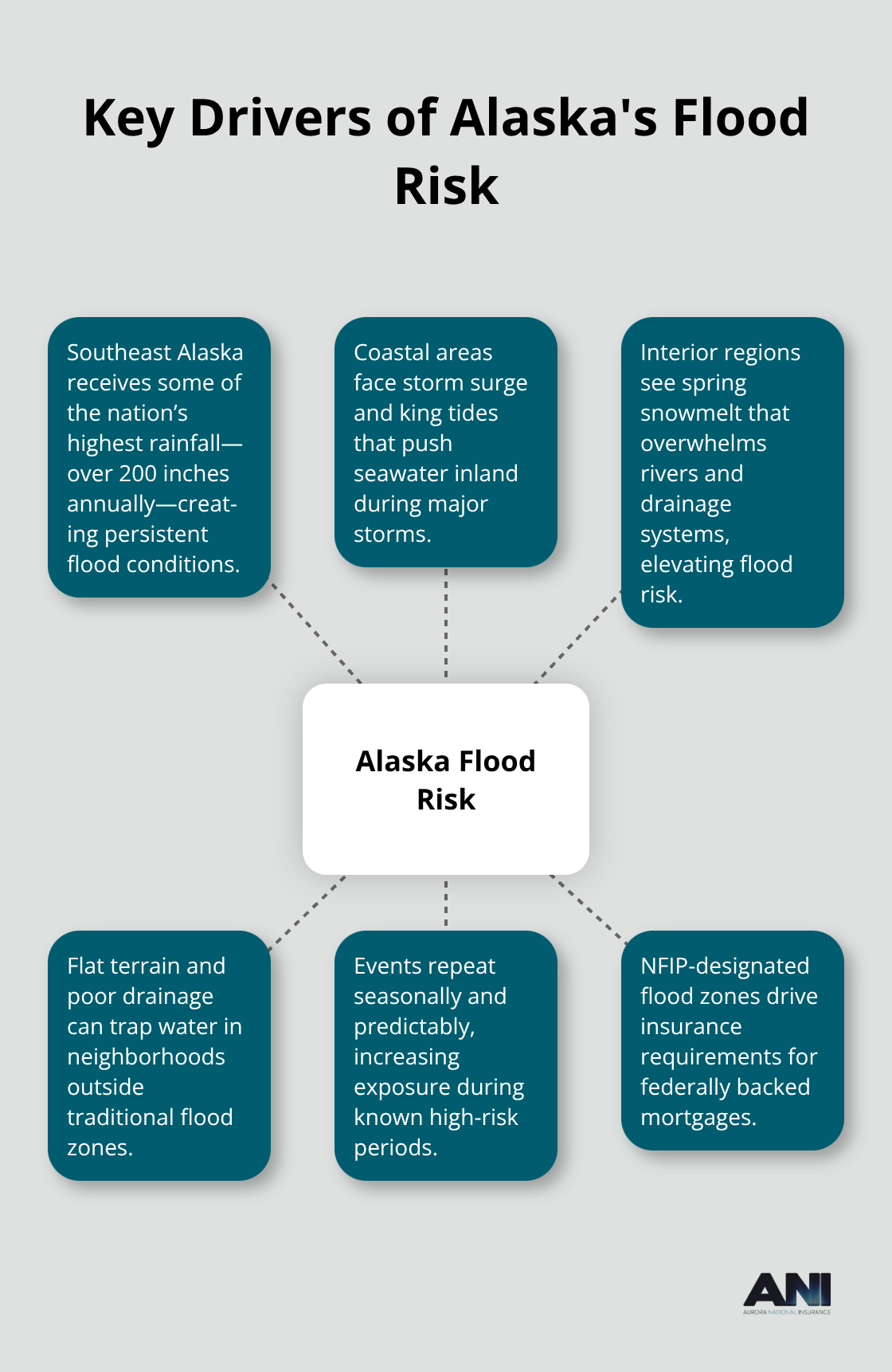
Infographic showing the main drivers of flood risk in Alaska, including rainfall, storm surge, snowmelt, terrain, seasonality, and NFIP zone requirements. - Alaska flood home insurance

Flat terrain and poor drainage in seemingly safe neighborhoods trap water during heavy rains, putting homes at risk even outside traditional flood zones. The National Flood Insurance Program identifies specific flood zones based on historical data, and homes in high-risk areas require flood insurance if they carry federally backed mortgages.

Identifying Your Flood Zone and Risk Level

Your location determines whether you fall into a high-risk, moderate-risk, or low-risk flood category. Homes near rivers, streams, and coastal zones face substantially higher risk than inland properties. However, coastal homeowners face different flood and storm surge risks than interior residents, making location assessment critical. A property agent or insurance professional can review your address against flood maps and tell you exactly where you stand. This assessment directly shapes your insurance needs and costs. High-risk properties face mandatory coverage requirements, while moderate and low-risk homes have more flexibility in their decisions.

The Critical Gap in Standard Homeowners Insurance

Standard homeowners insurance explicitly excludes flood damage-a fact that surprises most Alaskans who assume their policy covers water damage from any source. Water from a burst pipe or roof leak falls under your homeowners policy, but water entering your home from rising water outside does not. That distinction is absolute and non-negotiable. Flood insurance is separate coverage available through the National Flood Insurance Program or private carriers. This coverage protects both your structure and belongings inside. Most Alaska homeowners pay between $500 and $2,000 annually for flood coverage, depending on their flood zone and home value. For homeowners with mortgages in high-risk areas, this cost is mandatory. Even owners of paid-off homes in moderate or low-risk zones should consider coverage-uninsured flood damage can exceed your home’s total value and create financial hardship that takes years to recover from.

Coverage Details and Deductible Options

Flood insurance covers structural damage to your home and personal property inside it. Deductibles typically start at $1,000 for structure coverage and $500 for contents, though you can select higher deductibles to reduce your premium. Your choice of deductible directly affects what you pay annually. Higher deductibles mean lower premiums but greater out-of-pocket costs if flooding occurs. Lower deductibles cost more upfront but provide better protection when you need it most.

Understanding your flood zone, coverage options, and actual costs puts you in position to make an informed decision about protection. The next step involves comparing what different carriers offer and finding a policy that matches both your risk level and budget.

What Flood Insurance Actually Covers

Structure and Contents Protection

Flood insurance protects two distinct categories: your home’s structure and the belongings inside it. Structural coverage pays for foundation damage, walls, floors, built-in appliances, HVAC systems, and electrical wiring when floodwater enters your home. Contents coverage reimburses personal property like furniture, electronics, clothing, and stored items. Most homeowners purchase these separately, and contents coverage caps at $100,000 under the National Flood Insurance Program, while structure coverage reaches $250,000 for single-family homes. If your home’s replacement value exceeds these limits, private flood insurance fills the gap, though it costs more annually.

Understanding Premium Costs

Most Alaska homeowners in moderate-risk zones pay $600 to $1,200 yearly for basic structure coverage with standard deductibles. High-risk coastal properties run $1,500 to $3,500 annually. The Federal Emergency Management Agency reports that just one inch of floodwater causes an average of $25,000 in damage to a single-story home, making this coverage economically sensible even for properties outside mandatory flood zones.

How Deductibles Affect Your Premium

Deductibles function differently in flood insurance than homeowners policies. You choose your deductible amount, and this directly determines your premium-higher deductibles lower your annual cost. Standard structure deductibles start at $1,000, $2,500, $5,000, or $10,000, while contents deductibles begin at $500 or $1,000. Selecting a $5,000 deductible instead of $1,000 typically reduces your annual premium by 15 to 25 percent.

Elevation and Location Impact

Your flood risk level, home age, elevation, and distance from water bodies all affect your final cost. Homes elevated above the base flood elevation pay substantially less than those at ground level. A property elevated four feet above the base flood elevation can see premium reductions of 30 to 40 percent compared to non-elevated homes in the same zone. Alaska’s freeze-thaw cycles and soil conditions make elevation expensive, but the insurance savings accumulate quickly.
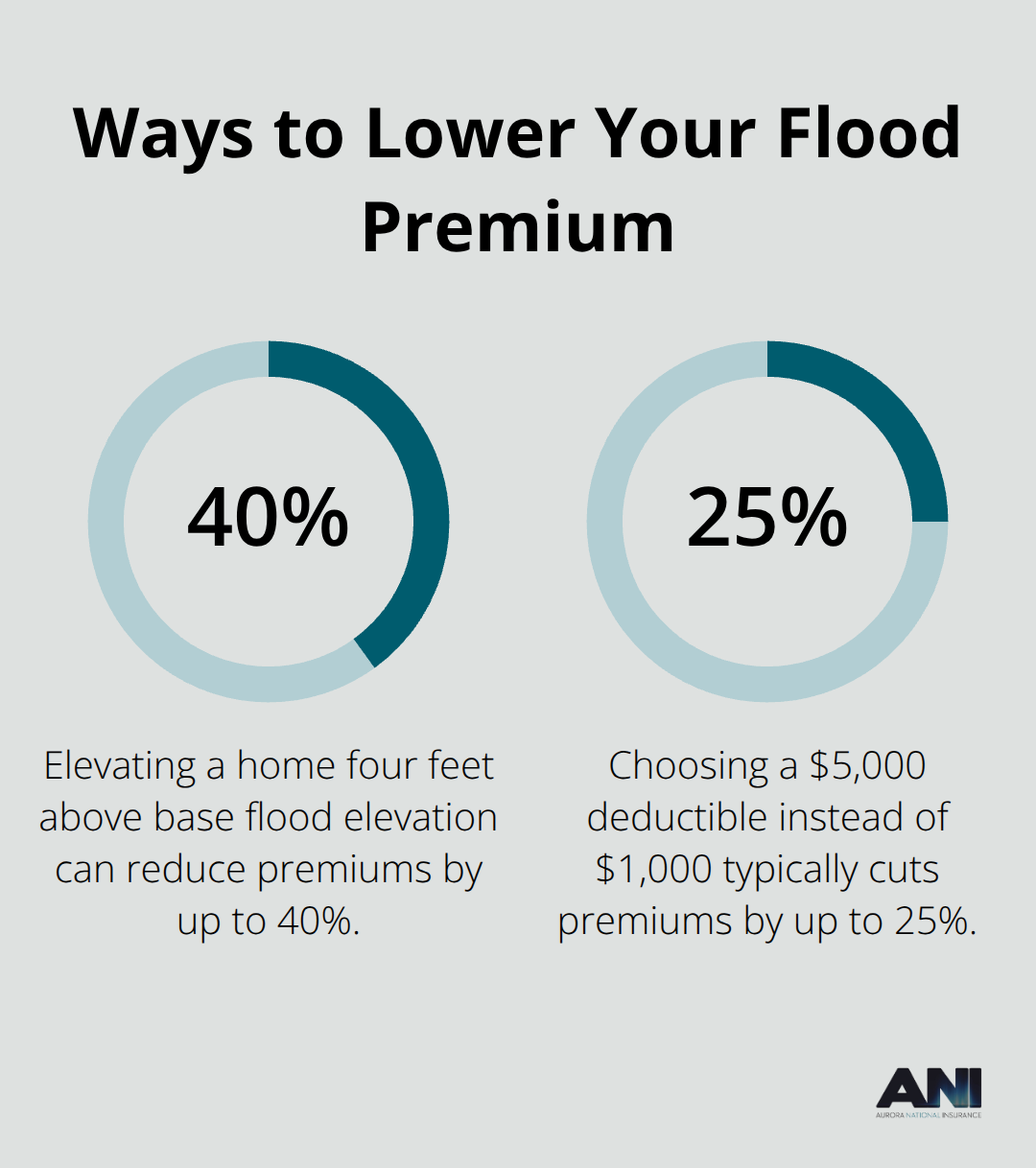
Chart showing premium reductions from home elevation and higher deductibles for Alaska flood insurance.

Coverage Beyond Designated Flood Zones

Homeowners in low-risk zones sometimes skip coverage entirely, accepting the financial risk themselves-a gamble that backfires when unexpected flooding occurs. Over the past 20 years, 99% of counties in the U.S. have experienced a flood event. That statistic alone justifies coverage for any Alaska property with potential water exposure, regardless of official zone designation. Once you understand what coverage costs and what it protects, the next step involves selecting the right policy for your specific situation and budget.

Selecting the Right Flood Policy for Your Alaska Home

Confirm Your Flood Zone First

Start with your flood zone assessment because it determines which carriers will quote your property and what you’ll actually pay. Contact your local city or borough planning department or use FEMA’s flood map portal to confirm whether your home sits in a high-risk zone that requires flood insurance or a moderate-to-low-risk area where coverage remains optional. This single step eliminates guesswork and prevents wasting time requesting quotes from carriers who won’t insure your address.

Compare Multiple Carriers and Quotes

Once you know your zone, compare at least three carriers offering flood insurance in Alaska rather than accepting the first quote. The National Flood Insurance Program provides baseline coverage, but private carriers like Homeowners Choice and Heritage Insurance often undercut NFIP premiums by 20 to 35 percent for homes in moderate-risk zones, according to data from the Insurance Information Institute. Request quotes with identical deductibles and coverage limits from each carrier so you see real price differences rather than comparing different protection levels. A home in Anchorage’s moderate-risk zone might cost $800 annually through NFIP but only $550 through a private carrier offering the same protection-that $250 difference adds up to $2,500 over a decade.

Invest in Elevation and Mitigation Improvements

Elevation and mitigation improvements deserve serious consideration when selecting coverage because they directly reduce your premium without sacrificing protection. If your home sits below the base flood elevation, investing in elevation or flood vents typically costs $15,000 to $30,000 but generates insurance savings of 30 to 40 percent annually-meaning the investment pays for itself in five to eight years. Ask your agent which specific improvements your carrier recognizes for discounts before spending money on upgrades that won’t reduce your premium. Some carriers offer substantial discounts for sump pumps, backflow preventers, or wet floodproofing, while others ignore these improvements entirely.

Select a Deductible That Matches Your Financial Situation

Your deductible choice should align with your emergency savings rather than defaulting to the lowest option. If you have $3,000 in readily available cash, a $2,500 deductible makes sense financially. If you’d struggle to cover $5,000 out-of-pocket, stick with a $1,000 deductible even though your premium costs more. The goal is avoiding a situation where you have insurance but can’t afford the deductible when flooding occurs.

Work with an Agent Who Understands Alaska’s Flood Patterns

An agent who understands Alaska’s specific flood patterns can explain why a coastal property near Ketchikan faces different risks than a riverfront home in the Matanuska Valley. Local expertise matters far more than national call centers when assessing whether your particular address truly needs coverage or whether you can safely skip it in a low-risk zone.

Final Thoughts

Alaska flood home insurance protects your family and property from water damage that standard homeowners policies explicitly exclude. One inch of floodwater causes an average of $25,000 in damage, and 99% of U.S. counties experienced flooding over the past two decades-your Alaska property faces real risk regardless of zone designation. Three concrete steps put you in position to secure the right coverage: confirm your flood zone through FEMA’s map portal, request quotes from at least three carriers with identical deductibles, and select a deductible that matches your emergency savings.
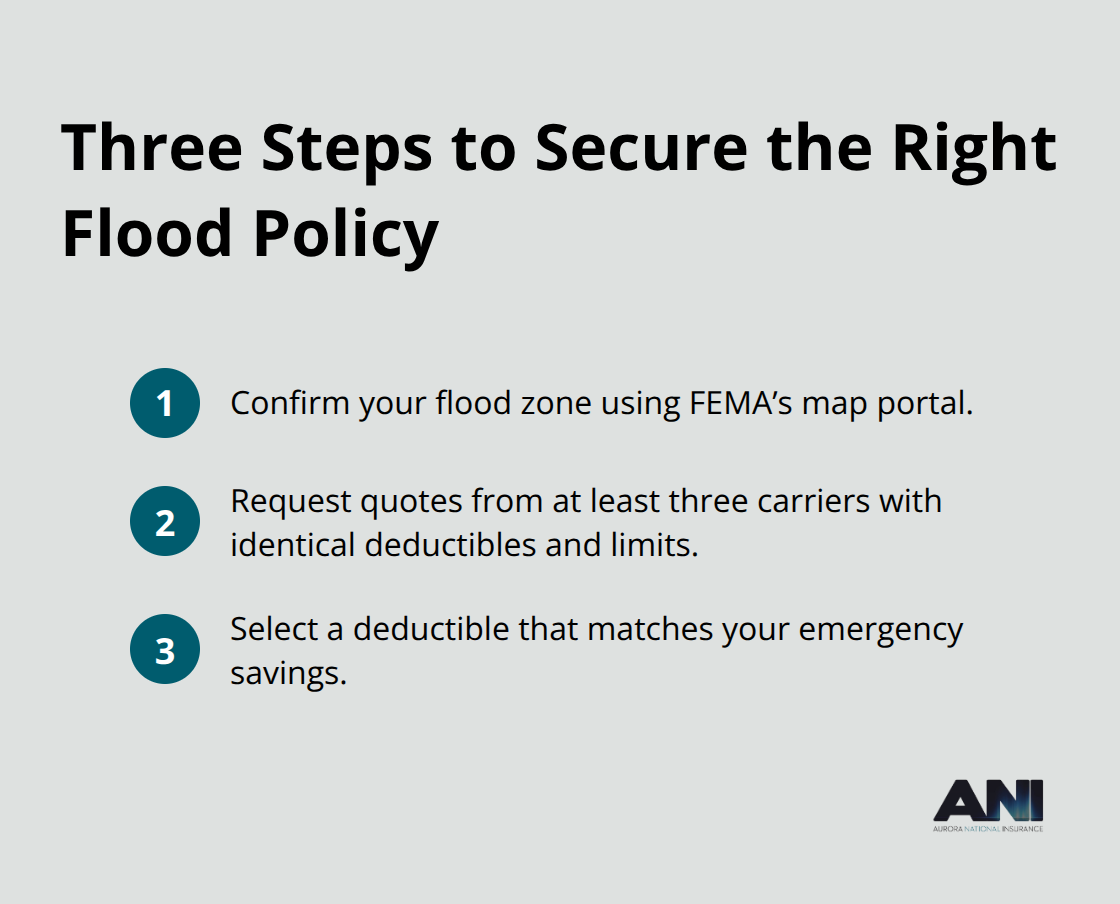
Compact checklist of three steps to choose an Alaska flood insurance policy. - Alaska flood home insurance

Private carriers often undercut National Flood Insurance Program premiums by 20 to 35 percent for moderate-risk homes, making price comparison essential before you commit to any policy. We at Aurora National Insurance help Alaska homeowners navigate these decisions with local expertise and access to multiple top-rated carriers-our licensed agents deliver tailored comparisons and competitive pricing so you find protection without overpaying. Contact us at aurorainsurance.net to request instant online quotes and compare your options quickly.

Coverage costs far less than uninsured damage, and peace of mind comes from knowing you’re prepared when heavy rain, snowmelt, or coastal storms arrive. Your family and property deserve that protection from Alaska’s predictable flood threats.

The information provided in this blog is for general informational purposes only and does not constitute legal, financial, or insurance advice. Coverage options, terms, and availability may vary. Please consult with a licensed professional for advice specific to your situation.
Artificial intelligence may have been used to generate text and images in some blog articles.
Oregon Home Insurance Tips: Score Savings and Better Coverage

Oregon homeowners pay an average of $1,200 annually for dwelling coverage, yet many miss critical gaps that leave them underprotected. At Aurora National Insurance, we’ve seen firsthand how the right Oregon home insurance tips can cut your premiums while strengthening your coverage.

This guide walks you through state requirements, proven discount strategies, and how to compare policies without overpaying. You’ll learn exactly what to look for-and what to avoid-when securing the protection your home deserves.

What Oregon Home Insurance Actually Covers

The Six Core Protections Your Policy Provides

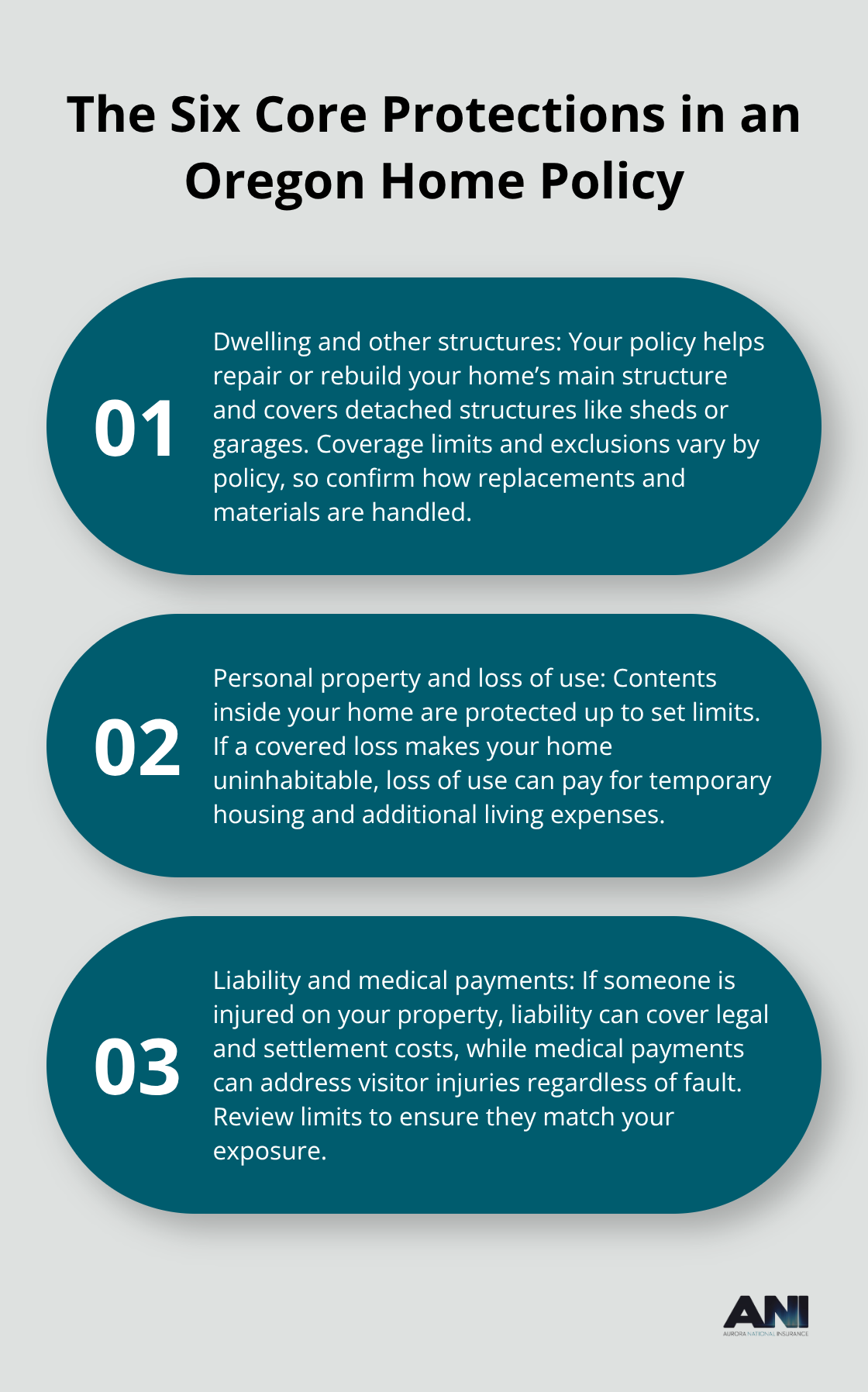
Oregon doesn’t mandate homeowners insurance by law, but your mortgage lender will require it as a condition of your loan. This means most Oregon homeowners carry coverage whether they choose to or not. A standard policy covers six core areas: your dwelling structure, other structures like sheds or garages, personal property inside your home, loss of use if your home becomes uninhabitable, liability protection if someone gets injured on your property, and medical payments for visitor injuries.

Summary of the six core protections included in standard Oregon homeowners insurance.

However, these protections come with limits and exclusions that vary by policy. A typical Oregon policy with $500,000 in dwelling coverage and $300,000 in liability costs around $2,065 per year according to NerdWallet data from February 2026.

The Dwelling Limit Problem Most Homeowners Face

Most homeowners set their dwelling limit too low, which creates serious financial exposure after a loss. The median rebuilding cost in Oregon sits at approximately $470,581, meaning a $300,000 dwelling limit leaves you massively underinsured. This gap between your coverage and actual rebuilding costs can force you to pay tens of thousands out of pocket. Location matters significantly in determining both your rates and your coverage needs. Homes in Bend average $2,305 annually while Portland properties typically run $1,850 for identical coverage, largely due to wildfire risk in central Oregon. Your credit history also impacts what you pay-homeowners with poor credit in Oregon pay roughly 113 percent more than those with good credit, translating to around $4,405 annually versus $2,100.

Wildfire Risk and Its Impact on Your Premiums

Oregon’s geography creates major coverage challenges that most homeowners overlook. Wildfire risk directly influences your premium and which carriers will even quote your home. If you live near forested areas, expect higher rates and stricter underwriting from insurers. This geographic reality means your location determines not just your price but your access to coverage itself.

The Gaps That Standard Policies Leave Unprotected

Flood damage isn’t covered under standard homeowners policies at all, despite Oregon’s proximity to water and storm systems. You must purchase flood insurance separately through the National Flood Insurance Program, which is federally backed. This means waiting until a storm arrives to buy flood insurance is too late. Earthquake coverage presents another gap-it’s excluded from standard policies and requires a standalone rider. Adding earthquake coverage can increase your annual premium by $865 or more, depending on your location and home value. Plumbing leaks rank among the most common claims in Oregon due to old, corroded pipes and clogged drains, yet water backup coverage is optional and often overlooked. The hard truth is that Oregon homeowners who skip these optional coverages face genuine financial exposure. Evaluating your specific geographic risks before choosing coverage limits helps you avoid these protection gaps and the financial consequences that follow.

How to Cut Your Oregon Premiums Without Sacrificing Protection

Bundle Your Home and Auto Policies for Immediate Savings

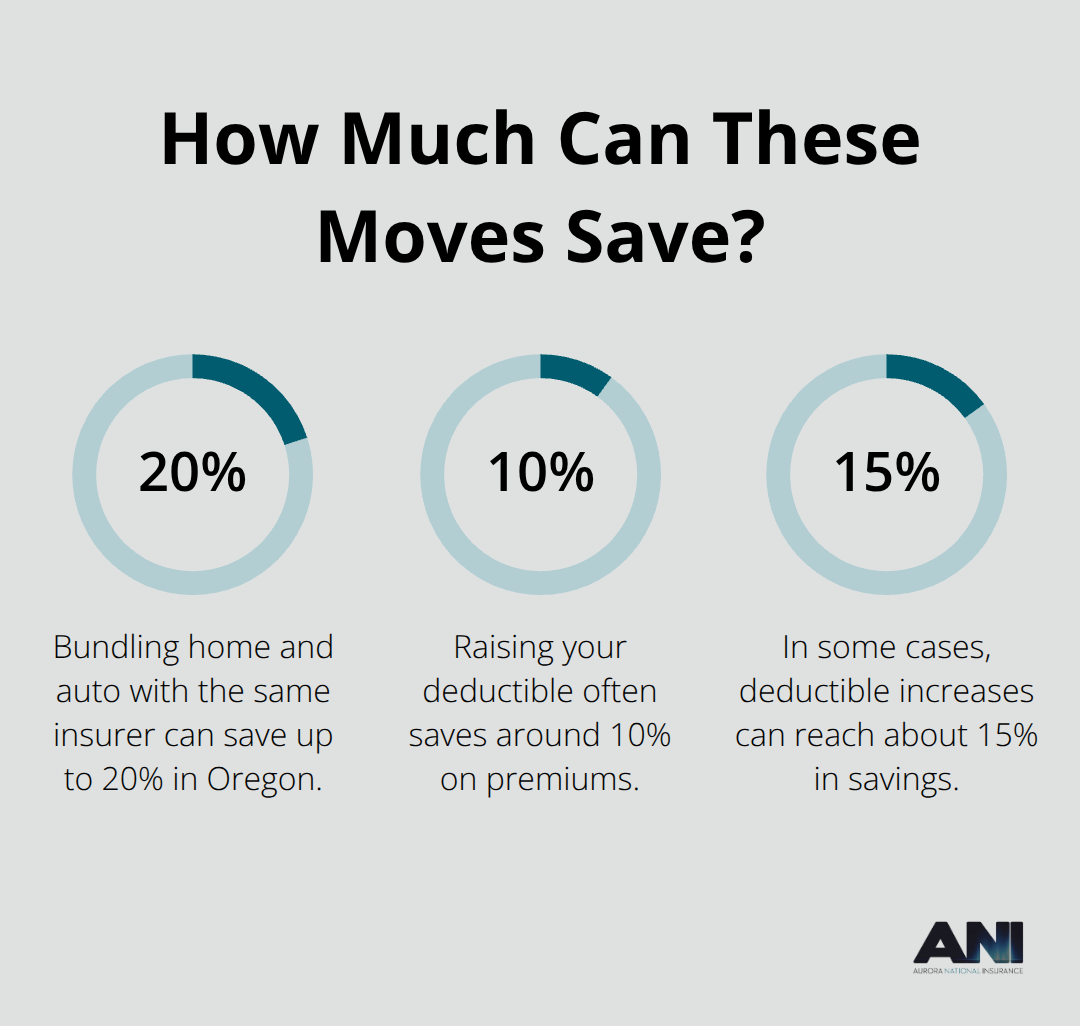
Bundling your home and auto policies with the same insurer delivers the fastest path to savings. Nationwide offers up to 20 percent off when you combine home and auto coverage in Oregon, and this discount stacks with other savings you might qualify for. Homeowners consistently overlook this opportunity, treating their auto and home policies as separate purchases when consolidating them cuts hundreds from annual costs. The math is straightforward: if you pay $1,200 for home coverage and $1,000 for auto, a 20 percent bundling discount saves you $440 per year. Many carriers extend this further if you add life or umbrella coverage to the mix. Before you renew either policy separately, request a combined quote from your current insurer or a competitor to see the actual dollar difference. The Oregon insurance market has tightened recently with some carriers pulling back from new business, making it harder to switch, but bundling discounts are substantial enough to justify the effort of moving both policies simultaneously.

Install Safety Devices That Lower Your Rates

Safety and security devices lower your premiums because they reduce claim frequency and severity. Installing deadbolts, burglar alarms, fire extinguishers, smoke detectors, sprinklers, or monitored fire alarms can qualify for homeowners insurance discounts. Water detection devices and temperature sensors also qualify for credits, particularly valuable given that plumbing leaks rank among Oregon’s most common claims. Installing these devices costs between $300 and $1,500 upfront, but the premium reductions recoup that investment within two to four years for most homeowners. Ask your insurer specifically which devices trigger discounts before purchasing anything, since requirements vary by carrier.

Raise Your Deductible-But Only If You Can Afford It

Increasing your deductible from $500 to $1,000 sounds appealing for lower premiums, but the savings are typically modest-often just 10 to 15 percent, which translates to $200 to $310 annually on a $2,065 policy. This approach makes sense only if you have emergency savings of at least $1,500 to cover that deductible without hardship.

Chart showing potential savings from bundling policies and raising deductibles for Oregon homeowners. - Oregon home insurance tips

For homeowners living paycheck to paycheck, raising your deductible creates genuine financial risk when a claim arrives. The better strategy combines modest deductible increases with concrete risk reduction through device installation and bundling, which together deliver far more substantial savings than any single tactic. These three levers-bundling, safety devices, and selective deductible adjustments-work together to lower your costs while maintaining the protection your home needs.

Now that you understand what impacts your costs, the next critical step involves comparing quotes across multiple carriers to find the coverage that actually fits your situation.

Comparing Quotes Across Carriers

The Staggering Price Differences Between Insurers

Shopping for Oregon home insurance without comparing multiple quotes guarantees you’ll overpay. The difference between carriers for identical coverage is staggering-some homes see premiums ranging from $450 annually to over $1,900 depending on the insurer, even when the dwelling limit, deductible, and location remain constant. Premium differences between Oregon insurers vary significantly based on carrier selection. This means your choice of carrier matters far more than tweaking your deductible or coverage limits.

How to Request Apples-to-Apples Quotes

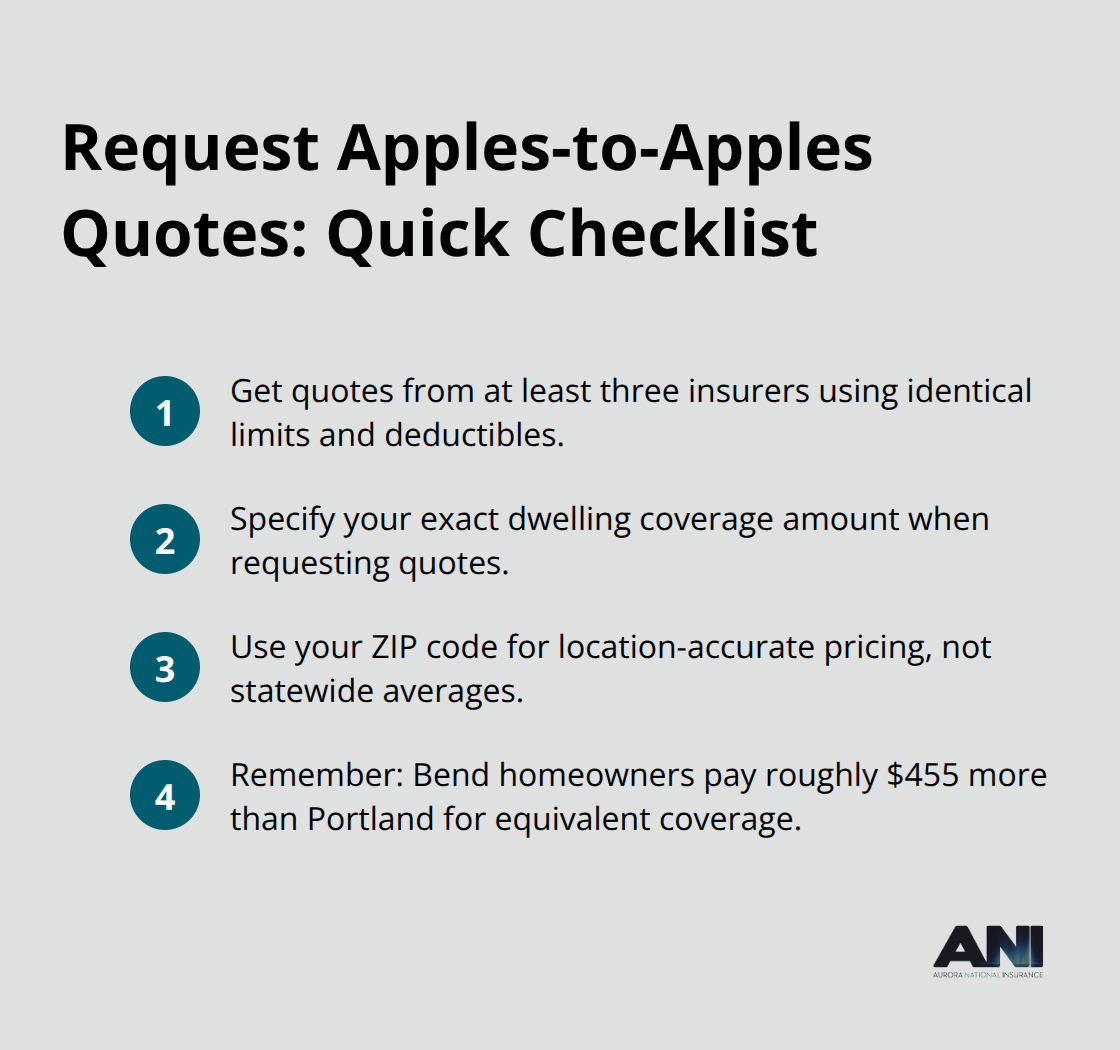
Start by requesting quotes from at least three different insurers using identical parameters-same dwelling limit, same liability coverage, same deductible-so you can actually compare apples to apples. When you call, specify your exact dwelling coverage amount because premiums scale predictably with coverage. Your location within Oregon also dramatically affects pricing, so request quotes specific to your ZIP code rather than accepting statewide averages. Bend homeowners pay roughly $455 more annually than Portland residents for equivalent coverage, primarily due to wildfire exposure, making location-specific quotes essential for accuracy.

Checklist to request consistent Oregon home insurance quotes for accurate comparisons. - Oregon home insurance tips

What to Examine Beyond the Premium Number

Beyond the premium number itself, examine what each quote actually includes and excludes. Cincinnati Insurance ranks among the fewest consumer complaints in Oregon according to NAIC data, which matters more than you’d think when a claim arrives and you need responsive service. Check whether the quote includes replacement cost coverage-determined by an appraiser to fully rebuild your home rather than just its current market value-or if it defaults to actual cash value, which pays far less after depreciation. Ask explicitly whether water backup coverage, extended replacement cost, and service-line protection are included or optional add-ons, since these gaps create expensive surprises.

Coverage Requirements and Special Circumstances

Request the insurer’s specific requirements for safety devices to qualify for discounts, because requirements vary significantly between carriers and you want to know exactly what installation triggers savings. Most importantly, verify the liability limit matches your actual exposure-if you own a pool, Nationwide requires higher liability coverage, and running a home-based business may increase your premium substantially to cover inventory and equipment. The Oregon FAIR Plan Association exists specifically for homeowners who can’t obtain open-market quotes after being declined by two private insurers, but it covers only actual cash value up to $600,000 dwelling limit and excludes liability entirely, making it a last resort rather than a competitive option.

Finalizing Your Comparison

Request an On Your Side Review consultation if you quote with Nationwide, since this free annual review adjusts deductibles and ensures coverage fits life changes like new garages or additions. Once you’ve narrowed to two or three carriers, request written comparisons showing coverage details side-by-side rather than relying on phone conversations, which create confusion when you’re comparing multiple policies simultaneously.

Final Thoughts

Oregon home insurance tips boil down to three concrete actions: bundle your policies for immediate savings, install safety devices that lower your premiums, and compare quotes across multiple carriers to find actual value. Most Oregon homeowners leave hundreds of dollars on the table annually by treating these steps as optional rather than essential. The median rebuilding cost in Oregon sits at $470,581, yet many homeowners carry dwelling limits far below this figure, creating genuine financial exposure after a loss.

Wildfire risk, flood exclusions, and earthquake gaps demand your attention before a disaster forces expensive decisions under pressure. Request quotes from at least three different insurers using identical coverage parameters so you can see real price differences between carriers. Specify your exact dwelling limit, liability coverage, and deductible to ensure accurate comparisons, and ask each carrier about safety device discounts specific to their requirements since these vary significantly.

A local agent matters more than most homeowners realize because they access options you won’t find shopping online alone and understand Oregon-specific risks like wildfire exposure and flood vulnerability that affect both your rates and coverage needs. We at Aurora National Insurance represent multiple top-rated carriers and provide instant online quotes so you can compare options immediately. Contact us for a free consultation to review your current coverage and identify gaps or savings opportunities specific to your situation.

The information provided in this blog is for general informational purposes only and does not constitute legal, financial, or insurance advice. Coverage options, terms, and availability may vary. Please consult with a licensed professional for advice specific to your situation.
Artificial intelligence may have been used to generate text and images in some blog articles.
Smart Fleet Planning With Alaska Truck Insurance Quotes For Local Operators

Running a truck fleet in Alaska means facing challenges most operators in the lower 48 states never encounter. Extreme weather, remote terrain, and strict regulations make insurance decisions more complex-and more important.

At Aurora National Insurance, we know that finding the right Alaska truck insurance quotes requires understanding what coverage actually protects your business. This guide walks you through comparing quotes, planning your fleet strategically, and reducing costs without sacrificing protection.

Why Alaska Truck Operators Need Specialized Insurance

Alaska’s truck insurance landscape differs fundamentally from the lower 48 states. Winter driving conditions cause claim severity to spike-remote towing and repair costs in Alaska run higher than national averages because of distance and limited service infrastructure. According to the U.S. Census Bureau, trucks move roughly $13.2 trillion in annual shipment value nationally, but Alaska operators face disproportionate risk from weather-related incidents, equipment failures in extreme cold, and accident recovery in isolated areas. Standard commercial auto policies designed for temperate climates simply don’t account for these realities.

State Minimums Leave You Underinsured

Alaska state minimum liability requires 50/100/25 in split limits, but this baseline leaves most operators dangerously underinsured. Brokers and freight contracts typically demand $1,000,000 in auto liability coverage-double or triple the state minimum-because they understand that a single accident in a remote corridor can trigger catastrophic costs that low limits won’t cover. The Federal Motor Carrier Safety Administration requires minimum coverage based on cargo type: $750,000 for non-hazardous freight over 10,001 pounds on interstate routes, $1,000,000 for oil, and $5,000,000 for hazmat. Intrastate Alaska rules can differ, so you must confirm your specific filing requirements before quoting.

Location and Route Patterns Drive Premium Differences

Your garaging location and operating radius directly influence what you’ll pay. Anchorage premiums run substantially higher than Wasilla due to claim activity and density, while regional Alaska routes cost more than city-only operations because winter conditions and long-haul exposure multiply loss severity. A contractor running equipment-heavy vehicles or a food service operator with a fully loaded truck faces steeper premiums than lighter operations, but underinsuring that vehicle creates exposure that no premium savings justify.

Continuous Coverage Protects Your Rate History

Allowing coverage to lapse costs far more than maintaining continuous protection. Insurers reward operators who maintain unbroken coverage history with better rates when you shop 30 to 45 days in advance. Alaska’s remote environment means a breakdown or accident in the interior or on the Dalton Highway creates recovery costs that test the limits of standard coverage. Rental reimbursement and non-trucking/bobtail endorsements protect you during deadhead miles or off-dispatch periods when you’re not generating revenue but still exposed to loss.

Fleet Composition Requires Customized Coverage

Your fleet’s composition shapes cost significantly. A mix of vehicle types and ages across different routes requires customized coverage rather than a one-size-fits-all policy that leaves gaps or overinsures lower-risk assets. When you compare quotes, standardizing your coverage details-limits, deductibles, driver list, radius, and cargo description-across multiple carriers reveals which insurers price your specific operation most competitively. This apples-to-apples comparison process separates realistic quotes from inflated estimates and helps you identify carriers that understand Alaska’s unique risk profile.

Comparing Quotes That Actually Match Your Operation

Standardize Your Information Across All Carriers

Collecting truck insurance quotes without standardizing your inputs wastes time and produces meaningless comparisons. Most Alaska operators fail at this step, requesting quotes with vague descriptions of their operation and then wondering why prices vary wildly across carriers. The difference between a useless quote and one that guides real decisions comes down to precision.

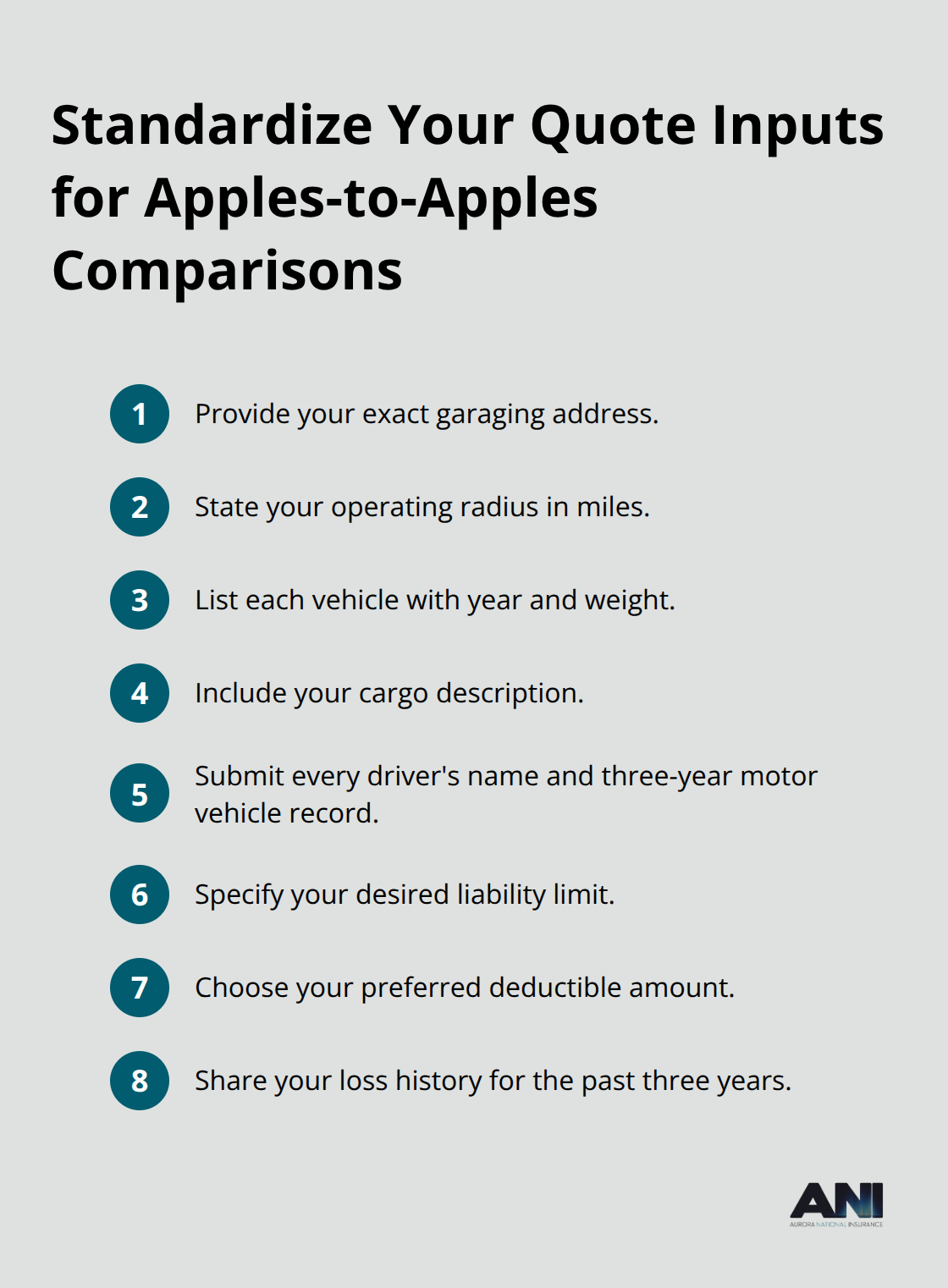
Checklist of information to standardize when requesting Alaska truck insurance quotes

When you contact Progressive, The Hartford, Great West Casualty, Northland Insurance, or other carriers, you must provide identical information to each: your exact garaging address, your operating radius in miles, your specific vehicle list with year and weight, your cargo description, every driver’s name and three-year motor vehicle record, your desired liability limit, your preferred deductible amount, and your loss history for the past three years. Anchorage-based operators typically see quotes 20 to 40 percent lower than rural Alaska locations because claim severity in the city runs lower than remote recovery costs, but only if you compare identical coverage across all carriers.

Understand How Location and Timing Affect Your Quote

Progressive leads the market as the number-one commercial auto insurer nationally with over 2.3 million commercial vehicles insured, and their Alaska pricing often reflects that scale. The Hartford excels for high-risk drivers, while Northland Insurance specializes in small fleets. You should contact these carriers 30 to 45 days before your current policy expires-this timing gives insurers the opportunity to compete and allows you to lock in better rates than last-minute renewals. Alaska’s remote environment means a breakdown or accident in the interior creates recovery costs that test the limits of standard coverage.

Choose a Deductible You Can Actually Afford

Your deductible choice directly affects what you’ll actually pay out of pocket after a claim and shapes your monthly premium. Many operators chase the lowest monthly premium without considering whether they can afford their chosen deductible when a loss occurs. A $1,000 deductible typically saves 15 to 25 percent on premium compared to a $500 deductible, but if your cash flow cannot absorb a $1,000 expense after an accident, that savings evaporates when you face a claim you cannot cover. Paying your annual premium in full instead of monthly installments saves 13 percent or more across most carriers, a discount that compounds your savings strategy.

Evaluate Carrier Responsiveness and Alaska Experience

Carrier ratings matter less than most operators assume because AM Best A+ ratings and BBB accreditation exist across the industry, but customer service responsiveness separates winners from frustration. Progressive and The Hartford offer 24/7 claims support with specialized commercial adjusters, while Sentry provides a personalized underwriting experience through agent relationships rather than online quotes. For Alaska operations specifically, you want a carrier that understands winter claim severity and remote repair costs, not a national company that prices your Anchorage operation using templates built for suburban Texas routes. Request references from each carrier’s Alaska clients before committing, and ask directly whether they have handled claims involving Dalton Highway recovery or winter equipment failures in the interior.

The quotes you collect now form the foundation for your fleet planning decisions. Once you understand what each carrier actually charges for your specific operation, you can move forward with strategies that reduce claims and protect your bottom line.

Building a Fleet That Cuts Insurance Costs

Right-Size Your Fleet to Seasonal Demand

Fleet size and vehicle composition drive insurance premiums more than most operators realize, yet many Alaska operators maintain oversized fleets that sit idle during low-demand seasons while paying full insurance premiums year-round. Right-sizing your fleet means matching your vehicle count to actual seasonal demand rather than maintaining excess capacity. A contractor running five trucks during summer but only needing two during winter should sell or store the off-season vehicles rather than insuring idle assets. This approach directly reduces your total insurable value and lowers annual premiums. When you quote with carriers like Progressive or Northland Insurance, provide accurate seasonal vehicle counts and garaging locations so quotes reflect your actual operation instead of inflated estimates based on peak-season assumptions.

Maintain Vehicles to Lower Claims and Premiums

Maintenance quality separates operators who pay standard rates from those who face surcharges. Fleets with consistent preventive maintenance records experience fewer breakdowns and claims, which insurers reward through lower premiums at renewal. Cloud-based fleet management systems like Fleetio centralize maintenance scheduling, vehicle inspections, and cost tracking across your entire operation. Set maintenance intervals based on original equipment manufacturer guidelines rather than waiting for failures, and document every service in your system. When you request quotes 30 to 45 days before renewal, provide your maintenance records to underwriters-this documentation demonstrates risk management and often results in better pricing. Alaska’s remote environment makes preventive maintenance non-negotiable because a breakdown on the Dalton Highway or in the interior costs far more to recover than a scheduled service in Anchorage.

Deploy Telematics to Monitor Driver Behavior and Reduce Risk

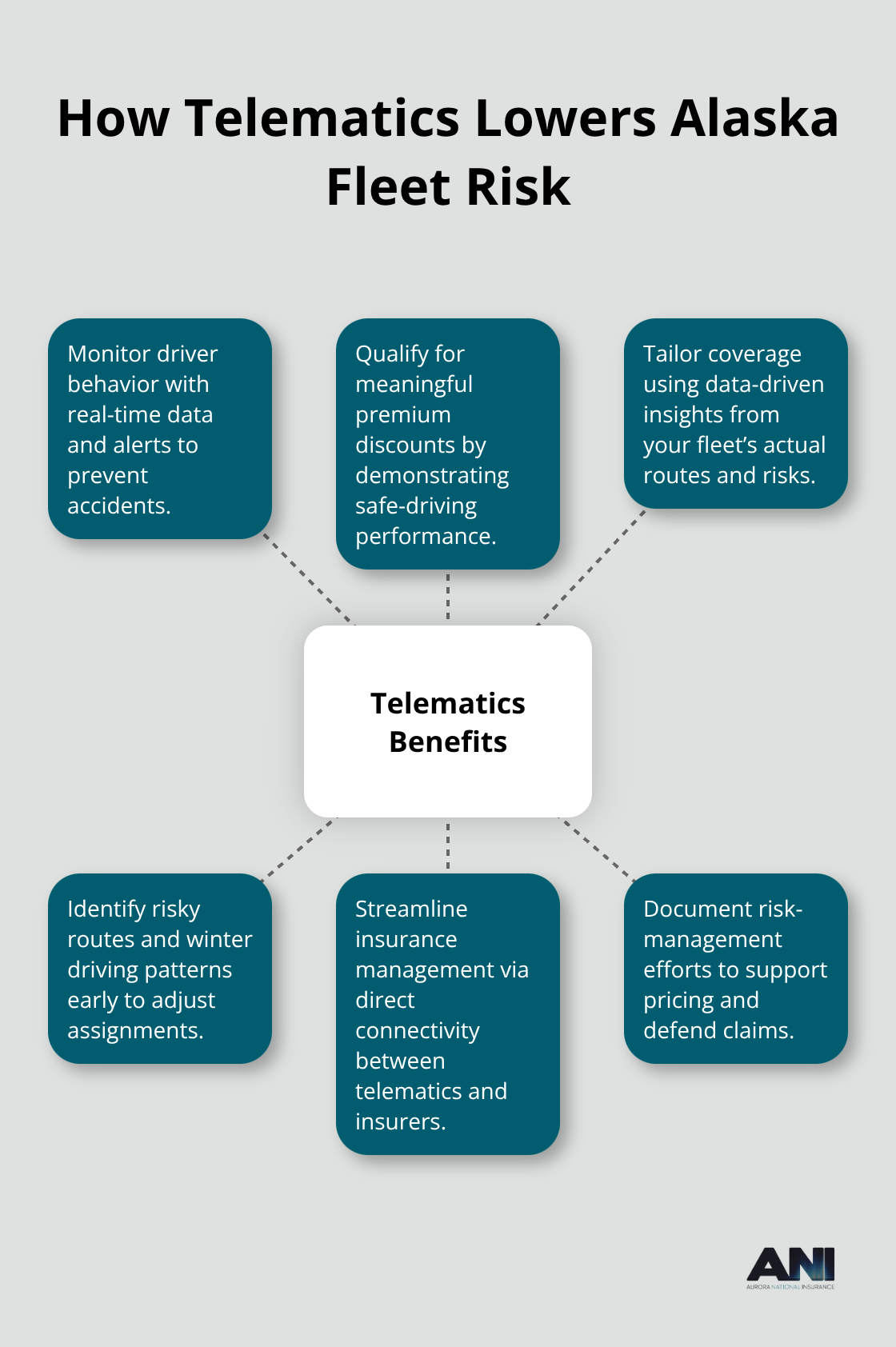
Telematics technology transforms fleet management from reactive to proactive by collecting real-time data on driver behavior, vehicle performance, and route patterns. According to Geotab research on commercial trucking insurance, data-driven policy customization uses telematics to tailor coverage to each fleet’s specific driving patterns and risks, and direct connectivity between telematics and insurers streamlines insurance management. Cover Whale’s Driver Safety Program uses AI-based dashcams and telematics with real-time coaching to lower claim frequency and severity, and safe-driving status can qualify insured drivers for up to a 30 percent discount on premiums at renewal.

Hub-and-spoke diagram showing key benefits of telematics for Alaska trucking fleets

For Alaska operators, install telematics devices in every vehicle and review the data weekly to identify risky driving behaviors before they cause accidents. A driver consistently speeding on the Glenn Highway or accelerating aggressively in winter conditions appears immediately in your telematics reports, allowing you to coach that driver or remove them from high-risk routes. Geotab users receive a 10 percent discount on Cover Whale policy premiums, making the integration between telematics platforms and insurance partners a practical cost-reduction tool.

Use Data to Support Accurate Quotes and Claims

Alaska’s winter driving conditions reward operators who invest in driver monitoring because claim severity from weather-related incidents compounds when drivers lack proper training or judgment. Your telematics data supports accurate radius reporting and cargo documentation when you quote, ensuring carriers price your operation based on actual behavior rather than worst-case assumptions. Most importantly, telematics creates a documented record of your risk-management efforts that justifies lower premiums and protects your operation during claims disputes.

Final Thoughts

Smart fleet planning in Alaska requires three concrete actions: standardize your Alaska truck insurance quotes across multiple carriers, invest in telematics and maintenance systems that reduce claims, and work with agents who understand Alaska’s unique operating environment. The operators who pay the lowest total cost for coverage compare apples-to-apples quotes 30 to 45 days before renewal, maintain continuous coverage history, and document their risk-management efforts through maintenance records and driver safety programs. Paying your annual premium in full saves 13 percent or more, while telematics-enabled driver safety programs can qualify you for up to 30 percent discounts at renewal.

Percentage chart showing common premium discounts available to Alaska trucking fleets - Alaska truck insurance quotes

Local insurance agents deliver advantages that online quote tools cannot match because they understand why Anchorage premiums differ from rural locations, why winter claim severity justifies higher limits than state minimums, and which carriers price your specific vehicle types and routes most competitively. An agent familiar with Alaska operations knows the difference between intrastate and interstate requirements, explains why brokers demand $1,000,000 liability coverage, and asks the right questions about your garaging address, operating radius, and loss history to ensure quotes reflect your actual operation. They recognize that a breakdown on the Dalton Highway or in the interior costs far more to recover than a scheduled service in Anchorage.

Contact Aurora National Insurance or another local agent with your vehicle list, operating radius, desired liability limits, and preferred deductible, then request quotes from at least three carriers. Compare those quotes side-by-side using identical coverage parameters, evaluate each carrier’s Alaska claims experience and customer service responsiveness, and select the policy that delivers the lowest total cost while maintaining the coverage your operation actually needs. The time you invest in this process now directly reduces what you’ll pay for insurance over the next three years.

The information provided in this blog is for general informational purposes only and does not constitute legal, financial, or insurance advice. Coverage options, terms, and availability may vary. Please consult with a licensed professional for advice specific to your situation.
Artificial intelligence may have been used to generate text and images in some blog articles.
Oregon commercial auto policy: Key Terms and Cost-Effective Options

Running a business in Oregon means understanding your commercial auto policy requirements and finding coverage that fits your budget. At Aurora National Insurance, we know that navigating insurance options takes time and research.

This guide walks you through Oregon’s mandatory coverage types, the cost factors that impact your premiums, and practical strategies to lower your rates without sacrificing protection.

What Oregon Requires for Commercial Auto Coverage

Mandatory Liability and Medical Coverage

Oregon law mandates that every business vehicle carry minimum liability coverage of $25,000 per person and $50,000 per accident for bodily injury, plus $20,000 for property damage. The Oregon Department of Transportation enforces these requirements strictly. Oregon also requires personal injury protection coverage, which pays medical expenses regardless of fault, and uninsured motorist coverage to protect your drivers when they’re hit by someone without insurance.

Quick reference of Oregon’s required commercial auto coverages for businesses - Oregon commercial auto policy

Filing Deadlines and Compliance

If you operate as an intrastate carrier with a 1A permit, you have 60 days from vehicle registration and enrollment in Oregon’s weight-mile-tax program to file proof of insurance with the Oregon Commission on Court and Department Services. Missing this deadline puts your operating authority at risk of suspension. Your insurance agent files the required standard industry forms-Form E for liability and Form H for cargo-on your behalf. You should verify your filing status through Oregon’s Online Insurance Look-Up tool to confirm compliance before the deadline passes.

Coverage Beyond State Minimums

Most Oregon businesses need more than the legal minimums to protect their assets adequately. If your operation involves transporting hazardous materials, federal law under 49 CFR Part 387 requires higher financial responsibility limits. For cargo operations, Oregon mandates a minimum of $10,000 in cargo coverage. If you run a fleet with employees, collision and comprehensive coverage protects your vehicles from theft, weather, and accidents-costs you’d otherwise pay out of pocket.

Tailoring Coverage to Your Business Risk

Adding uninsured and underinsured motorist coverage beyond the minimum shields your business and personal assets in a lawsuit. Higher limits cost more, but they protect you if your business has significant assets at stake. A contractor with equipment-laden vehicles faces different risk than a consultant with a single sedan, so you should tailor your limits to match your actual exposure rather than defaulting to state minimums.

The specific coverage you need depends on your industry, fleet size, and the value of assets your vehicles carry. Understanding these distinctions helps you avoid overpaying for unnecessary coverage while maintaining adequate protection.

Cost Factors That Affect Your Oregon Commercial Auto Premium

How Your Driving Record Shapes Your Rate

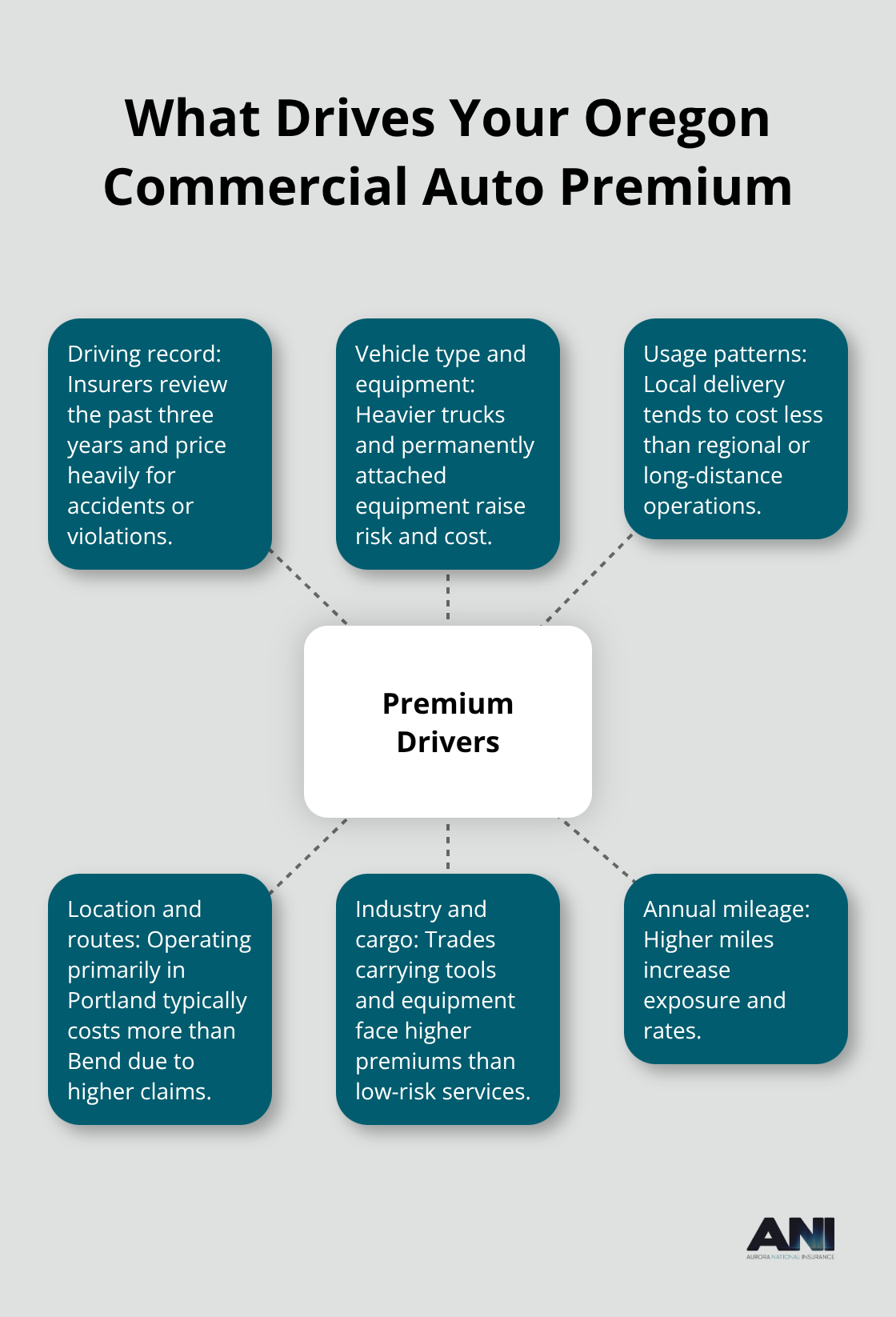
Your driving record impacts your premium more than any other single factor, and Oregon insurers scrutinize the past three years of your history carefully. A single accident or violation typically increases your rate significantly, while a clean record qualifies you for better pricing. If you operate a fleet with multiple drivers, each driver’s history affects the overall premium, so hiring drivers with solid records directly impacts your bottom line. Safety training programs and defensive driving courses can offset a less-than-perfect history, though some insurers weight recent violations more heavily than older ones.

Vehicle Type and Usage Patterns

Vehicle type and how you use it matter just as much as who drives it. A heavy equipment truck or food truck with permanently attached items costs significantly more to insure than a light sedan. The reason is simple-larger vehicles and those carrying valuable cargo present higher claims risk. If you decide whether to buy or lease a vehicle for your business, check insurance rates before you commit to the purchase, since the difference between insuring a box truck versus a pickup can be substantial.

Geographic location within Oregon also influences your rate; operating primarily in Portland typically costs more than routes centered around Bend due to higher claims activity and settlement costs in urban areas. Travel radius matters too-local delivery routes carry lower premiums than regional or long-distance operations because distance increases accident exposure.

Hub-and-spoke showing key factors that influence commercial auto rates in Oregon

Business Industry and Annual Mileage

Your industry classification and annual mileage round out the major cost drivers. Construction, plumbing, landscaping, and trades that carry tools and equipment face higher premiums than service-based businesses with minimal vehicle wear. A contractor’s median commercial auto premium runs around $203 per month, while for-hire transport trucks average $926 monthly. Annual mileage affects risk assessment directly; a business that logs 5,000 miles yearly in local service calls pays less than one covering 50,000 miles regionally.

The combination of these factors-your industry’s risk profile, how many miles your fleet accumulates, and the types of vehicles you operate-creates your individualized rate. Understanding these specific cost drivers helps you make informed decisions about vehicle selection, driver hiring, and route planning that can meaningfully reduce what you pay. These choices set the stage for finding affordable coverage that actually fits your operation.

How to Get Lower Rates Without Sacrificing Protection

Request Quotes from Multiple Carriers

Getting multiple quotes is the only reliable way to find affordable commercial auto coverage in Oregon, and the difference between carriers can be substantial. A contractor in Portland might find better pricing with one carrier while a food truck operator in Salem gets a superior quote elsewhere. Request quotes from at least three carriers and compare the same coverage limits across each proposal, since comparing different limits makes pricing meaningless. When you request a quote, provide accurate information about your vehicles, drivers, annual mileage, and business type, as underestimating these details will lead to rate adjustments later. Oregon’s Division of Financial Regulation maintains a license verification tool, so verify that any agent or insurer you contact holds an active Oregon license before sharing sensitive business information.

Combine Policies to Cut Your Costs

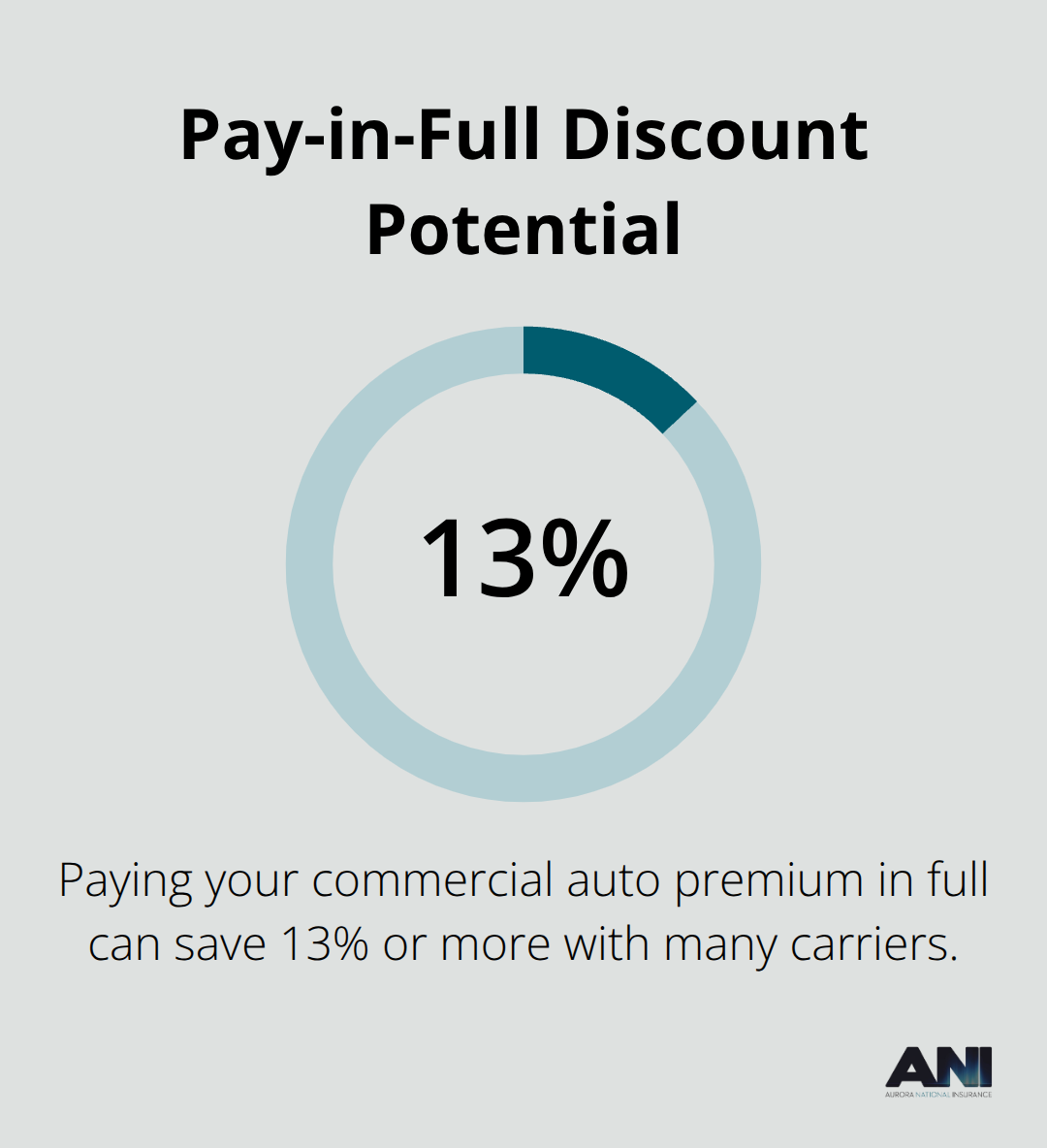
Bundling your commercial auto policy with other business coverages delivers real savings that most Oregon business owners overlook. Commercial auto insurance policies typically have higher liability limits and may cover rented and other nonowned vehicles, including employees’ cars. The savings only materialize if you consolidate policies under one provider rather than spreading coverage across multiple insurers. Beyond bundling, paying your premium in full instead of monthly installments saves 13 percent or more with many carriers.

Percentage savings shown for paying a commercial auto premium in full - Oregon commercial auto policy

Invest in Vehicle Safety and Driver Training

Safety features on your vehicles reduce your premium by lowering theft and collision risk. Anti-lock brakes, daytime running lights, side airbags, and GPS trackers all qualify for rate reductions with most carriers. Defensive driving courses and safety training programs for your drivers provide documented risk reduction that insurers reward with rate reductions. If your fleet operates primarily in secure locations, parking vehicles in a locked lot or indoor garage instead of street parking further reduces your theft risk and qualifies you for lower rates. These specific actions directly impact what you pay each month.

Final Thoughts

Protecting your business with an Oregon commercial auto policy requires balancing legal compliance with practical protection. You now understand Oregon’s mandatory minimums-$25,000 per person and $50,000 per accident for bodily injury, plus $20,000 for property damage-and why most businesses need coverage beyond these floors. Filing deadlines matter; missing the 60-day window after vehicle registration risks suspension of your operating authority.

Your premium depends on factors you can influence. A clean driving record, strategic vehicle selection, and parking in secure locations all reduce what you pay monthly. Bundling your commercial auto policy with other business coverages delivers real savings, and paying in full instead of monthly installments saves 13 percent or more.

Request quotes from multiple carriers using identical coverage limits so you can compare apples to apples. Verify that any agent or insurer holds an active Oregon license before sharing information. Get your instant online quote today and take the first step toward affordable, adequate coverage that protects your business.

The information provided in this blog is for general informational purposes only and does not constitute legal, financial, or insurance advice. Coverage options, terms, and availability may vary. Please consult with a licensed professional for advice specific to your situation.
Artificial intelligence may have been used to generate text and images in some blog articles.

Washington Commercial Auto Coverage: Finding the Right Policy

Running a business in Washington means understanding your commercial auto coverage obligations. State law requires specific liability limits, but the right policy goes beyond minimum requirements.

At Aurora National Insurance, we help business owners navigate these requirements and find coverage that actually fits their operations. This guide walks you through what Washington requires, what affects your rates, and how to select a policy that protects your business.

Understanding Washington Commercial Auto Requirements

State-Mandated Liability Coverage Limits

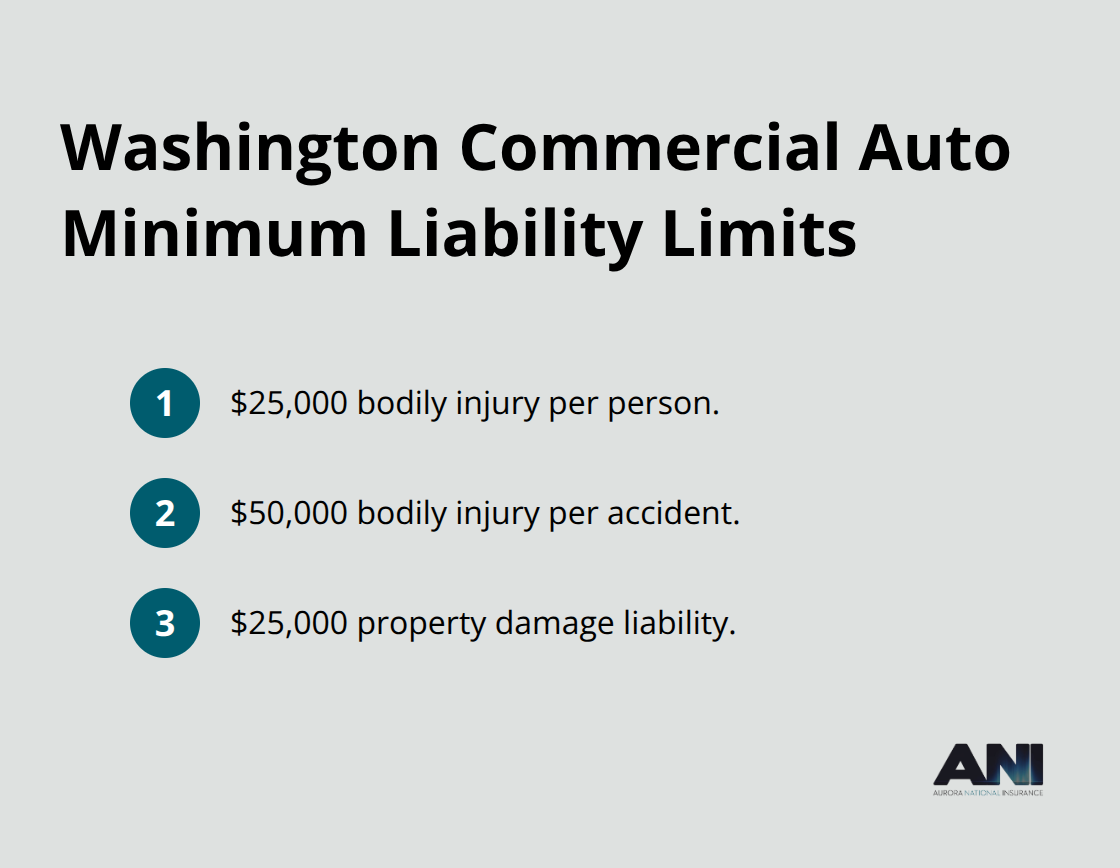
Washington State mandates that all businesses carrying commercial vehicles maintain liability coverage of at least $25,000 per person and $50,000 per accident for bodily injury, plus $25,000 for property damage. These minimums exist because commercial vehicles pose higher risks than personal vehicles. A delivery truck or service van causes significantly more damage in an accident than a sedan, which is why Washington’s minimums are higher than personal auto limits.

Summary of Washington State minimum commercial auto liability limits for businesses - Washington commercial auto coverage

However, these state minimums fall short for most businesses. If your driver causes a serious accident that injures multiple people or damages expensive commercial property, you’ll quickly exceed these limits and face personal liability. Many successful Washington businesses carry $100,000 or $250,000 liability limits instead, and some carry limits as high as $500,000 or $1 million depending on their operations.

Additional Coverage Types Available to Businesses

Beyond liability, you need collision and comprehensive coverage if your vehicles are financed or leased (most loan agreements require this). Collision covers damage from accidents, while comprehensive covers theft, weather, and vandalism. Uninsured motorist coverage protects your drivers and business if someone without insurance causes an accident involving your vehicle.

Commercial general liability is separate from auto coverage and protects against claims that don’t involve vehicle accidents, such as customer injuries at your place of business. This additional layer of protection matters when your business operations extend beyond what happens on the road.

How Coverage Needs Vary by Business Type

A plumbing contractor with service vehicles needs different coverage than a construction company with heavy equipment on job sites. A delivery business operates in different territories and logs different annual mileage than a contractor who uses vehicles primarily for local service calls. Your specific business type, the number of vehicles you operate, and how your drivers use those vehicles all determine what coverage structure actually makes sense for your operation.

These differences mean that comparing policies across carriers requires understanding your own business first. The next section walks you through the specific factors that insurers examine when calculating your rates.

Key Factors That Affect Your Commercial Auto Rates

Vehicle Type and Usage Patterns

Insurers examine vehicle type first because a heavy-duty truck causes more damage in accidents than a sedan, and they price accordingly. A box truck used for deliveries five days a week faces different risk than a contractor’s van that sits idle most days. Usage patterns directly impact your premium because frequent highway driving generates higher accident rates than local deliveries, and seasonal businesses that operate only certain months qualify for lower annual premiums than year-round operators.

Commercial vehicles driven more than 15,000 miles annually face substantially higher premiums than those driven under 10,000 miles. Tracking your actual mileage matters when shopping for quotes because accurate numbers produce accurate rate comparisons.

Driver History and Experience

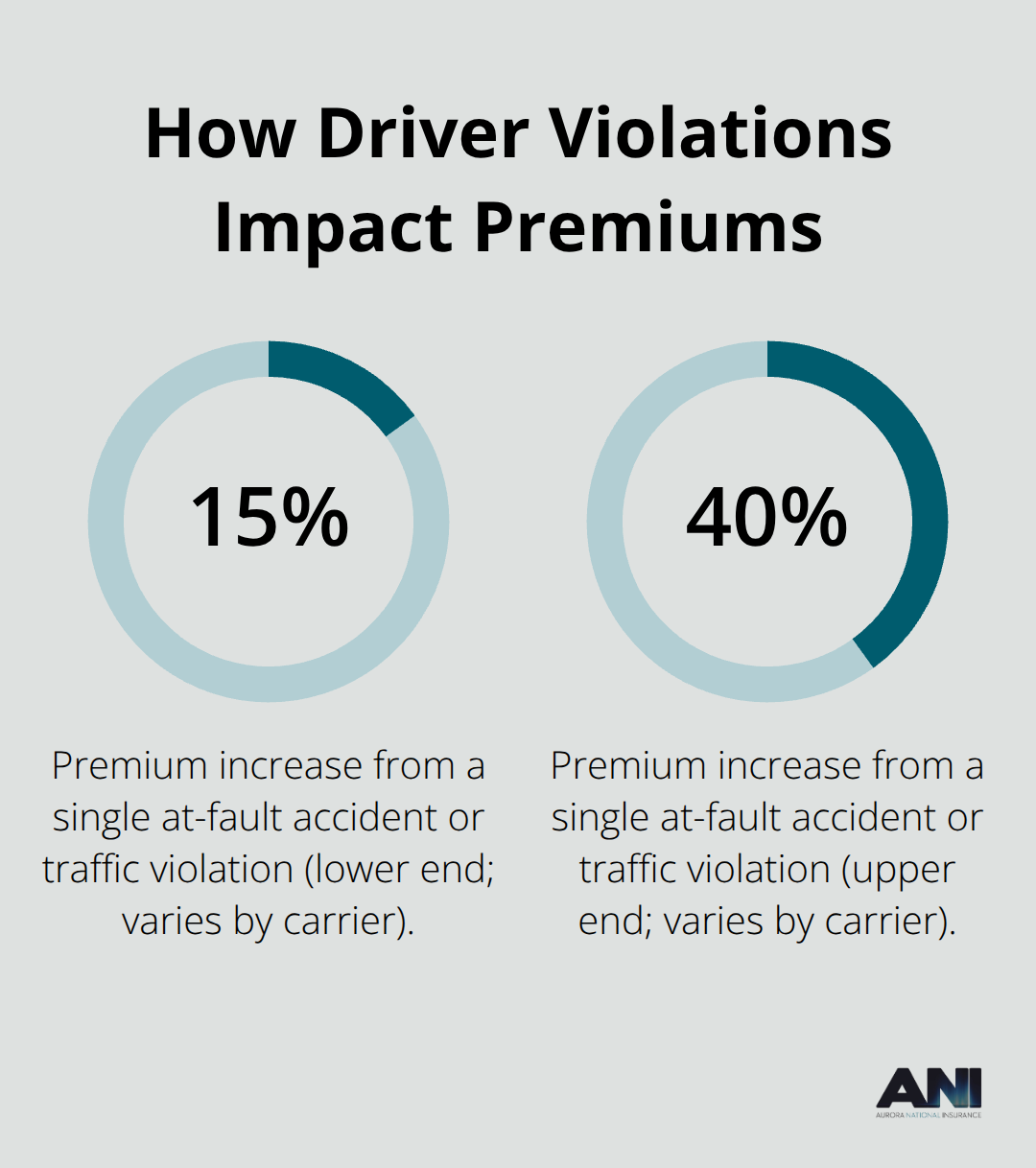
Driver history and experience shape your rates more than most business owners realize. A single at-fault accident or traffic violation can increase premiums by 15 to 40 percent depending on your carrier. Insurers pull motor vehicle records on every driver your business employs, not just the primary operator, which means hiring drivers with clean records directly reduces your costs.

Chart showing premium increases of 15% to 40% from a single at-fault accident or violation

A 25-year-old driver with five years of commercial driving experience pays significantly less than a 19-year-old with a recent speeding ticket, even if both operate the same vehicle the same number of miles. Your hiring decisions directly affect what you pay for coverage.

Territory and Mileage

Territory and mileage combine to create your risk profile because driving primarily in rural Washington areas generates lower premiums than operating in Seattle’s congested urban environment. Insurers weight these factors heavily when calculating your final rate.

Collecting detailed information about your actual driving patterns, vehicle types, and driver records before requesting quotes produces accurate rate comparisons that reveal which carriers offer the best value for your specific operation. This groundwork positions you to evaluate policies that match your business needs.

Finding the Right Commercial Auto Policy for Your Business

Getting multiple quotes from different carriers is the only way to understand what you actually pay for your specific operation, and the differences between carriers can exceed 40 percent for identical coverage. Start with your vehicle information, driver records, and mileage data, then request quotes from at least three carriers that operate in Washington. Most insurers provide online quotes within 24 hours, and comparing actual numbers eliminates guesswork about which policy fits your budget and protects your business adequately. A contractor with two service vans and a clean driving record might pay $1,200 annually with one carrier and $1,680 with another for the same liability limits and deductibles. That $480 difference compounds significantly over time, which is why shopping multiple carriers matters more than settling for convenience.

Assess Your Actual Coverage Needs

Your coverage decisions should reflect your real operations, not what a template suggests. A plumbing service that operates exclusively within a five-mile radius of Spokane needs different limits than a construction company that travels statewide for jobs. If your business regularly works with clients who require proof of specific liability limits before allowing your vehicles on their property, those contractual requirements must drive your coverage selection. Many Washington businesses discover they need higher limits than state minimums only after reviewing client contracts or after discussing their operations with someone who understands commercial risk.

Calculate your potential liability exposure by considering what happens if your driver causes a serious injury or damages expensive property. A single accident injuring multiple people can generate claims exceeding $500,000 in medical expenses alone, which means carrying only the state minimum of $50,000 per accident exposes your business to substantial financial risk. Most successful operations in Washington carry at least $100,000 in liability coverage, and many carry $250,000 or higher depending on their risk profile.

Work with an Agent Who Understands Your Business

An agent who asks detailed questions about your specific business finds better coverage than an online quote system that treats all operations identically. Washington’s diverse geography, from Seattle’s urban congestion to rural eastern Washington, creates different risk profiles that generic online tools miss. A knowledgeable agent identifies coverage gaps you might overlook, such as hired and non-owned auto coverage for situations where employees drive their personal vehicles for business purposes, or uninsured motorist coverage limits that match your liability protection.

An agent reviews your driver hiring practices, vehicle maintenance procedures, and loss history to identify which carriers offer the best rates for your specific situation. This personalized approach typically takes 30 to 45 minutes of conversation but produces quotes that accurately reflect your risk profile and reveal which carriers genuinely offer value for your business. Licensed agents in Washington can represent multiple carriers, which means they compare options across the market rather than pushing a single company’s products.

Compare Coverage Options Across Multiple Carriers

Request quotes that specify identical coverage limits, deductibles, and vehicle information across all carriers you contact. This consistency allows you to compare apples to apples and identify which insurers offer the best value for your operation. Some carriers specialize in specific business types (contractors, delivery services, service professionals), and these specialists often provide better rates than generalist insurers for your particular industry.

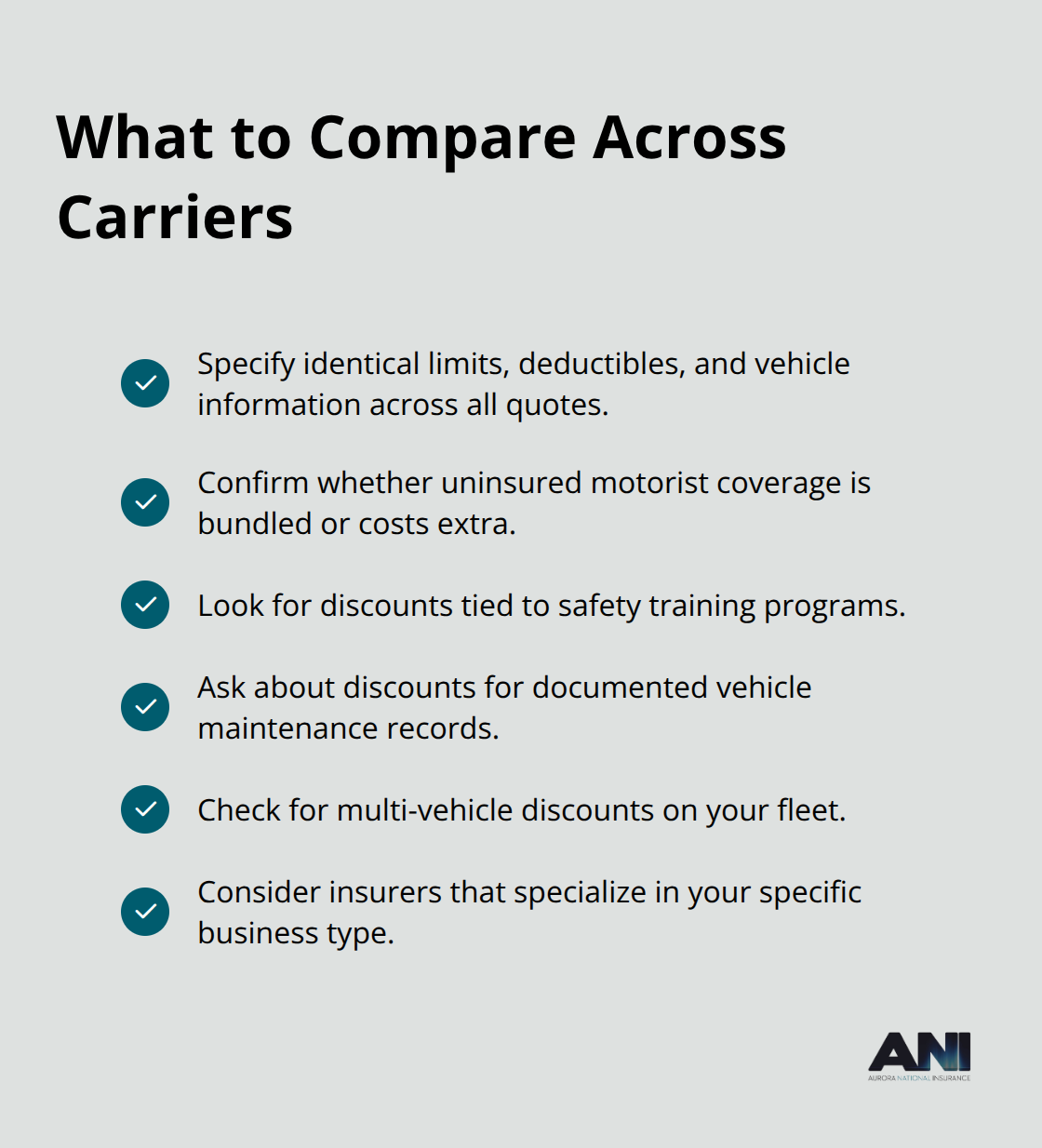
Checklist of key items to compare when evaluating commercial auto quotes - Washington commercial auto coverage

Pay attention to what each quote includes beyond basic liability and collision coverage. Some carriers bundle uninsured motorist coverage at no additional cost, while others charge extra. Some offer discounts for safety training, vehicle maintenance records, or multiple vehicles. These details matter when comparing final premiums across carriers.

Final Thoughts

Washington commercial auto coverage requirements establish a legal baseline, but your actual protection depends on decisions you make beyond state minimums. The $25,000 per person and $50,000 per accident liability limits satisfy legal requirements, yet most businesses operating in Washington need substantially higher limits to protect against realistic accident scenarios. Your specific coverage should reflect your vehicle types, driver records, annual mileage, and the territories where you operate.

Gather your actual business information before requesting quotes from multiple carriers. Document your vehicle details, driver records, annual mileage, and service areas so you can request quotes using identical coverage limits and deductibles across all insurers. This groundwork takes roughly an hour but produces accurate rate comparisons that reveal genuine differences between carriers and help you identify which option fits your budget and protects your business adequately.

Contact an agent who understands Washington’s diverse business landscape and can identify coverage gaps you might miss. At Aurora National Insurance, our licensed agents represent multiple top-rated carriers and deliver tailored comparisons to help you find Washington commercial auto coverage that fits your actual operations and budgets. Get an instant online quote to see what coverage costs for your specific business, or contact our team to discuss your needs with an agent who understands your operation.

The information provided in this blog is for general informational purposes only and does not constitute legal, financial, or insurance advice. Coverage options, terms, and availability may vary. Please consult with a licensed professional for advice specific to your situation.
Artificial intelligence may have been used to generate text and images in some blog articles.
Washington General Liability Guide: Navigating Local Requirements

Running a business in Washington means protecting yourself from liability risks that are specific to your state. General liability insurance isn’t optional-it’s a business necessity that shields you from costly claims.

At Aurora National Insurance, we’ve helped countless Washington business owners understand their coverage needs. This Washington general liability guide walks you through what you need to know to make informed decisions about your protection.

What Your Washington Business Actually Needs to Know About General Liability

General liability insurance protects your business when someone claims you caused them bodily injury, damaged their property, or injured their reputation through your work or operations. This coverage pays for medical expenses, legal defense, settlements, and judgments up to your policy limits. Washington State Department of Labor & Industries requires minimum general liability coverage of $200,000 for public liability and $50,000 for property damage, or a combined single-limit policy of $250,000. If you work with government agencies or large contractors, they demand proof that L&I is listed as the certificate holder on your policy. Most Washington contractors actually carry $1 million per occurrence and $2 million aggregate limits because clients won’t hire you without it.

How Your Industry and Payroll Shape Your Costs

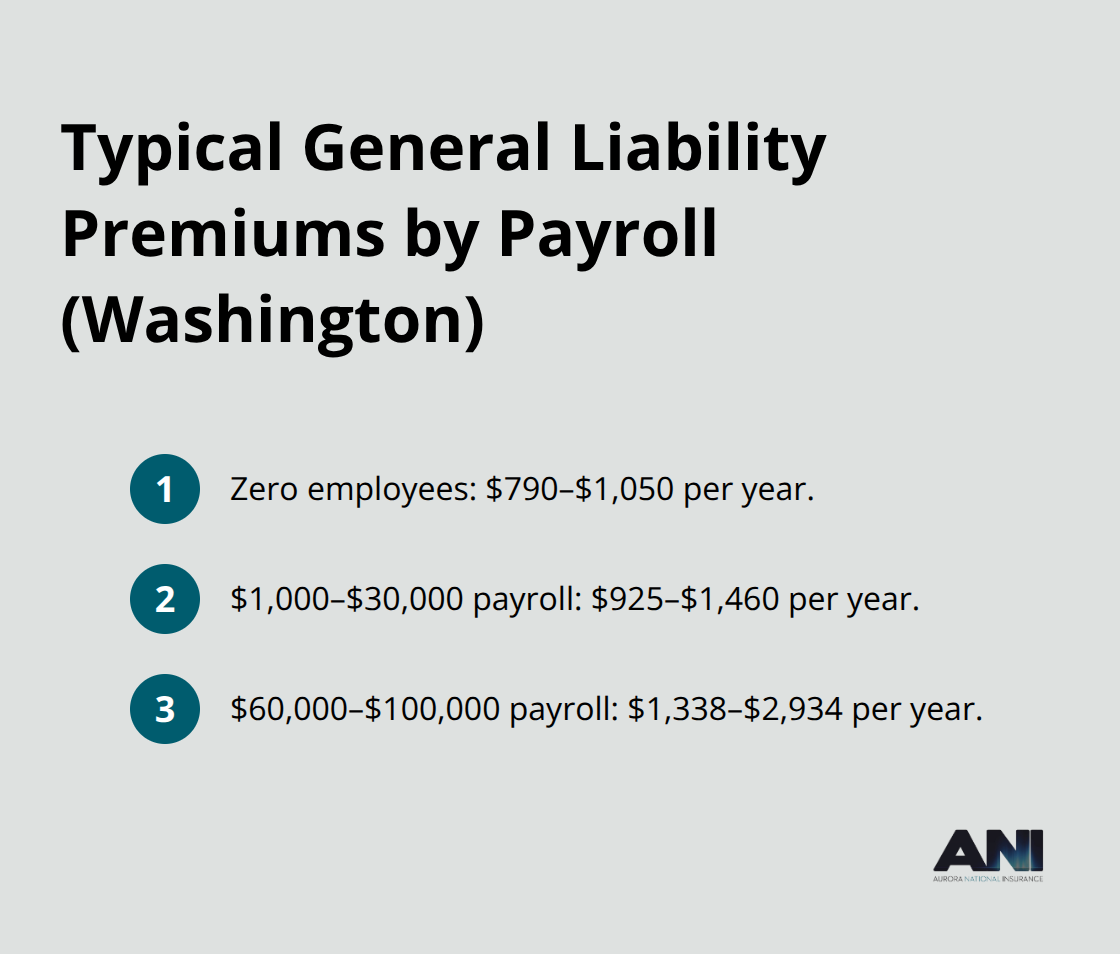
Your industry matters enormously for what you’ll pay and what you actually need. A landscaper faces different risks than an electrician, and your payroll size directly affects your premium. If you have zero employees, you’ll pay roughly $790 to $1,050 annually. With $1,000 to $30,000 in payroll, you’ll face $925 to $1,460 per year. Those numbers jump to $1,338 to $2,934 annually if your payroll reaches $60,000 to $100,000.

Three payroll tiers with their corresponding annual general liability premium ranges in Washington. - Washington general liability guide

General contractors, electricians, plumbers, roofers, HVAC technicians, painters, drywall specialists, concrete workers, landscapers, and carpenters all operate in Washington’s competitive construction market where general liability isn’t negotiable.

Understanding What Coverage Actually Protects

Your policy covers bodily injury claims when someone gets hurt because of your work, property damage when you accidentally damage a client’s building or belongings, medical payments up to about $5,000 for minor injuries, and personal and advertising injury from accusations of slander or copyright infringement. The coverage applies to work you performed during the policy period and continues protecting you after project completion if a claim arises within the policy terms. A roofing job completed in March could generate a leak claim in November, and your policy still covers it. Occurrence-based policies are strongly preferred over claims-made policies because they protect you for work done during the policy period regardless of when the claim is filed. When a claim happens, your insurer handles the legal defense and any settlement up to your limits, and you only pay the deductible.

Getting Coverage Active and Verified

Many carriers offer same-day general liability coverage for Washington businesses. Once your policy activates, you can request a Certificate of Insurance to provide to clients immediately. Your premium gets verified through a premium audit that checks your actual payroll and revenue to confirm you’re paying the correct rate. If your actual numbers differ from your estimate, your premium adjusts accordingly. This transparency prevents surprise bills and ensures you’re not overpaying or underpaying for your risk profile. With the right coverage in place, you’re ready to address the specific risks that Washington’s climate and business environment create for your operation.

Common Risks and Claims in Washington

Weather Creates Persistent Liability Exposures

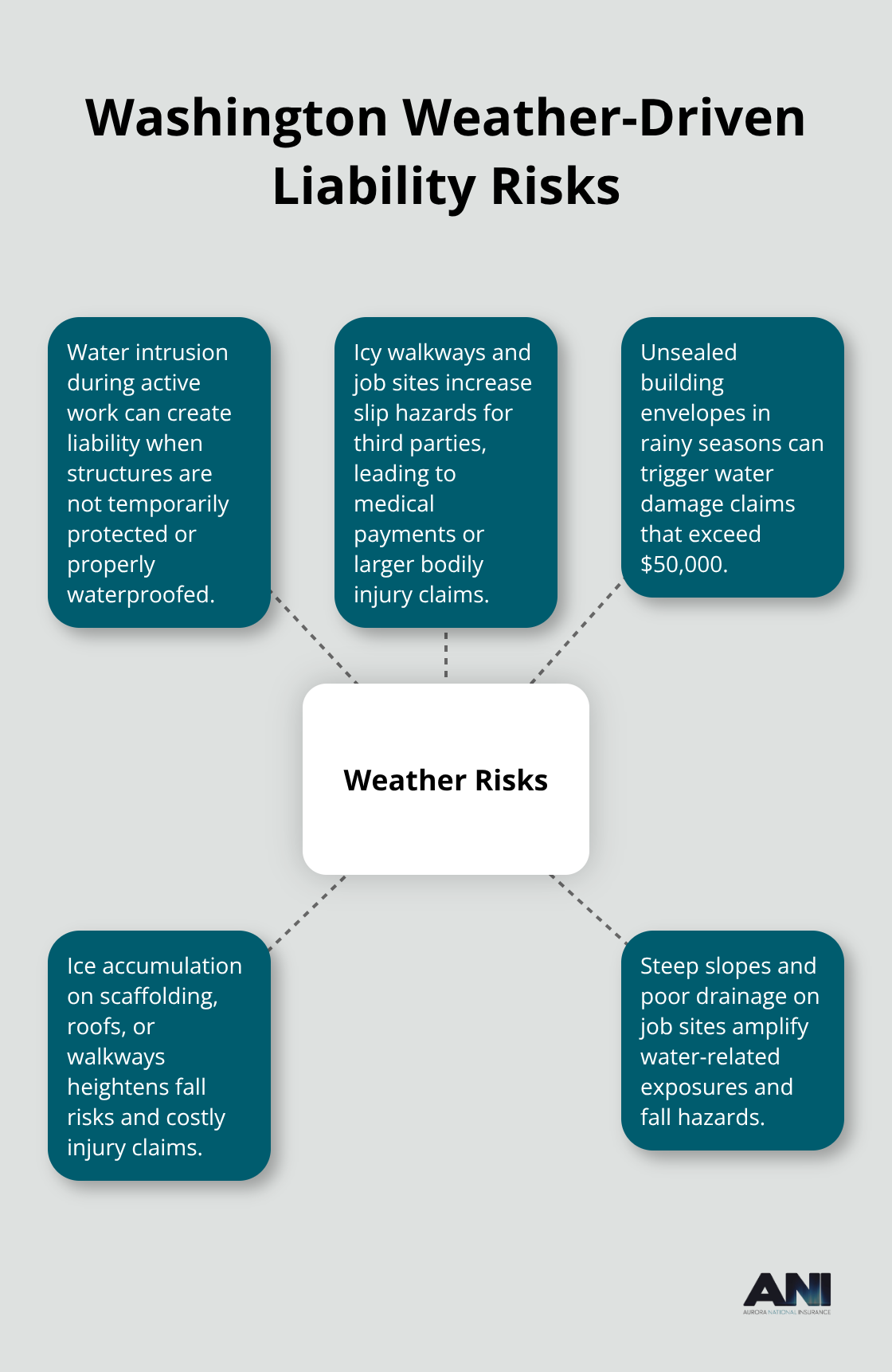
Washington’s weather patterns and construction environment generate specific liability exposures that show up repeatedly in claims data. Rain and snow don’t just cause property damage-they create liability situations when water intrusion happens during your work, when ice makes walkways hazardous at job sites, or when you fail to properly waterproof structures before handing them over to clients. A contractor who leaves a building envelope unsealed during the rainy season faces water damage claims that can exceed $50,000 easily. Winter weather compounds this because ice accumulation on scaffolding, roofs, or walkways leads to fall injuries that trigger bodily injury claims.

Hub-and-spoke chart showing how Washington weather and terrain create recurring liability exposures for businesses and contractors.

Water damage and freezing claims affect 2.8 percent of insured homes, with such losses representing a significant portion of weather-related claims. The state’s terrain also creates challenges-steep slopes in residential areas increase fall risks during construction, and poor drainage on job sites multiplies water-related exposures.

Third-Party Injuries Generate Significant Claims

Third-party injury claims happen constantly on Washington job sites and at business locations. Someone slips on a wet floor at your retail shop, gets hit by falling materials during construction, or suffers heat-related illness at an outdoor event your company manages. Medical payments coverage up to $5,000 handles minor incidents quickly, but serious injuries generate settlements well beyond that threshold. A single fall from scaffolding can cost $100,000 or more in medical care and lost wages. Your general liability policy covers investigation, legal defense, and settlement costs, protecting your business from financial devastation when these incidents occur.

Property Damage Claims Expose Underinsured Businesses

Property damage claims follow similar patterns to injury claims-you accidentally damage a client’s electrical system while running new wiring, water from your work damages a neighbor’s foundation, or your equipment punctures their driveway. The difference between adequate coverage and underinsurance shows up immediately when a claim arrives. A contractor carrying only the state minimum of $250,000 combined single-limit coverage faces serious financial exposure on any significant claim. This reality explains why Washington clients demand proof that you carry $1 million per occurrence coverage. Without occurrence-based coverage, you face gaps in protection for work completed years earlier that generates claims after your policy expires (a problem that claims-made policies create but occurrence-based policies eliminate).

Coverage Gaps Create Long-Term Exposure

Your insurance handles investigation, legal defense, and settlement costs, but only if your limits match the actual risk. Work you completed in March could generate a water intrusion claim in November, and your policy still covers it if you maintain occurrence-based protection. The seasonal nature of Washington construction means claims often arrive months or years after project completion. Contractors who switch to claims-made policies or let coverage lapse between jobs discover too late that old projects no longer have protection. Understanding these specific Washington risks helps you select coverage that actually protects your operation rather than leaving gaps that expose your business to financial loss. As you evaluate your industry-specific exposures, the next step involves comparing how different carriers price these risks and which coverage options best match your actual business operations.

How to Choose the Right Coverage for Your Washington Business

State Minimums Don’t Match Market Reality

The gap between state minimums and what Washington clients actually demand means you need a strategic approach to coverage selection. State law requires $200,000 public liability and $50,000 property damage, but most Washington contractors carrying only these limits lose jobs regularly because clients won’t hire them. The market reality is that $1 million per occurrence and $2 million aggregate coverage has become the baseline expectation across general contracting, electrical work, plumbing, roofing, and landscaping trades. Your first step involves honest assessment of what your specific work generates as risk exposure.

Assess Your Industry-Specific Risks and Payroll

A painter working on interior residential projects faces fundamentally different hazard profiles than a concrete contractor working on commercial building foundations or a roofer installing systems on multi-story structures. Your payroll size directly affects premium costs, so a solo operator with zero employees will pay $790 to $1,050 annually while a crew with $60,000 to $100,000 in payroll faces $1,338 to $2,934 per year. Industry classification matters enormously because underwriters price risk based on historical claims data for your specific trade. Request quotes from at least three carriers that specialize in your industry rather than relying on one company’s pricing.

Compare Quotes and Policy Structures

When you receive quotes, compare not just the premium but the policy structure, deductible options, and whether carriers offer occurrence-based or claims-made coverage. Occurrence-based policies provide substantially better protection for Washington contractors because claims filed years after project completion still have coverage if the work occurred during your policy period. Different carriers view your particular operation differently-what one company charges another may price significantly higher or lower based on their underwriting approach and claims experience with your trade.

Work with Local Agents Who Understand Washington Markets

Local agents who understand Washington’s specific business environment, weather patterns, and client requirements give you advantages that online quote systems cannot match. An agent familiar with Washington construction knows which carriers offer the fastest coverage activation, understands the state’s premium audit process, and can explain why certain industries face higher rates in coastal areas versus inland regions. An experienced local agent identifies coverage gaps you might miss on your own, such as products and completed operations exposure that protects you when work you finished months earlier generates claims.

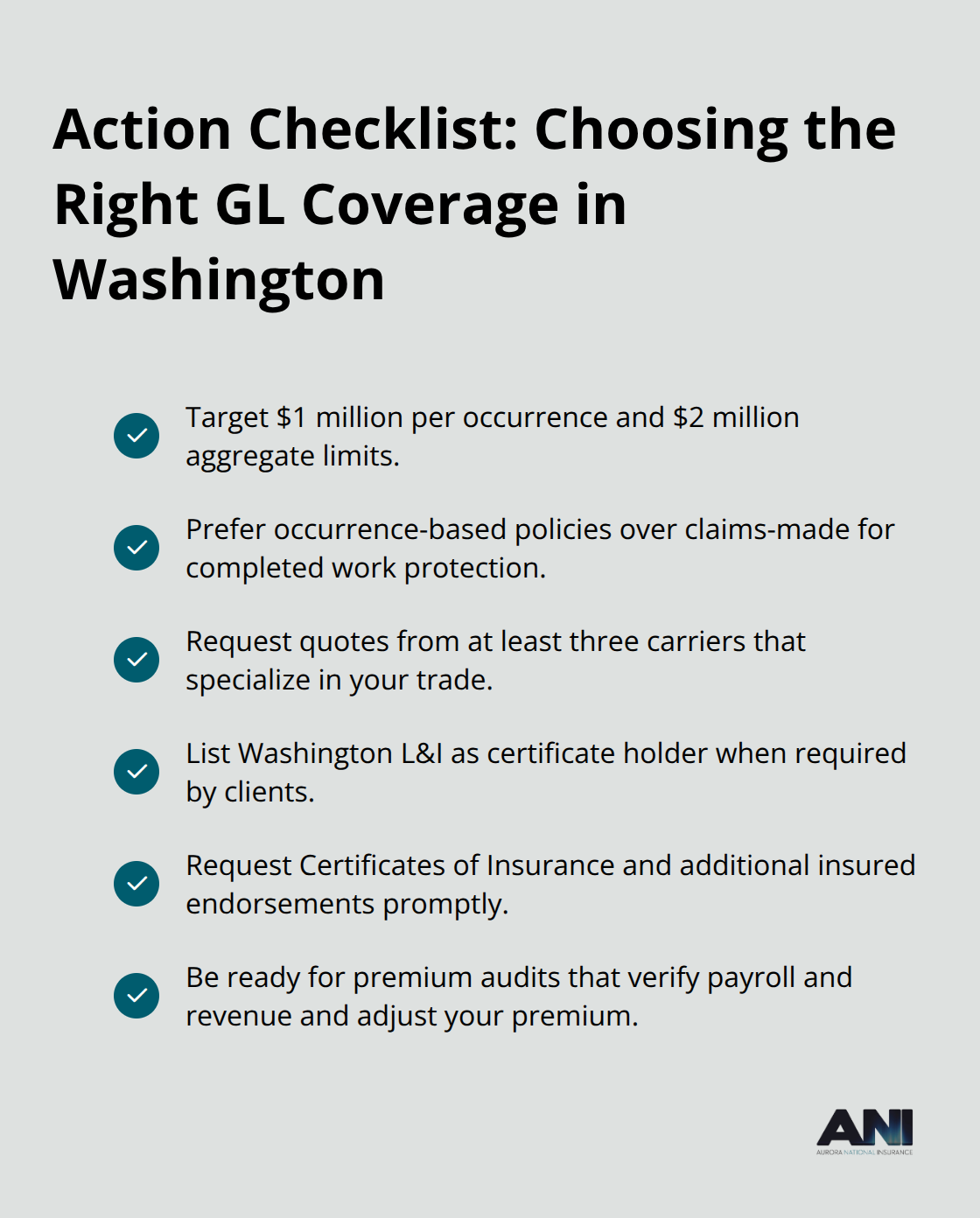
Checklist of key actions for selecting general liability coverage that meets Washington market expectations. - Washington general liability guide

They also handle the practical details like ensuring L&I gets listed as certificate holder on your policy and managing premium audits that adjust your rate based on actual payroll. When you need additional insured endorsements because a client requires it, a local agent secures these quickly without delaying your job start. The difference between selecting coverage online and working with someone who understands Washington markets shows up immediately when claims happen or when you discover mid-project that your coverage doesn’t match what your contract actually requires.

Final Thoughts

Washington general liability insurance protects your business from the specific risks that operating in this state creates. The gap between state minimums and what clients actually demand means you need coverage that reflects market reality, not just legal requirements. Most Washington contractors carry $1 million per occurrence and $2 million aggregate limits because that’s what keeps them competitive and hired.

Your payroll size, industry classification, and the weather patterns unique to your region all shape what you’ll pay and what protection you actually need. Request quotes from multiple carriers that understand your specific trade rather than accepting the first number you receive. The difference between carriers can be substantial, and occurrence-based policies provide protection that claims-made policies cannot match for Washington contractors.

We at Aurora National Insurance help Washington business owners find the right coverage at competitive prices. Our licensed agents deliver tailored comparisons and expert consultation to match your specific operation with protection that actually works. Get an instant online quote and discover how proper general liability coverage protects your Washington business from the claims that matter most.

The information provided in this blog is for general informational purposes only and does not constitute legal, financial, or insurance advice. Coverage options, terms, and availability may vary. Please consult with a licensed professional for advice specific to your situation.
Artificial intelligence may have been used to generate text and images in some blog articles.
Alaska Home Insurance Claims: Navigate Your Claim with Confidence

Filing an Alaska home insurance claim can feel overwhelming, especially when you’re dealing with property damage or loss. The process involves multiple steps, timelines, and documentation requirements that many homeowners don’t fully understand.

At Aurora National Insurance, we’ve helped countless Alaskans navigate their claims successfully. This guide walks you through what to expect, common pitfalls to avoid, and practical strategies to maximize your settlement.

What Happens After You File Your Claim

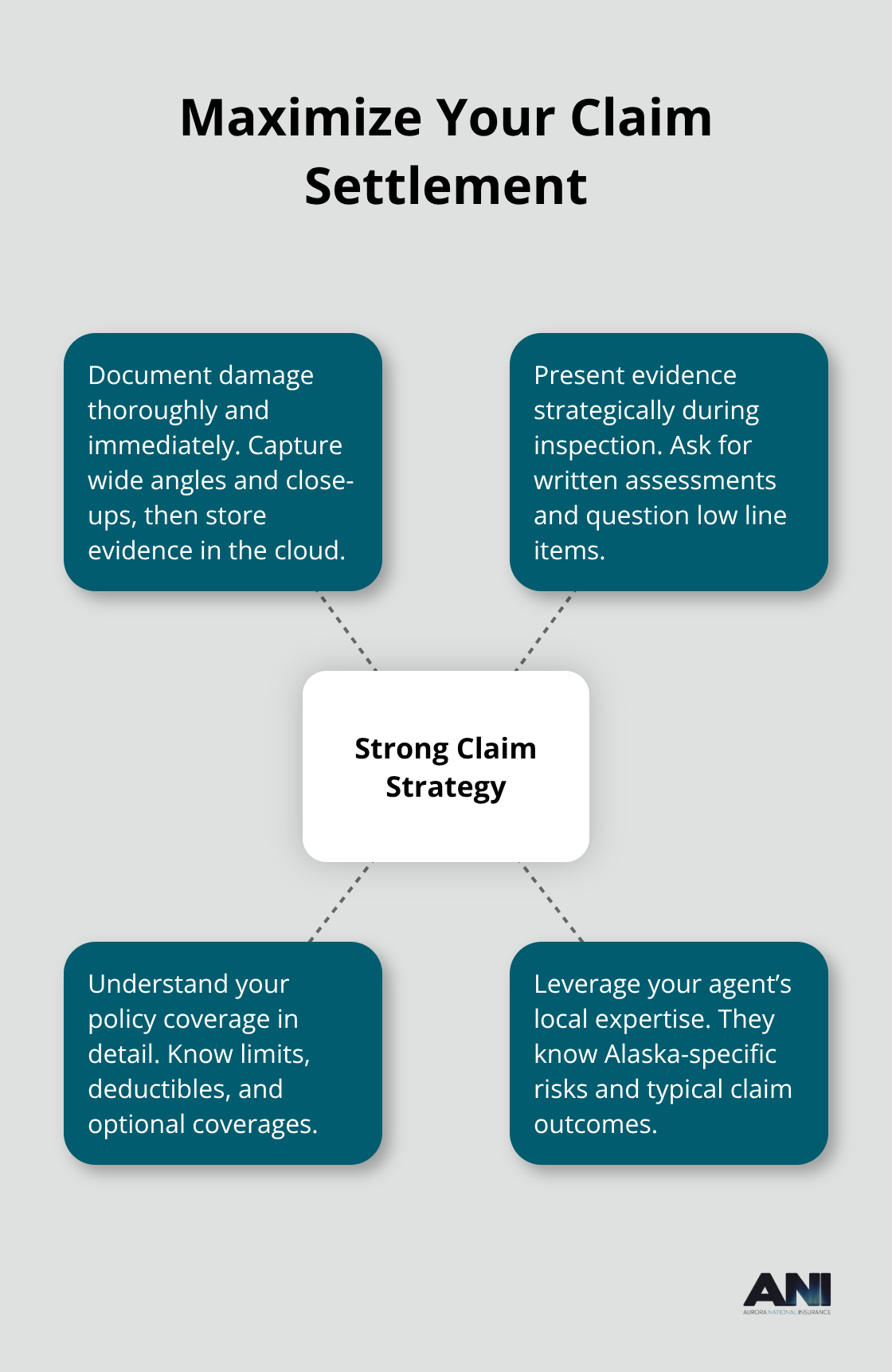
The first 48 hours after you file your claim are critical. Contact your insurer immediately and provide a detailed account of what happened, including the date, time, and nature of the damage. Alaska’s harsh winters mean frozen pipes, ice dams, and heavy snow damage claims are common, and you’ll speed up settlements by documenting these issues promptly. Take photos and videos of all damage before you clean up or make temporary repairs. Create a written list of damaged items with descriptions and approximate values, then store these records digitally in cloud storage so you can access them even if your home is uninhabitable. Don’t throw away damaged materials until the adjuster inspects them, as they’ll need to see the actual loss to assess your claim properly.

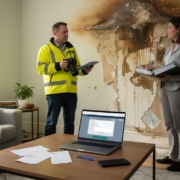
Meeting Your Adjuster

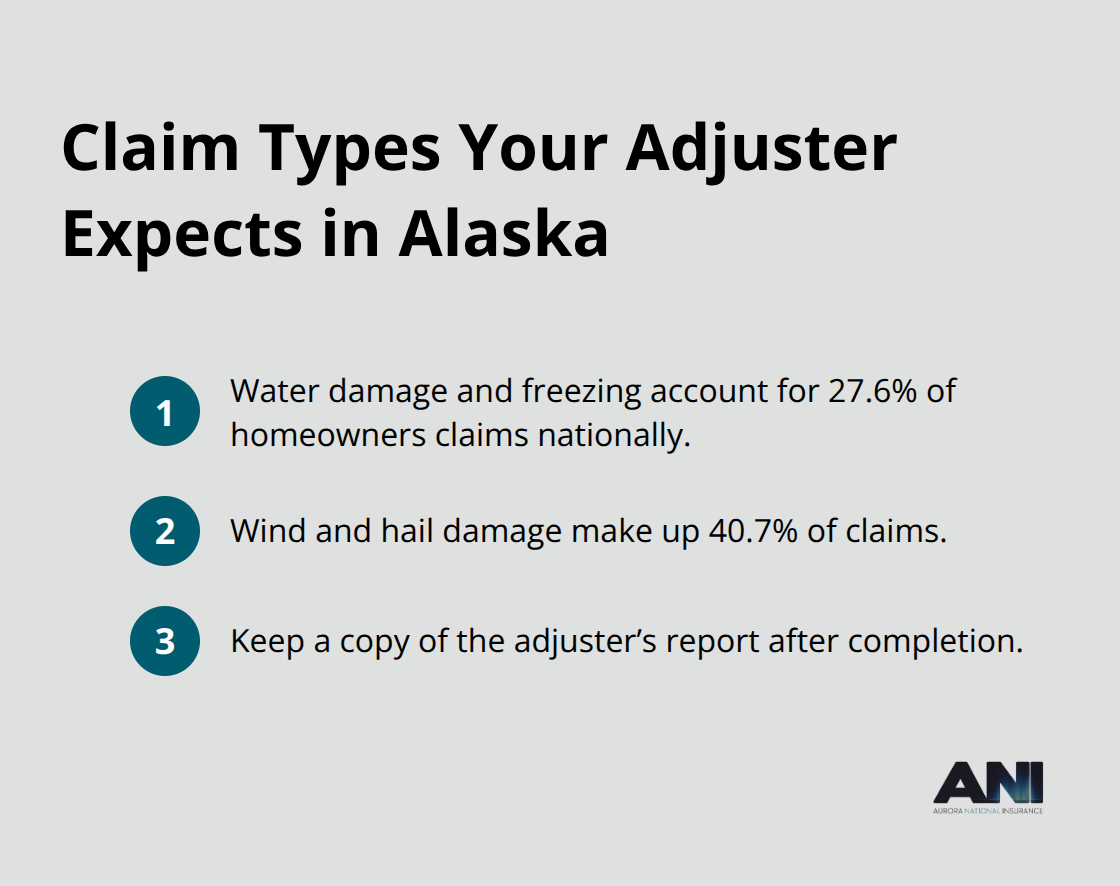
Your insurance company will assign a claims adjuster to your case, typically within 24 to 72 hours depending on claim volume. This adjuster investigates the claim, verifies coverage, and determines the payout amount. Prepare for the inspection by having your policy documents ready, your photo evidence organized chronologically, and a detailed list of damaged items with receipts or proof of purchase when available. Walk through the damage with your adjuster and point out specific issues-don’t assume they’ll catch everything. Ask questions about coverage limits, deductibles, and what the adjuster will include in their report. Water damage and freezing account for roughly 27.6% of homeowners claims nationally, so if your damage involves burst pipes or ice dam damage, clearly explain the sequence of events. Wind and hail damage make up about 40.7% of claims, so document wind speeds or hail size if relevant. Keep a copy of the adjuster’s report once they complete it.

Key claim types and action items during inspection for Alaska homeowners - Alaska home insurance claims

Understanding Your Timeline

Most claims in Alaska resolve within 30 to 45 days, though complex claims involving structural damage or multiple coverages can take longer. The adjuster’s inspection typically happens within the first week, followed by their written report within 10 to 14 days. Once you receive the adjuster’s estimate, you have time to review it carefully and request additional documentation if you disagree with their assessment. If your claim is denied or underpaid, you have the right to appeal within a specific timeframe outlined in your policy. The Alaska Division of Insurance provides resources to help you understand your rights and file complaints if you believe your claim was handled unfairly. Don’t delay in filing your appeal if needed-insurance companies have deadlines for responding to disputes, and missing your window can limit your options. Stay in regular contact with your claims adjuster and follow up in writing if they miss promised deadlines, creating a paper trail of your communication.

What Comes Next

Once your adjuster submits their report and estimate, you move into the settlement phase. This is where many homeowners miss opportunities to maximize their payout. You’ll want to carefully review the adjuster’s findings against your own documentation and the actual damage you sustained.

Why Claims Get Denied or Delayed

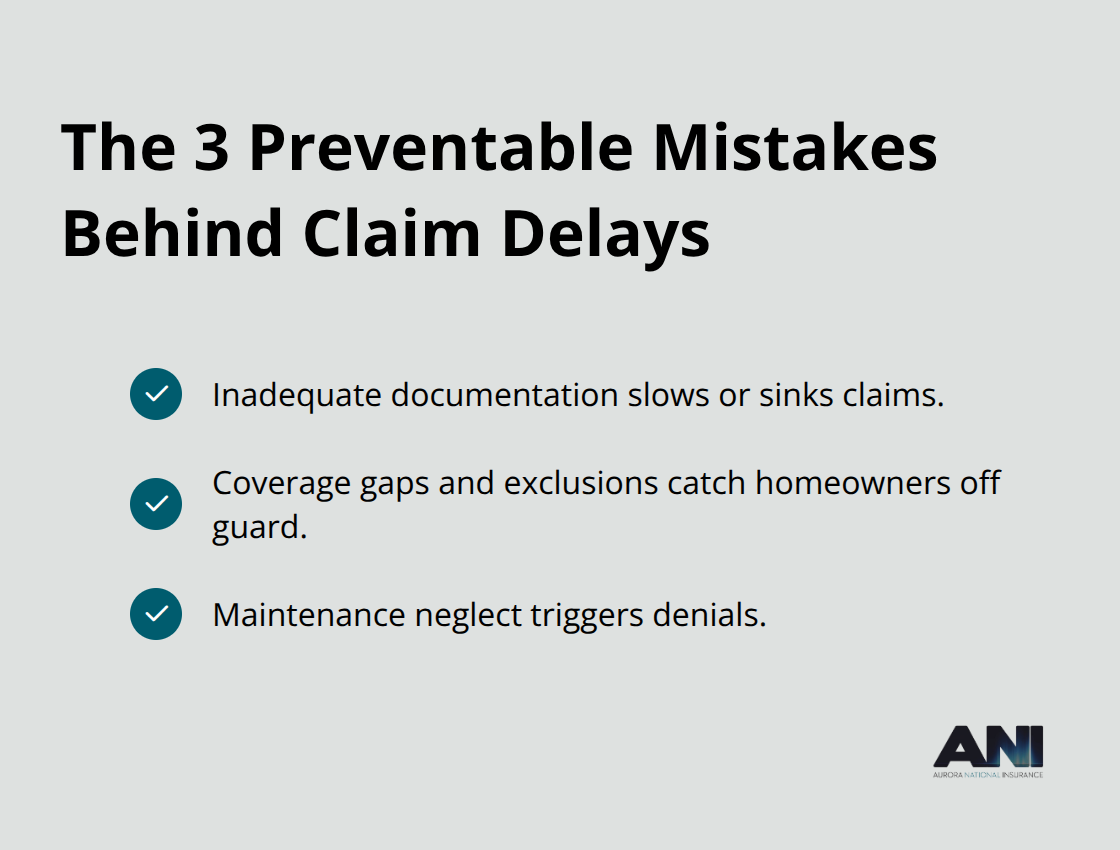
Most Alaska homeowners assume their claim will move smoothly once they file it. The reality differs significantly. According to ISO data, about 5.5% of insured homes filed claims in 2022, but not all of those claims paid out without friction. The gap between filing and settlement stems from three preventable mistakes that you can avoid.

Top preventable mistakes that lead to denied or delayed home insurance claims

Documentation Failures Cost You Money

Inadequate documentation kills claims faster than almost anything else. When you photograph damage, shoot wide angles that show the overall destruction, then close-ups of specific damage. If pipes froze and burst, photograph the water damage on walls and floors, the broken pipe itself, and any damaged belongings. Write down dates, times, and what triggered the damage. Insurance adjusters review hundreds of claims yearly. The ones that move quickly have clear photo timelines, itemized lists with approximate values, and written explanations of how the damage occurred.

Without these materials, adjusters request additional documentation, which delays your settlement by weeks. You control this outcome. Take action immediately after damage occurs-photograph everything before you clean up or make temporary repairs. Create a written list of damaged items with descriptions and approximate values, then store these records digitally in cloud storage so you can access them even if your home is uninhabitable. Don’t throw away damaged materials until the adjuster inspects them, as they need to see the actual loss to assess your claim properly.

Coverage Gaps and Exclusions Surprise Homeowners

Policy exclusions and coverage gaps catch homeowners off guard constantly. Standard homeowners policies do not cover flood damage under any circumstances. If water entered your home from rising ground water, a swollen river, or heavy precipitation pooling around your foundation, that qualifies as flood damage and requires separate flood insurance through the National Flood Insurance Program operated by FEMA. Wind and hail damage is covered, but earthquake damage is not. Mold resulting from water damage may or may not be covered depending on your specific policy language.

Before filing a claim, pull out your actual policy document and read the exclusions section. Call your agent and ask specifically what is not covered. This prevents wasted time pursuing claims for excluded perils. Water damage and freezing are common homeowners claims in Alaska’s climate, so understanding your coverage for these events matters tremendously.

Maintenance Neglect Triggers Denials

The third reason claims get denied involves your home’s maintenance history. Insurance companies deny claims when they discover that negligence or lack of maintenance caused or worsened the loss. If your roof was visibly deteriorating for years and a storm caused water damage, the insurer may argue you failed to maintain the property. If burst pipes damaged your home because you didn’t insulate exposed pipes in an unheated crawlspace during Alaska’s brutal winters, denial is likely. If mold grew unchecked because you ignored a slow roof leak for months, the claim gets denied.

The insurer’s position is straightforward: you had a duty to maintain your property reasonably. Document your maintenance efforts. Keep receipts from roof repairs, gutter cleaning, pipe insulation work, and HVAC servicing. Take photos of routine maintenance tasks. If damage occurs and the insurer questions maintenance, you have evidence showing you acted responsibly. In Alaska, pipe damage represents your biggest exposure. Insulate pipes in unheated areas, open cabinet doors under sinks on extremely cold nights to allow warm air circulation, and keep your home heated to at least 55 degrees even when you’re away. These steps prevent claims entirely and protect you if damage somehow still occurs.

Understanding what causes denials and delays puts you in control of your claim outcome. The next section shows you exactly how to organize your evidence and present it in ways that maximize your settlement amount.

How to Maximize Your Claim Settlement

Document Damage Thoroughly and Immediately

The moment damage occurs, you must act. Your adjuster will base their payout on the strength of your evidence, not on what you remember weeks later. Photograph wide angles that show the overall damage to each affected area, then shoot close-ups of specific damage points. If a pipe burst and flooded your kitchen, photograph the water pooling on the floor, the broken pipe connection, the damaged cabinets, and the ruined items inside.

Document your damage with photographs and detailed descriptions by organizing them logically. Store these files in cloud storage immediately so they survive even if your home becomes uninhabitable. Don’t throw away damaged materials until the adjuster inspects them-they need to see the actual loss to assess your claim properly.

Present Evidence Strategically During Inspection

When the adjuster inspects your property, walk them through the damage systematically and point out details they might miss. Ask them to explain their assessment in writing and request clarification on any line items that seem low. Don’t accept their initial estimate if you believe it undervalues your loss, especially for high-cost items like appliances or electronics.

According to ISO data, fire and lightning claims average around $83,991 per claim while water damage averages $13,954, so the type of damage significantly affects settlement amounts. If your estimate seems inconsistent with these benchmarks, push back and provide additional documentation supporting higher values. This approach often results in higher payouts without requiring formal appeals.

Understand Your Policy Coverage in Detail

Your policy document is your contract with the insurance company, and most homeowners never read the coverage section thoroughly. Pull out your actual policy and identify your dwelling coverage limit, personal property limit, liability limit, and deductible. Note any optional coverages you purchased like replacement cost coverage for personal property or water backup coverage.

Call your agent and ask them to walk you through what your policy covers and what it excludes specifically. Many Alaskans discover too late that their policy doesn’t cover flood damage or that their personal property coverage applies only actual cash value rather than replacement cost, which pays significantly less for older items. If your policy has replacement cost coverage for personal property, that coverage pays to replace lost or damaged belongings with brand-new items after a covered loss, which dramatically increases settlements for older possessions.

Leverage Your Agent’s Local Expertise

Work with your agent throughout the claims process, not just when you’re shopping for coverage. They can advocate on your behalf with the adjuster, explain coverage questions that arise during the investigation, and help you understand appeal options if your claim gets denied or underpaid. Your agent has relationships with adjusters and knows how claims typically resolve in Alaska’s specific climate and market.

That local expertise matters when you’re fighting for a fair settlement. An agent familiar with Alaska’s winter risks (frozen pipes, ice dams, heavy snow damage) understands how adjusters evaluate these common claims in your region. They can point out documentation gaps before they delay your settlement and recommend additional evidence that strengthens your position with the insurance company.

Core tactics to strengthen your Alaska home insurance claim - Alaska home insurance claims

Final Thoughts

Filing Alaska home insurance claims successfully requires three actions you control completely. Document damage immediately with photographs and written descriptions stored in cloud storage before you clean up or make repairs. Understand your policy coverage by reading your actual policy document and asking your agent to clarify what is and isn’t covered. Work actively with your claims adjuster by organizing evidence chronologically, asking questions during inspections, and pushing back if estimates seem low compared to actual replacement costs.

These steps transform Alaska home insurance claims from overwhelming experiences into manageable processes. Your documentation quality, policy knowledge, and communication directly influence your settlement amount. Homeowners who take these actions consistently receive higher payouts and faster resolutions than those who assume the process will work itself out.

Local Alaskan expertise matters tremendously when navigating claims in our state’s unique climate. Adjusters and agents familiar with frozen pipes, ice dams, and heavy snow damage understand how to evaluate these common losses properly. Connect with our Anchorage-based team to access agents who understand Alaska’s insurance landscape completely and can advocate for fair settlements when damage strikes your home.

The information provided in this blog is for general informational purposes only and does not constitute legal, financial, or insurance advice. Coverage options, terms, and availability may vary. Please consult with a licensed professional for advice specific to your situation.
Artificial intelligence may have been used to generate text and images in some blog articles.
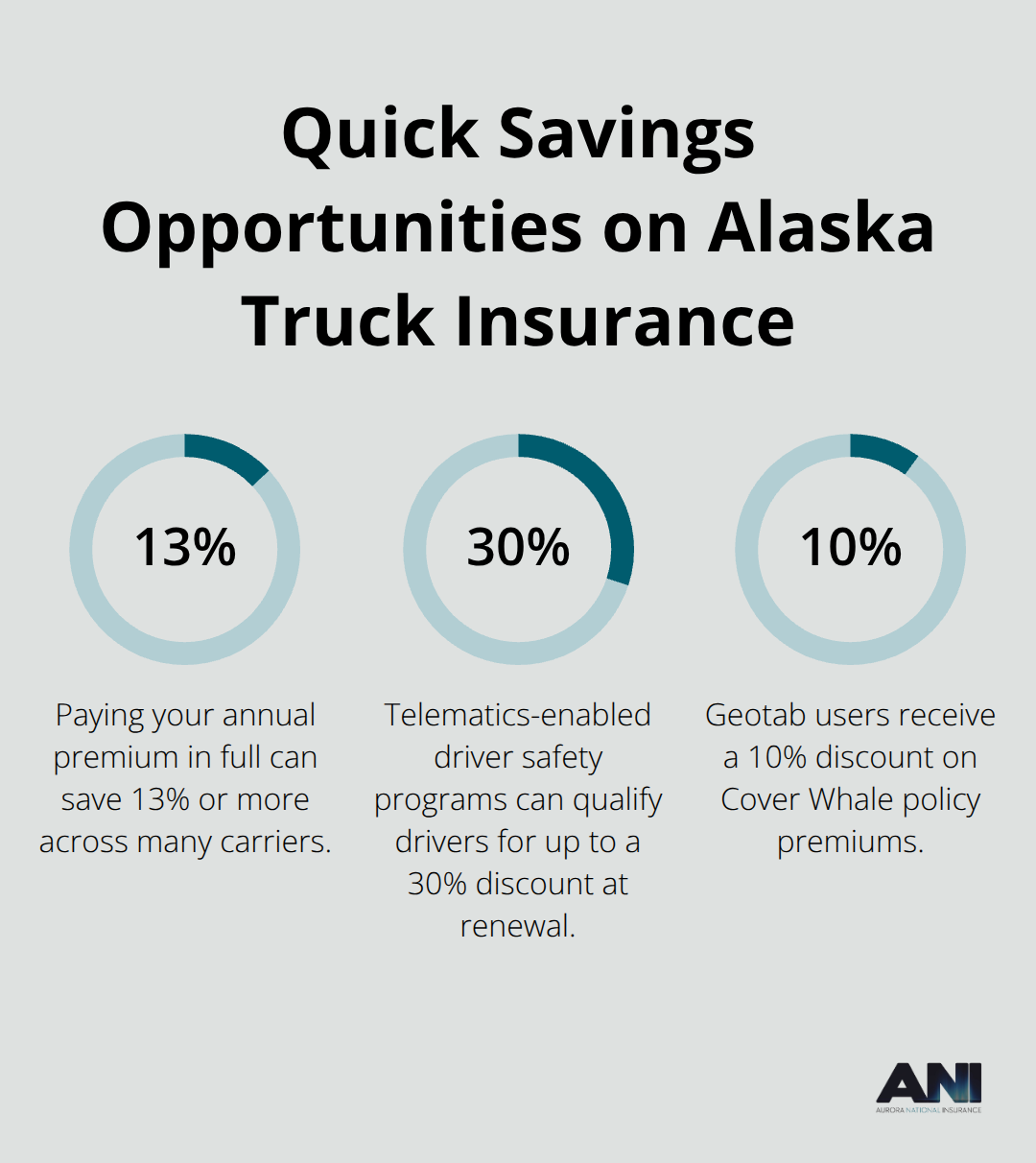
Washington Landlord Property Policy: Protecting Rental Assets

Rental properties in Washington generate steady income, but they also expose you to risks that standard homeowners insurance won’t cover. A Washington landlord property policy is specifically designed to protect your investment from property damage, liability claims, and lost rental income.

At Aurora National Insurance, we help landlords across Washington understand exactly what coverage they need. This guide walks you through the essentials of landlord insurance so you can make informed decisions about protecting your assets.

What Your Landlord Policy Actually Covers

A landlord property policy in Washington protects three critical areas that standard homeowners insurance ignores. The building structure itself-the walls, roof, foundation, electrical systems, and plumbing-forms the first layer of protection. When a covered loss like fire, wind, or theft damages these elements, your policy pays for repairs or replacement.

Infographic showing the three core protections in a Washington landlord policy: structure, loss of rental income, and liability. - Washington landlord property policy

Loss of rental income coverage reimburses you for lost rent when the property becomes uninhabitable due to a covered event. This matters enormously in Washington’s high-rent markets; two-bedroom rentals in Seattle and Bellevue exceed $2,000 per month, so losing even one month of income creates real financial strain. Liability coverage forms the third layer, protecting you if a tenant or visitor is injured on the property and sues. According to the Washington State Office of the Insurance Commissioner, average liability claims by landlords exceeded $22,300 in 2022, making this protection non-negotiable.

Dwelling and Property Damage Protection

Your policy covers the rental structure and permanent fixtures attached to it, including the roof, foundation, walls, built-in appliances, and permanently installed systems like HVAC and plumbing. Most Washington landlords choose either a DP-2 or DP-3 form. A DP-2 policy covers broad perils and typically costs about 15 to 25 percent less than a DP-3, but a DP-3 offers all-risk protection and is especially popular for newer or urban properties where replacement costs matter most. If your property sits in a flood zone (more than 175,000 structures in Washington occupy mapped floodplains), standard policies exclude water damage, so you’ll need a separate flood endorsement or NFIP coverage. Earthquake endorsements are equally important; Cascadia faces a 10 to 15 percent chance of a magnitude 9.0 event within 50 years, yet standard policies exclude earthquake damage entirely. Upgrading features like fire-rated roofing or seismic retrofits can reduce premiums by 5 to 10 percent while lowering your actual loss exposure.

Income Protection When Tenants Cannot Occupy

Loss of rental income coverage reimburses your lost rent during repairs after a covered loss. If a fire makes the unit uninhabitable for three months, your policy covers the rent you would have collected during that period. This protection proves especially valuable if you depend on rental income to cover the mortgage or other expenses. The coverage amount should equal your monthly rent multiplied by the number of months you estimate repairs could take-typically six to twelve months for major losses. Many landlords underestimate this protection and set limits too low, then face a gap between actual lost income and what the policy pays. Set your Loss of Use limit based on realistic repair timelines for your specific property, not optimistic assumptions about quick turnarounds.

Liability and Medical Payments Coverage

Liability coverage protects you when someone is injured on your property and holds you responsible. If a tenant slips on icy steps and breaks an arm, or a visitor is bitten by an animal, liability covers medical costs, legal fees, and court judgments up to your policy limit. Most Washington landlords carry between $100,000 and $300,000 in liability limits; higher limits are available and cost relatively little extra. Medical payments coverage operates separately and covers immediate medical expenses for injuries on the property without requiring fault, capping at $1,000 to $5,000 depending on your policy. This coverage does not apply to you or regular residents, only to guests and visitors. Requiring tenants to carry renter’s insurance with at least $100,000 in liability shifts some responsibility for their belongings to them and reduces disputes after losses.

Choosing Between DP-2 and DP-3 Forms

The form you select determines both your premium and your protection level. DP-2 policies offer broad coverage at a lower cost, making them suitable for landlords with moderate risk tolerance and established properties. DP-3 policies provide all-risk coverage (covering all perils except those specifically excluded) and typically include replacement cost coverage as standard, which means your insurer pays what it actually costs to rebuild or repair, not just the depreciated value. For properties in high-value markets or those with significant replacement costs, the extra 15 to 25 percent premium for DP-3 coverage often makes financial sense. Your agent can help you evaluate which form aligns with your property’s age, location, and replacement cost to ensure you’re not overpaying for coverage you don’t need or underpaying for protection you do.

Why Your Standard Homeowners Policy Won’t Protect Your Rental

Your standard homeowners insurance policy excludes rental properties, which means you have zero coverage the moment you convert your home into a rental or purchase an investment property. Most insurers will outright cancel your homeowners policy if they discover the property generates rental income, leaving you completely exposed. An owner living in the house has financial incentive to maintain it and prevent losses, while tenants have no such stake in the property’s condition. Your homeowners policy reflects that difference in underwriting and pricing, so attempting to use it for a rental property is both impossible and illegal in Washington. The moment you sign a lease, your homeowners coverage becomes void, and any claim you file during that period will be denied.

Homeowners Policies Treat Rentals as Uninsurable Risks

Insurers view owner-occupied homes and rental properties as fundamentally different risks. This is not a gray area or a technicality. Some landlords discover this devastating reality only after a fire, flood, or liability incident occurs, at which point it’s far too late. Your homeowners insurer will deny the claim outright because the property was rented at the time of loss. The policy language explicitly prohibits coverage for any structure that generates rental income, and insurers enforce this restriction without exception.

Washington Law Imposes Strict Maintenance Obligations

Washington state law compounds this problem by imposing strict maintenance obligations on landlords under the Residential Landlord-Tenant Act. You must keep the structure sound, heating and plumbing functional, electrical systems safe, and the property free from pest infestations. Without dedicated landlord insurance, a single liability claim from a tenant injury or a property damage loss from weather or theft will come directly from your personal assets-savings, wages, other real estate, and retirement accounts.

Lenders Require Proof of Landlord Insurance

If you carry a mortgage on the rental property, your lender almost certainly requires proof of landlord insurance before approving the loan or renewing the mortgage. Lenders have seen too many defaults from landlords who faced uninsured losses and could no longer cover the mortgage payment. Washington’s earthquake and flood risks make this requirement even more critical; Cascadia faces a 10 to 15 percent probability of a magnitude 9.0 earthquake within the next 50 years, and more than 175,000 structures in Washington occupy mapped floodplains where standard policies won’t cover it.

A Landlord Policy Protects Your Personal Wealth

A landlord property policy transfers financial risk to an insurer, protecting your personal wealth from claims that arise from your rental business. This protection matters because one uninsured loss can wipe out years of rental income and force you to liquidate personal assets to cover the gap. The policy pays claims up to your selected limits, leaving you free to focus on managing the property rather than worrying about catastrophic financial exposure.

Understanding what your standard homeowners policy cannot do sets the stage for recognizing what a dedicated landlord policy must accomplish-and how to select the right coverage for your specific property and risk profile.

Selecting the Right Coverage for Your Washington Rental

Calculate Your Property’s True Replacement Cost

Start by calculating your property’s replacement cost, not its market value. Market value includes land; replacement cost covers only the structure, systems, and permanent fixtures that would need rebuilding after a total loss. A $600,000 home in Seattle might have a replacement cost of $450,000 because land comprises much of the purchase price. Underestimating replacement cost leaves you exposed to significant out-of-pocket losses when repairs exceed your coverage limit. Most agents use replacement cost estimators or hire appraisers to establish accurate figures. Washington State Office of the Insurance Commissioner data from 2022 showed average property damage claims by landlords exceeded $9,800, which means even moderate losses can strain finances if your coverage limits fall short. Set your dwelling coverage equal to full replacement cost, not some discounted percentage.

Determine Loss of Rental Income and Liability Limits

Evaluate Loss of Rental Income needs realistically. If your two-bedroom unit rents for $2,200 monthly in Seattle or Bellevue, a six-month loss of income equals $13,200. Most landlords should carry Loss of Use limits covering at least six to twelve months of rent, depending on property age and local construction timelines. Older properties with outdated systems face longer repair periods, so increase your limit accordingly. Set your liability limit based on your personal assets and risk tolerance. Most Washington landlords carry $100,000 to $300,000 in liability coverage; higher limits cost surprisingly little extra and provide meaningful protection given that average liability claims exceeded $22,300 in 2022. If you own significant assets beyond the rental property, consider limits at the higher end or add an umbrella policy for additional protection.

Compare Carriers on More Than Price Alone

Comparing carriers requires looking beyond premium alone. Request quotes from at least three insurers and ask specifically about earthquake and flood endorsement costs, since these represent major expense categories in Washington. Earthquake endorsements typically start around $200 annually per $100,000 of dwelling coverage, while flood coverage depends entirely on your zone and property elevation. An agent familiar with Washington’s specific risks will flag properties in Cascadia earthquake zones or mapped floodplains immediately and recommend appropriate endorsements. Deductible selection directly impacts your premium; increasing from $1,000 to $2,500 reduces premiums by 8 to 15 percent, but only if you can absorb the higher out-of-pocket cost without financial strain. Keep a cash reserve equal to your deductible to handle smaller losses without borrowing.

Evaluate Financial Strength and Claims Performance

Check each carrier’s claims satisfaction ratings through JD Power’s Property Claims Study and verify their financial strength rating with AM Best, looking for A- or higher. Short-term rental properties face higher premiums, often 20 to 40 percent above comparable long-term rentals, so confirm upfront whether your property qualifies for standard landlord rates or requires a specialized host guarantee rider. Finally, work with an independent agent licensed in Washington who maintains relationships with multiple carriers and understands local conditions like wildfire smoke damage, heavy rainfall, and landslide risk in specific regions. An agent familiar with your neighborhood can recommend coverage features tailored to actual exposure rather than generic options that may leave gaps or include unnecessary protections.

Final Thoughts

Protecting your rental investment in Washington requires a dedicated landlord property policy that covers your building structure, lost rental income during repairs, and liability when someone is injured on your property. Standard homeowners insurance will not protect you, lenders will demand proof of coverage before approving your mortgage, and Washington’s strict maintenance laws under the Residential Landlord-Tenant Act create real exposure if you operate without proper insurance. Calculate your property’s true replacement cost, set your Loss of Rental Income limit based on realistic repair timelines for your specific property, and choose liability limits between $100,000 and $300,000 depending on your personal assets.

Earthquake and flood endorsements are not optional in Washington given Cascadia’s 10 to 15 percent probability of a magnitude 9.0 event within 50 years and more than 175,000 structures in mapped floodplains. Increasing your deductible from $1,000 to $2,500 reduces premiums by 8 to 15 percent, but only if you maintain a cash reserve to cover the higher out-of-pocket cost. Review your policy annually as your property ages, rents increase, or local conditions change, since a policy that protected you adequately five years ago may leave gaps today if your replacement costs have climbed or your rental income has grown.

Work with an independent agent who represents multiple carriers and understands Washington’s specific risks, from wildfire smoke damage to heavy rainfall and landslide exposure in your neighborhood. Getting a quote takes minutes and costs nothing, and the right Washington landlord property policy protects your investment from the losses that can derail your financial goals.

The information provided in this blog is for general informational purposes only and does not constitute legal, financial, or insurance advice. Coverage options, terms, and availability may vary. Please consult with a licensed professional for advice specific to your situation.
Artificial intelligence may have been used to generate text and images in some blog articles.

General Liability Tips Alaska: Reducing Risk in Extreme Conditions

Alaska’s extreme weather creates real liability challenges that most standard policies don’t address. Ice storms, frozen ground, and brutal cold seasons expose your business to slip-and-fall claims, property damage, and seasonal operation gaps that can cost thousands.

At Aurora National Insurance, we’ve seen how quickly these risks turn into expensive claims. Our general liability tips for Alaska focus on what actually works: identifying your specific hazards and closing the coverage gaps before winter hits.

What Makes Alaska’s Weather a Unique Liability Threat

Alaska’s climate creates liability exposures that businesses in the lower 48 simply don’t face. Alaska air temperatures have risen more than 3 degrees since the late 1970s, which has intensified extreme weather events rather than eliminated them. Anchorage experienced heavy-snow events exceeding 12 inches in each of the last three winters, and the 2023-24 winter alone saw dozens of commercial roof collapses and put over 1,000 business properties at risk due to snow loads. This isn’t theoretical risk-it’s happening now. Standard general liability policies written for temperate climates don’t account for the specific hazards Alaska presents: ice accumulation on walkways and roofs, frozen ground that shifts building foundations, coastal storms driven by warmer ocean temperatures, and the logistical reality that medical response and claim resolution take far longer in remote areas. A seafood processor in Dillingham faced $28,000 in rehabilitation costs and six months of wage replacement from a single workers’ compensation claim, but that’s just one piece of the liability puzzle.

Key Alaska liability hazards businesses should address - General liability tips Alaska

Your exposure includes third-party claims when customers or contractors slip on your icy property, property damage claims when heavy snow crushes your roof or damages neighboring structures, and coverage gaps when your business operates seasonally but your policy doesn’t reflect those limitations.

Slip and Fall Claims Drive Winter Liability

Winter slip-and-fall claims dominate Alaska’s liability landscape, and they’re more expensive here than elsewhere. The combination of ice, snow, and the difficulty of maintaining walkways in extreme cold means these incidents happen frequently and result in serious injuries. Standard policies cover slip-and-fall liability, but they often exclude claims if you failed to maintain safe premises-and Alaska’s weather makes that standard nearly impossible to meet without deliberate, documented effort. You must implement strict ice and slip-prevention measures: clear walkways regularly, apply salt or ice melt appropriate for Alaska’s extreme temperatures, and require non-slip footwear for employees working outdoors. Document everything-when you cleared snow, what products you used, and any post-incident inspections. This documentation directly reduces your claim costs and accelerates processing with your insurer.

Seasonal Operations Create Coverage Gaps

Many Alaska businesses operate seasonally (fishing operations, tourism, construction), yet they purchase year-round policies at full premium. Your standard general liability policy doesn’t adjust for months when you’re closed or operating at minimal capacity. More critically, some insurers exclude coverage during periods of inactivity or impose waiting periods before coverage resumes. If you operate only six months per year, you overpay for the other six months while potentially facing coverage disputes when claims occur outside your stated operational window. Tailor your policy to match your actual business calendar, and explicitly confirm with your insurer how coverage applies during shutdown periods and seasonal transitions. This step directly affects both your costs and your protection when you need it most.

How to Build a Safety System That Actually Prevents Liability Claims

Alaska businesses face a choice: build a deliberate safety system now, or pay for claims later. The difference between a business that controls its liability exposure and one that doesn’t comes down to three concrete practices that work specifically in Alaska’s conditions. You need cold-weather safety protocols that address the exact hazards your operation faces-not generic winter tips, but procedures matched to your building layout, employee roles, and local weather patterns. You must maintain equipment and infrastructure on a schedule that prevents failure under Alaska’s extreme stress, not just when something breaks. You train employees on what to do when conditions deteriorate, so they don’t improvise and create new liability exposure. These three elements work together. A slip-and-fall prevention program fails if you clear walkways but don’t train employees to report hazards. Equipment maintenance prevents property damage claims, but only if someone actually inspects roofs before heavy snow arrives. Employee training prevents accidents, but only if the procedures your team follows match the safety equipment you’ve installed.

Establish Cold-Weather Safety Protocols for Your Site

Start with cold-weather safety protocols specific to your site. If you operate a commercial property, assign responsibility for snow and ice removal to a specific person or contractor, document the schedule in writing, and track completion daily during winter months. Workers’ compensation insurance requirements for Alaska businesses mean your company pays for injuries that could have been prevented. A documented removal schedule proves you took reasonable precautions and reduces both injury risk and claim severity.

For walkways, apply ice melt products rated for Alaska’s extreme cold-standard rock salt becomes ineffective below minus 15 degrees Fahrenheit, so specify products that work at deeper freezes and include them in your contracts with maintenance vendors. Require non-slip footwear for all outdoor work, verify employees actually wear it, and replace worn footwear before traction fails. For roofs, calculate safe snow load limits for your structure and hire contractors to remove snow before loads approach capacity. The 2023-24 winter saw dozens of roof collapses in Anchorage, so this isn’t optional for buildings in areas that receive heavy snow.

Create a Maintenance Schedule Tied to Alaska’s Seasons

Equipment maintenance should follow a written schedule tied to Alaska’s seasonal calendar, not a generic national standard. Inspect building exteriors in fall before freeze-thaw cycles begin, check HVAC systems before heating season, test backup generators monthly because power outages happen during storms, and inspect roofs quarterly during winter rather than annually. This frequency reflects Alaska’s weather intensity.

For vehicles used in business, service brakes, batteries, and tires before winter driving season, keep antifreeze rated for minus 50 degrees, and maintain emergency kits in every vehicle. Document maintenance in a log that your insurer can review-this record directly reduces claim costs if an incident occurs.

Train Employees on Procedures That Match Your Operation

Employee training works only when it happens regularly and covers scenarios your team actually faces. Train new employees on walkway hazard reporting before their first winter shift, conduct monthly safety meetings during winter months to address emerging conditions, and require refresher training each fall. Tailor training to your operation: construction crews need fall protection and equipment handling in cold conditions, hospitality staff need customer assistance during icy conditions, and office workers need emergency response if weather traps them at the building.

Test your procedures with drills-if you claim employees know how to respond to heavy snow, run a scenario where your team actually executes the plan and identifies what breaks. This approach prevents the expensive gap between what you think your employees do and what they actually do when conditions deteriorate. Once your safety system operates consistently across all three areas, you’ve built the foundation that prevents claims. The next step involves examining your actual policy language to identify what your coverage protects and where gaps still exist.

What Your General Liability Policy Actually Covers in Alaska Winter

Your general liability policy covers third-party bodily injury and property damage claims, but Alaska’s extreme conditions expose gaps that standard language doesn’t address. A slip-and-fall claim when someone injures themselves on your icy walkway qualifies for coverage, yet your policy may exclude liability if an inspector determines you failed to maintain safe premises. Property damage claims work similarly-if heavy snow damages a neighboring structure or crushes a customer’s vehicle in your lot, your policy should respond, but exclusions for weather-related damage or failure to maintain roofs can block payment.

The real problem surfaces when you examine what happens during seasonal shutdowns. If your business closes for three months and someone is injured on your property during closure, your insurer may deny coverage because your policy states coverage applies only during operational periods. Standard policies written for year-round operations don’t anticipate that Alaska fishing operations, tourism businesses, and construction companies operate six months or less annually. Your premium reflects full-year coverage while your actual liability exposure concentrates in specific months. This mismatch creates two problems: you overpay for months when you’re closed, and you face disputes when claims occur outside your documented operational window.

Snow Accumulation Damage Requires Explicit Coverage Language

Heavy snow damage claims reveal how policy language matters in Alaska. Your general liability policy covers liability you create when your roof collapses and damages neighboring property, but it doesn’t cover damage to your own building-that requires property insurance. This distinction matters because many Alaska business owners carry only general liability and assume they’re protected.

You need both coverages working together. Request that your property coverage explicitly addresses ice dam damage, snow load damage, and freeze-thaw structural damage rather than relying on vague language about weather damage. Confirm your roof load limits with a structural engineer before winter, then verify your property policy covers damage up to those limits. If your building holds significant inventory or equipment, calculate replacement value accurately because remote Alaska operations cost 30 to 50 percent more to repair and replace than comparable work in the lower 48 due to transportation and labor costs.

Document your property’s condition in fall with photos before heavy snow arrives, then repeat the documentation after major storms. This record protects you if disputes arise about whether damage was pre-existing or storm-caused.

Seasonal Operation Gaps Require Explicit Policy Dates

Your policy renewal date should never be arbitrary-it must align with when your business actually operates. If you fish commercially and operate from May through September, your policy should reflect those exact dates with coverage that activates May 1 and terminates September 30. This approach costs less than full-year coverage and eliminates disputes about whether you were covered during months when you had no operations.

Some insurers resist seasonal policies because they create administrative complexity, but legitimate Alaska carriers understand that seasonal operations dominate the state economy. Confirm in writing that your coverage includes a clear operational window with no gap between the end date of one policy and the start date of the next year’s policy. Ask your insurer explicitly whether coverage applies if you operate outside your documented window-for example, if you extend operations into October due to weather delays. This conversation prevents the expensive scenario where you operate believing you’re covered, then discover your policy ended September 30.

Also address what happens if you scale operations up or down mid-season. If you planned for five employees but hire ten, your liability exposure increases immediately. Notify your insurer of payroll changes during the season rather than waiting for renewal, because understated payroll at renewal triggers premium adjustments and potential coverage disputes.

Property Damage Claims During Winter Weather Events

Winter weather creates property damage exposure that extends beyond your own building. Heavy snow, ice accumulation, and freeze-thaw cycles damage neighboring structures, vehicles parked on your property, and customer belongings stored at your site. Your general liability policy should cover these third-party claims, but the coverage language must explicitly address weather-related damage scenarios rather than treating them as excluded perils.

Request that your policy includes coverage for property damage you cause through snow removal operations, roof collapse, or ice dam overflow. Confirm that your insurer covers liability claims even when weather contributed to the damage-many policies contain weather exclusions that can block payment. If you operate a commercial property where customers or contractors visit, your liability exposure increases significantly during winter months when slip-and-fall and property damage claims spike. Verify your policy limits match the actual risk your property presents, particularly if you operate in areas that receive heavy snow or experience freeze-thaw cycles that damage structures.

Final Thoughts

Alaska’s extreme weather demands that you move beyond standard general liability coverage and build protection matched to your actual operation. The general liability tips for Alaska we’ve covered-documenting safety protocols, maintaining equipment on Alaska’s seasonal schedule, training employees on cold-weather procedures, and closing policy gaps-work because they address the specific hazards your business faces. Winter slip-and-fall claims, snow load damage, and seasonal operation gaps happen every year across Alaska, and they cost thousands in claims, legal defense, and business interruption.

Start by reviewing your current policy with fresh eyes and pull your declarations page to confirm your coverage limits match what your lease, client contracts, or licensing requirements actually demand. Check whether your policy explicitly addresses seasonal operations if your business doesn’t run year-round, and verify that property damage coverage includes snow accumulation and freeze-thaw damage rather than just standard weather perils. Ask your insurer directly whether slip-and-fall liability coverage applies if an inspector determines you failed to maintain safe premises, because this answer determines whether your policy protects you or leaves you exposed.

At Aurora National Insurance, we represent multiple top-rated carriers and leverage local Alaskan expertise to deliver tailored comparisons that match your operation’s actual risk profile. Whether you operate seasonally, work in remote areas, or face Alaska’s extreme weather daily, we help you find coverage at competitive prices with instant online quotes. Contact us today to review your current protection and identify the gaps before your next claim arrives.

The information provided in this blog is for general informational purposes only and does not constitute legal, financial, or insurance advice. Coverage options, terms, and availability may vary. Please consult with a licensed professional for advice specific to your situation.
Artificial intelligence may have been used to generate text and images in some blog articles.
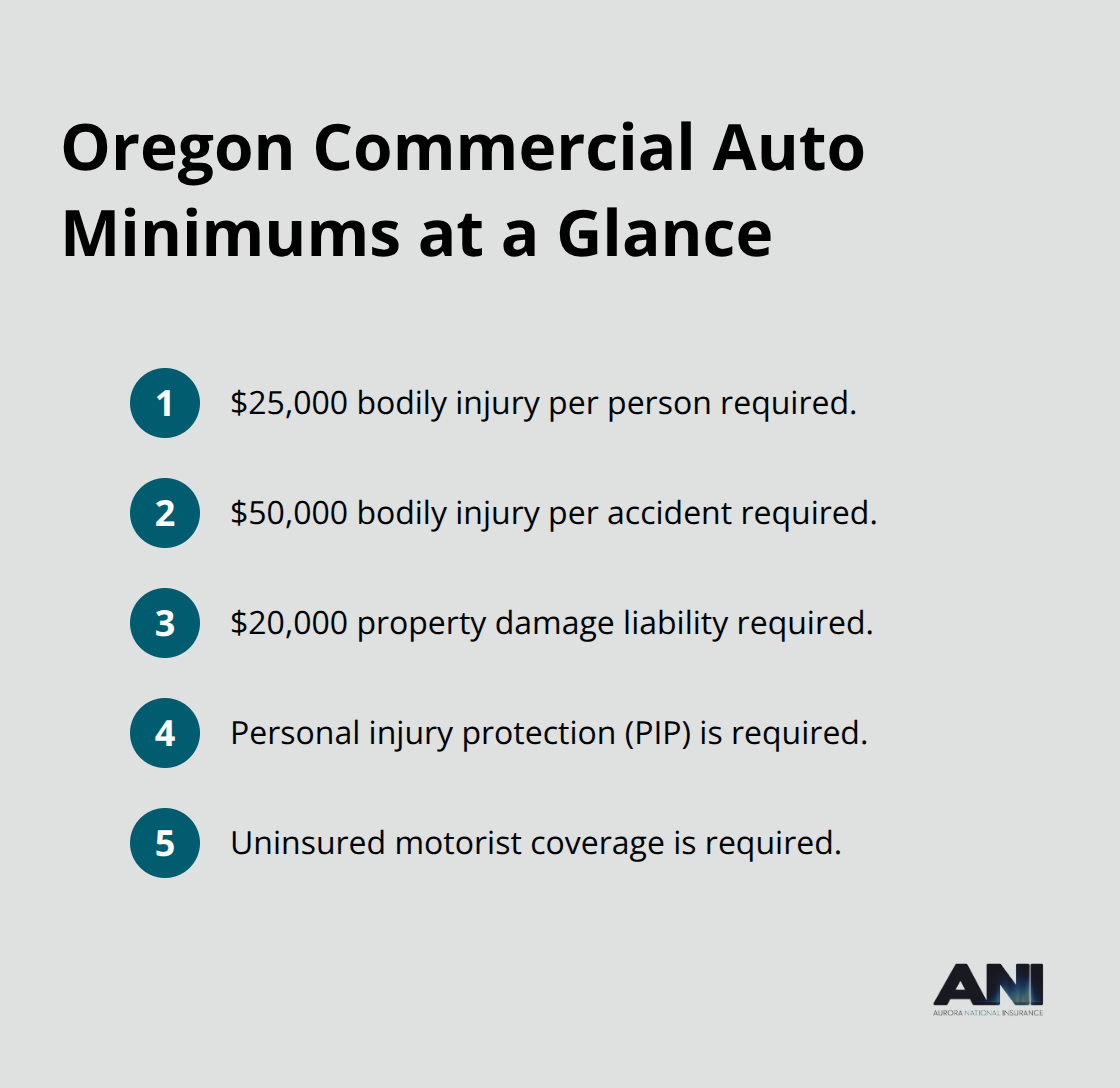
General Liability Insurance Coverage: Understanding What Shields Your Business

General liability insurance coverage protects your business from financial losses when someone gets hurt on your property or you accidentally damage their belongings. Without it, a single lawsuit could drain your savings and force you to close your doors.

At Aurora National Insurance, we’ve helped thousands of business owners understand exactly what their policies cover and where the gaps hide. This guide walks you through the protection you actually have and how to pick the right limits for your situation.

What Your General Liability Policy Actually Covers

General liability insurance covers three main categories of claims that most businesses face regularly. When a customer slips on your floor and breaks their arm, when you accidentally damage a client’s equipment during a service call, or when your advertisement unintentionally uses someone else’s trademarked slogan, your general liability policy steps in to pay medical bills, repair costs, and legal fees.

Checkmark list showing bodily injury, property damage, and legal defense costs as the three core protections in a general liability policy.

The Hartford reports that typical coverage costs around $810 per year for small businesses, which works out to roughly $67 monthly. This relatively low cost becomes a bargain the moment you face a legitimate claim, since a single serious injury or property damage incident can easily exceed $100,000 in medical expenses and legal defense costs combined.

Bodily Injury Claims on Your Premises

Medical expenses and bodily injury claims represent the most common type of general liability claim across industries. If a client suffers an injury at your location or because of your business operations, your policy covers their medical treatment regardless of who was technically at fault. This medical payments coverage applies whether the injury occurred in your office, at a client’s location, or even at a trade show where you represented your business. The coverage pays directly to the injured party’s medical providers, which often resolves minor incidents without ever escalating to a lawsuit. For serious injuries where the injured party pursues legal action, your policy’s bodily injury coverage kicks in to cover settlement amounts and court judgments up to your policy limits.

Damage to Client Property and Equipment

Property damage claims work similarly but address physical damage you cause to someone else’s belongings rather than injuries to their body. If you accidentally damage a client’s expensive equipment, destroy inventory during a service call, or cause structural damage to a rental property, your general liability policy covers the repair or replacement costs. Your policy protects you against these financial hits without requiring you to negotiate directly with the damaged party.

Legal Defense Costs That Protect Your Cash Flow

What makes general liability genuinely valuable is the legal defense costs component included in virtually all policies. When someone sues your business, your insurer pays for your lawyer, court costs, and investigation expenses from day one, even before the claim is determined to be covered. This defense cost protection means you do not drain your business cash flow fighting a lawsuit out of pocket. A claim worth $1.1 million with a $1 million per-occurrence limit means your insurer covers the full $1 million plus all defense costs, while you would be responsible for only the $100,000 overage.

Understanding what your policy covers sets the foundation for smart risk management, but knowing where coverage stops matters just as much. The gaps in general liability protection can expose your business to unexpected costs that no business owner anticipates.

Common Gaps in General Liability Coverage

General liability insurance creates a safety net for many business risks, but it has strict boundaries that leave significant exposures unprotected. Understanding these gaps prevents costly surprises when you assume a claim will be covered only to discover your policy excludes it entirely. The most dangerous gaps affect service providers, businesses with employees, and companies that manufacture or sell products.

Professional Errors Fall Outside Your Coverage

Service-based businesses face the biggest coverage blind spot: general liability explicitly excludes professional errors and negligence. If you work as an accountant and miscalculate a client’s taxes, an architect whose design has structural flaws, or a consultant whose advice costs a client money, general liability will not pay for the resulting damages. Many service providers operate under the false assumption that their general liability policy protects them from professional liability claims, then face devastating out-of-pocket costs when a client sues. Professional liability insurance, also called errors and omissions coverage, protects businesses that provide expert advice and services against claims of negligence or substandard work. Service providers who work under contracts frequently discover that clients require proof of professional liability coverage before signing agreements, so this gap affects your ability to win business, not just your protection after a claim occurs.

Employee Injuries Require Workers’ Compensation

General liability explicitly excludes injuries to your own employees, which is where workers’ compensation insurance takes over. If an employee gets hurt on the job, your general liability policy will deny the claim outright, leaving you personally liable for medical bills and lost wages. Workers’ compensation is mandatory in most states and covers medical treatment, rehabilitation costs, and wage replacement for injured workers. Many small business owners bundle workers’ compensation with their general liability through a Business Owner’s Policy to simplify administration and often receive modest cost savings.

Product Defects and Recall Costs Need Separate Protection

Product defects and product recalls represent another significant gap that many manufacturers and retailers overlook. If a product you sell causes injury or property damage, general liability covers the injury claim itself, but product recall expenses, notification costs, and replacement inventory fall outside your policy. Product recall insurance can be added as an endorsement to address these costs. These three coverage gaps-professional errors, employee injuries, and product recalls-account for the majority of claims that business owners mistakenly believe their general liability policy will cover. Identifying which gaps apply to your specific business model determines what additional policies you actually need to protect your assets and operations.

Hub-and-spoke diagram showing three gaps: professional errors, employee injuries, and product recalls. - General liability insurance coverage

How to Choose the Right Coverage Limits

Most business owners select coverage limits based on what competitors use or what sounds reasonable, rather than analyzing their actual financial exposure. A standard $1 million per-occurrence and $2 million aggregate limit works fine for some businesses but leaves others dangerously underprotected. The Hartford’s data shows small businesses typically pay around $810 annually for general liability, yet many spend that same amount on inadequate limits that could bankrupt them if a serious claim hits.

Calculate Your Real Financial Exposure

Your coverage limits should reflect three concrete factors: what you stand to lose if someone sues, what your clients contractually require, and what assets you need to protect. A landscaping company with $500,000 in annual revenue and minimal equipment needs different limits than a consulting firm managing $5 million in client projects. Start by calculating your total business assets, then add your annual revenue to understand your maximum financial exposure. If a lawsuit awards damages exceeding your per-occurrence limit, you personally cover the overage, so underestimating your exposure creates real financial risk.

Industry Risk Determines Your Baseline Limits

Your industry determines baseline exposure more reliably than company size alone. Contractors and service providers working on client sites face higher bodily injury risk than online retailers, which affects what limits clients will accept in contracts. Alaska-based businesses working in high-risk industries should seriously consider $2 million minimum limits, while service providers in lower-risk fields might adequately protect themselves at $1 million.

Compare Multiple Quotes at Different Limit Levels

Before finalizing limits, request quotes at multiple levels-typically $500,000, $1 million, $2 million, and $3 million per-occurrence-so you see exactly how much additional premium you pay for increased protection. Most carriers charge only 15 to 25 percent more for doubling your limits, making higher protection surprisingly affordable. Review your existing contracts and leases for specific coverage requirements; many clients demand $2 million per-occurrence or higher before signing agreements with you.

Percentage chart showing typical and upper-end premium increases to double liability limits. - General liability insurance coverage

Try different limit combinations with multiple carriers to compare not just prices but how different insurers rate your specific industry and risk profile, since underwriting standards vary significantly between companies.

Final Thoughts

General liability insurance coverage protects your business from the financial devastation that comes with unexpected lawsuits and injury claims. The three core protections-bodily injury coverage, property damage liability, and legal defense costs-form the foundation of responsible business risk management. Yet this protection has real boundaries, and professional errors, employee injuries, and product defects fall outside standard policies, which means you need to assess your specific business model to identify which gaps require additional coverage.

Choosing the right coverage limits matters far more than most business owners realize. A $1 million per-occurrence limit sounds substantial until you face a serious injury claim that exceeds it, leaving you personally responsible for the overage. Your industry, annual revenue, and contractual requirements should drive your limit decisions, not industry averages or what competitors carry. Most carriers charge only 15 to 25 percent more for doubled limits, making higher coverage surprisingly affordable when you compare the cost against potential financial exposure.

Start by calculating your total business assets and annual revenue to understand your maximum loss exposure. Review any existing contracts, leases, or client agreements for specific coverage requirements, since many businesses demand $2 million minimum limits before signing with you. Then get quotes from multiple carriers at your target limit levels to see exactly how different insurers evaluate your specific industry and risk profile.

The information provided in this blog is for general informational purposes only and does not constitute legal, financial, or insurance advice. Coverage options, terms, and availability may vary. Please consult with a licensed professional for advice specific to your situation.
Artificial intelligence may have been used to generate text and images in some blog articles.