
Washington Commercial Auto Coverage: Finding the Right Policy
Running a business in Washington means understanding your commercial auto coverage obligations. State law requires specific liability limits, but the right policy goes beyond minimum requirements.
At Aurora National Insurance, we help business owners navigate these requirements and find coverage that actually fits their operations. This guide walks you through what Washington requires, what affects your rates, and how to select a policy that protects your business.
Understanding Washington Commercial Auto Requirements
State-Mandated Liability Coverage Limits
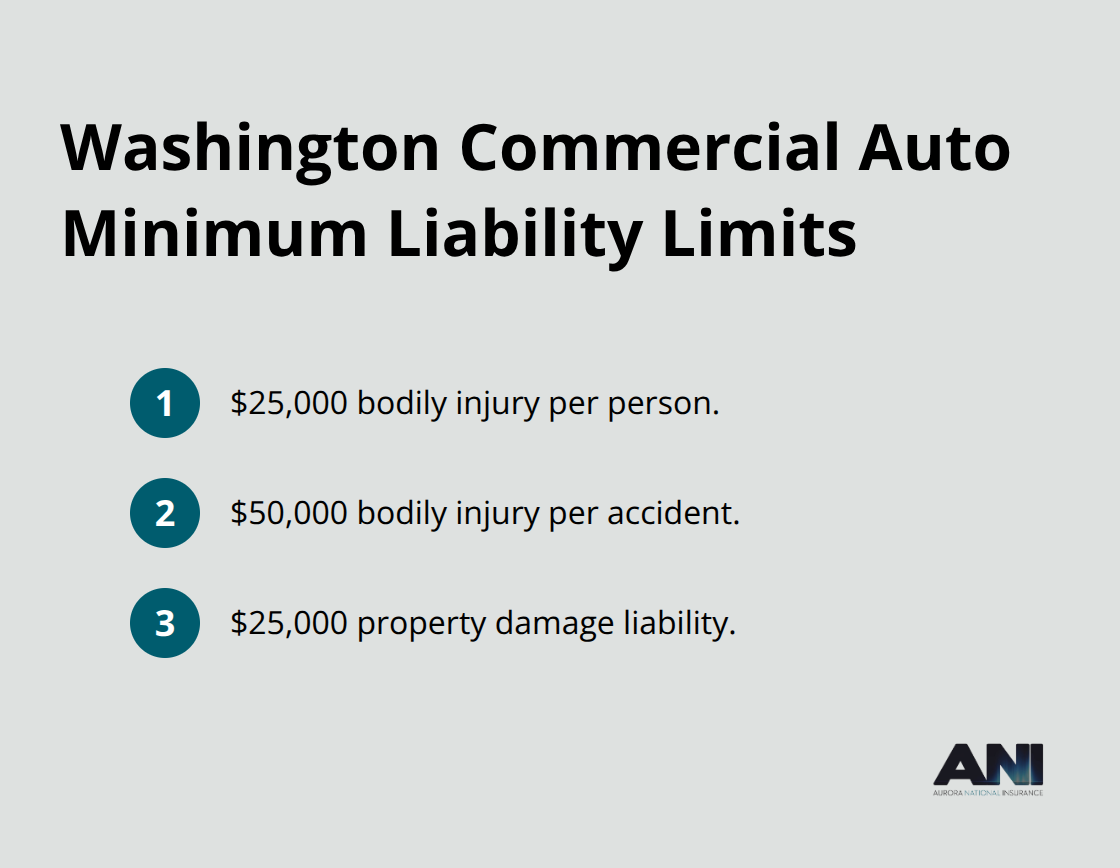
Washington State mandates that all businesses carrying commercial vehicles maintain liability coverage of at least $25,000 per person and $50,000 per accident for bodily injury, plus $25,000 for property damage. These minimums exist because commercial vehicles pose higher risks than personal vehicles. A delivery truck or service van causes significantly more damage in an accident than a sedan, which is why Washington’s minimums are higher than personal auto limits.
However, these state minimums fall short for most businesses. If your driver causes a serious accident that injures multiple people or damages expensive commercial property, you’ll quickly exceed these limits and face personal liability. Many successful Washington businesses carry $100,000 or $250,000 liability limits instead, and some carry limits as high as $500,000 or $1 million depending on their operations.
Additional Coverage Types Available to Businesses
Beyond liability, you need collision and comprehensive coverage if your vehicles are financed or leased (most loan agreements require this). Collision covers damage from accidents, while comprehensive covers theft, weather, and vandalism. Uninsured motorist coverage protects your drivers and business if someone without insurance causes an accident involving your vehicle.
Commercial general liability is separate from auto coverage and protects against claims that don’t involve vehicle accidents, such as customer injuries at your place of business. This additional layer of protection matters when your business operations extend beyond what happens on the road.
How Coverage Needs Vary by Business Type
A plumbing contractor with service vehicles needs different coverage than a construction company with heavy equipment on job sites. A delivery business operates in different territories and logs different annual mileage than a contractor who uses vehicles primarily for local service calls. Your specific business type, the number of vehicles you operate, and how your drivers use those vehicles all determine what coverage structure actually makes sense for your operation.
These differences mean that comparing policies across carriers requires understanding your own business first. The next section walks you through the specific factors that insurers examine when calculating your rates.
Key Factors That Affect Your Commercial Auto Rates
Vehicle Type and Usage Patterns
Insurers examine vehicle type first because a heavy-duty truck causes more damage in accidents than a sedan, and they price accordingly. A box truck used for deliveries five days a week faces different risk than a contractor’s van that sits idle most days. Usage patterns directly impact your premium because frequent highway driving generates higher accident rates than local deliveries, and seasonal businesses that operate only certain months qualify for lower annual premiums than year-round operators.
Commercial vehicles driven more than 15,000 miles annually face substantially higher premiums than those driven under 10,000 miles. Tracking your actual mileage matters when shopping for quotes because accurate numbers produce accurate rate comparisons.
Driver History and Experience
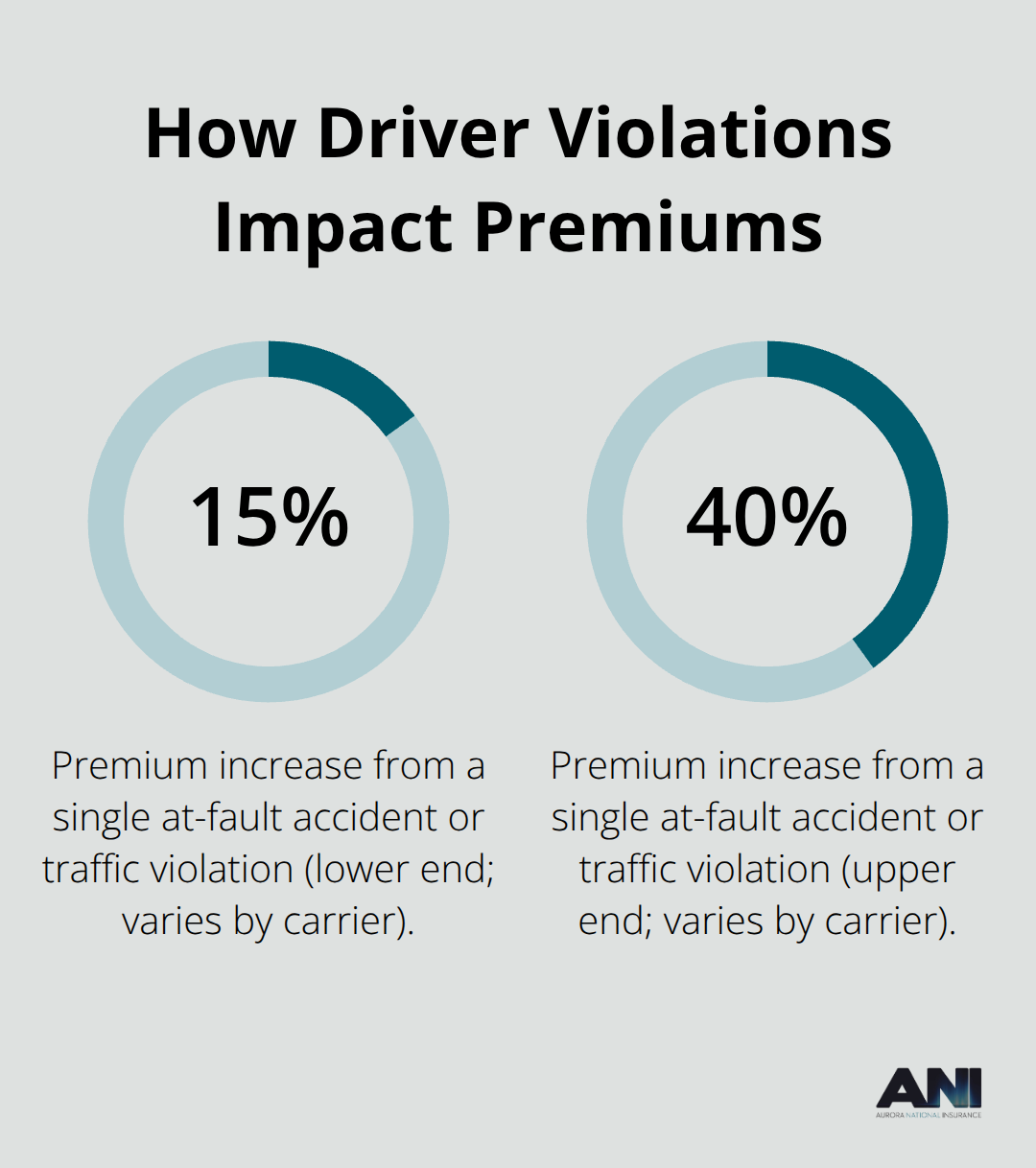
Driver history and experience shape your rates more than most business owners realize. A single at-fault accident or traffic violation can increase premiums by 15 to 40 percent depending on your carrier. Insurers pull motor vehicle records on every driver your business employs, not just the primary operator, which means hiring drivers with clean records directly reduces your costs.
A 25-year-old driver with five years of commercial driving experience pays significantly less than a 19-year-old with a recent speeding ticket, even if both operate the same vehicle the same number of miles. Your hiring decisions directly affect what you pay for coverage.
Territory and Mileage
Territory and mileage combine to create your risk profile because driving primarily in rural Washington areas generates lower premiums than operating in Seattle’s congested urban environment. Insurers weight these factors heavily when calculating your final rate.
Collecting detailed information about your actual driving patterns, vehicle types, and driver records before requesting quotes produces accurate rate comparisons that reveal which carriers offer the best value for your specific operation. This groundwork positions you to evaluate policies that match your business needs.
Finding the Right Commercial Auto Policy for Your Business
Getting multiple quotes from different carriers is the only way to understand what you actually pay for your specific operation, and the differences between carriers can exceed 40 percent for identical coverage. Start with your vehicle information, driver records, and mileage data, then request quotes from at least three carriers that operate in Washington. Most insurers provide online quotes within 24 hours, and comparing actual numbers eliminates guesswork about which policy fits your budget and protects your business adequately. A contractor with two service vans and a clean driving record might pay $1,200 annually with one carrier and $1,680 with another for the same liability limits and deductibles. That $480 difference compounds significantly over time, which is why shopping multiple carriers matters more than settling for convenience.
Assess Your Actual Coverage Needs
Your coverage decisions should reflect your real operations, not what a template suggests. A plumbing service that operates exclusively within a five-mile radius of Spokane needs different limits than a construction company that travels statewide for jobs. If your business regularly works with clients who require proof of specific liability limits before allowing your vehicles on their property, those contractual requirements must drive your coverage selection. Many Washington businesses discover they need higher limits than state minimums only after reviewing client contracts or after discussing their operations with someone who understands commercial risk.
Calculate your potential liability exposure by considering what happens if your driver causes a serious injury or damages expensive property. A single accident injuring multiple people can generate claims exceeding $500,000 in medical expenses alone, which means carrying only the state minimum of $50,000 per accident exposes your business to substantial financial risk. Most successful operations in Washington carry at least $100,000 in liability coverage, and many carry $250,000 or higher depending on their risk profile.
Work with an Agent Who Understands Your Business
An agent who asks detailed questions about your specific business finds better coverage than an online quote system that treats all operations identically. Washington’s diverse geography, from Seattle’s urban congestion to rural eastern Washington, creates different risk profiles that generic online tools miss. A knowledgeable agent identifies coverage gaps you might overlook, such as hired and non-owned auto coverage for situations where employees drive their personal vehicles for business purposes, or uninsured motorist coverage limits that match your liability protection.
An agent reviews your driver hiring practices, vehicle maintenance procedures, and loss history to identify which carriers offer the best rates for your specific situation. This personalized approach typically takes 30 to 45 minutes of conversation but produces quotes that accurately reflect your risk profile and reveal which carriers genuinely offer value for your business. Licensed agents in Washington can represent multiple carriers, which means they compare options across the market rather than pushing a single company’s products.
Compare Coverage Options Across Multiple Carriers
Request quotes that specify identical coverage limits, deductibles, and vehicle information across all carriers you contact. This consistency allows you to compare apples to apples and identify which insurers offer the best value for your operation. Some carriers specialize in specific business types (contractors, delivery services, service professionals), and these specialists often provide better rates than generalist insurers for your particular industry.
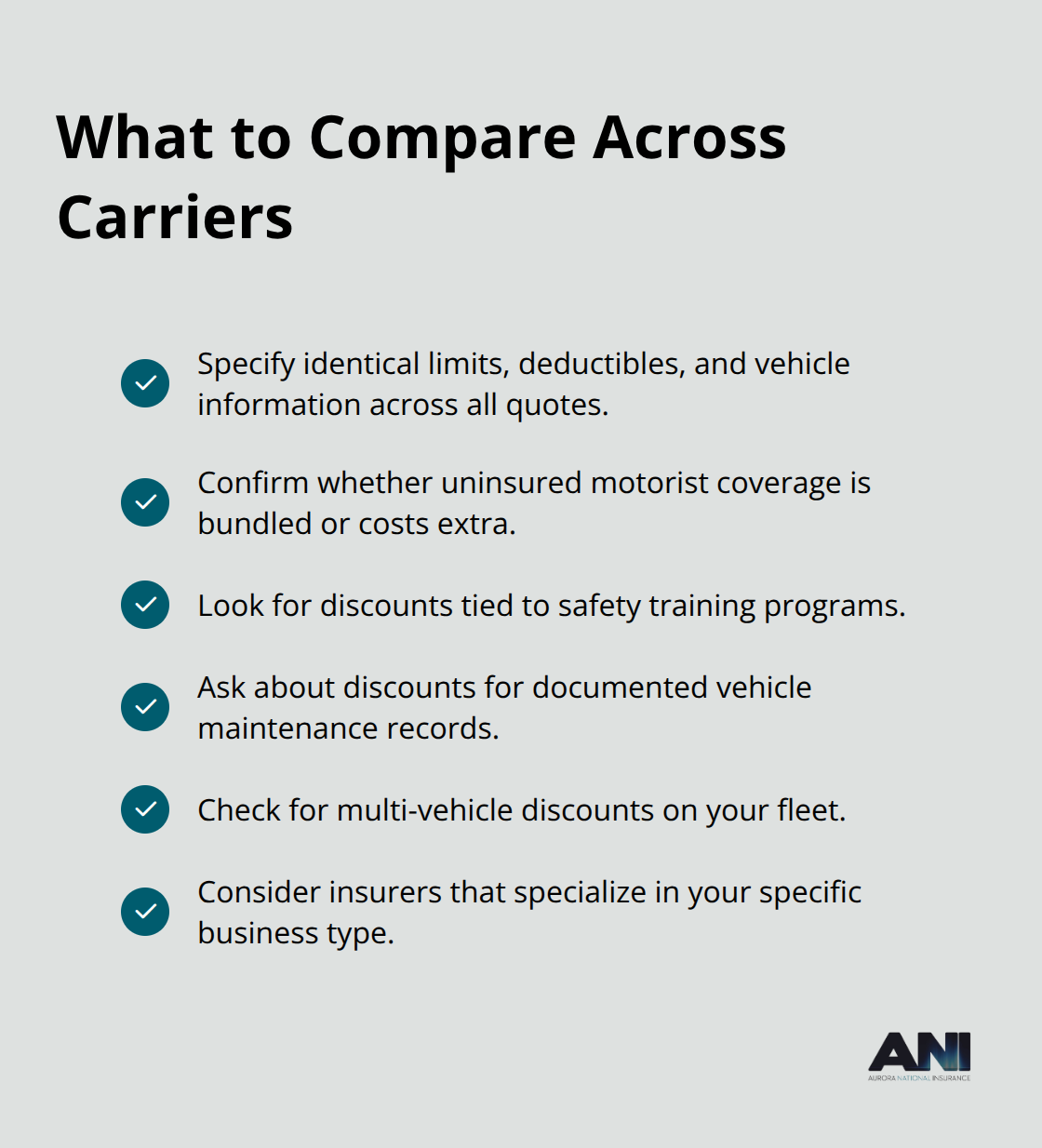
Pay attention to what each quote includes beyond basic liability and collision coverage. Some carriers bundle uninsured motorist coverage at no additional cost, while others charge extra. Some offer discounts for safety training, vehicle maintenance records, or multiple vehicles. These details matter when comparing final premiums across carriers.
Final Thoughts
Washington commercial auto coverage requirements establish a legal baseline, but your actual protection depends on decisions you make beyond state minimums. The $25,000 per person and $50,000 per accident liability limits satisfy legal requirements, yet most businesses operating in Washington need substantially higher limits to protect against realistic accident scenarios. Your specific coverage should reflect your vehicle types, driver records, annual mileage, and the territories where you operate.
Gather your actual business information before requesting quotes from multiple carriers. Document your vehicle details, driver records, annual mileage, and service areas so you can request quotes using identical coverage limits and deductibles across all insurers. This groundwork takes roughly an hour but produces accurate rate comparisons that reveal genuine differences between carriers and help you identify which option fits your budget and protects your business adequately.
Contact an agent who understands Washington’s diverse business landscape and can identify coverage gaps you might miss. At Aurora National Insurance, our licensed agents represent multiple top-rated carriers and deliver tailored comparisons to help you find Washington commercial auto coverage that fits your actual operations and budgets. Get an instant online quote to see what coverage costs for your specific business, or contact our team to discuss your needs with an agent who understands your operation.
The information provided in this blog is for general informational purposes only and does not constitute legal, financial, or insurance advice. Coverage options, terms, and availability may vary. Please consult with a licensed professional for advice specific to your situation.
Artificial intelligence may have been used to generate text and images in some blog articles.


