
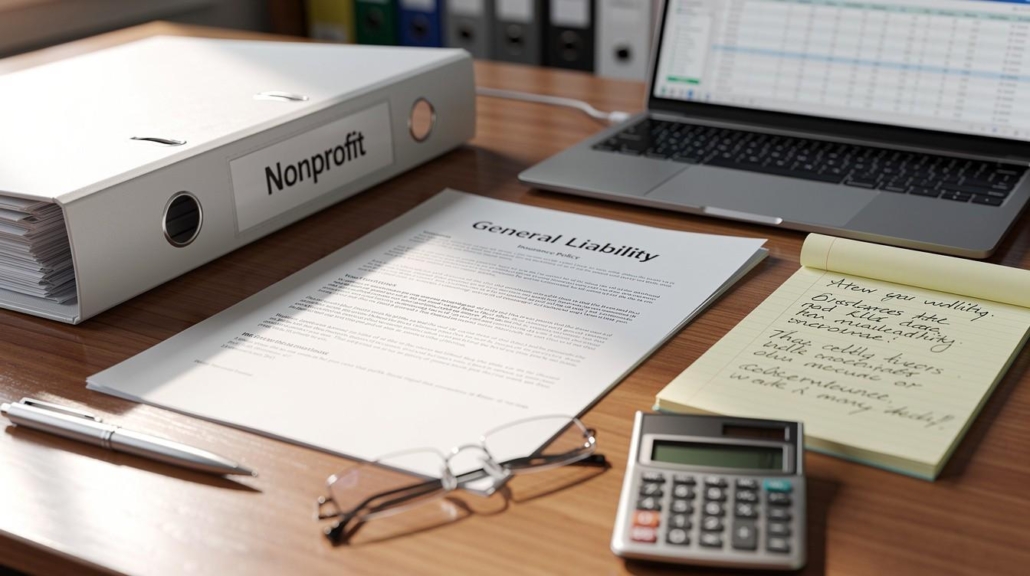
Nonprofit general liability: Protecting Charities and Social Enterprises
Nonprofits face unique risks that standard business insurance simply doesn’t address. From volunteer activities to community events, your organization operates in ways that expose you to liability claims most insurers don’t understand.
At Aurora National Insurance, we’ve seen how nonprofit general liability coverage can be the difference between a minor incident and a financial crisis that derails your mission. The right protection lets you focus on what matters-serving your community-without worrying about unexpected legal costs.
What Risks Actually Threaten Your Nonprofit
The Reality of Nonprofit Liability Exposure
Nonprofits operate differently than traditional businesses, which means your liability exposure looks nothing like a standard company’s. A volunteer leads a youth mentorship program, trips, and breaks their arm during an activity you organized. A community member gets injured at your fundraising event. Someone claims your staff member caused them emotional distress during a counseling session. These situations happen constantly in the nonprofit sector, and they create legal liability that standard business policies either exclude or severely limit.
Why Commercial Insurance Misses the Mark
The gap between nonprofit reality and commercial insurance is massive. Most general business policies assume a traditional employer-employee relationship with controlled operations in fixed locations. Nonprofits typically involve volunteers, community events in varied locations, program participants with vulnerable populations, and activities that insurers classify as higher-risk.
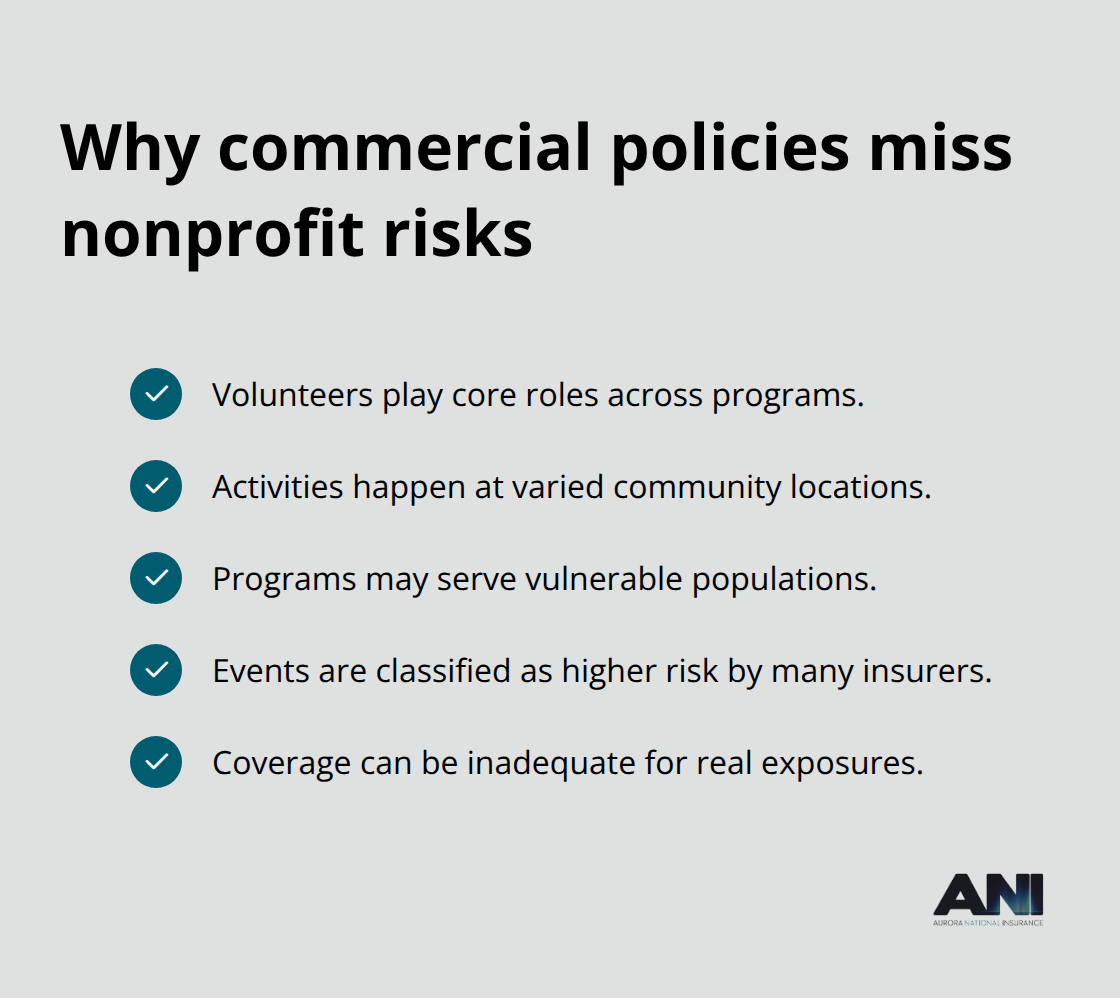
General liability policies protect against accidents and injuries on your property, yet many nonprofits operate with inadequate or completely absent coverage for their actual needs.
State-Specific Requirements You Can’t Ignore
State regulations compound this problem significantly. Some states require nonprofits receiving government funding to carry specific liability minimums, while others mandate coverage for organizations serving children or vulnerable adults. Texas and Illinois have different thresholds for nonprofit requirements than Washington or Oregon. Many nonprofits discover mid-crisis that their coverage either doesn’t apply to their specific activities or carries liability caps far too low for realistic damage awards.
The Real Cost of Underinsurance
A single lawsuit over bodily injury at a community event can easily exceed $100,000 in legal defense costs alone, before any settlement. Your nonprofit’s mission depends on financial stability, which means protecting against these gaps isn’t optional-it’s fundamental to your organization’s survival and ability to serve your community long-term. Understanding what specific risks your nonprofit faces (and what your current coverage actually protects) becomes the first step toward securing the right protection.
What General Liability Actually Covers for Nonprofits
Real Claims That Drain Nonprofit Budgets
General liability coverage protects your nonprofit against the specific claims that drain organizational budgets. When a participant in your after-school program suffers a fall during an activity and requires emergency surgery costing $45,000, general liability pays medical expenses and legal defense. When someone attending your fundraising gala slips on a wet floor and sues for lost wages and pain and suffering, this coverage handles the settlement and court costs. When a volunteer at your food bank faces accusations of causing property damage during operations, general liability covers your legal representation. These aren’t hypothetical scenarios-they represent the everyday incidents that force nonprofits to choose between paying settlements and funding programs.
What Your Policy Actually Pays For
General liability covers three main categories of claims. Bodily injury claims include medical bills, lost income, and pain and suffering damages. Property damage claims cover repair or replacement costs for items your organization damages. Advertising injury claims address defamation or copyright infringement in your marketing materials. Most importantly, general liability covers legal defense costs separately from your policy limits, meaning a $1 million policy doesn’t shrink when your attorney bills $50,000 to defend a frivolous lawsuit.
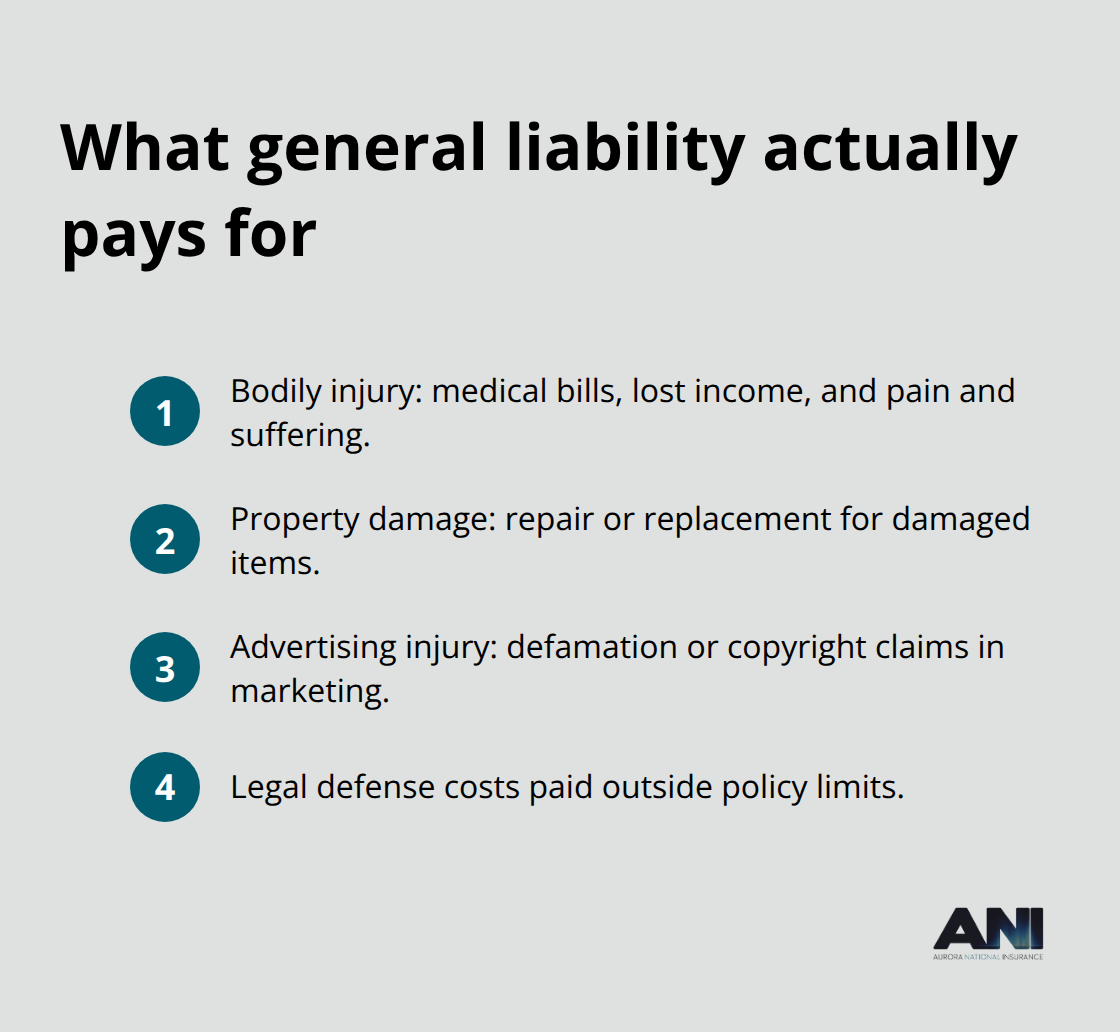
This distinction matters enormously because nonprofits often face legal expenses that dwarf the actual settlement amounts.
Why Third-Party Claims Threaten Your Mission
Third-party claims represent the true financial threat to nonprofit operations because external individuals control whether litigation happens. A community member injured at your event can sue regardless of your precautions, and your organization faces legal bills immediately even if the claim proves baseless. General liability handles these external threats systematically-it pays defense attorneys, expert witnesses, settlements, and court judgments without requiring your nonprofit to fund the fight from operational reserves. This protection extends across all your activities and locations, whether you operate programs at your facility, host events in rented spaces, or conduct outreach in community settings.
How Coverage Protects Your Organization’s Future
Your mission-driven work requires financial stability to continue serving vulnerable populations, and general liability preserves that stability by transferring catastrophic costs to an insurer. Without this coverage, a single serious incident can force difficult budget decisions that ultimately harm the communities you serve. The right protection level depends on your specific operations, participant populations, and event frequency. Understanding your actual coverage gaps (and what your current policy truly protects) becomes essential before you face a claim that tests those boundaries.
How to Find Better Rates Without Compromising Coverage
Shop Multiple Carriers to Uncover Real Price Differences
Nonprofit budgets are tight, which means general liability insurance often competes with program funding for limited dollars. Many nonprofits overpay significantly because they accept the first quote they receive or stick with whatever coverage their board member recommended years ago. Shopping multiple carriers for nonprofit general liability isn’t optional if you want cost-effective protection-it’s the only way to understand what your organization actually pays for comparable coverage.
Different insurers price nonprofit risk completely differently based on their underwriting philosophy, claims history in your sector, and how they weight specific exposures. One carrier might charge $800 annually for a youth-serving nonprofit with $2 million coverage limits, while another quotes $1,200 for identical protection because they view youth programs as higher-risk. You’ll only discover these gaps by requesting quotes from at least three to five carriers that specialize in nonprofit coverage.
Highlight Your Risk management practices to Reduce Premiums
Many nonprofits fail to mention their risk management practices during initial quotes, which directly suppresses your premiums. If your organization maintains documented volunteer training programs, conducts regular facility safety inspections, or implements incident reporting procedures, tell every carrier about these practices. Some insurers reduce premiums by 10 to 15 percent when nonprofits demonstrate systematic risk management rather than reactive crisis response.
This transparency matters because carriers want to work with organizations that take loss prevention seriously. Your documented safety protocols signal that you operate responsibly, which translates into lower claims risk from the insurer’s perspective.
Bundle Policies to Generate Substantial Savings
Bundling your general liability coverage with other policies your nonprofit carries-property insurance, directors and officers liability, employment practices liability-typically generates 15 to 25 percent savings across the entire package compared to purchasing policies separately. This bundling advantage exists because insurers reduce administrative costs and gain broader exposure to your organization’s operations, which they translate into premium reductions.
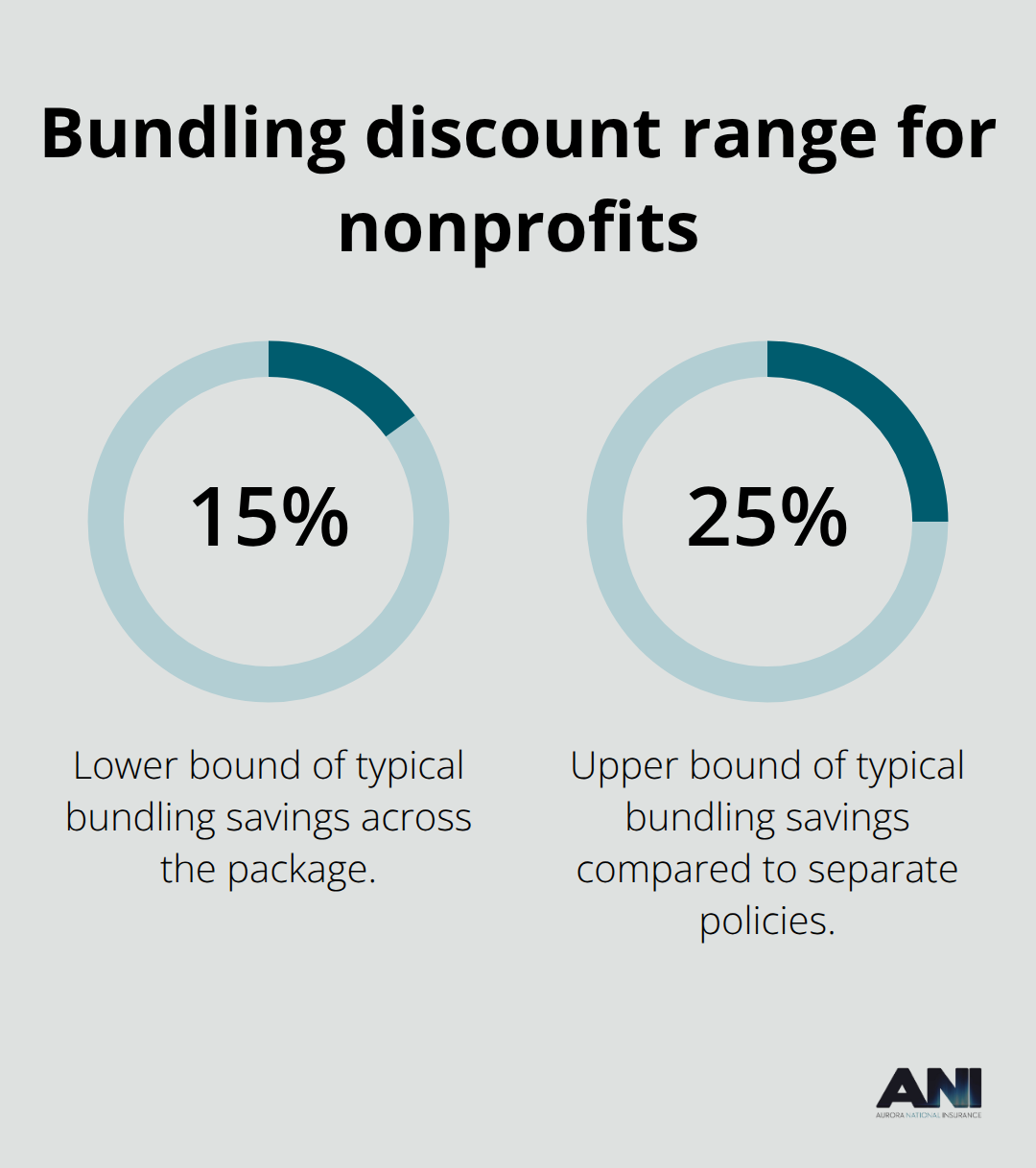
The specific discount varies by carrier and your risk profile, but bundling almost always produces lower total costs than standalone policies. When you request quotes, ask each carrier what bundling discounts they offer for your specific combination of coverages.
Implement Measurable Risk Reduction for Long-Term Savings
After you’ve identified your best rate through multiple quotes and bundling optimization, implement concrete risk management improvements that qualify for additional discounts in renewal cycles. Document volunteer background checks, maintain written safety protocols for all programs, photograph facility conditions monthly to prove maintenance standards, and track any incidents or near-misses systematically.
Carriers often offer 5 to 10 percent additional discounts for nonprofits that demonstrate measurable risk reduction over time, which means your risk management investment directly lowers insurance costs year after year while simultaneously protecting your mission and participants. This creates a powerful cycle where better safety practices produce both lower premiums and fewer actual claims that could disrupt your operations.
Final Thoughts
Nonprofit general liability coverage protects your organization’s financial stability when unexpected incidents occur. A single claim involving a volunteer injury, event participant accident, or property damage can consume operational reserves that should fund your programs and serve your community. Without proper protection, your nonprofit faces devastating budget crises that force program cuts and staff layoffs.
We at Aurora National Insurance work with mission-driven organizations across multiple states to deliver nonprofit general liability protection tailored to your actual operations. Our independent agency represents multiple top-rated carriers, which means we compare coverage options and pricing to find the right fit for your nonprofit’s specific risks and budget constraints. Whether you operate in Alaska, Washington, Oregon, Idaho, Arizona, Nevada, Texas, or Illinois, get instant online quotes from Aurora National Insurance and secure the protection your mission deserves.
The information provided in this blog is for general informational purposes only and does not constitute legal, financial, or insurance advice. Coverage options, terms, and availability may vary. Please consult with a licensed professional for advice specific to your situation.
Artificial intelligence may have been used to generate text and images in some blog articles.


