
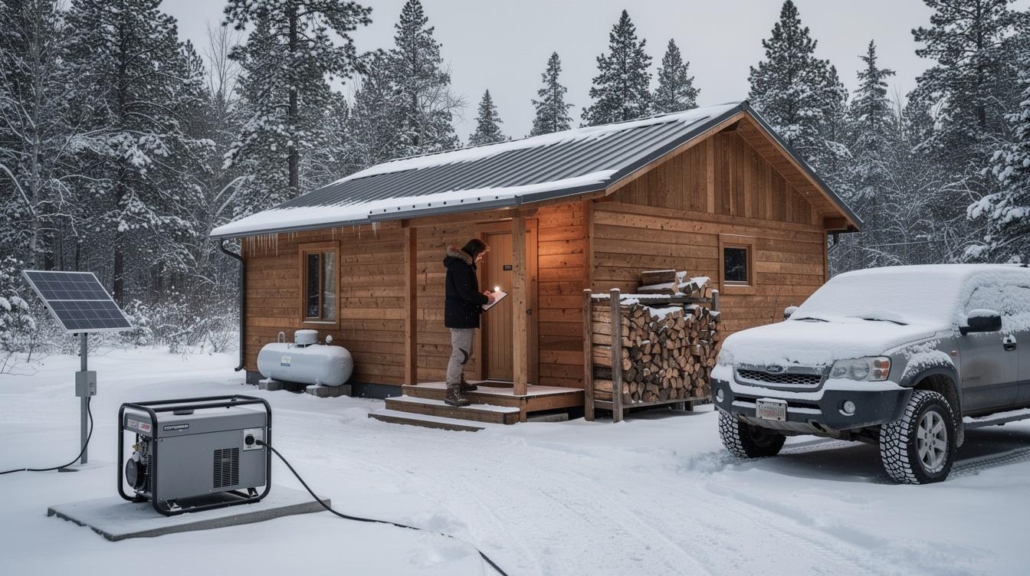
Alaska Remote Property Coverage: Safeguarding Remote Homes
Owning a remote property in Alaska comes with distinct challenges that standard homeowners policies simply don’t address. Harsh winters, isolation, and limited access to repair services create coverage gaps that leave many property owners vulnerable.
At Aurora National Insurance, we’ve seen firsthand how Alaska remote property coverage needs to be tailored to the realities of remote living. This guide walks you through the specific protections your home requires.
What Makes Alaska Remote Properties Unique
Alaska’s remote properties operate under fundamentally different conditions than homes in the lower 48 states, and this reality demands a completely different approach to insurance. The national housing market shows 1,335,389 homes for sale with a median price of $386,000, but Alaska remote properties exist in an entirely separate category. These homes face extreme weather patterns that arrive without warning, sit hundreds of miles from the nearest repair contractor, and cost significantly more to fix when damage occurs. Standard homeowners policies treat all properties as if they’re accessible year-round with nearby service providers, which simply doesn’t reflect how Alaska remote homes actually function.
Winter damage hits different in remote areas
Alaska experiences extended winter seasons where temperatures routinely drop to minus 20 or lower, and your home sits idle for months at a time. Frozen pipes become catastrophic in remote locations because you cannot call a plumber in February when the property is inaccessible.
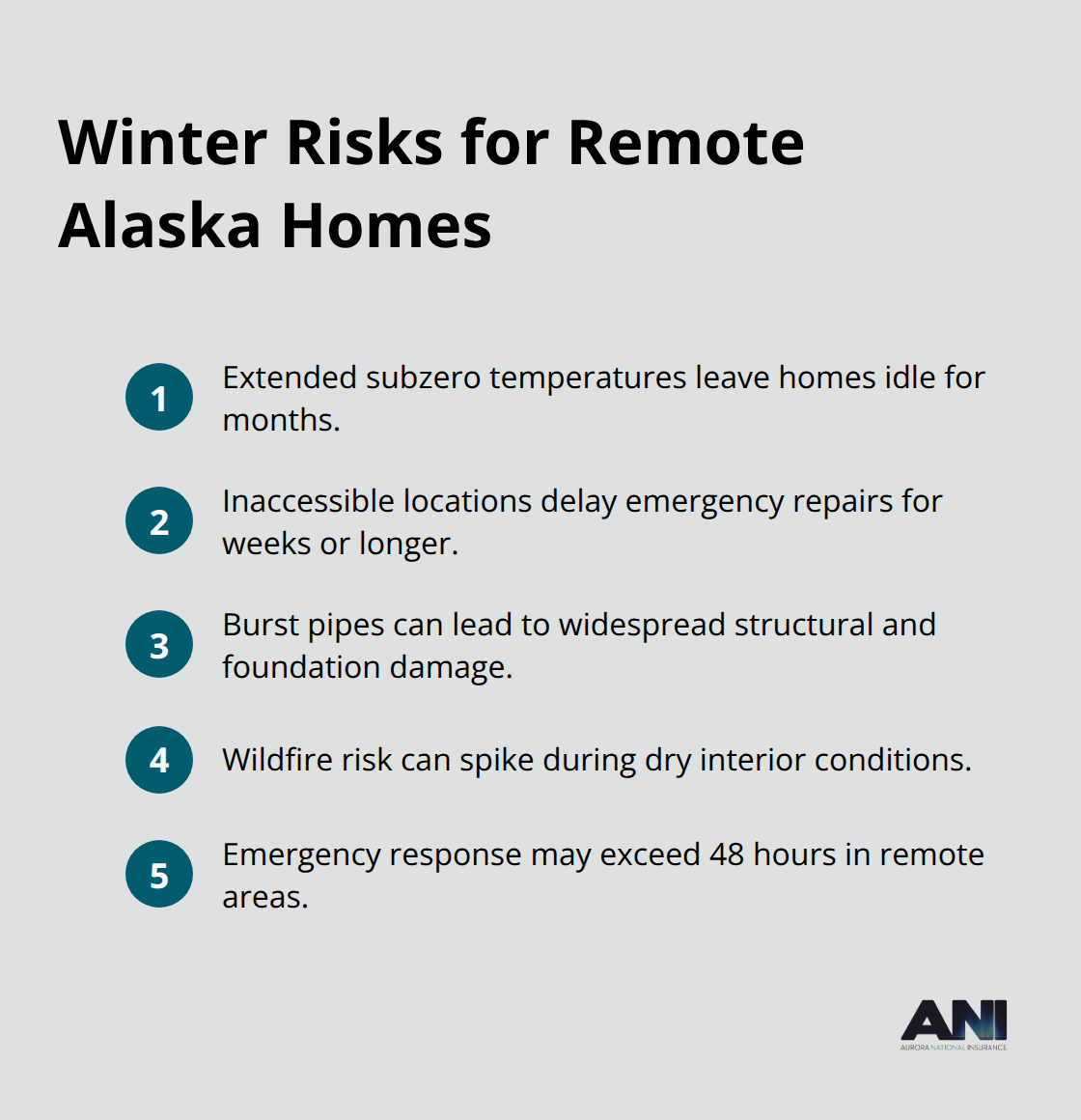
Water damage from burst pipes does not just mean replacing the pipes-it means replacing walls, flooring, and potentially the entire foundation if freezing cycles continue unchecked. Wildfire exposure compounds this problem, particularly in interior Alaska where vegetation-driven fires spread rapidly across remote terrain. Standard homeowners policies often exclude or severely limit wildfire coverage, leaving remote property owners exposed to total loss. Emergency response times in remote Alaska frequently exceed 48 hours, meaning a small fire can become a complete loss before help arrives.
Distance transforms repair economics
When your property sits 200 miles from Anchorage, a simple roof repair costs three times what it costs in town. Contractors charge mobilization fees just to reach your property, and these fees often exceed the cost of the actual repair work. If your home suffers storm damage in September, you might not access it until May when snow melts enough for travel. This extended timeline means temporary damage becomes permanent damage-water seeps into walls, structural rot accelerates, and secondary damage compounds the original loss. You need coverage that accounts for these extended repair timelines and the genuine cost of getting contractors to remote locations (not coverage designed for suburban homes with next-day service availability).
Isolation creates unique property management challenges
Remote Alaska properties require a different maintenance approach than standard homes. You cannot simply hire a local contractor to check on your property during winter months or respond to weather emergencies. Many remote property owners must arrange for caretakers or property managers to monitor their homes during the off-season, adding significant costs that standard insurance policies do not account for. Pipes need heat tape and insulation that exceeds typical winterization standards. Roofs need reinforcement to handle heavy snow loads that accumulate without the benefit of regular clearing. These specialized maintenance requirements directly impact your insurance needs and the coverage limits you should carry.
Alaska remote properties demand specialized protection
The combination of extreme isolation, harsh weather, and high repair costs means your remote Alaska home requires coverage that goes far beyond what standard homeowners policies provide. Your property sits in a category that demands attention to specific risks-extended emergency response times, seasonal inaccessibility, and contractor scarcity that drives repair costs to levels unimaginable in populated areas. This reality shapes every decision you make about protecting your investment. As you work with an insurance agent to build your coverage strategy, you need someone who understands these Alaska-specific challenges and can recommend the right endorsements and limits for your situation.
Coverage Gaps in Standard Homeowners Policies
Standard homeowners policies operate on assumptions that collapse instantly in remote Alaska. Insurers price coverage based on national averages where the nearest contractor sits minutes away, emergency responders arrive within hours, and repair costs follow predictable regional patterns. None of these assumptions hold true for properties hundreds of miles from Anchorage or accessible only by float plane.
Contractor networks fail in remote locations
When your home sits in interior Alaska, a standard policy’s contractor network becomes worthless. Most national insurance carriers maintain service networks in populated areas only, leaving remote property owners scrambling to find qualified contractors willing to mobilize to distant locations. A roof repair that costs $5,000 in town balloons to $18,000 or higher when contractors charge mobilization fees, travel time, and equipment transport. Your standard policy reimburses based on repair costs in populated markets, creating a coverage shortfall that you absorb personally.
Wildfire coverage leaves you exposed
Wildfire coverage reveals another critical gap. Standard homeowners policies either exclude wildfire entirely or cap coverage at levels insufficient for total loss in remote areas. Wildfire coverage leaves you exposed to significant risk, with the 2015-2024 decade marking the largest period of fire on record and approximately 14 million acres burned across the nation. Homes in fire-prone zones face exposure that standard policies simply do not address adequately. When emergency response times exceed 48 hours in remote locations, a manageable fire becomes a catastrophic loss before help arrives. Your policy needs wildfire coverage with limits that reflect actual replacement costs in your remote location, not national averages.
Frozen pipes create catastrophic water damage
Water damage from frozen pipes represents the most expensive gap in standard coverage for Alaska remote properties. Standard policies include some pipe burst coverage, but the limitations destroy their value in remote settings. Most policies cap water damage reimbursement at $10,000 to $15,000, an amount that barely covers the cost of replacing burst pipes in a small remote cabin, let alone the secondary water damage to walls, flooring, and structural components. A remote home left unheated through winter experiences catastrophic pipe failure that spreads across the entire structure.
Extended vacancy periods compound this risk significantly. If you cannot access your property from November through April, pipes that would survive in occupied homes freeze solid in unoccupied ones. Standard policies penalize extended vacancy by reducing or eliminating coverage during months when your home sits empty. You need coverage that acknowledges the reality of seasonal inaccessibility and provides adequate protection for the specific freeze-thaw cycles your remote location experiences.
Finding the right protection requires local insight
The gaps in standard coverage for remote Alaska properties demand a different approach to insurance altogether. Your home faces risks that national policies simply were not designed to address-contractor scarcity, extended emergency response times, and seasonal inaccessibility that transforms minor damage into major loss. Working with an agent who understands Alaska’s remote property challenges becomes your first step toward building adequate protection.
Building the Right Protection Strategy
Remote Alaska property protection starts with finding someone who actually understands what remote means in Alaska. Most insurance agents work from national playbooks that treat a cabin 200 miles from Anchorage the same as a suburban home with next-door neighbors and same-day contractor availability. That approach fails immediately when winter arrives and your pipes freeze solid because no one can reach your property for months. Standard solutions create false security-you think you’re covered until you file a claim and discover your policy was written for a completely different property type.
The first actionable step is finding an agent licensed in Alaska who has handled remote property claims. Ask potential agents about their experience with extended vacancy periods, wildfire exposure in interior regions, and the actual cost of contractor mobilization in remote areas. Request references from other remote property owners, not general homeowners. A solid Alaska agent will immediately explain the gaps in standard coverage rather than selling you a basic policy and hoping nothing happens.
Endorsements that actually protect remote homes
Once you’ve found an agent who understands Alaska’s unique challenges, add specific endorsements that transform inadequate standard coverage into real protection. Water damage endorsements matter enormously for remote properties-you need coverage that removes or significantly raises the cap on frozen pipe damage and accounts for extended vacancy periods when homes sit unheated. Request a water backup endorsement that covers damage from frozen gutters and downspouts, not just interior pipes.
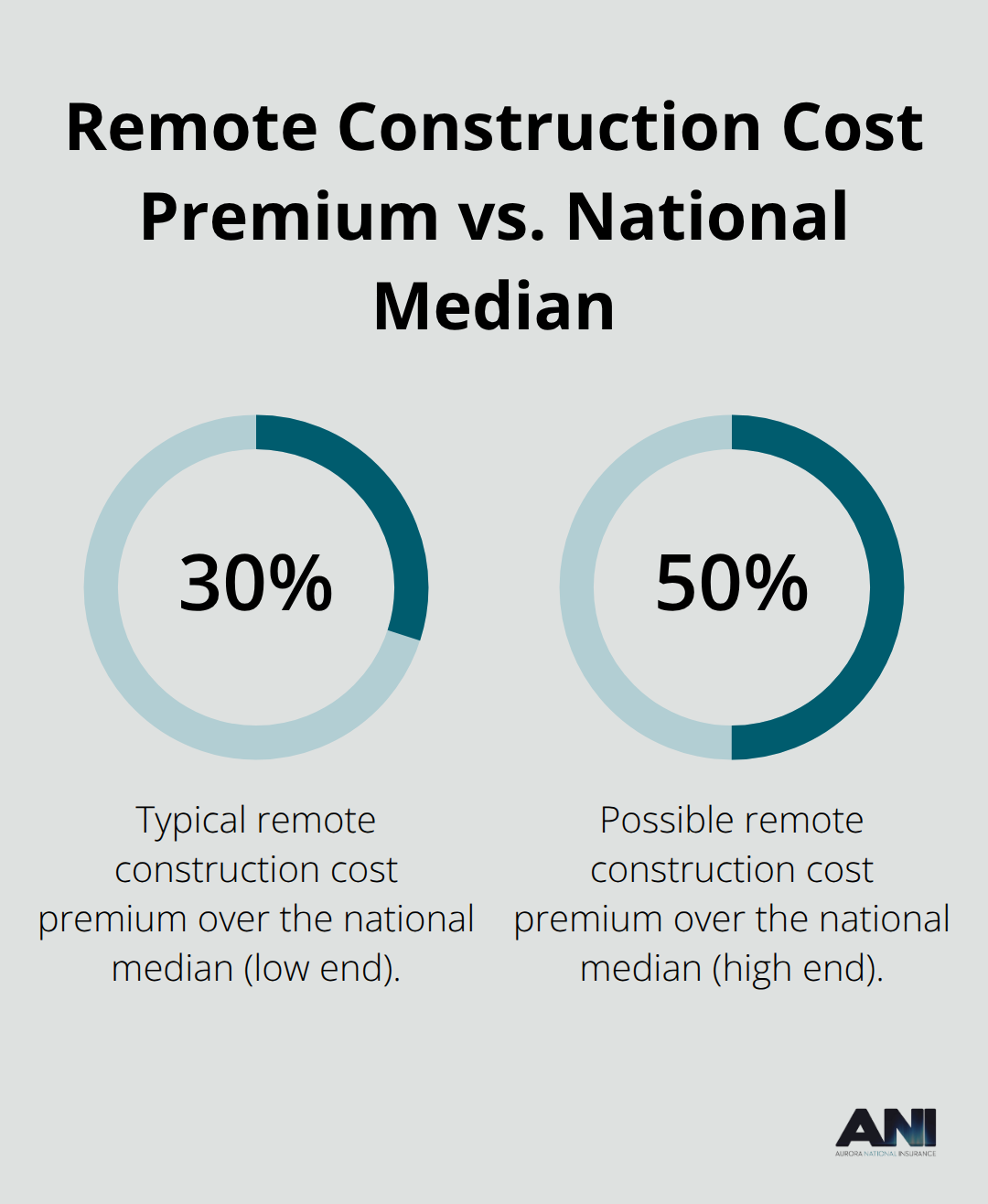
For wildfire exposure, add a specific wildfire or brush fire endorsement with limits reflecting actual replacement costs in your remote location, not national averages. The standard coverage cap of $50,000 to $100,000 won’t rebuild a destroyed home in most remote Alaska locations where construction costs run 30 to 50 percent higher than the national median. Ask your agent about an extended replacement cost endorsement that covers inflation in construction materials and labor, since remote areas experience price volatility that standard policies don’t anticipate.
Water damage coverage should include a specific endorsement for damage from snow and ice dams, particularly critical for remote properties where roof maintenance happens infrequently and snow accumulates without regular clearing. Equally important is confirming that your policy covers temporary repairs and emergency mitigation-you need authorization to pay a caretaker to shut off water, board windows, or perform emergency stabilization without waiting for adjuster approval, since response times in remote areas make speed essential. Your agent should also discuss equipment breakdown coverage for backup generators and heating systems, since a failed generator in January at a remote property creates an emergency that standard policies don’t adequately address.
Maintenance prevents catastrophic claims
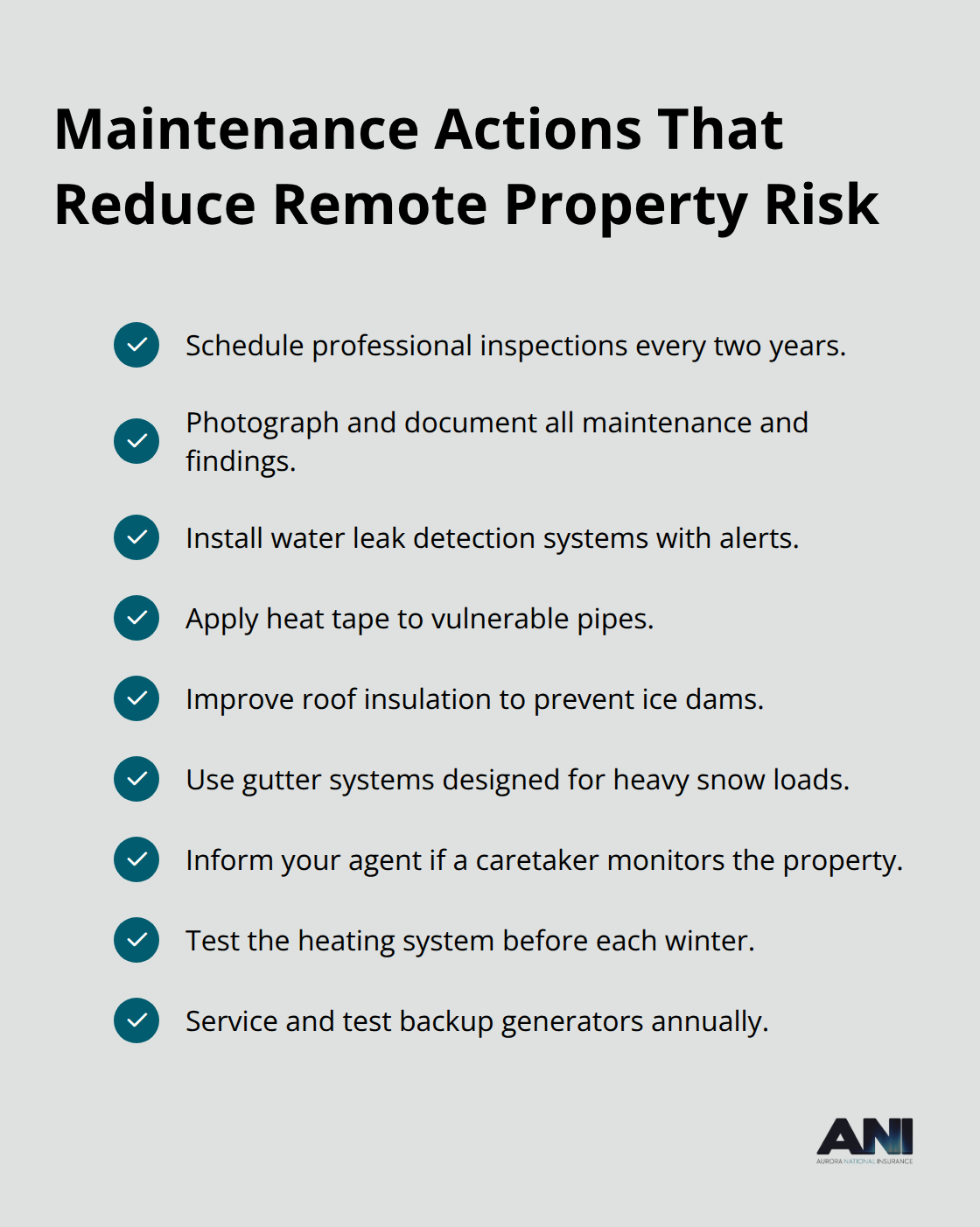
Regular maintenance and inspections directly reduce your insurance costs and prevent catastrophic claims. Schedule a professional inspection every two years focusing specifically on systems vulnerable to freeze damage-pipes, water lines, heating systems, and roof drainage. Document everything with photographs and written reports that you can provide to your insurance agent.
This documentation protects you in two ways: it demonstrates that you actively manage risk (which insurers reward with better rates), and it creates a clear record if you need to file a claim.
For properties that sit vacant during winter months, install water leak detection systems that alert you to burst pipes before water destroys the entire structure. These systems cost $500 to $2,000 installed but can prevent claims costing $50,000 or more. Heat tape on vulnerable pipes, proper roof insulation to prevent ice dams, and gutter systems designed for heavy snow loads represent investments that directly reduce your insurance risk profile. If you employ a caretaker or property manager to monitor your home during off-season months, inform your insurance agent about this arrangement-some policies offer premium reductions when remote properties receive regular professional oversight. Test your heating system before winter every single year, and if you rely on backup generators, schedule maintenance that confirms they’ll start when needed. These actions separate remote property owners who file small claims from those who experience total losses.
Final Thoughts
Remote Alaska property ownership demands insurance decisions that differ fundamentally from standard homeowners coverage. Your home faces contractor scarcity, extended emergency response times, and seasonal inaccessibility that standard policies simply don’t address. Alaska remote property coverage must account for these realities through specialized endorsements, higher limits on water damage and wildfire protection, and explicit acknowledgment of extended vacancy periods.
Local expertise matters more for remote properties than for any other insurance category. An agent who understands Alaska’s unique challenges will immediately identify coverage gaps that national carriers overlook, knowing how contractor mobilization fees inflate repair costs, how freeze-thaw cycles create catastrophic water damage, and how wildfire exposure in interior regions demands limits far exceeding national averages. An agent working from a national playbook will sell you inadequate protection and leave you vulnerable when claims arise.
Your next step is connecting with an insurance professional who has handled remote Alaska property claims and understands the specific risks your location presents. At Aurora National Insurance, our Anchorage-based team brings genuine Alaska expertise to remote property protection and will walk you through the endorsements your property needs, confirm your coverage limits reflect actual replacement costs in your location, and answer questions about seasonal vacancy, contractor access, and emergency response realities.
The information provided in this blog is for general informational purposes only and does not constitute legal, financial, or insurance advice. Coverage options, terms, and availability may vary. Please consult with a licensed professional for advice specific to your situation.
Artificial intelligence may have been used to generate text and images in some blog articles.


