Commercial Vehicle Insurance Alaska: Protecting Your Fleet in the Last Frontier
Operating a commercial fleet in Alaska comes with real challenges. Harsh winters, remote terrain, and unpredictable weather create risks that standard insurance won’t cover.
At Aurora National Insurance, we know that commercial vehicle insurance in Alaska isn’t optional-it’s essential for protecting your business. The right coverage keeps your fleet running and your finances secure when accidents happen.
Why Alaska’s Commercial Vehicles Face Real Risks
Alaska’s environment creates genuine insurance challenges that you won’t encounter in the lower 48. Winter conditions across the state regularly produce black ice, whiteout visibility, and roads that stay frozen for months. According to data from the Alaska Division of Motor Vehicles, weather-related claims activity in Alaska pushes premiums higher, especially in larger cities like Anchorage where claim frequency increases.
Your vehicles travel longer distances than typical commercial fleets. A delivery route in Anchorage might span 50 miles round trip, while regional Alaska routes stretch across 200+ miles of remote terrain with minimal services. This exposure directly affects your insurance costs and the coverage you actually need.
How Vehicle Type Impacts Your Premiums
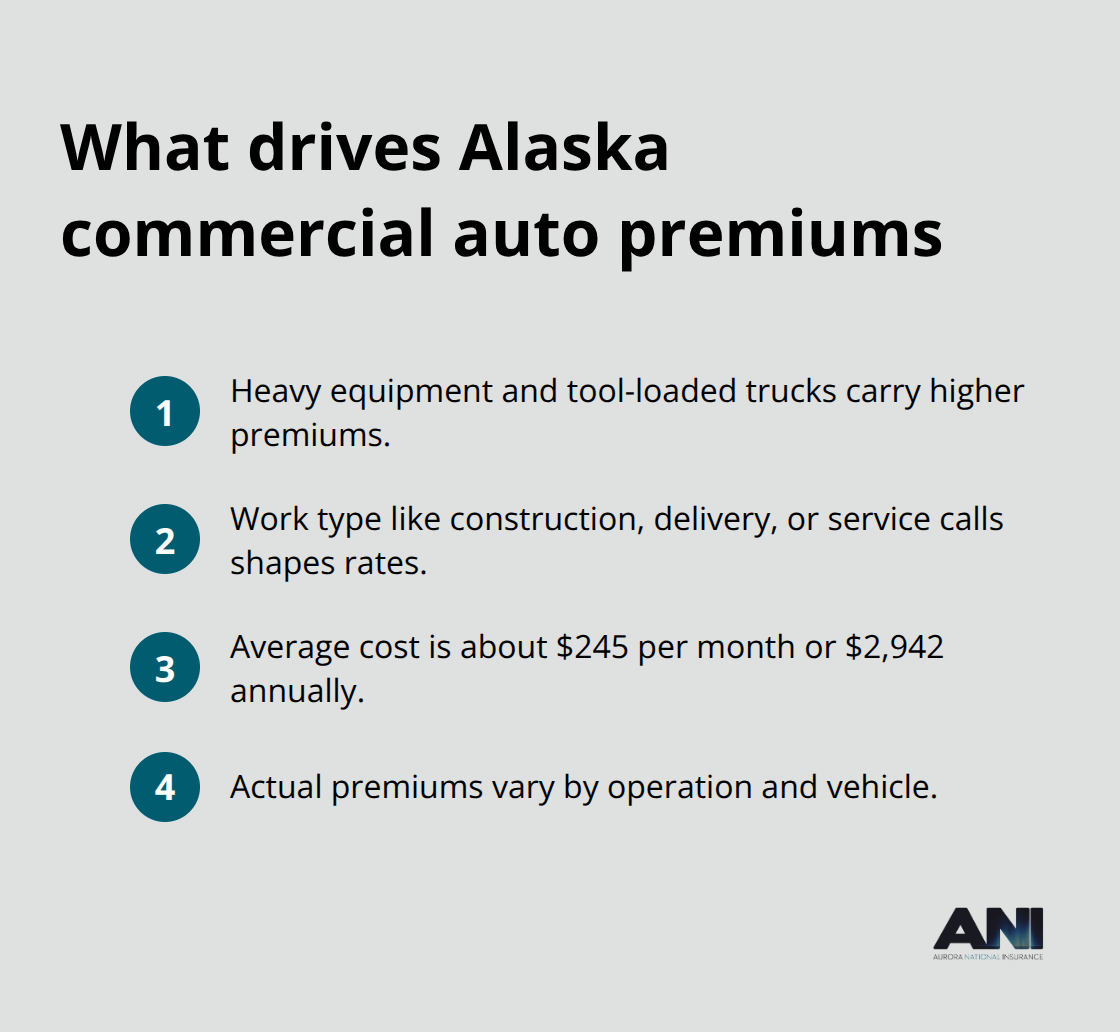
Heavy equipment vehicles like food trucks with attached gear or contractor trucks loaded with tools command higher premiums than light vans because they represent greater loss potential if damaged. The type of work you perform-whether construction, delivery, or service calls-shapes your rate significantly. Alaska’s average commercial auto insurance costs around $245 per month or roughly $2,942 annually according to Insureon data based on 100,000 small business owners. This baseline reflects statewide averages, but your actual premium depends on your specific operation.
A contractor van in Wasilla costs differently than a food truck in Fairbanks.
Alaska’s Mandatory Insurance Requirements
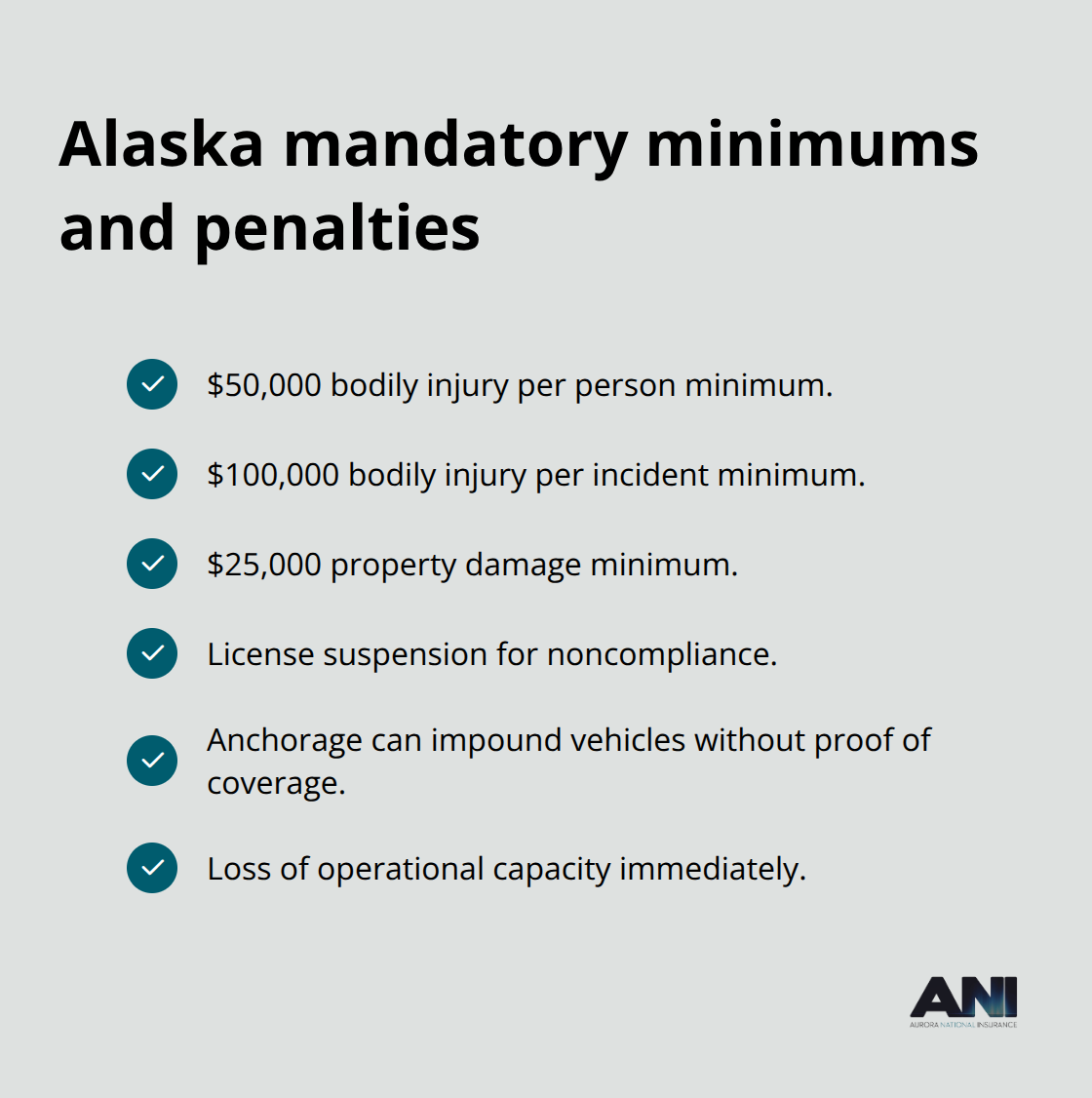
Alaska’s Mandatory Insurance Statute requires all commercial vehicle owners to carry liability coverage with minimums of $50,000 per person and $100,000 per incident for bodily injury, plus $25,000 for property damage. These aren’t suggestions. Failing to maintain proper insurance results in license suspension, and in Anchorage, vehicles can be impounded if you lack proof of coverage. Your business loses operational capacity immediately.
The Real Cost of Underinsurance
Maintaining only the minimum liability limits leaves your fleet dangerously exposed. A single accident involving serious injuries could exceed your $50,000 per-person limit, forcing your business to cover excess damages out of pocket. Higher liability limits cost more upfront but protect your assets if something catastrophic happens.
Commercial auto insurance covers what personal policies explicitly exclude. If an employee uses a company vehicle for deliveries, client visits, or any business task, your personal auto policy won’t respond to claims. You need a commercial policy that lists every employee who might drive company vehicles. This isn’t optional paperwork; it’s the difference between coverage and denial when you file a claim.
Understanding what your fleet actually needs requires honest assessment of your operations and the risks you face daily.
What Coverage Should Your Fleet Actually Carry
Building a Strong Liability Foundation
Liability coverage forms the foundation of any commercial fleet policy, but Alaska’s minimum liability requirements leave significant gaps. The state mandates $50,000 per person and $100,000 per accident for bodily injury, plus $25,000 for property damage. We recommend liability limits well above these thresholds. A single serious injury claim can quickly exceed the minimums. Medical costs for a severe accident involving multiple people reach $200,000 to $500,000 easily. Many Alaska fleet operators carry $100,000 per person and $300,000 per accident limits instead, which costs more monthly but prevents catastrophic out-of-pocket exposure.
Your liability coverage also pays legal defense costs when you face a lawsuit, a separate benefit that protects your business even if the claim exceeds your policy limits. This protection matters significantly in Alaska, where remote operations and harsh conditions increase accident severity.
Protecting Your Vehicles from Physical Damage
Collision coverage pays for repairs or replacement after impact with another vehicle or object, while comprehensive coverage handles theft, vandalism, weather damage, and other non-collision losses. In Alaska, comprehensive becomes especially valuable given the weather exposure and remote locations where theft recovery proves harder.
Food trucks with attached equipment or contractor vehicles loaded with tools need higher physical damage limits because replacement costs run steep. A box truck damaged in an accident costs $40,000 to $60,000 to replace, so choosing appropriate deductibles matters significantly. Lower deductibles mean higher monthly premiums but less out-of-pocket expense when claims occur. Most Alaska fleet operators find $1,000 deductibles strike the right balance between affordability and manageable claim expenses.
Covering Gaps When Other Drivers Fail
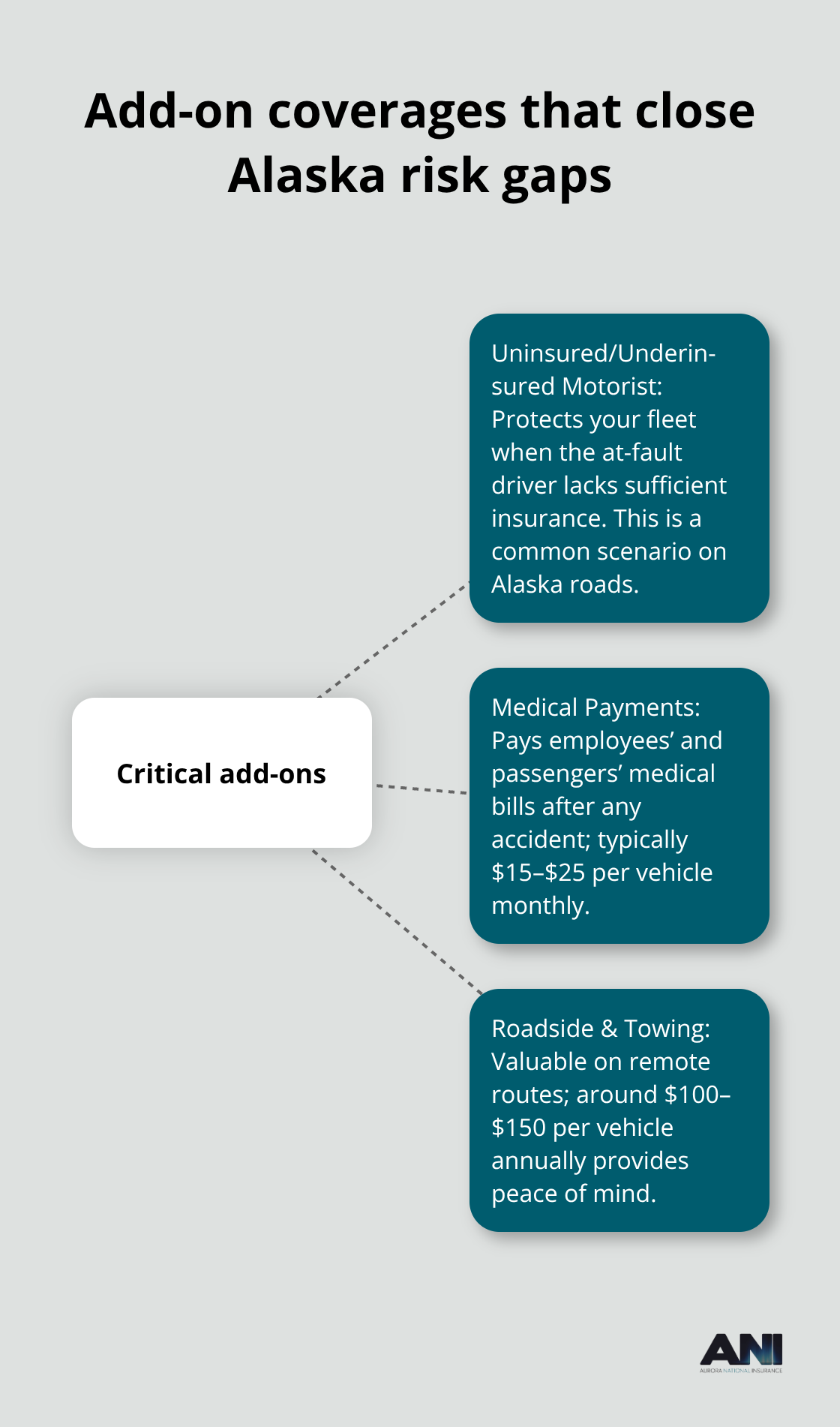
Uninsured and underinsured motorist coverage protects your fleet when another driver causes damage but lacks sufficient insurance. Alaska roads see uninsured drivers regularly, and this coverage responds when those drivers cause accidents. Medical payments coverage pays medical expenses for your employees and passengers after any accident, regardless of fault, which keeps injured workers from facing unexpected bills. This coverage typically costs $15 to $25 monthly per vehicle but prevents significant employee relations problems when someone gets hurt.
Preparing for Alaska’s Remote Routes
Towing and roadside assistance becomes practical in Alaska given remote routes and harsh conditions. A breakdown 100 miles from the nearest town without towing coverage means expensive helicopter extraction or long waits for volunteer help. Coverage for $100 to $150 annually per vehicle provides peace of mind on extended routes.
Tailoring Coverage to Your Operation
The combination of these coverages creates comprehensive protection that the minimum liability-only approach cannot match. Your specific needs depend on vehicle type, routes traveled, and employee count. Getting quotes from multiple carriers lets you compare actual costs for different coverage combinations rather than guessing what protection costs. Once you understand your coverage options, the next step involves assessing your fleet’s unique characteristics and finding the right balance between protection and premium costs.
How to Choose the Right Commercial Vehicle Insurance
Document Your Fleet’s Exact Operations
Start by writing down what your fleet actually does and where it operates. A contractor with three box trucks working within Anchorage faces different risks than a delivery service covering routes between Fairbanks and Valdez. Record your annual mileage, the types of cargo or equipment you transport, which employees drive company vehicles, and whether you operate year-round or seasonally. This information directly determines your premium and the coverage you actually need.
Alaska’s average commercial auto insurance costs around $245 monthly according to Insureon data, but that baseline shifts dramatically based on your specific operation. A food truck in Anchorage costs differently than the same truck in a smaller community.
Request Quotes for Identical Coverage Combinations
Once you know your operation inside and out, contact multiple carriers and request quotes for identical coverage combinations. This prevents comparing apples to oranges and shows you real premium differences between insurers. Most Alaska carriers can provide quotes within hours, and many offer online quote tools that let you adjust coverage levels and deductibles instantly to see how costs change.
Test different scenarios: request quotes with $50,000 per person liability limits, then $100,000, then $300,000 to understand the actual cost difference. You’ll discover that jumping from minimum coverage to substantially higher limits often costs far less than you expect. A $50 monthly increase for significantly better protection usually makes financial sense for Alaska operations.
Select Deductibles That Match Your Cash Flow
Review your deductibles with the same scrutiny you apply to liability limits. A $500 deductible versus $1,000 versus $2,500 creates meaningful monthly savings, but only if your business can absorb that out-of-pocket cost when claims occur. If a single breakdown or minor accident would strain your cash flow, lower deductibles protect your finances better than premium savings justify.
Alaska’s harsh conditions mean weather-related claims happen regularly, so realistic deductible selection matters more than in lower-risk states. Request quotes that include Medical Payments coverage, which covers doctor visits, hospital stays, surgery, X-rays and other medical bills. This coverage prevents injured workers from facing unexpected bills and protects your business from potential liability disputes.
Evaluate Uninsured Motorist and Roadside Protection
Uninsured motorist coverage costs similarly to Medical Payments but responds when uninsured drivers cause damage-a common scenario on Alaska roads. Finally, compare what each carrier includes in roadside assistance and towing coverage, since remote Alaska routes make breakdowns far more expensive than in urban areas (one carrier might include 100 miles of free towing while another charges per incident). These details accumulate into real savings and operational benefits when you actually need help on a remote highway.
Final Thoughts
Protecting your Alaska fleet requires more than meeting minimum legal requirements. The real protection comes from understanding your specific operation, comparing coverage options honestly, and selecting limits that match your actual risk exposure. Commercial vehicle insurance Alaska costs more than in other states because the environment demands it, but that investment prevents catastrophic financial losses when accidents happen on remote roads or during harsh weather.
Your fleet’s safety depends on three decisions working together. First, document exactly what your vehicles do and where they operate so you understand your exposure. Second, request quotes for identical coverage combinations from multiple carriers to see real premium differences. Third, select deductibles and liability limits that protect your business without straining cash flow.
Working with a local Alaska insurance agent transforms this process from overwhelming to straightforward. Agents rooted in Alaska understand the specific risks your fleet faces, from weather patterns to remote route challenges to local claim frequency, and they know which carriers offer the best rates for your operation type. Contact Aurora National Insurance for instant online quotes on commercial vehicle insurance coverage that fits your fleet, and our Anchorage-based team will answer your questions about specific coverage options and help you understand what protection actually costs for your operation.
The information provided in this blog is for general informational purposes only and does not constitute legal, financial, or insurance advice. Coverage options, terms, and availability may vary. Please consult with a licensed professional for advice specific to your situation.
Artificial intelligence may have been used to generate text and images in some blog articles.