
General Liability for Startups: Laying a Strong Legal Foundation
Starting a business means taking on new risks. One lawsuit over a customer’s injury or damaged property can drain your startup’s savings and threaten your future.
General liability for startups isn’t optional-it’s the foundation that protects your business from these financial disasters. We at Aurora National Insurance help entrepreneurs understand what coverage they need and how to get it affordably.
What General Liability Actually Protects
Bodily Injury Claims
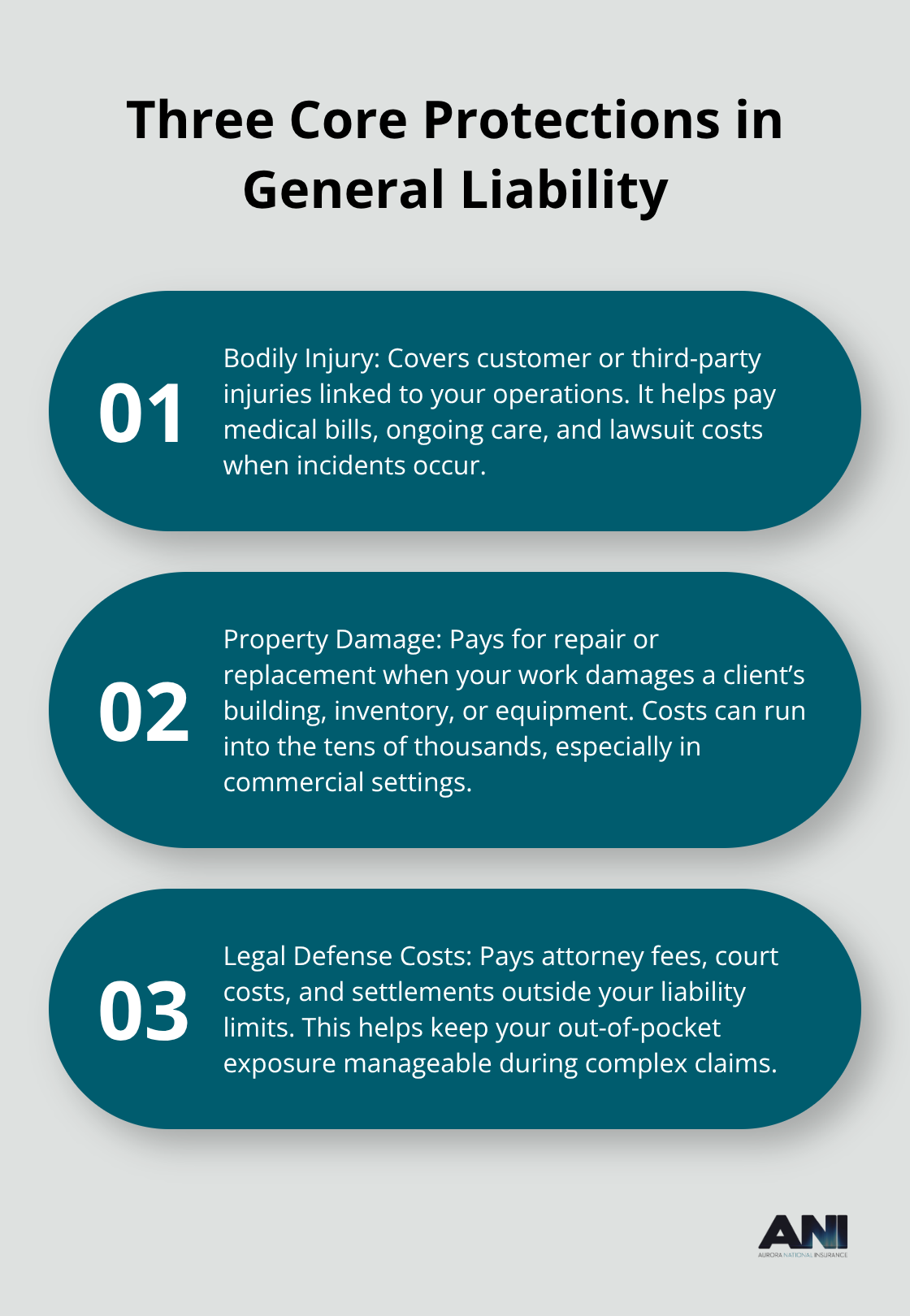
General liability insurance covers three distinct categories of financial exposure that can cripple a startup. First, bodily injury claims arise when a customer, visitor, or third party gets hurt because of your business operations. A slip-and-fall in your office, a product defect that injures someone, or an accident caused by your equipment all fall here. According to Insureon’s analysis of 100,000 small business policies, bodily injury claims represent the most common payout trigger for general liability. These claims routinely reach tens of thousands of dollars-a single incident can cost $45,000 or more if someone requires medical treatment, ongoing care, or files a lawsuit.
Property Damage Coverage
Second, property damage coverage pays when your work or operations damage a client’s building, inventory, or equipment. If your installation crew accidentally damages a customer’s flooring, or your delivery causes structural harm, general liability covers the repair or replacement costs. These incidents frequently run into the tens of thousands of dollars, especially in commercial settings where high-value assets are at stake.
Legal Defense Costs
Third, legal defense costs are paid separately from your coverage limits. If someone sues you, the insurance company pays your attorney, court fees, and settlement negotiations directly. This separation means your actual out-of-pocket exposure stays manageable even if a claim becomes complicated.
What General Liability Does Not Cover
What general liability does not cover is equally important to understand. It excludes damage to property you own or rent, so your building, inventory, and equipment need separate property insurance. It also excludes professional errors or negligence-if you’re an accountant and miscalculate a client’s taxes, general liability won’t defend you. Professional liability, also called errors and omissions insurance, handles that separately. Advertising injury claims (like libel or copyright infringement in your marketing) are covered under most general liability policies, but only if your policy explicitly includes this protection.
Cost Factors That Impact Your Premium
A typical startup targeting $1,000,000 per occurrence and $2,000,000 aggregate coverage, the standard recommended by the SBA and Insureon data, costs between $45 and $166 per month depending on your industry, location, and number of employees. Businesses with higher physical risk-landscapers, contractors, manufacturers-pay more than consultants or service providers with lower injury exposure. Location matters too; urban areas with higher claim activity and denser customer interaction typically cost more than rural operations. Your deductible choice between $500 and $1,000 directly impacts your premium, but you must select a deductible you can actually afford to pay from cash flow when a claim occurs, or you’ll face a financial crisis the moment you need the coverage most. Understanding these cost drivers helps you move forward with confidence when you assess your own business risk level.
Why Your Startup Faces Real Liability Exposure
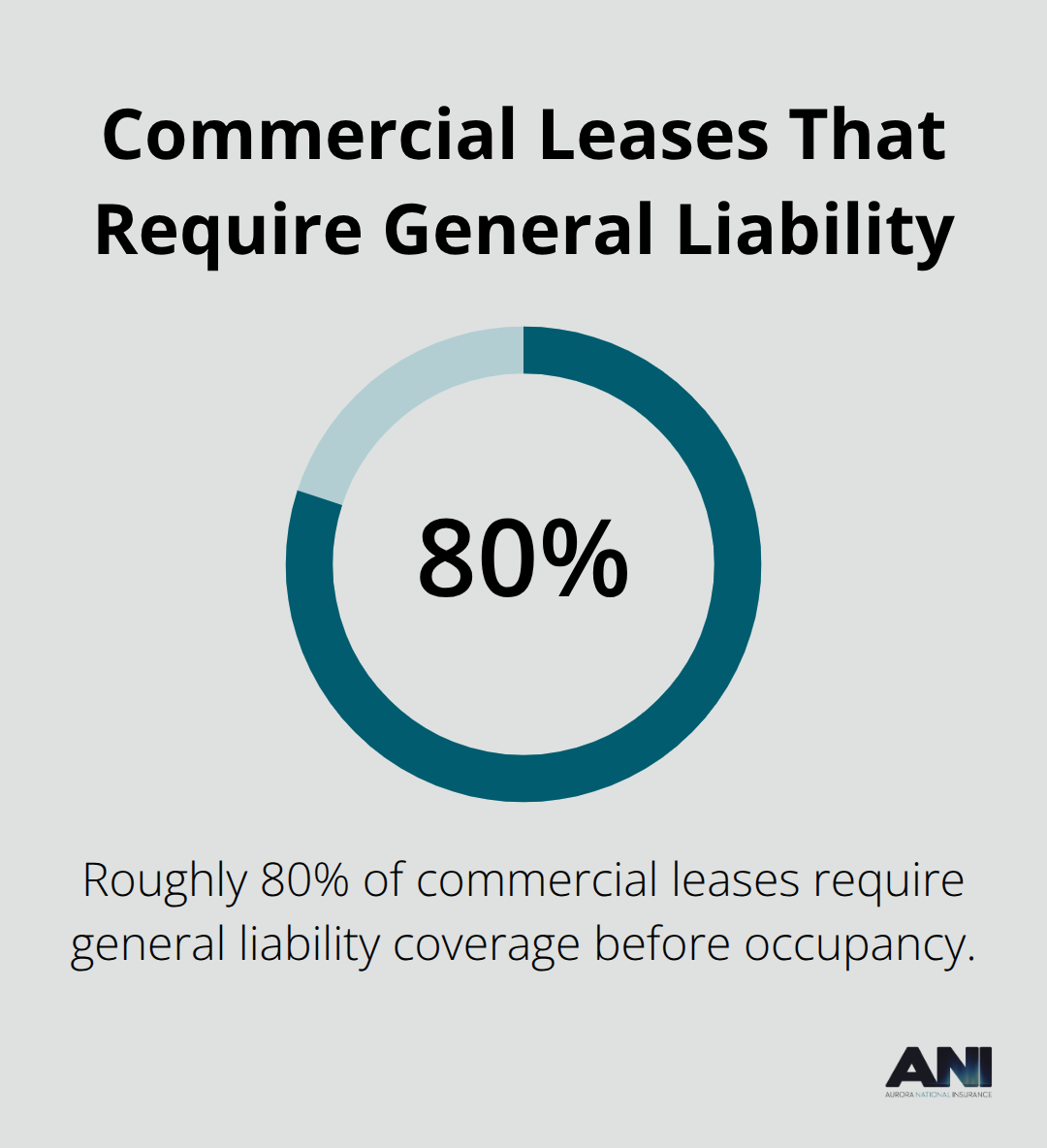
Startups operate in constant vulnerability. You juggle tight budgets, rapid growth, and countless interactions with customers, vendors, and visitors. Every interaction carries liability risk. A customer slips on a wet floor in your office and fractures their wrist. Your delivery driver hits a client’s storefront while making a drop-off. An employee damages a customer’s equipment during installation. Four out of 10 small businesses are likely to experience a property or general liability claim in the next 10 years. These aren’t rare edge cases-they’re statistically likely events that strike your business. The Texas Department of Insurance reports that roughly 80% of commercial leases require general liability coverage before you occupy the space. If you operate in an urban area, your landlord almost certainly demands proof of coverage. Without it, you lose access to the location entirely, and your business stalls before it gains momentum.
The Financial Damage When Claims Hit
A single lawsuit obliterates a startup’s financial runway. Bodily injury claims routinely reach $45,000 or more when someone requires medical treatment and legal representation. Defense costs alone average around $15,000 per incident for advertising claims like libel or copyright infringement. A Dallas service firm faced a $40,000 negligence claim that nearly forced closure. What makes this worse is that startup founders often assume they can self-insure or absorb these costs. They cannot. Most startups operate on razor-thin margins with minimal cash reserves. One major claim wipes out months or years of profit and forces difficult decisions: lay off employees, halt operations, or declare bankruptcy. Founders who delayed purchasing coverage lost everything to incidents they could have prevented for less than $100 per month. The financial impact extends beyond the immediate payout. Your business interrupts while you manage the claim. Your reputation suffers. Insurance companies and lenders lose confidence. Future financing becomes nearly impossible.
Landlords and Partners Won’t Let You Operate Without It
Your lease agreement almost certainly includes a requirement for general liability insurance. Commercial property owners protect themselves by mandating that tenants carry coverage. If you violate this requirement, you breach your lease and face eviction. The Texas Department of Insurance notes that non-compliance with basic liability requirements can trigger fines up to $25,000 per violation. Beyond landlords, investors, business partners, and lending institutions all demand proof of coverage before committing capital or partnership agreements. About 70% of Texas small businesses already carry general liability precisely because lenders and landlords won’t work with uninsured operations. If you want to scale your business and attract investment, general liability insurance becomes a prerequisite that signals you operate professionally and understand risk management.
What Happens When You Skip Coverage
Uninsured startups face consequences that extend far beyond a single claim. Your business loses credibility with potential clients who request certificates of insurance before signing contracts. Vendors hesitate to work with you. Landlords refuse to renew leases. Banks deny loans. The cost of remaining uninsured-lost opportunities, rejected partnerships, and operational restrictions-far exceeds the monthly premium you’d pay for protection. When a claim finally arrives (and statistics suggest it will), you face the choice between personal bankruptcy or business closure. The path forward requires understanding exactly what coverage limits and deductibles make sense for your specific operation.
How to Choose the Right General Liability Policy
Most startups default to the standard $1,000,000 per occurrence and $2,000,000 aggregate limits because they hear it recommended everywhere. This baseline makes sense for many operations, but it’s not universal. Your actual risk depends on what you do, where you operate, and who you interact with daily. A software consultant working from a home office faces vastly different exposure than a contractor installing equipment in client facilities. The contractor’s work directly damages property and injures people; the consultant’s primary risk is professional liability, not bodily injury.
Assess Your Business Risk Level
Before you accept the standard limits, assess what you genuinely cannot afford to pay out of pocket. If a claim hits for $500,000 in property damage and your business has $200,000 in annual revenue, you need that $1,000,000 limit. If you operate in a low-contact service business with minimal physical risk, lower limits may reduce your premium without leaving you exposed. The SBA advises insuring against what you couldn’t personally cover, which means your risk assessment must be honest, not conservative.
Choose Deductibles You Can Actually Pay
Your deductible choice between $500 and $1,000 cuts your premium but only if you can actually pay it when a claim occurs. This is where startups make terrible decisions. A founder selects a $1,000 deductible to save money per month, then faces a $45,000 claim and cannot access the $1,000 deductible from cash flow because the business runs lean. The insurance company pays, but the startup’s operational budget collapses. The right deductible is the highest amount you can withdraw from your business account without disrupting payroll or vendor payments. For most startups with tight cash flow, $500 is the practical maximum, even though $1,000 saves money. Calculate what your business can genuinely absorb, then build your coverage around that number. Lowering your aggregate limit from $2,000,000 to $1,000,000 also reduces cost without sacrificing per-occurrence protection-a middle-ground option for startups that need lower premiums but want reasonable coverage.
Compare Quotes from Multiple Providers
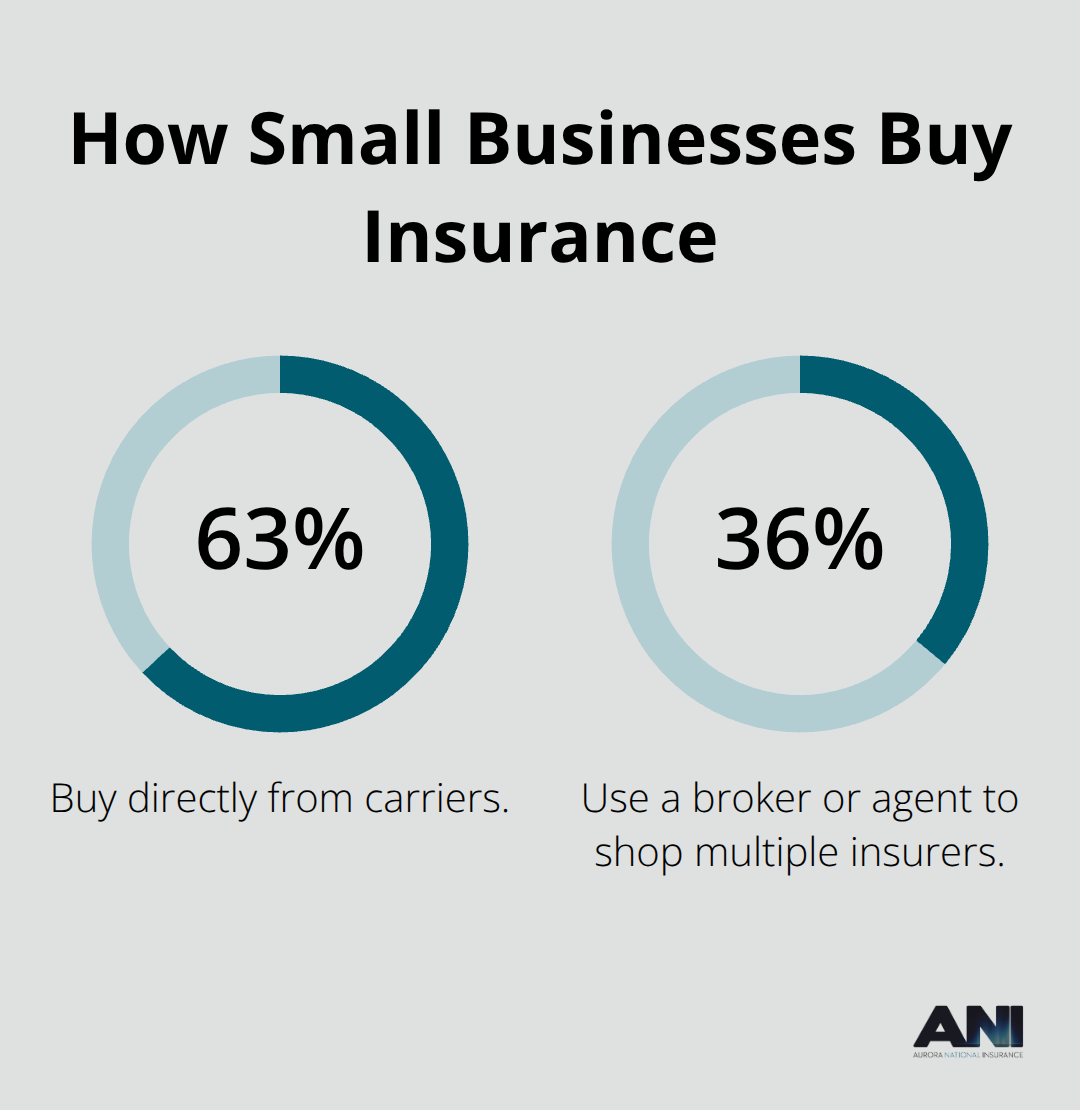
About 63% of small businesses buy insurance directly from carriers, but roughly 36% use a broker or agent, and that second group typically pays less because brokers compare multiple insurers simultaneously. Request quotes from at least three providers using identical coverage specifications so you can compare apples to apples. Provide accurate claims history, loss runs if you have them, and specifics about your operations.
Vague applications lead to vague quotes that change when underwriters review your actual business. Tell the broker your industry, number of employees, annual revenue, and the specific work you perform. A landscaper who mentions equipment operation receives a different quote than one who only mows lawns. Location matters enormously; urban operations pay more than rural ones due to higher claim frequency. When you receive quotes, verify they include the same limits, deductibles, and coverage provisions before comparing price. A $40 per month quote with $500,000 limits is not cheaper than an $80 per month quote with $1,000,000 limits. Independent agents access options that direct online quotes cannot provide, giving you leverage to find the most competitive rate for your specific risk profile.
Final Thoughts
General liability for startups protects your business from financial ruin when claims arrive-and statistics confirm they will. Four out of ten small businesses face a claim within ten years, making coverage a practical necessity rather than an optional expense. Your landlord demands it, your investors require it, and your clients expect it before signing contracts. The monthly cost of $45 to $166 for standard $1,000,000 per occurrence and $2,000,000 aggregate limits represents a fraction of what a single uninsured incident would cost your operation.
Start by calculating what your business can genuinely afford to pay out of pocket if a claim occurs, then build your deductible around that realistic number. Request quotes from at least three providers using identical coverage specifications so you compare actual costs rather than misleading numbers. An independent agent accesses multiple carriers simultaneously and often finds better rates than direct online quotes because they shop your risk across the market. We at Aurora National Insurance represent top-rated carriers and can deliver tailored comparisons at competitive prices for your specific startup.
Contact us this week to get instant online quotes and see exactly what general liability for startups costs for your business. Delaying coverage leaves your operation exposed to financial catastrophe that could force closure. As your startup grows and you hire employees, workers’ compensation becomes mandatory under Texas law, but your foundation starts with general liability protection today.
The information provided in this blog is for general informational purposes only and does not constitute legal, financial, or insurance advice. Coverage options, terms, and availability may vary. Please consult with a licensed professional for advice specific to your situation.
Artificial intelligence may have been used to generate text and images in some blog articles.