
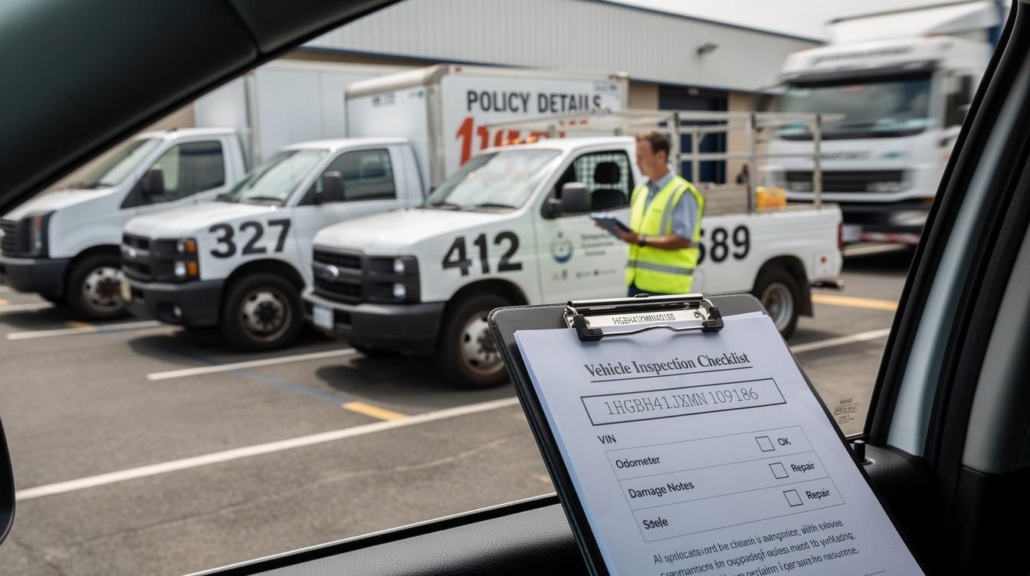
Alaska Commercial Vehicle Insurance: Fleet Coverage That Moves You Forward
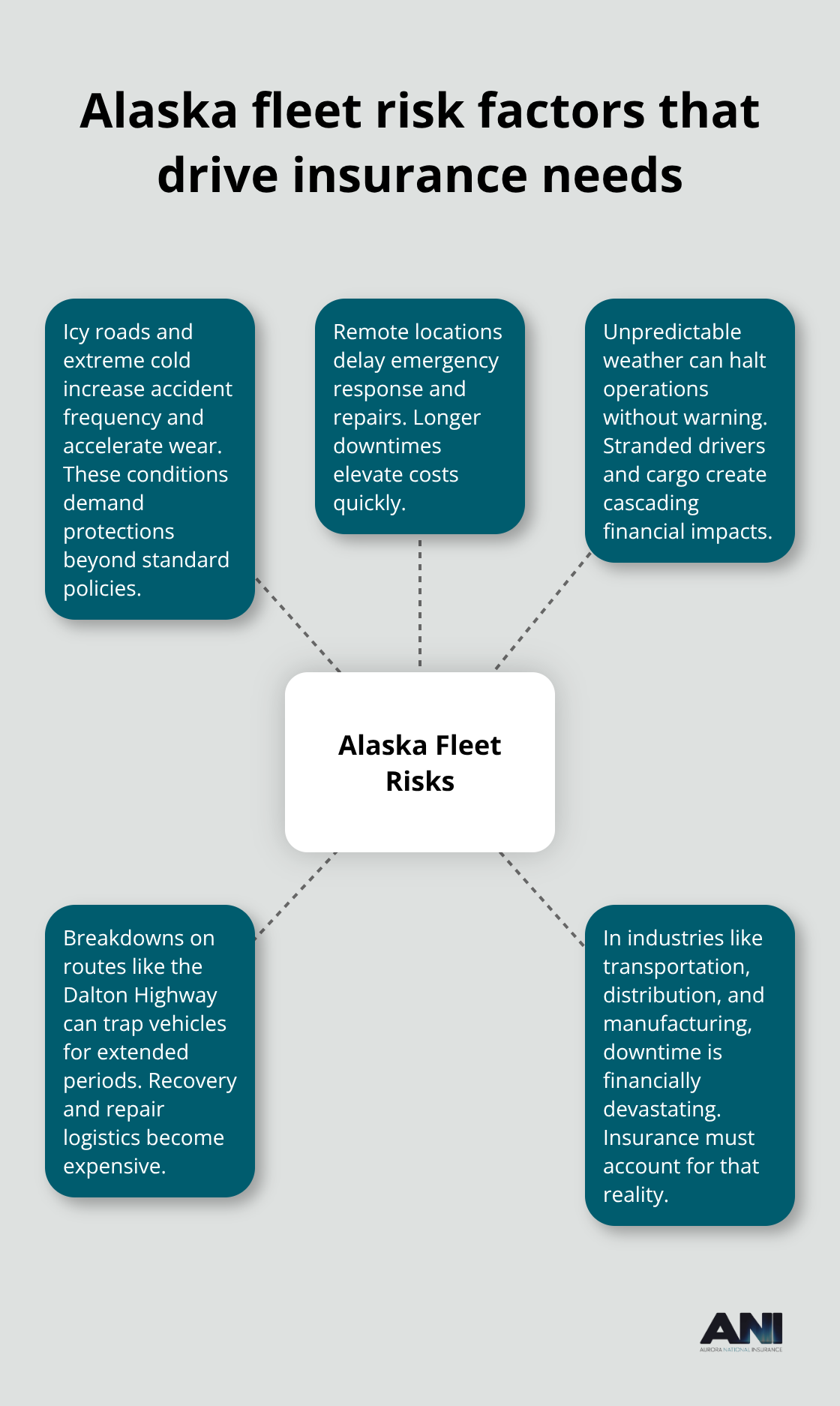
Running a commercial fleet in Alaska means dealing with extreme weather, remote terrain, and strict regulations that most other states don’t require. Vehicle breakdowns in isolated areas can cost thousands per day in lost productivity and emergency repairs.
At Aurora National Insurance, we’ve helped Alaska business owners protect their fleets with coverage designed specifically for the state’s unique challenges. The right Alaska commercial vehicle insurance strategy can mean the difference between a manageable expense and a financial crisis.
Why Alaska’s Harsh Conditions Make Fleet Insurance Non-Negotiable
Alaska’s commercial fleets face operational realities that demand specialized insurance. The state’s infrastructure presents genuine hazards: icy roads, remote locations where emergency services are hours away, and weather patterns that ground operations unpredictably. A single vehicle breakdown in areas like the Dalton Highway or rural Southeast Alaska traps drivers and cargo for extended periods, creating costs that standard commercial policies simply don’t address adequately. Anchorage experiences roughly 200 inches of snowfall annually, while Fairbanks averages 70 inches, and both cities see temperatures that accelerate vehicle wear and increase accident frequency. Alaska’s commercial fleets in transportation, distribution, and manufacturing sectors operate under conditions where downtime isn’t just inconvenient-it’s financially devastating.
A food truck business loses not just fuel costs but spoilage, labor, and customer relationships when it loses a day of service. A contractor fleet stuck due to vehicle damage faces project delays, penalties, and reputation damage that insurance must account for.
Alaska’s Minimum Coverage Falls Short for Real Operations
Alaska law requires minimum liability limits of $50,000 per person for bodily injury. These numbers were set decades ago and haven’t kept pace with actual repair costs or medical expenses. A single serious accident involving employee injury and damage to a client’s property easily exceeds these minimums, leaving your business personally liable for thousands beyond what insurance covers.
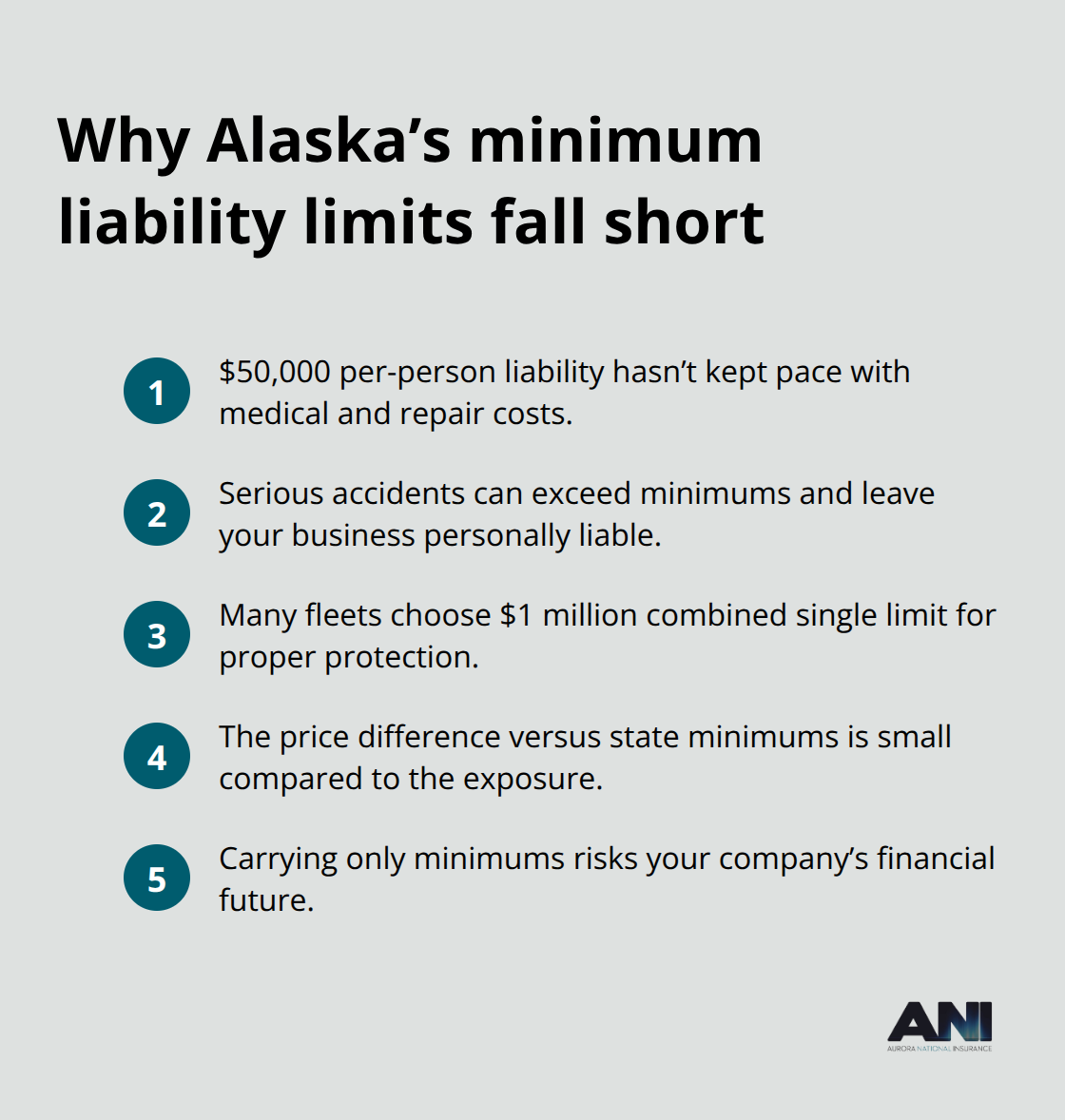
Fleet operators who carry only state minimums gamble with their company’s future. Higher limits-many fleets choose $1 million in combined single limits-protect your assets and employees properly. The cost difference between state minimums and adequate coverage is minimal compared to the financial exposure you accept by staying at the legal floor.
Remote Operations and Regulatory Compliance Add Real Costs
Vehicles operating across Alaska’s vast distances face higher claim frequency than urban fleets, pushing premiums higher than national averages. Federal regulations under FMCSA and USDOT add compliance requirements that non-compliant operations face fines, license suspension, or complete shutdowns. Fleet managers operating in multiple jurisdictions-say, routes between Anchorage and Fairbanks-need policies that address both urban congestion and remote highway risks. Non-trucking liability specifically covers trucks when not hauling loads, a coverage gap many operators overlook until a parked vehicle causes damage. Specialized vehicle types matter too: food trucks require different protection than service vans due to equipment risk and spoilage concerns. Coverage gaps in remote areas aren’t theoretical problems-they’re financial disasters waiting to happen.
Specialized Coverage Addresses Alaska’s Unique Fleet Risks
Food trucks present distinct challenges beyond standard commercial auto coverage. Equipment breakdowns, spoilage from temperature loss, and product liability from hot beverages or foodborne illness require additional protection that basic policies exclude. A contractor fleet needs different coverage than a delivery service, and a snow plow operation needs different protection than a landscaping company. Each profession carries distinct risk profiles that affect both what you need to cover and what you’ll pay for that coverage. Vehicle size and equipment load directly impact premiums: a food truck with a grill and fryer costs more to insure than a lightly equipped service van. Your insurance provider must understand these distinctions and tailor coverage accordingly, which is why working with someone who knows Alaska’s specific industries matters far more than choosing based on price alone.
Building the Right Coverage Stack for Your Alaska Fleet
Commercial Auto Insurance Forms Your Foundation
Commercial auto insurance for multiple vehicles forms the foundation of fleet protection, but Alaska’s operational demands require you to think beyond basic liability coverage. Standard commercial auto policies cover third-party bodily injury and property damage, plus driver and passenger injuries, vehicle damage, and roadside assistance-but these baseline protections often leave gaps specific to Alaska operations. A fleet operating across Anchorage’s congested streets and the Dalton Highway’s remote stretches faces wildly different risk profiles on the same policy. Collision and comprehensive coverage become essential rather than optional when vehicles operate in areas where emergency repair shops sit 200 miles away. Medical payments coverage protects your drivers when accidents happen, reducing workers’ compensation claims and keeping your insurance costs stable.
Uninsured motorist coverage addresses a real Alaska problem: drivers without adequate insurance create liability gaps that your policy must fill. The cost difference between state-minimum coverage and properly layered commercial auto protection typically runs 15-25% more in premiums, but that investment prevents catastrophic exposure when serious accidents occur. Food trucks, contractor vehicles, and service vans each require different coverage configurations because their operational risks differ fundamentally. A food truck needs equipment breakdown protection and spoilage coverage that a plumbing contractor’s van doesn’t require.
Customization Matters More Than One-Size-Fits-All Policies
Alaska’s harsh conditions mean vehicles experience higher claim frequency than national averages, which is why customization matters more than accepting a standard policy. Food trucks present distinct challenges beyond standard commercial auto coverage. Equipment breakdowns, spoilage from temperature loss, and product liability from hot beverages or foodborne illness require additional protection that basic policies exclude. A contractor fleet needs different coverage than a delivery service, and a snow plow operation needs different protection than a landscaping company. Each profession carries distinct risk profiles that affect both what you need to cover and what you’ll pay for that coverage.
Vehicle size and equipment load directly impact premiums: a food truck with a grill and fryer costs more to insure than a lightly equipped service van. Your insurance provider must understand these distinctions and tailor coverage accordingly, which is why working with someone who knows Alaska’s specific industries matters far more than choosing based on price alone.
Workers’ Compensation and General Liability Complete Your Protection
Workers’ compensation covers employee injuries from vehicle accidents, medical expenses, and lost wages-a critical gap that commercial auto alone doesn’t address. In Alaska, where medical costs run higher than national averages due to geographic isolation and limited provider competition, adequate workers’ comp limits protect both your employees and your bottom line. General liability coverage within a business owner’s policy handles property damage claims that exceed what commercial auto covers, protecting your company when an employee accidentally damages a client’s building or equipment during service delivery.
Bundling commercial auto with general liability and workers’ compensation typically costs 10-15% less than purchasing policies separately, making the layered approach economically smarter than minimalist coverage. Federal regulations under FMCSA and USDOT require specific compliance documentation, and comprehensive policies help demonstrate that compliance to regulators.
Scaling Coverage as Your Fleet Grows
A contractor operating multiple vehicles across different job sites needs coverage that scales with fleet growth-policies that allow quick additions of new vehicles without lengthy underwriting delays. Snow plow services, landscaping companies, and HVAC contractors in Alaska commonly add non-trucking liability to protect parked vehicles and equipment, addressing liability exposure that standard policies exclude. The practical reality is that fleet operators choosing coverage based solely on price end up with gaps that cost thousands when claims occur, while those building coverage systematically around their actual operational risks maintain stability even during expensive loss periods. Your next step involves selecting a provider who understands both Alaska’s regulatory landscape and your specific industry’s risk profile.
How to Choose the Right Fleet Insurance Provider
Look Beyond Price to Alaska-Specific Expertise
Finding the right fleet insurance provider means evaluating more than price quotes-you need providers who understand Alaska-specific operational challenges and customize coverage accordingly. An independent agency representing multiple carriers offers genuine options rather than forcing you into one company’s standard offerings, which matters tremendously when your fleet operates across Anchorage’s urban congestion and remote highways simultaneously. Aurora National Insurance, an independent Anchorage-based agency rooted in Alaska, works with businesses across transportation, distribution, and specialty industries, tailoring coverage to match how your vehicles actually operate rather than applying generic policies designed for the lower 48. The provider you choose should pull motor vehicle records for all drivers with access to company vehicles, because incidents in the past three years directly impact your rates, and you need transparency about how their underwriting process evaluates your specific drivers and operational profile.
Verify Industry-Specific Experience
Ask directly whether your potential provider has experience insuring food trucks, contractor fleets, snow plow operations, or whatever your specific business type is, because someone who regularly insures landscaping companies knows the equipment risks and coverage gaps that a generalist misses entirely. Local expertise matters far more than national brand recognition when claims happen in areas where repair shops sit 200 miles away and emergency services move slowly. A provider with an established network in Alaska knows which shops deliver quality work quickly, understands how weather delays affect claim timelines, and navigates the state’s unique regulatory environment without delays.
Evaluate Claims Response and Support Systems
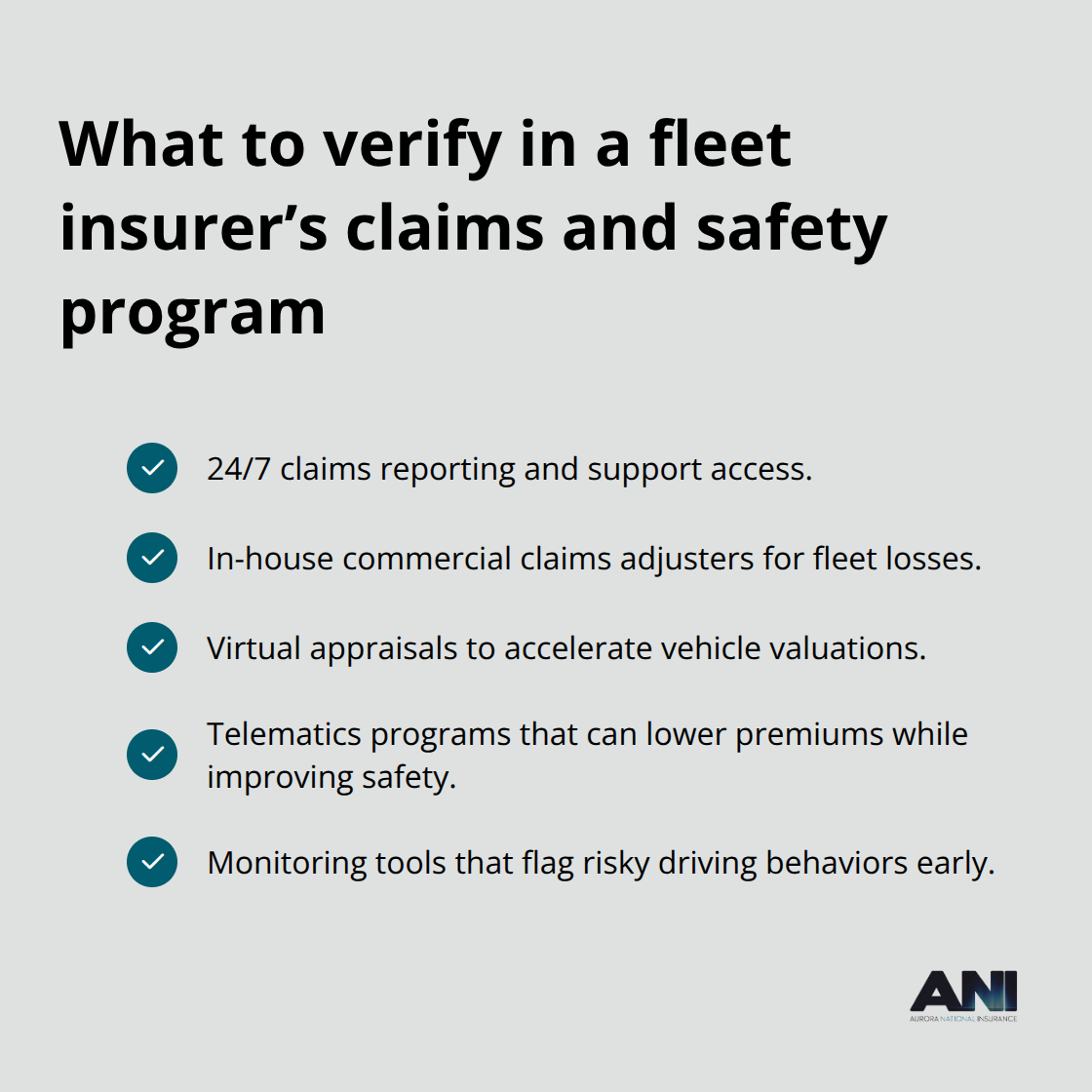
Request specific information about their claims response process: do they offer 24/7 support, do they have in-house adjusters or contract outside firms, and can they handle virtual appraisals to speed vehicle valuations after losses? Some carriers maintain in-house commercial claims adjusters specifically for fleet situations, which matters when you need fast turnaround to get vehicles back in service. Compare what telematics programs each provider offers, since monitoring systems can lower premiums by 10-15% while improving driver safety and identifying risky behaviors before they cause accidents.
Compare Multiple Quotes with Complete Information
Request quotes from at least three providers before deciding, and specify your exact fleet composition, typical routes, and operational areas so comparisons remain apples-to-apples rather than based on incomplete information. The cheapest quote rarely reflects the best value once you factor in coverage gaps, claims handling speed, and customization options that prevent expensive surprises when losses occur. Coverage customization for Alaska’s unique risks (food truck spoilage protection, remote area liability, equipment breakdown coverage) separates providers who truly understand your operational environment from those applying one-size-fits-all approaches.
Final Thoughts
Selecting the right Alaska commercial vehicle insurance requires balancing coverage that matches your actual operational risks, provider expertise in Alaska’s specific industries and terrain, and claims support that returns vehicles to service quickly when losses occur. The cheapest quote rarely delivers the best value once you account for coverage gaps that cost thousands when accidents happen in remote areas or specialized equipment fails. Your fleet’s profitability depends on minimizing downtime, and that means choosing a provider who understands food truck spoilage risks, contractor equipment exposure, snow plow seasonal demands, or whatever your specific business requires.
Working with a local insurance partner who knows Alaska’s regulatory landscape, repair shop networks, and operational challenges delivers advantages that national carriers cannot match. Someone rooted in Alaska understands how weather delays affect claim timelines, knows which shops deliver quality work quickly, and navigates state compliance requirements without unnecessary delays. An independent agency representing multiple carriers gives you genuine options rather than forcing you into one company’s standard offerings, which matters tremendously when your fleet operates across Anchorage’s congested streets and remote highways simultaneously.
Aurora National Insurance is an independent Anchorage-based agency that provides Alaska commercial vehicle insurance tailored to your business, representing multiple top-rated carriers and delivering expert consultation to help you find the right protection at competitive prices. Their licensed agents understand the specific risks facing transportation, distribution, and specialty industry fleets across Alaska, and they can pull together quotes that compare apples-to-apples so you see exactly what coverage differences cost. Request quotes from multiple providers, specify your exact fleet composition and operational areas, and ask directly about their experience insuring businesses like yours.
The information provided in this blog is for general informational purposes only and does not constitute legal, financial, or insurance advice. Coverage options, terms, and availability may vary. Please consult with a licensed professional for advice specific to your situation.
Artificial intelligence may have been used to generate text and images in some blog articles.


