General Liability Coverage Alaska: Tailoring Protection for Remote Work
Remote work has fundamentally changed where and how you operate your business. If you’re working from home in Alaska, your liability risks have shifted too-and your standard business insurance might not keep pace.
At Aurora National Insurance, we’ve seen firsthand how general liability coverage Alaska policies often miss the exposures that come with home-based operations. This guide walks you through what actually matters for your protection.
How Remote Work Shifts Your Liability Exposure
Remote work fundamentally changes where liability claims originate. When you operated from a traditional office, your exposure stayed contained-clients visited during business hours, your property remained controlled, and your activities followed predictable patterns. Remote work shatters that model. Your home becomes a business location. Client meetings happen in your living room. Contractors or delivery personnel enter spaces you may not have prepared for commercial activity. A client trips on your home office stairs, or a delivery driver sustains an injury while accessing your residential property to drop off business equipment.
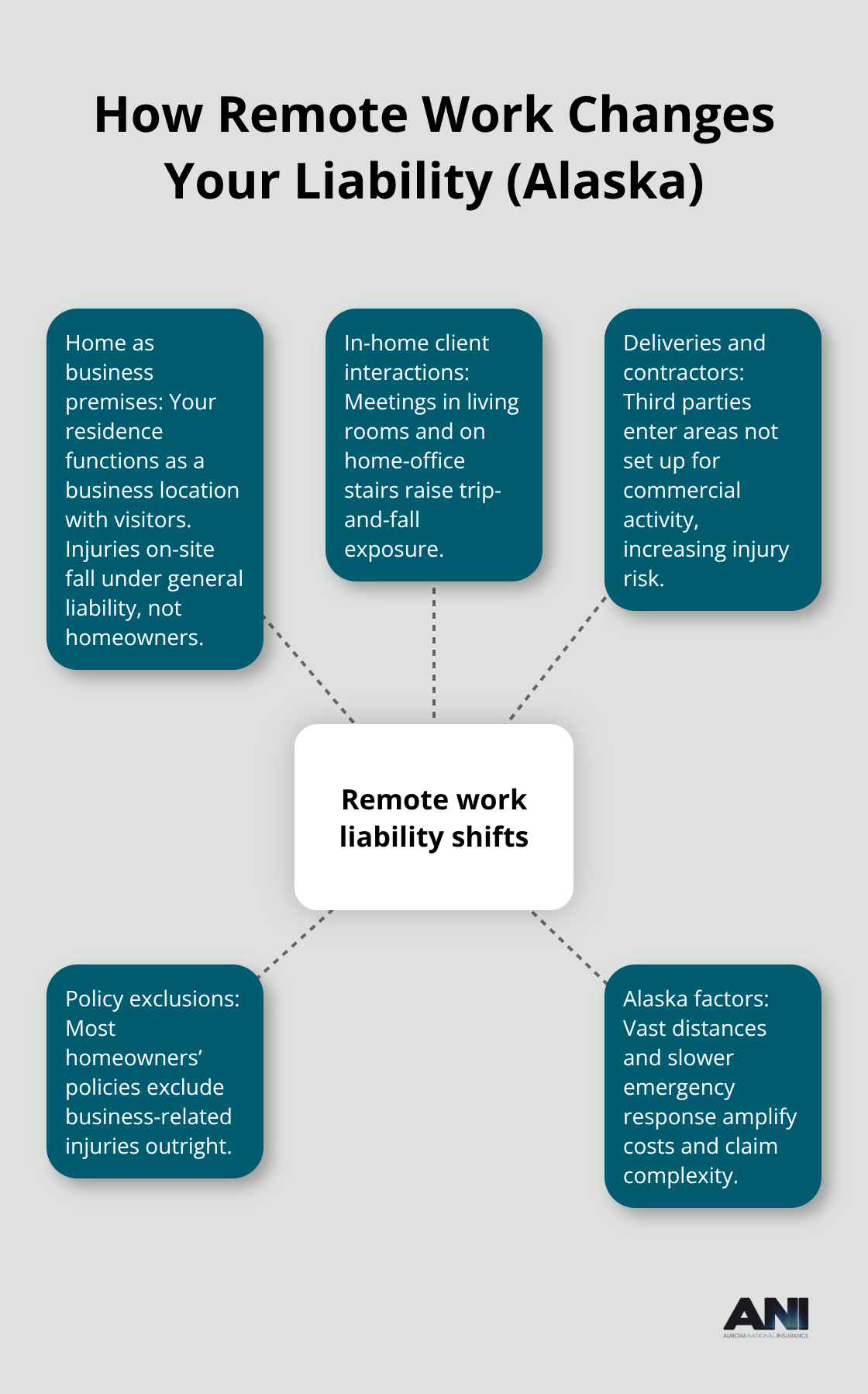
These incidents fall squarely into general liability territory, yet most homeowners’ policies explicitly exclude business-related injuries. Standard commercial general liability policies written for traditional offices often fail to account for the specific hazards of home-based operations-especially in Alaska, where remote job sites span vast distances and emergency services can take hours to reach accident victims. Slip-and-fall incidents cost businesses an average of $10,000 to $50,000 in medical bills and legal expenses combined. In Alaska’s remote regions, those costs climb higher due to medical evacuation and limited local emergency capacity.
Your Home Becomes Your Workplace
The moment you conduct business from your residence, your liability profile changes. If a client or vendor sustains an injury on your property during a business meeting or while performing work-related tasks, standard homeowners’ coverage will deny the claim. Your home liability exclusions specifically carve out business activities. A general liability policy designed for remote work must account for the fact that your residential space now hosts business visitors, equipment deliveries, and work-related activities. Alaska’s unique geography compounds this risk-rural properties often feature long driveways, steep terrain, or winter hazards that increase slip-and-fall probability. Additionally, if you operate from a home office and store business equipment, materials, or inventory, property damage claims become more likely. Someone damages your business laptop or sustains an injury on unsecured equipment. These losses fall outside residential policy coverage.
Third-Party Exposure Beyond Your Front Door
Remote work does not confine your liability to your home. If you meet clients at coffee shops, co-working spaces, or their offices, you remain liable for injuries you cause during those interactions. If you are a consultant who accidentally damages a client’s equipment during a presentation, or a contractor who causes property damage while working at a remote site, your general liability coverage must follow you. Alaska’s remote work culture means many professionals operate from job sites scattered across the state-from Juneau to Fairbanks to villages accessible only by plane. Each location introduces new hazards: uneven ground, weather exposure, limited medical access. Your liability extends to every location where you conduct business activities.
Alaska-Specific Hazards Demand Tailored Coverage
Alaska’s geography and climate create liability exposures that standard policies overlook. Winter conditions introduce slip-and-fall risks on ice and snow. Remote locations mean that emergency response times stretch to hours rather than minutes, which increases medical costs and complicates liability claims. If you operate across multiple sites or travel frequently for client meetings, your exposure multiplies. A policy that works for a Seattle-based consultant may leave an Alaska professional underprotected. The distance between your home office and client locations, combined with Alaska’s unpredictable weather and terrain, means your general liability coverage must reflect these realities rather than assume a traditional office environment.
Coverage Gaps in Standard Policies
Most standard commercial general liability policies assume you operate from a fixed business location with controlled access and predictable visitor patterns. Remote work violates all three assumptions. Your policy may exclude coverage for injuries that occur at your home office, fail to protect you when you work at client sites, or provide inadequate limits for Alaska’s higher medical costs. Additionally, if you hire contractors or subcontractors who work from your home or travel with you to job sites, coverage gaps expand further. You need a policy that explicitly addresses home-based operations, client-site work, and the specific risks of Alaska’s remote environment. That’s where tailored coverage makes the difference between protection and exposure.
What Your General Liability Policy Actually Covers
General liability coverage protects you against the financial fallout when someone else gets hurt or their property gets damaged because of your business activities. In Alaska’s remote work environment, this protection becomes your first line of defense against claims that could otherwise bankrupt your operation. The policy covers three distinct areas that matter most for home-based and mobile professionals.
Bodily Injury and Property Damage Claims
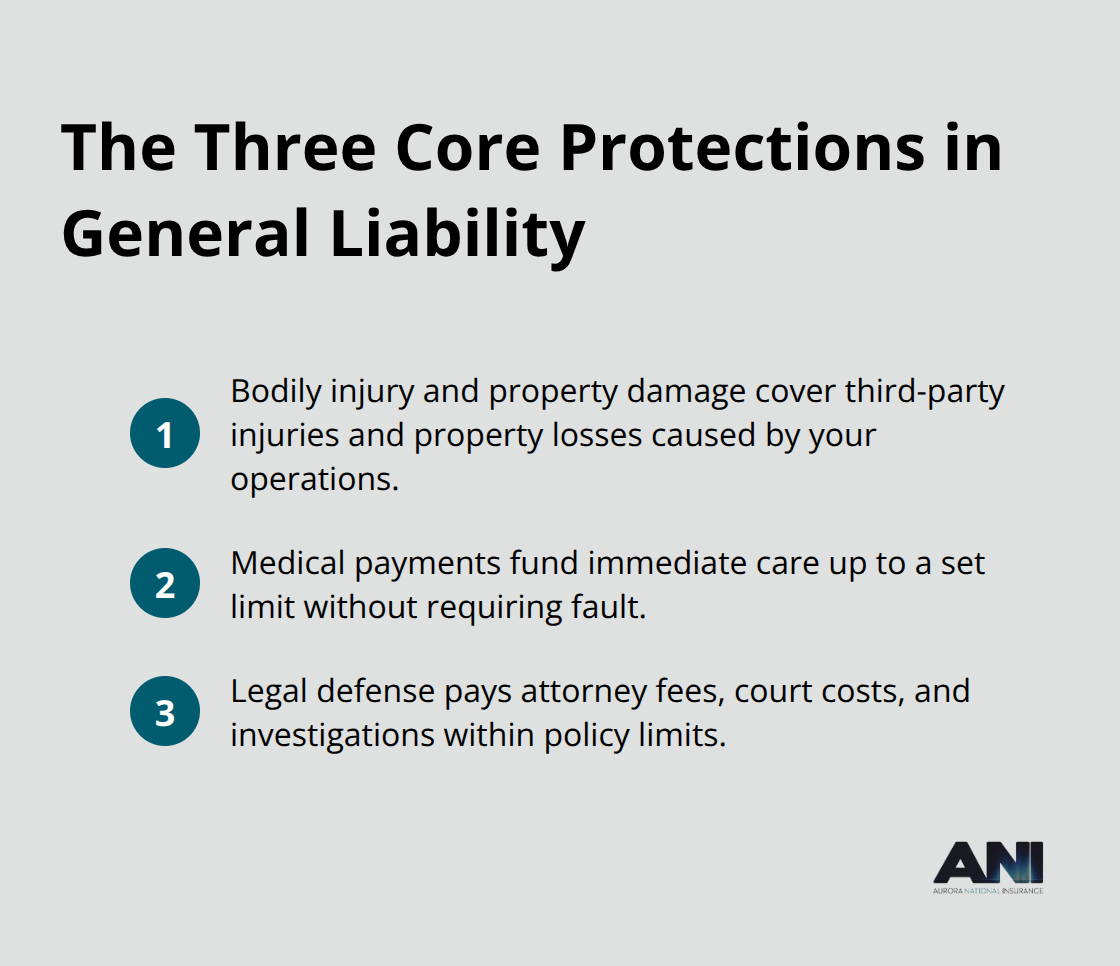
Bodily injury coverage pays medical expenses, rehabilitation costs, and court judgments when a client, vendor, or visitor sustains an injury connected to your work. If a prospective client slips on your home office stairs during a meeting, or a contractor gets injured while delivering equipment to your remote job site, bodily injury coverage handles the medical bills and any resulting lawsuit. Property damage coverage addresses the opposite scenario-when your actions damage someone else’s property. A consultant who accidentally spills coffee on a client’s laptop during a meeting, or a contractor whose equipment damages a client’s building during installation, both trigger property damage claims. Together, these two components form the backbone of your protection against third-party losses.
Medical Payments Coverage for Immediate Costs
Medical payments coverage operates independently from bodily injury and property damage claims. It pays immediate medical expenses up to a set limit without requiring fault determination. This matters significantly in Alaska, where medical evacuation from remote locations can cost thousands of dollars before any lawsuit even begins. Your policy covers emergency transport, initial treatment, and follow-up care for injured parties on your property or at your work sites. Unlike bodily injury coverage (which requires you to be found liable), medical payments coverage activates regardless of who caused the accident. This distinction proves valuable when injuries occur in ambiguous circumstances or when you want to resolve minor medical costs quickly without litigation.
Legal Defense Costs That Protect Your Business
Legal defense costs represent the coverage component most remote workers underestimate. When a claim arises, your insurer covers attorney fees, court costs, and investigation expenses-costs that accumulate rapidly regardless of whether you ultimately prevail. A single premises liability lawsuit in Alaska routinely generates $5,000 to $15,000 in legal fees before settlement negotiations even begin, and complex cases easily exceed $50,000. Your general liability policy covers these expenses up to your policy limit, meaning the insurer pays your legal team to defend you while you focus on your business. This protection applies even if the claim lacks merit, which matters because frivolous claims still require legal response. Many remote professionals operating across multiple Alaska locations face heightened claim exposure simply because they work in unfamiliar spaces where hazards vary dramatically. A policy with adequate legal defense coverage ensures you can mount a proper defense without depleting your business reserves.
Now that you understand what general liability coverage protects, the next critical step involves understanding how Alaska’s unique environment shapes your actual coverage needs and where standard policies fall short for remote workers.
General Liability Coverage for Alaska Remote Workers
Winter Conditions and Terrain Create Unique Hazards
Alaska’s climate and geography introduce liability exposures that standard policies overlook. Winter conditions create slip-and-fall risks on ice and snow around your home and at client sites. Rural locations mean emergency response times stretch to hours rather than minutes, which inflates medical costs and complicates claims. If you operate across multiple sites or travel frequently between Anchorage, Fairbanks, Juneau, and villages accessible only by plane, your liability exposure multiplies with every location. A policy written for a consultant working in Seattle won’t protect an Alaska professional operating across the state.
Standard Policies Leave Critical Gaps
Standard commercial general liability insurance policies assume you work from a fixed business location with controlled access and predictable visitor patterns. Remote work violates all three assumptions. Your policy may exclude coverage for injuries at your home office, fail to protect you when you work at client sites, or provide inadequate limits for Alaska’s higher medical costs and evacuation expenses. If you hire contractors or subcontractors who work from your home or travel with you to job sites, coverage gaps expand further.
What Tailored Coverage Addresses
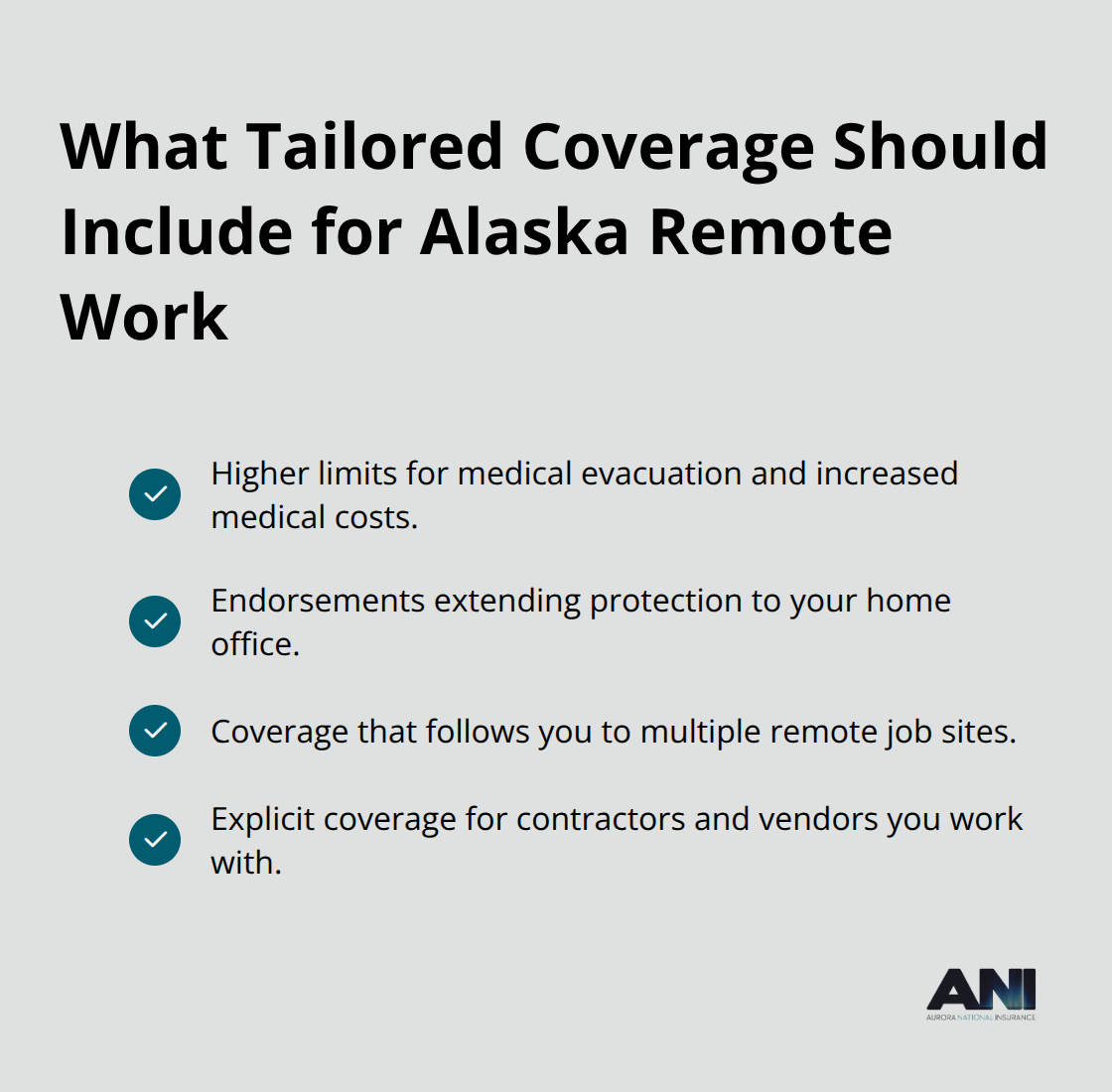
You need explicit protection for home-based operations, client-site work, and Alaska’s specific hazards rather than a one-size-fits-all policy designed for traditional office settings. Tailored coverage addresses the actual conditions where you work. This means higher limits to account for Alaska’s medical evacuation costs, endorsements that extend protection to your home office and multiple remote job sites, and explicit coverage for the contractors and vendors you work with.
Protection Across Your Operating Locations
Your policy should cover third-party injuries at your residential workspace, property damage you cause at client locations, and medical payments that activate immediately without requiring fault determination. Alaska’s geography and weather patterns demand coverage that reflects your real operating environment. Local agents who understand Alaska’s terrain, emergency response delays, and regulatory requirements help you match your policy to your actual exposures rather than leaving gaps when claims arise.
Final Thoughts
Remote work in Alaska demands general liability coverage Alaska that reflects your actual operating environment, not a standard policy designed for traditional offices. Your home office creates liability exposures that homeowners’ policies explicitly exclude, so you need commercial coverage that addresses residential business activities. Alaska’s geography and climate multiply your risk across multiple job sites and remote locations where emergency response takes hours rather than minutes, and standard policies leave critical gaps in medical evacuation costs, contractor coverage, and protection at client sites scattered across the state.
Review your policy documents and ask your agent whether your home office, client-site work, and Alaska-specific hazards receive explicit protection. Check your bodily injury limits against Alaska’s higher medical costs, verify that medical payments coverage activates without fault determination, and confirm that legal defense costs cover the attorney fees that accumulate quickly in any claim. If your policy was written for a different state or business model, it almost certainly leaves you underprotected.
Working with local agents who understand Alaska’s terrain, weather patterns, and regulatory environment makes the difference between adequate protection and dangerous gaps. We at Aurora National Insurance represent multiple top-rated carriers and leverage local Alaskan expertise to help you compare coverage options and find the right protection at competitive prices. Get an instant online quote to see what your current coverage includes and where you need additional protection.
The information provided in this blog is for general informational purposes only and does not constitute legal, financial, or insurance advice. Coverage options, terms, and availability may vary. Please consult with a licensed professional for advice specific to your situation.
Artificial intelligence may have been used to generate text and images in some blog articles.