
Alaska Home Insurance Claims: Navigate Your Claim with Confidence
Filing an Alaska home insurance claim can feel overwhelming, especially when you’re dealing with property damage or loss. The process involves multiple steps, timelines, and documentation requirements that many homeowners don’t fully understand.
At Aurora National Insurance, we’ve helped countless Alaskans navigate their claims successfully. This guide walks you through what to expect, common pitfalls to avoid, and practical strategies to maximize your settlement.
What Happens After You File Your Claim
The first 48 hours after you file your claim are critical. Contact your insurer immediately and provide a detailed account of what happened, including the date, time, and nature of the damage. Alaska’s harsh winters mean frozen pipes, ice dams, and heavy snow damage claims are common, and you’ll speed up settlements by documenting these issues promptly. Take photos and videos of all damage before you clean up or make temporary repairs. Create a written list of damaged items with descriptions and approximate values, then store these records digitally in cloud storage so you can access them even if your home is uninhabitable. Don’t throw away damaged materials until the adjuster inspects them, as they’ll need to see the actual loss to assess your claim properly.
Meeting Your Adjuster
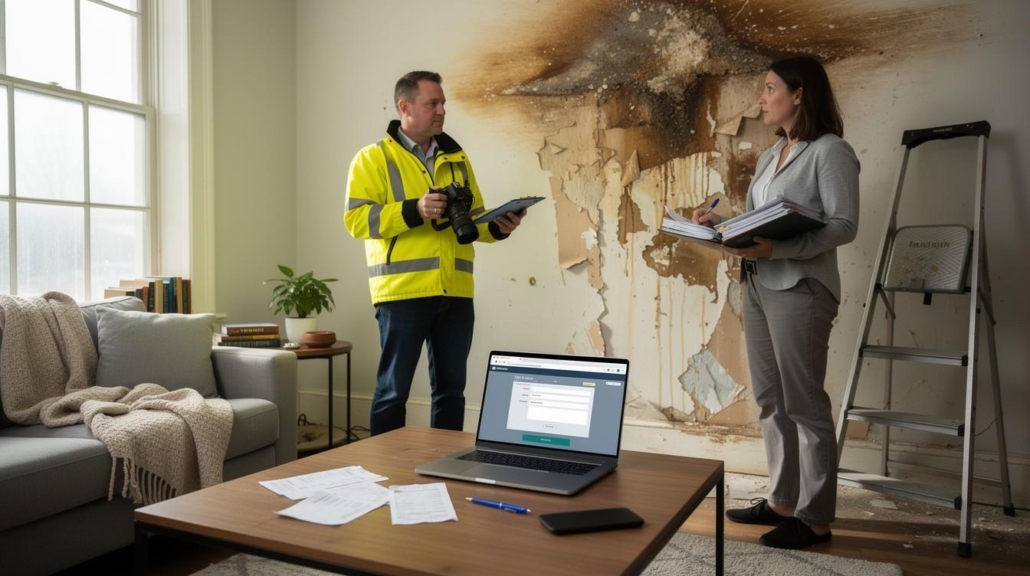
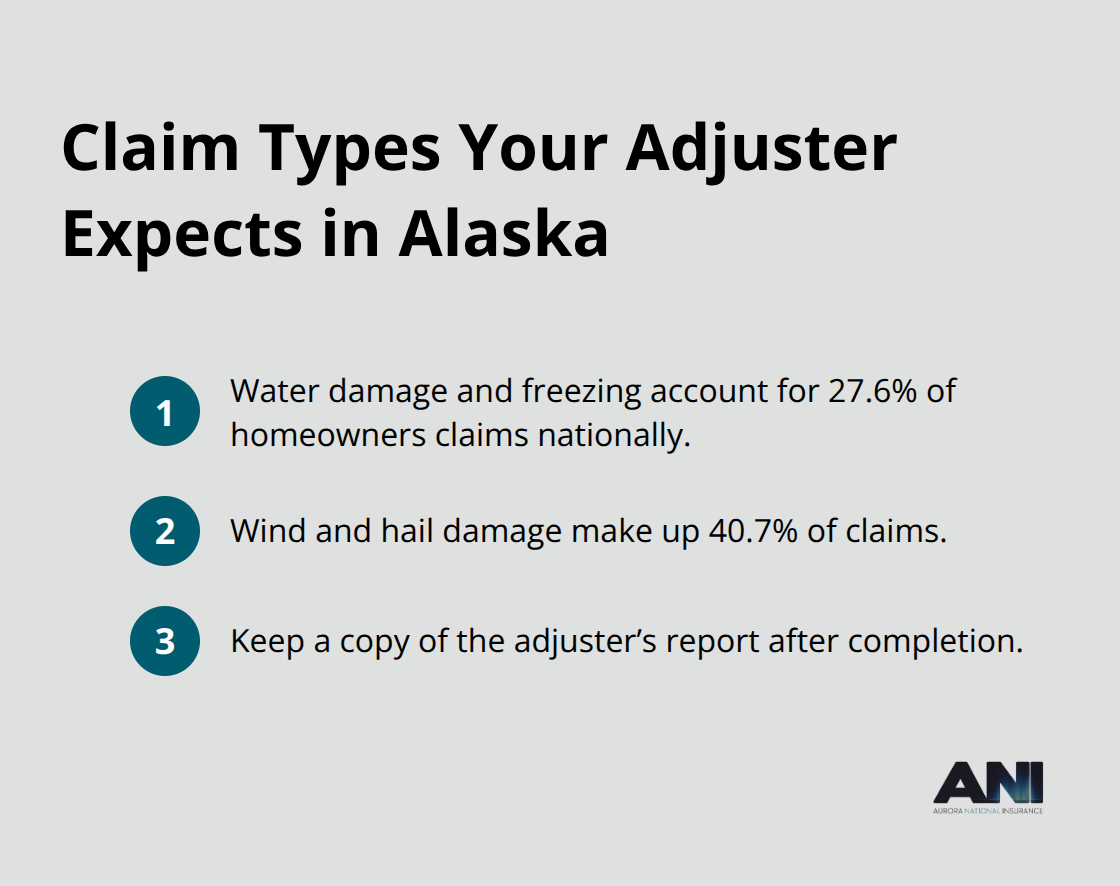
Your insurance company will assign a claims adjuster to your case, typically within 24 to 72 hours depending on claim volume. This adjuster investigates the claim, verifies coverage, and determines the payout amount. Prepare for the inspection by having your policy documents ready, your photo evidence organized chronologically, and a detailed list of damaged items with receipts or proof of purchase when available. Walk through the damage with your adjuster and point out specific issues-don’t assume they’ll catch everything. Ask questions about coverage limits, deductibles, and what the adjuster will include in their report. Water damage and freezing account for roughly 27.6% of homeowners claims nationally, so if your damage involves burst pipes or ice dam damage, clearly explain the sequence of events. Wind and hail damage make up about 40.7% of claims, so document wind speeds or hail size if relevant. Keep a copy of the adjuster’s report once they complete it.
Understanding Your Timeline
Most claims in Alaska resolve within 30 to 45 days, though complex claims involving structural damage or multiple coverages can take longer. The adjuster’s inspection typically happens within the first week, followed by their written report within 10 to 14 days. Once you receive the adjuster’s estimate, you have time to review it carefully and request additional documentation if you disagree with their assessment. If your claim is denied or underpaid, you have the right to appeal within a specific timeframe outlined in your policy. The Alaska Division of Insurance provides resources to help you understand your rights and file complaints if you believe your claim was handled unfairly. Don’t delay in filing your appeal if needed-insurance companies have deadlines for responding to disputes, and missing your window can limit your options. Stay in regular contact with your claims adjuster and follow up in writing if they miss promised deadlines, creating a paper trail of your communication.
What Comes Next
Once your adjuster submits their report and estimate, you move into the settlement phase. This is where many homeowners miss opportunities to maximize their payout. You’ll want to carefully review the adjuster’s findings against your own documentation and the actual damage you sustained.
Why Claims Get Denied or Delayed
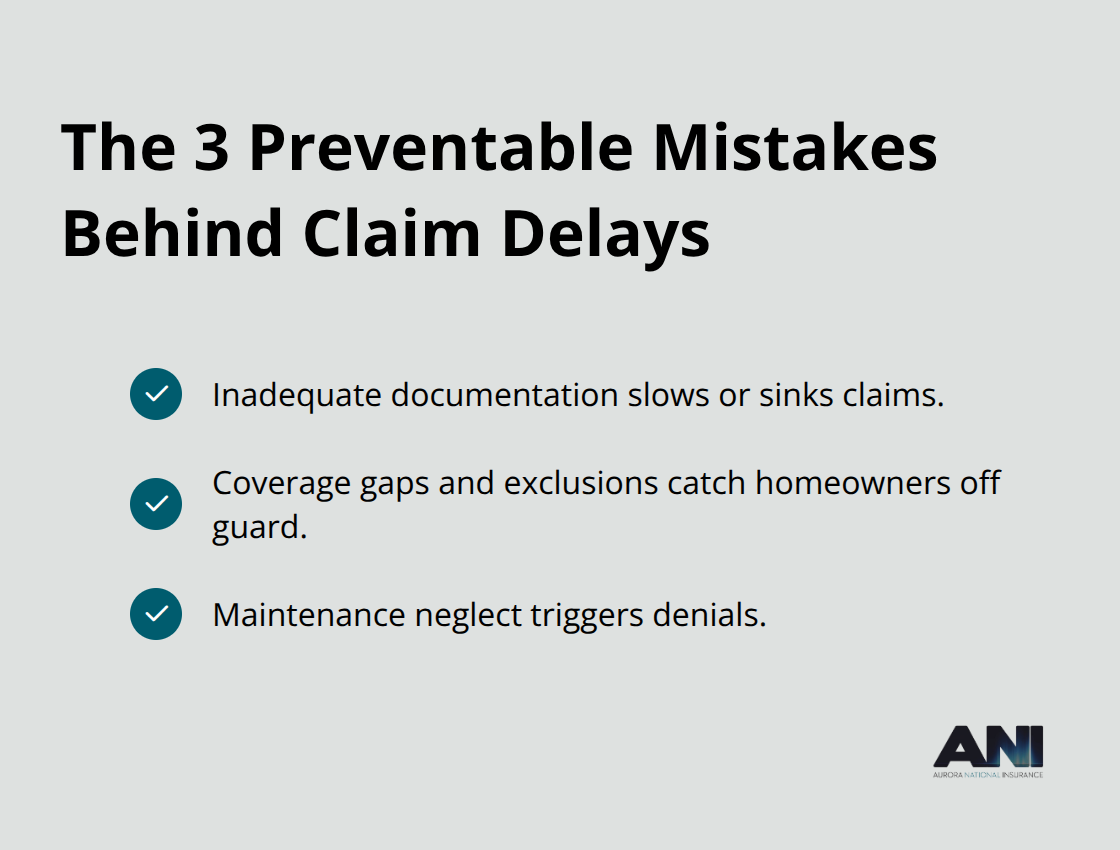
Most Alaska homeowners assume their claim will move smoothly once they file it. The reality differs significantly. According to ISO data, about 5.5% of insured homes filed claims in 2022, but not all of those claims paid out without friction. The gap between filing and settlement stems from three preventable mistakes that you can avoid.
Documentation Failures Cost You Money
Inadequate documentation kills claims faster than almost anything else. When you photograph damage, shoot wide angles that show the overall destruction, then close-ups of specific damage. If pipes froze and burst, photograph the water damage on walls and floors, the broken pipe itself, and any damaged belongings. Write down dates, times, and what triggered the damage. Insurance adjusters review hundreds of claims yearly. The ones that move quickly have clear photo timelines, itemized lists with approximate values, and written explanations of how the damage occurred.
Without these materials, adjusters request additional documentation, which delays your settlement by weeks. You control this outcome. Take action immediately after damage occurs-photograph everything before you clean up or make temporary repairs. Create a written list of damaged items with descriptions and approximate values, then store these records digitally in cloud storage so you can access them even if your home is uninhabitable. Don’t throw away damaged materials until the adjuster inspects them, as they need to see the actual loss to assess your claim properly.
Coverage Gaps and Exclusions Surprise Homeowners
Policy exclusions and coverage gaps catch homeowners off guard constantly. Standard homeowners policies do not cover flood damage under any circumstances. If water entered your home from rising ground water, a swollen river, or heavy precipitation pooling around your foundation, that qualifies as flood damage and requires separate flood insurance through the National Flood Insurance Program operated by FEMA. Wind and hail damage is covered, but earthquake damage is not. Mold resulting from water damage may or may not be covered depending on your specific policy language.
Before filing a claim, pull out your actual policy document and read the exclusions section. Call your agent and ask specifically what is not covered. This prevents wasted time pursuing claims for excluded perils. Water damage and freezing are common homeowners claims in Alaska’s climate, so understanding your coverage for these events matters tremendously.
Maintenance Neglect Triggers Denials
The third reason claims get denied involves your home’s maintenance history. Insurance companies deny claims when they discover that negligence or lack of maintenance caused or worsened the loss. If your roof was visibly deteriorating for years and a storm caused water damage, the insurer may argue you failed to maintain the property. If burst pipes damaged your home because you didn’t insulate exposed pipes in an unheated crawlspace during Alaska’s brutal winters, denial is likely. If mold grew unchecked because you ignored a slow roof leak for months, the claim gets denied.
The insurer’s position is straightforward: you had a duty to maintain your property reasonably. Document your maintenance efforts. Keep receipts from roof repairs, gutter cleaning, pipe insulation work, and HVAC servicing. Take photos of routine maintenance tasks. If damage occurs and the insurer questions maintenance, you have evidence showing you acted responsibly. In Alaska, pipe damage represents your biggest exposure. Insulate pipes in unheated areas, open cabinet doors under sinks on extremely cold nights to allow warm air circulation, and keep your home heated to at least 55 degrees even when you’re away. These steps prevent claims entirely and protect you if damage somehow still occurs.
Understanding what causes denials and delays puts you in control of your claim outcome. The next section shows you exactly how to organize your evidence and present it in ways that maximize your settlement amount.
How to Maximize Your Claim Settlement
Document Damage Thoroughly and Immediately
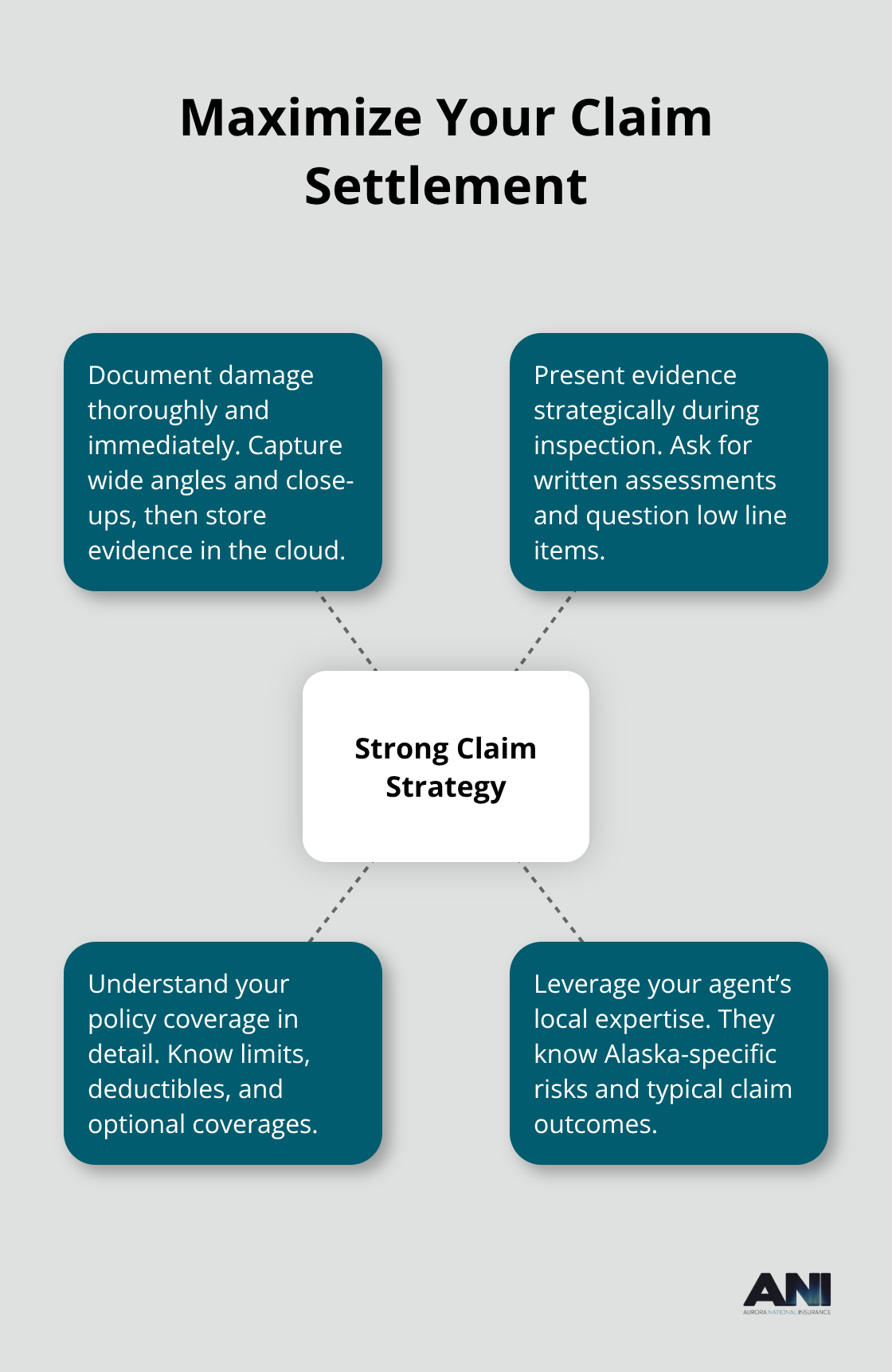
The moment damage occurs, you must act. Your adjuster will base their payout on the strength of your evidence, not on what you remember weeks later. Photograph wide angles that show the overall damage to each affected area, then shoot close-ups of specific damage points. If a pipe burst and flooded your kitchen, photograph the water pooling on the floor, the broken pipe connection, the damaged cabinets, and the ruined items inside.
Document your damage with photographs and detailed descriptions by organizing them logically. Store these files in cloud storage immediately so they survive even if your home becomes uninhabitable. Don’t throw away damaged materials until the adjuster inspects them-they need to see the actual loss to assess your claim properly.
Present Evidence Strategically During Inspection
When the adjuster inspects your property, walk them through the damage systematically and point out details they might miss. Ask them to explain their assessment in writing and request clarification on any line items that seem low. Don’t accept their initial estimate if you believe it undervalues your loss, especially for high-cost items like appliances or electronics.
According to ISO data, fire and lightning claims average around $83,991 per claim while water damage averages $13,954, so the type of damage significantly affects settlement amounts. If your estimate seems inconsistent with these benchmarks, push back and provide additional documentation supporting higher values. This approach often results in higher payouts without requiring formal appeals.
Understand Your Policy Coverage in Detail
Your policy document is your contract with the insurance company, and most homeowners never read the coverage section thoroughly. Pull out your actual policy and identify your dwelling coverage limit, personal property limit, liability limit, and deductible. Note any optional coverages you purchased like replacement cost coverage for personal property or water backup coverage.
Call your agent and ask them to walk you through what your policy covers and what it excludes specifically. Many Alaskans discover too late that their policy doesn’t cover flood damage or that their personal property coverage applies only actual cash value rather than replacement cost, which pays significantly less for older items. If your policy has replacement cost coverage for personal property, that coverage pays to replace lost or damaged belongings with brand-new items after a covered loss, which dramatically increases settlements for older possessions.
Leverage Your Agent’s Local Expertise
Work with your agent throughout the claims process, not just when you’re shopping for coverage. They can advocate on your behalf with the adjuster, explain coverage questions that arise during the investigation, and help you understand appeal options if your claim gets denied or underpaid. Your agent has relationships with adjusters and knows how claims typically resolve in Alaska’s specific climate and market.
That local expertise matters when you’re fighting for a fair settlement. An agent familiar with Alaska’s winter risks (frozen pipes, ice dams, heavy snow damage) understands how adjusters evaluate these common claims in your region. They can point out documentation gaps before they delay your settlement and recommend additional evidence that strengthens your position with the insurance company.
Final Thoughts
Filing Alaska home insurance claims successfully requires three actions you control completely. Document damage immediately with photographs and written descriptions stored in cloud storage before you clean up or make repairs. Understand your policy coverage by reading your actual policy document and asking your agent to clarify what is and isn’t covered. Work actively with your claims adjuster by organizing evidence chronologically, asking questions during inspections, and pushing back if estimates seem low compared to actual replacement costs.
These steps transform Alaska home insurance claims from overwhelming experiences into manageable processes. Your documentation quality, policy knowledge, and communication directly influence your settlement amount. Homeowners who take these actions consistently receive higher payouts and faster resolutions than those who assume the process will work itself out.
Local Alaskan expertise matters tremendously when navigating claims in our state’s unique climate. Adjusters and agents familiar with frozen pipes, ice dams, and heavy snow damage understand how to evaluate these common losses properly. Connect with our Anchorage-based team to access agents who understand Alaska’s insurance landscape completely and can advocate for fair settlements when damage strikes your home.
The information provided in this blog is for general informational purposes only and does not constitute legal, financial, or insurance advice. Coverage options, terms, and availability may vary. Please consult with a licensed professional for advice specific to your situation.
Artificial intelligence may have been used to generate text and images in some blog articles.


