
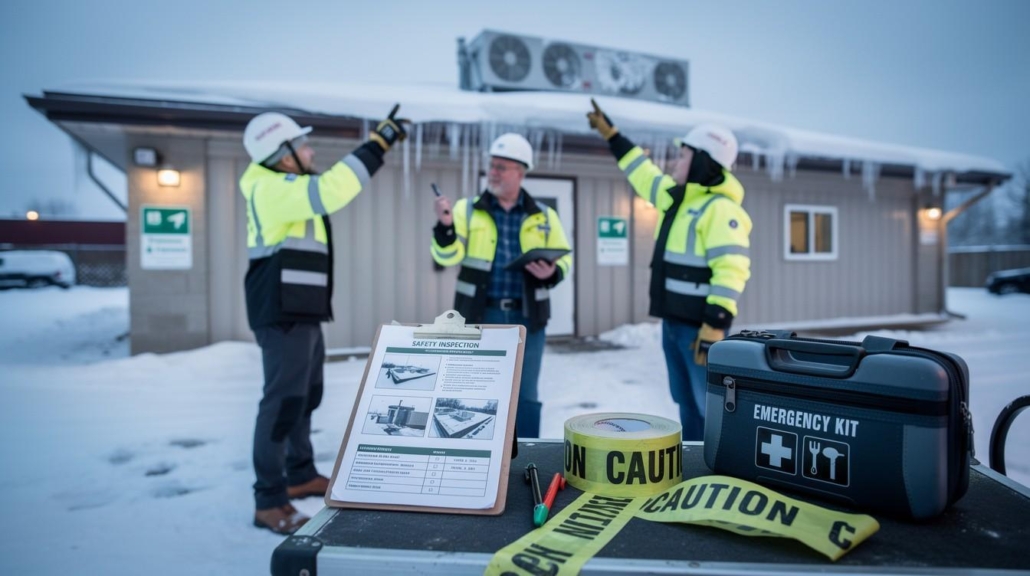
General Liability Tips Alaska: Reducing Risk in Extreme Conditions
Alaska’s extreme weather creates real liability challenges that most standard policies don’t address. Ice storms, frozen ground, and brutal cold seasons expose your business to slip-and-fall claims, property damage, and seasonal operation gaps that can cost thousands.
At Aurora National Insurance, we’ve seen how quickly these risks turn into expensive claims. Our general liability tips for Alaska focus on what actually works: identifying your specific hazards and closing the coverage gaps before winter hits.
What Makes Alaska’s Weather a Unique Liability Threat
Alaska’s climate creates liability exposures that businesses in the lower 48 simply don’t face. Alaska air temperatures have risen more than 3 degrees since the late 1970s, which has intensified extreme weather events rather than eliminated them. Anchorage experienced heavy-snow events exceeding 12 inches in each of the last three winters, and the 2023-24 winter alone saw dozens of commercial roof collapses and put over 1,000 business properties at risk due to snow loads. This isn’t theoretical risk-it’s happening now. Standard general liability policies written for temperate climates don’t account for the specific hazards Alaska presents: ice accumulation on walkways and roofs, frozen ground that shifts building foundations, coastal storms driven by warmer ocean temperatures, and the logistical reality that medical response and claim resolution take far longer in remote areas. A seafood processor in Dillingham faced $28,000 in rehabilitation costs and six months of wage replacement from a single workers’ compensation claim, but that’s just one piece of the liability puzzle.
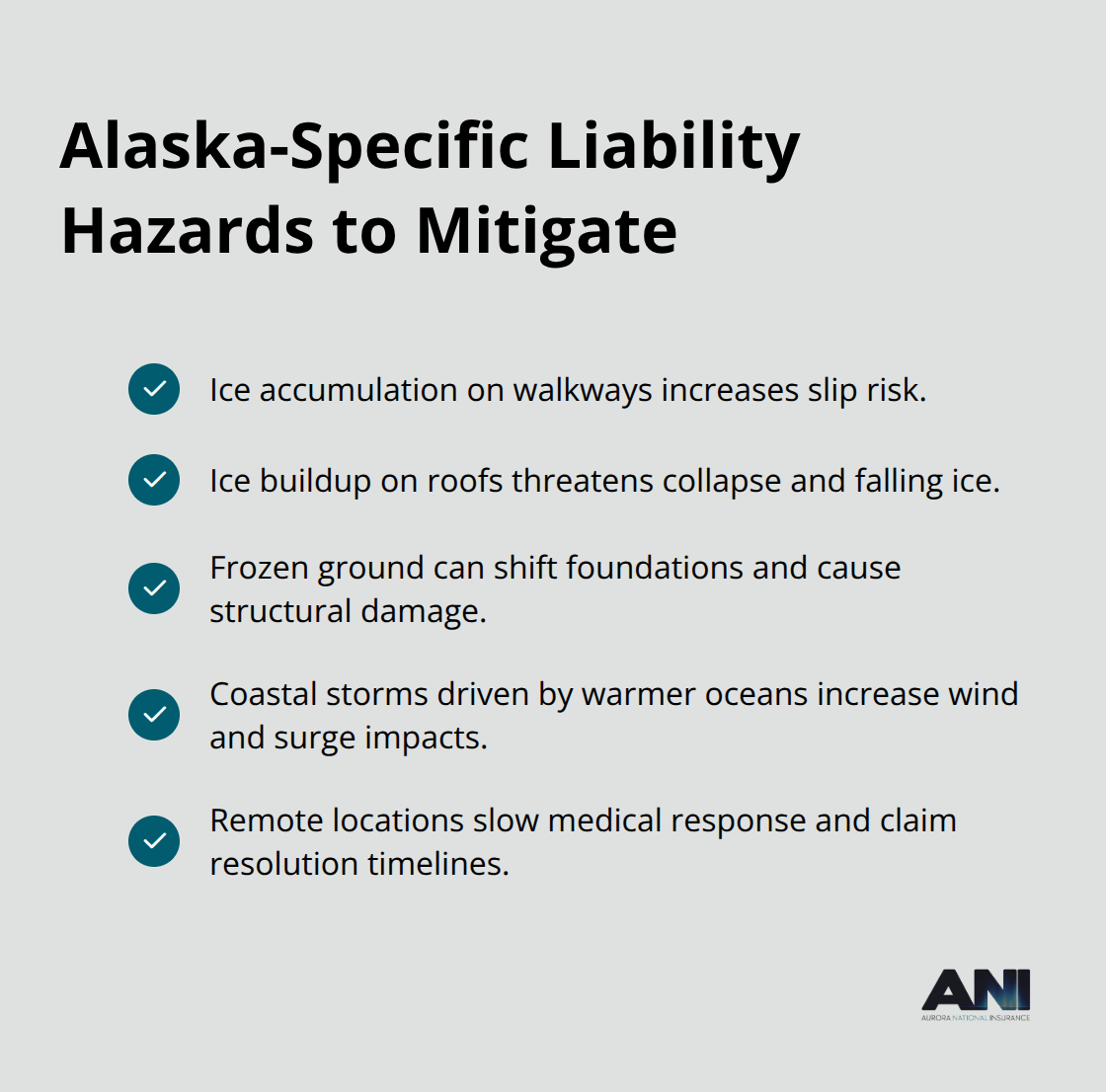
Your exposure includes third-party claims when customers or contractors slip on your icy property, property damage claims when heavy snow crushes your roof or damages neighboring structures, and coverage gaps when your business operates seasonally but your policy doesn’t reflect those limitations.
Slip and Fall Claims Drive Winter Liability
Winter slip-and-fall claims dominate Alaska’s liability landscape, and they’re more expensive here than elsewhere. The combination of ice, snow, and the difficulty of maintaining walkways in extreme cold means these incidents happen frequently and result in serious injuries. Standard policies cover slip-and-fall liability, but they often exclude claims if you failed to maintain safe premises-and Alaska’s weather makes that standard nearly impossible to meet without deliberate, documented effort. You must implement strict ice and slip-prevention measures: clear walkways regularly, apply salt or ice melt appropriate for Alaska’s extreme temperatures, and require non-slip footwear for employees working outdoors. Document everything-when you cleared snow, what products you used, and any post-incident inspections. This documentation directly reduces your claim costs and accelerates processing with your insurer.
Seasonal Operations Create Coverage Gaps
Many Alaska businesses operate seasonally (fishing operations, tourism, construction), yet they purchase year-round policies at full premium. Your standard general liability policy doesn’t adjust for months when you’re closed or operating at minimal capacity. More critically, some insurers exclude coverage during periods of inactivity or impose waiting periods before coverage resumes. If you operate only six months per year, you overpay for the other six months while potentially facing coverage disputes when claims occur outside your stated operational window. Tailor your policy to match your actual business calendar, and explicitly confirm with your insurer how coverage applies during shutdown periods and seasonal transitions. This step directly affects both your costs and your protection when you need it most.
How to Build a Safety System That Actually Prevents Liability Claims
Alaska businesses face a choice: build a deliberate safety system now, or pay for claims later. The difference between a business that controls its liability exposure and one that doesn’t comes down to three concrete practices that work specifically in Alaska’s conditions. You need cold-weather safety protocols that address the exact hazards your operation faces-not generic winter tips, but procedures matched to your building layout, employee roles, and local weather patterns. You must maintain equipment and infrastructure on a schedule that prevents failure under Alaska’s extreme stress, not just when something breaks. You train employees on what to do when conditions deteriorate, so they don’t improvise and create new liability exposure. These three elements work together. A slip-and-fall prevention program fails if you clear walkways but don’t train employees to report hazards. Equipment maintenance prevents property damage claims, but only if someone actually inspects roofs before heavy snow arrives. Employee training prevents accidents, but only if the procedures your team follows match the safety equipment you’ve installed.
Establish Cold-Weather Safety Protocols for Your Site
Start with cold-weather safety protocols specific to your site. If you operate a commercial property, assign responsibility for snow and ice removal to a specific person or contractor, document the schedule in writing, and track completion daily during winter months. Workers’ compensation insurance requirements for Alaska businesses mean your company pays for injuries that could have been prevented. A documented removal schedule proves you took reasonable precautions and reduces both injury risk and claim severity.
For walkways, apply ice melt products rated for Alaska’s extreme cold-standard rock salt becomes ineffective below minus 15 degrees Fahrenheit, so specify products that work at deeper freezes and include them in your contracts with maintenance vendors. Require non-slip footwear for all outdoor work, verify employees actually wear it, and replace worn footwear before traction fails. For roofs, calculate safe snow load limits for your structure and hire contractors to remove snow before loads approach capacity. The 2023-24 winter saw dozens of roof collapses in Anchorage, so this isn’t optional for buildings in areas that receive heavy snow.
Create a Maintenance Schedule Tied to Alaska’s Seasons
Equipment maintenance should follow a written schedule tied to Alaska’s seasonal calendar, not a generic national standard. Inspect building exteriors in fall before freeze-thaw cycles begin, check HVAC systems before heating season, test backup generators monthly because power outages happen during storms, and inspect roofs quarterly during winter rather than annually. This frequency reflects Alaska’s weather intensity.
For vehicles used in business, service brakes, batteries, and tires before winter driving season, keep antifreeze rated for minus 50 degrees, and maintain emergency kits in every vehicle. Document maintenance in a log that your insurer can review-this record directly reduces claim costs if an incident occurs.
Train Employees on Procedures That Match Your Operation
Employee training works only when it happens regularly and covers scenarios your team actually faces. Train new employees on walkway hazard reporting before their first winter shift, conduct monthly safety meetings during winter months to address emerging conditions, and require refresher training each fall. Tailor training to your operation: construction crews need fall protection and equipment handling in cold conditions, hospitality staff need customer assistance during icy conditions, and office workers need emergency response if weather traps them at the building.
Test your procedures with drills-if you claim employees know how to respond to heavy snow, run a scenario where your team actually executes the plan and identifies what breaks. This approach prevents the expensive gap between what you think your employees do and what they actually do when conditions deteriorate. Once your safety system operates consistently across all three areas, you’ve built the foundation that prevents claims. The next step involves examining your actual policy language to identify what your coverage protects and where gaps still exist.
What Your General Liability Policy Actually Covers in Alaska Winter
Your general liability policy covers third-party bodily injury and property damage claims, but Alaska’s extreme conditions expose gaps that standard language doesn’t address. A slip-and-fall claim when someone injures themselves on your icy walkway qualifies for coverage, yet your policy may exclude liability if an inspector determines you failed to maintain safe premises. Property damage claims work similarly-if heavy snow damages a neighboring structure or crushes a customer’s vehicle in your lot, your policy should respond, but exclusions for weather-related damage or failure to maintain roofs can block payment.
The real problem surfaces when you examine what happens during seasonal shutdowns. If your business closes for three months and someone is injured on your property during closure, your insurer may deny coverage because your policy states coverage applies only during operational periods. Standard policies written for year-round operations don’t anticipate that Alaska fishing operations, tourism businesses, and construction companies operate six months or less annually. Your premium reflects full-year coverage while your actual liability exposure concentrates in specific months. This mismatch creates two problems: you overpay for months when you’re closed, and you face disputes when claims occur outside your documented operational window.
Snow Accumulation Damage Requires Explicit Coverage Language
Heavy snow damage claims reveal how policy language matters in Alaska. Your general liability policy covers liability you create when your roof collapses and damages neighboring property, but it doesn’t cover damage to your own building-that requires property insurance. This distinction matters because many Alaska business owners carry only general liability and assume they’re protected.
You need both coverages working together. Request that your property coverage explicitly addresses ice dam damage, snow load damage, and freeze-thaw structural damage rather than relying on vague language about weather damage. Confirm your roof load limits with a structural engineer before winter, then verify your property policy covers damage up to those limits. If your building holds significant inventory or equipment, calculate replacement value accurately because remote Alaska operations cost 30 to 50 percent more to repair and replace than comparable work in the lower 48 due to transportation and labor costs.
Document your property’s condition in fall with photos before heavy snow arrives, then repeat the documentation after major storms. This record protects you if disputes arise about whether damage was pre-existing or storm-caused.
Seasonal Operation Gaps Require Explicit Policy Dates
Your policy renewal date should never be arbitrary-it must align with when your business actually operates. If you fish commercially and operate from May through September, your policy should reflect those exact dates with coverage that activates May 1 and terminates September 30. This approach costs less than full-year coverage and eliminates disputes about whether you were covered during months when you had no operations.
Some insurers resist seasonal policies because they create administrative complexity, but legitimate Alaska carriers understand that seasonal operations dominate the state economy. Confirm in writing that your coverage includes a clear operational window with no gap between the end date of one policy and the start date of the next year’s policy. Ask your insurer explicitly whether coverage applies if you operate outside your documented window-for example, if you extend operations into October due to weather delays. This conversation prevents the expensive scenario where you operate believing you’re covered, then discover your policy ended September 30.
Also address what happens if you scale operations up or down mid-season. If you planned for five employees but hire ten, your liability exposure increases immediately. Notify your insurer of payroll changes during the season rather than waiting for renewal, because understated payroll at renewal triggers premium adjustments and potential coverage disputes.
Property Damage Claims During Winter Weather Events
Winter weather creates property damage exposure that extends beyond your own building. Heavy snow, ice accumulation, and freeze-thaw cycles damage neighboring structures, vehicles parked on your property, and customer belongings stored at your site. Your general liability policy should cover these third-party claims, but the coverage language must explicitly address weather-related damage scenarios rather than treating them as excluded perils.
Request that your policy includes coverage for property damage you cause through snow removal operations, roof collapse, or ice dam overflow. Confirm that your insurer covers liability claims even when weather contributed to the damage-many policies contain weather exclusions that can block payment. If you operate a commercial property where customers or contractors visit, your liability exposure increases significantly during winter months when slip-and-fall and property damage claims spike. Verify your policy limits match the actual risk your property presents, particularly if you operate in areas that receive heavy snow or experience freeze-thaw cycles that damage structures.
Final Thoughts
Alaska’s extreme weather demands that you move beyond standard general liability coverage and build protection matched to your actual operation. The general liability tips for Alaska we’ve covered-documenting safety protocols, maintaining equipment on Alaska’s seasonal schedule, training employees on cold-weather procedures, and closing policy gaps-work because they address the specific hazards your business faces. Winter slip-and-fall claims, snow load damage, and seasonal operation gaps happen every year across Alaska, and they cost thousands in claims, legal defense, and business interruption.
Start by reviewing your current policy with fresh eyes and pull your declarations page to confirm your coverage limits match what your lease, client contracts, or licensing requirements actually demand. Check whether your policy explicitly addresses seasonal operations if your business doesn’t run year-round, and verify that property damage coverage includes snow accumulation and freeze-thaw damage rather than just standard weather perils. Ask your insurer directly whether slip-and-fall liability coverage applies if an inspector determines you failed to maintain safe premises, because this answer determines whether your policy protects you or leaves you exposed.
At Aurora National Insurance, we represent multiple top-rated carriers and leverage local Alaskan expertise to deliver tailored comparisons that match your operation’s actual risk profile. Whether you operate seasonally, work in remote areas, or face Alaska’s extreme weather daily, we help you find coverage at competitive prices with instant online quotes. Contact us today to review your current protection and identify the gaps before your next claim arrives.
The information provided in this blog is for general informational purposes only and does not constitute legal, financial, or insurance advice. Coverage options, terms, and availability may vary. Please consult with a licensed professional for advice specific to your situation.
Artificial intelligence may have been used to generate text and images in some blog articles.


