Online Home Insurance Alaska: Fast Quotes, Local Expertise
Alaska homeowners face real challenges that most insurance policies don’t address. Extreme weather, remote locations, and high replacement costs mean you need coverage built for your specific situation.
Getting online home insurance quotes in Alaska lets you compare options fast without leaving your home. At Aurora National Insurance, we believe combining quick online quotes with local expertise gives you the best protection for what matters most.
Why Alaska Homeowners Need Online Quotes
Alaska’s weather creates insurance problems that don’t exist in the lower 48. Heavy snow loads, ice storms, and extreme cold damage roofs and burst pipes regularly. Denali Park residents pay around $1,954 per year for homeowners insurance, nearly double what Anchorage residents pay at $1,167, according to ValuePenguin analysis. This difference reflects real climate variation across the state.
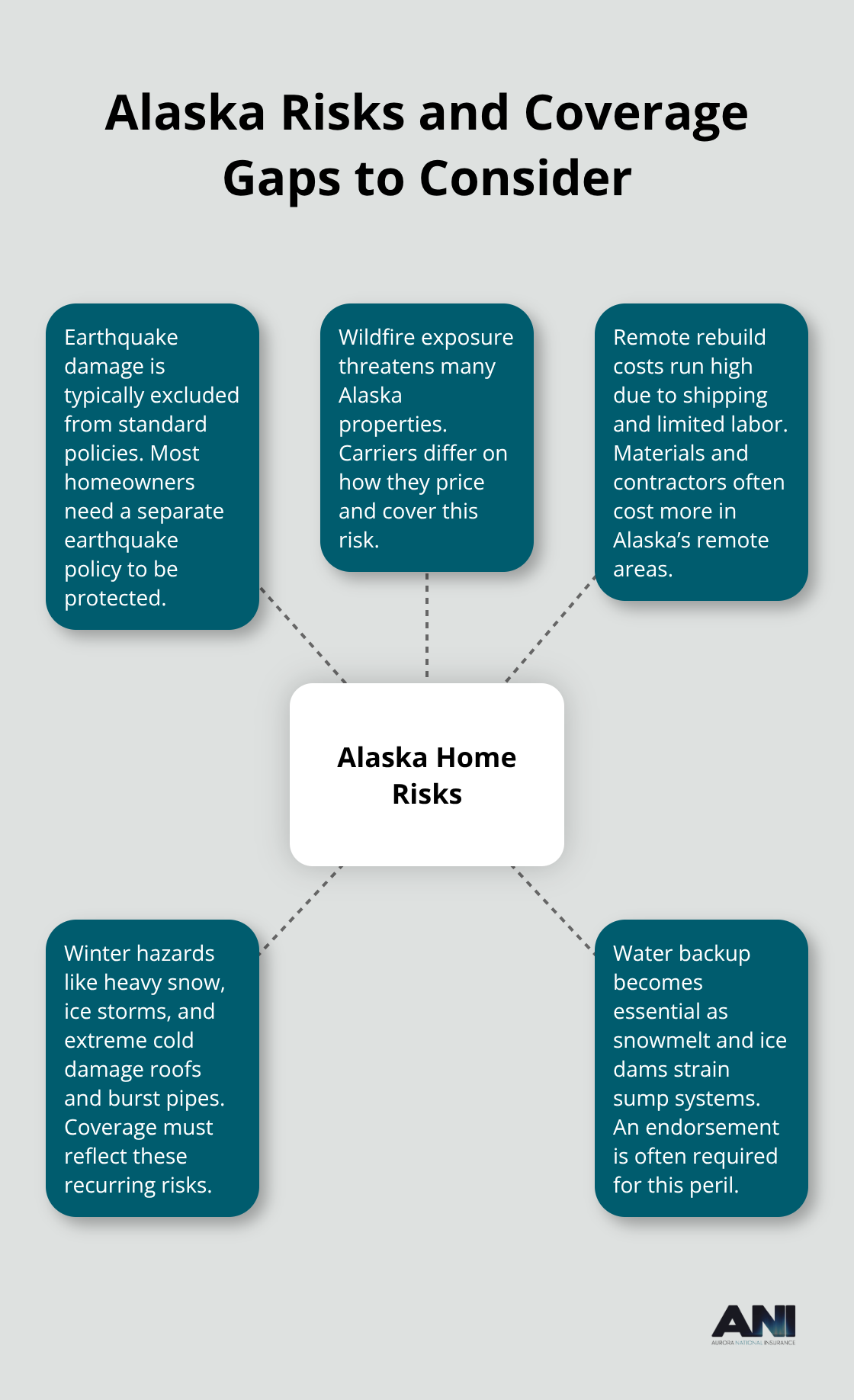
Wildfires also threaten many Alaska properties, and earthquakes are common due to the Denali fault. Standard policies typically exclude earthquake damage entirely, meaning you need separate coverage. Remote locations compound the problem because materials and labor cost significantly more to ship and deploy in Alaska. A contractor arriving four hours away costs more than one living nearby, and replacement materials often require expensive freight.
Shopping Multiple Quotes Saves Real Money
Alaska homeowners see premium quotes varying by as much as $744 per year between the cheapest and most expensive carriers for identical coverage, according to ValuePenguin data. This means shopping around isn’t optional if you want competitive rates. Three online quotes with the same deductible and coverage limits take about 30 minutes total and reveal which insurers understand Alaska-specific risks. Country Financial charges around $785 annually for $200,000 dwelling coverage, while Umialik Insurance costs about $1,029 for $350,000 coverage. State Farm runs approximately $1,358 per year for $350,000 dwelling protection. These aren’t minor differences. Online quotes let you compare what each carrier includes in their base coverage versus what costs extra. Water backup coverage, for example, sometimes comes standard and sometimes appears only as an add-on priced between $50 and $150 annually. Roof age and condition affect quotes dramatically since Alaska weather damages roofs faster than milder climates.
Local Expertise Catches Coverage Gaps
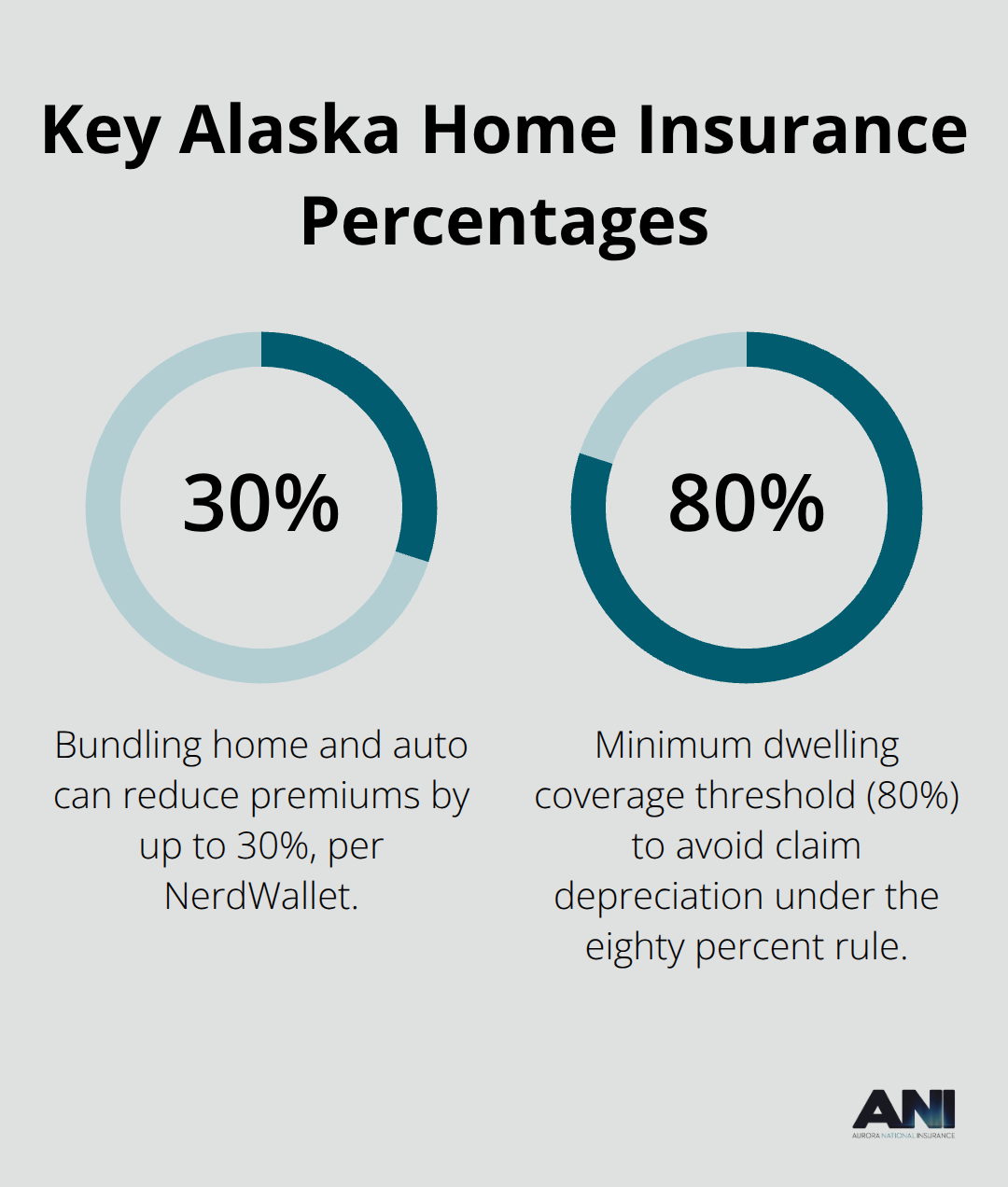
Generic online tools often miss Alaska-specific needs. A quote system designed for Florida won’t know that freezing-related damage requires proof you maintained heating and shut off water during cold snaps. Agents representing multiple carriers in Alaska understand these requirements and adjust your coverage accordingly. They also know which companies offer discounts for security systems, newer roofs, and bundled policies. Alaska homeowners who bundle home and auto insurance can reduce premiums by up to 30 percent, according to NerdWallet data. Local agents verify that your dwelling coverage meets the 80 percent rule (meaning you insure your home for at least 80 percent of reconstruction costs to avoid claim depreciation).
Older Alaska homes often need ordinance or law coverage to bring them up to current building codes after a claim, an add-on many national carriers downplay.
Why Speed and Local Knowledge Matter Together
Online quotes deliver fast results, but Alaska’s unique risks demand more than a generic algorithm. Local agents in Alaska combine instant quote capabilities with knowledge of state-specific perils, carrier preferences, and coverage requirements that protect your actual situation. This combination means you receive accurate quotes quickly while avoiding gaps that cost you money later when claims happen. The next step involves understanding exactly how online quotes work and what information you’ll need to provide for the most accurate comparison.
Getting Your Alaska Home Insurance Quote Online
Pulling up an online quote takes about ten minutes if you have basic home information ready, but accuracy depends on what details you provide. Most quote tools start by asking your ZIP code, which immediately flags Alaska-specific risks like earthquake zones or wildfire exposure. Next comes your home’s age, square footage, construction type, and roof material. Older homes with wood shakes cost more to insure than newer homes with metal or asphalt roofs because Alaska weather damages traditional materials faster. You’ll specify your desired dwelling coverage limit, which should reflect actual reconstruction costs in your area. Anchorage homeowners typically need $350,000 to $500,000 in dwelling coverage, while rural properties may require less or more depending on local construction costs. The tool then asks about your deductible preference, water backup coverage, and whether you want replacement cost or actual cash value for personal property. Replacement cost pays to buy new items at full price, while actual cash value deducts depreciation, making it significantly cheaper but leaving you underprotected. ValuePenguin data shows Alaska homeowners should expect to provide information about safety features like fire alarms, security systems, and recent roof replacements because these directly reduce your premium. A home with a roof less than ten years old typically qualifies for discounts ranging from five to fifteen percent depending on the carrier.
What Information You’ll Need Ready
Gathering details before you start saves time and produces more accurate quotes. Have your home’s construction year, square footage, and roof material available. Know whether you have a basement, crawlspace, or slab foundation, as this affects water damage risk assessment.
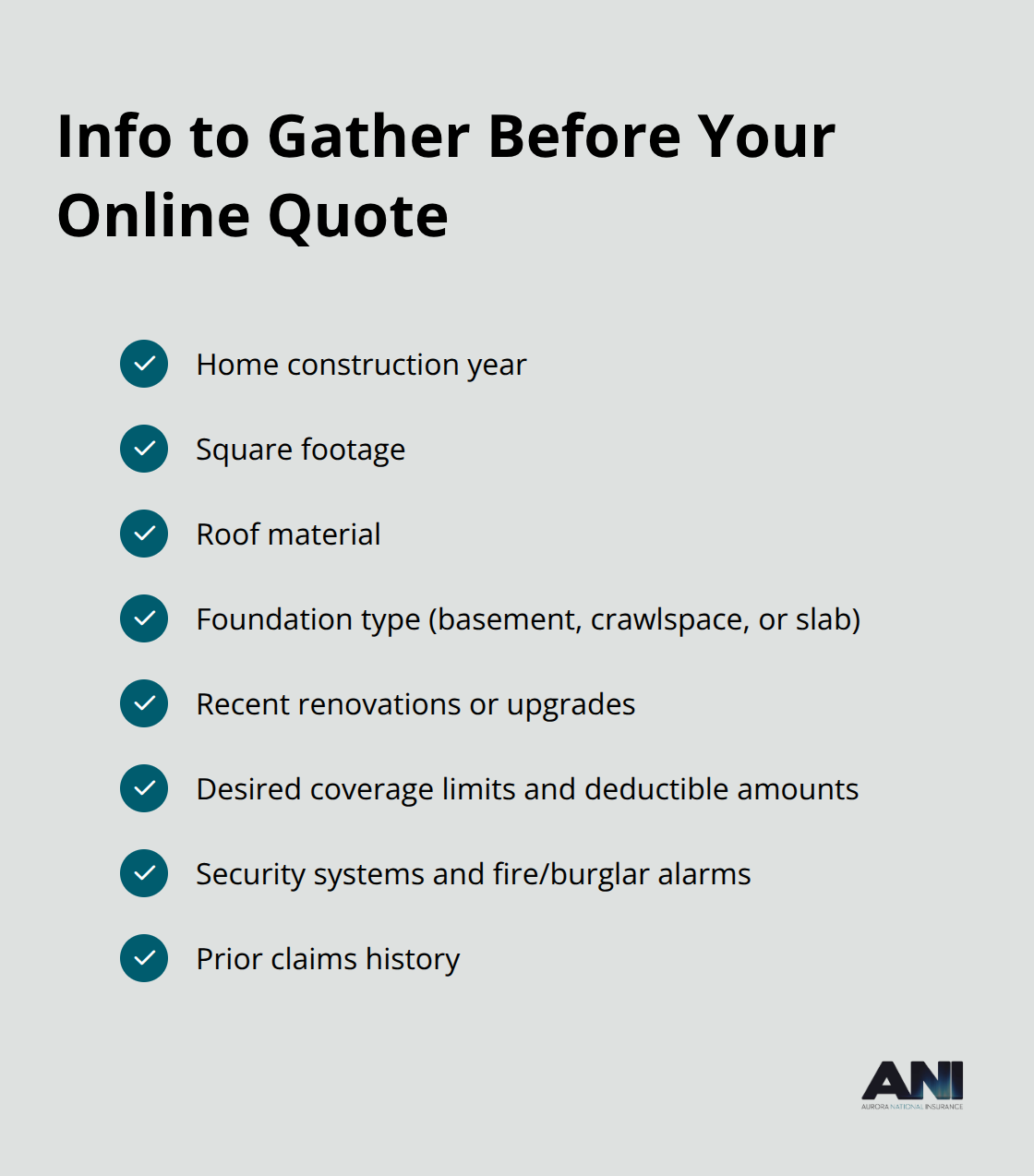
List any recent renovations or upgrades, especially roof replacements or electrical system updates. Document your desired coverage limits and deductible amounts. If your home has security systems, fire alarms, or burglar alarms, note those details because they qualify for discounts. Carriers also want to know about prior claims, so have that information accessible. The more complete your answers, the more accurate your quote becomes.
Why Local Agents Ask Different Questions Than Online Forms
Generic online systems treat all homes the same way, but Alaska homes aren’t generic. An agent representing multiple carriers will ask whether your pipes are insulated against freezing, if you have a sump pump that needs backup coverage, and whether your property sits in a wildfire risk zone. These questions matter because standard homeowners policies cover burst pipes only if you maintained heating and shut off water during cold snaps, which adjuster visits verify. Water backup coverage becomes essential in Alaska because heavy snow melt and ice dam problems cause sump pump failures regularly. Local agents also catch the ordinance or law coverage gap that online tools miss entirely. When an older Alaska home sustains fire damage, local building codes often require upgrades to electrical systems, insulation, or structural components before reconstruction can proceed. Without ordinance or law coverage, you pay these code-compliance costs out of pocket, potentially adding thousands to your claim. An agent working with carriers familiar with Alaska properties adjusts your coverage to address these specific exposures. They’ll verify that your dwelling coverage meets the eighty percent rule by comparing your coverage limit to estimated reconstruction costs in your specific area, something online calculators often underestimate for remote locations.
How Agents Tailor Coverage to Alaska Conditions
Agents representing multiple top-rated carriers leverage local Alaskan expertise to deliver tailored comparisons that address your actual situation. They understand which companies offer the best rates for properties in earthquake zones versus wildfire-prone areas. They know that bundling home and auto insurance can reduce premiums by up to 30 percent, according to NerdWallet data. Agents also identify which carriers provide the most generous water backup coverage limits and which ones charge excessive add-on fees. They verify that your personal property coverage limits match your actual belongings, preventing situations where you’re underinsured for high-value items. An agent will also explain how the eighty percent rule affects your specific claim payouts and recommend coverage adjustments if your current limits fall short. This personalized approach means you receive quotes that reflect Alaska’s unique risks rather than generic national standards.
The Speed Advantage of Online Tools with Local Support
Online quote systems deliver results in minutes, but Alaska’s specific perils demand more than algorithms. Agents who combine instant quote capabilities with knowledge of state-specific risks, carrier preferences, and coverage requirements protect your actual situation. This combination means you receive accurate quotes quickly while avoiding gaps that cost you money later when claims happen. Understanding what information carriers need and how local expertise shapes your coverage sets the stage for evaluating which quotes actually protect your home.
Finding the Right Coverage for Your Alaska Home
Essential Coverage Types for Alaska Properties
Standard homeowners policies include six basic components: dwelling protection, other structures, personal property, loss of use, liability, and medical payments for guests. In Alaska, dwelling coverage must reflect actual reconstruction costs in your area, not some national average. Anchorage homeowners typically need $350,000 to $500,000 in dwelling limits according to ValuePenguin data, but rural properties vary dramatically depending on local labor and material costs. Too many Alaska homeowners underinsure their dwellings by ten to twenty percent, which triggers the eighty percent rule penalty on claims. This rule means if your coverage falls below eighty percent of reconstruction value, insurers depreciate your payout significantly.
Personal property coverage needs replacement cost rather than actual cash value if you can afford the higher premium, since Alaska weather damages belongings faster and replacement costs run higher due to shipping. Water backup coverage is an optional endorsement that protects against damage caused by sump pump failure and sewer or drain backups, yet standard policies exclude this peril entirely. Ordinance or law coverage ranks as the most overlooked add-on for older Alaska homes, but it becomes essential when fire damage requires code upgrades that didn’t exist when your home was built. Earthquake coverage sits outside standard policies despite Alaska’s position on the Denali fault, making separate earthquake insurance a practical necessity for most properties.
Comparing Quotes Across Carriers
Evaluating quotes demands comparing identical coverage limits and deductibles across carriers because premium differences of $744 per year exist between cheapest and most expensive options according to ValuePenguin analysis. Start by requesting quotes with $350,000 dwelling coverage, a $1,000 deductible, replacement cost personal property coverage, and water backup included. This standardization reveals which carriers price competitively versus which ones load fees onto add-ons. State Farm charges approximately $1,358 annually for $350,000 dwelling coverage while Country Financial runs around $785 for $200,000, showing that carrier choice matters as much as coverage selection.
Check whether bundling home and auto insurance reduces premiums by up to thirty percent according to NerdWallet data, since this savings often exceeds individual policy discounts. Verify AM Best financial ratings of A-minus or higher to confirm carriers can actually pay claims when disasters strike. Review NAIC complaint data and JD Power satisfaction scores before committing, as customer service quality varies significantly among Alaska-focused versus national carriers.
Questions to Ask About Alaska-Specific Coverage
Ask agents specifically whether their quotes include ordinance or law coverage for older homes and what water backup limits they offer, since these answers reveal whether carriers understand Alaska-specific exposures. Request explanations of how the eighty percent rule affects your specific claim payouts, and ask agents to verify your coverage limits actually meet this threshold based on local reconstruction estimates. Many carriers underestimate Alaska rebuild costs by ten to fifteen percent, leaving you vulnerable to claim depreciation. Local agents leverage Alaskan expertise to deliver tailored comparisons that address your actual situation rather than generic national standards.
Final Thoughts
Online home insurance Alaska quotes deliver speed, but Alaska’s unique weather, remote locations, and high replacement costs demand more than generic algorithms. Premium differences of up to $744 annually for identical coverage prove that shopping around matters, yet comparing quotes effectively requires understanding which coverage gaps matter most in your specific situation. Alaska-based agents know which carriers understand freezing-related damage requirements, which ones offer competitive water backup coverage, and how ordinance or law protection saves thousands when older homes need code upgrades after claims.
We at Aurora National Insurance combine instant online quotes with local Alaskan expertise to deliver tailored comparisons that protect what matters most. Our licensed agents represent multiple top-rated carriers and leverage deep knowledge of state-specific risks to help you find the right protection at competitive prices. Getting your first quote takes ten minutes, but the real value comes from working with someone who understands Alaska’s actual insurance landscape.
Start by gathering your home’s basic information and pulling quotes from at least three carriers using identical coverage limits and deductibles. Then connect with a local agent who can explain how each quote addresses Alaska-specific exposures and identify coverage gaps before they become expensive problems.
The information provided in this blog is for general informational purposes only and does not constitute legal, financial, or insurance advice. Coverage options, terms, and availability may vary. Please consult with a licensed professional for advice specific to your situation.
Artificial intelligence may have been used to generate text and images in some blog articles.