
Alaska Fleet Auto Insurance: Streamlined Coverage for Your Vehicles
Running a fleet in Alaska means managing real costs and real risks. Vehicle accidents, liability claims, and regulatory compliance can drain your budget fast.
Alaska fleet auto insurance protects your business from these financial hits. We at Aurora National Insurance help fleet owners like you find coverage that matches your actual needs, not just generic policies.
Why Your Alaska Fleet Faces Higher Costs Than You Think
The Real Price of Operating in Alaska’s Climate
Alaska fleet operators spend significantly more on vehicle maintenance and repairs than their counterparts in the lower 48 states. Harsh winters, remote terrain, and limited access to parts drive up repair costs in Alaska. A single accident involving a commercial vehicle can cost $50,000 to $100,000 or more when factoring in medical claims, vehicle damage, and lost productivity.
Alaska’s Liability Requirements and Personal Risk
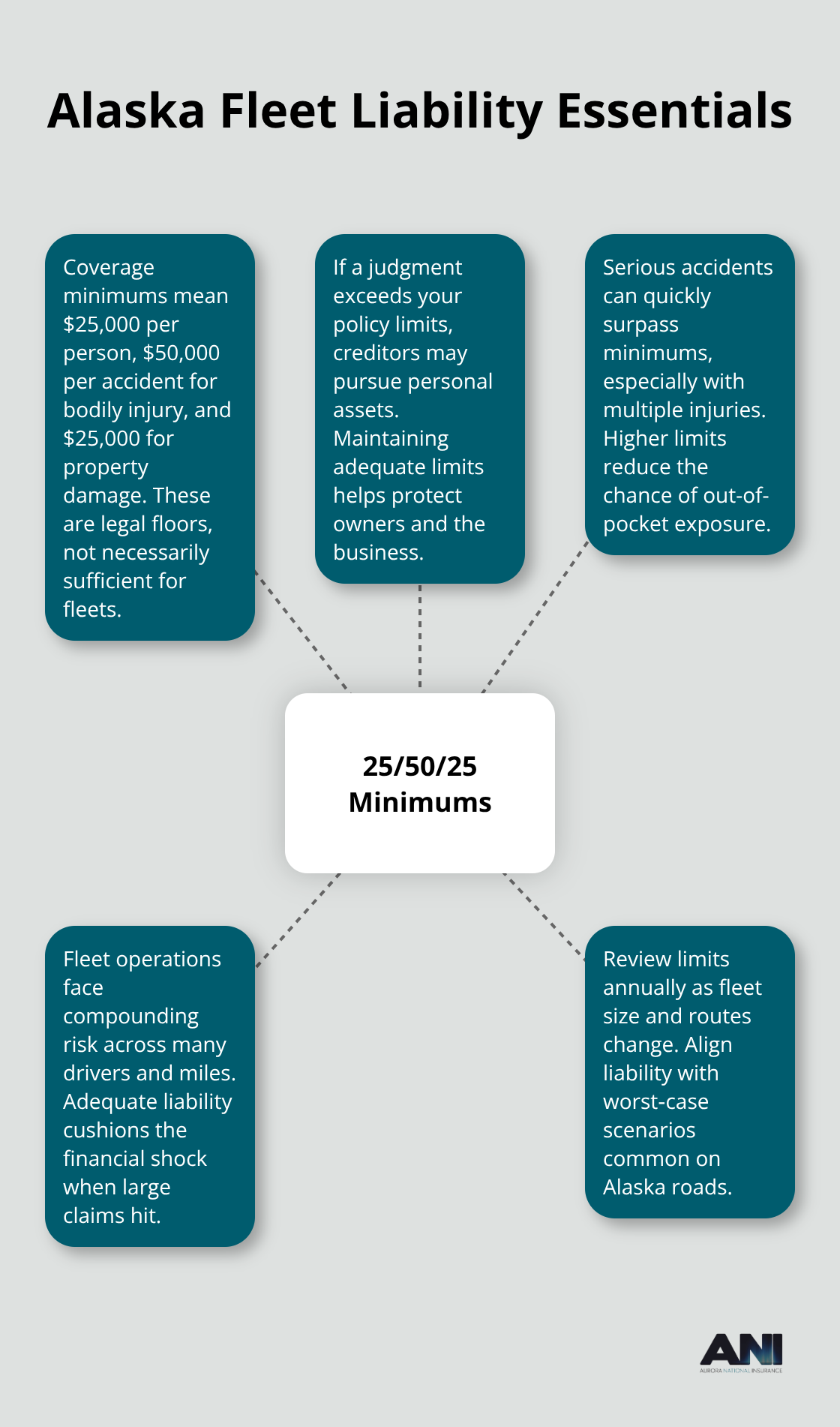
Alaska state law requires commercial vehicles to carry minimum liability coverage of 25/50/25, meaning $25,000 per person and $50,000 per accident for bodily injury, plus $25,000 for property damage. Failing to maintain proper coverage exposes your business to personal liability-creditors can pursue your personal assets if an accident judgment exceeds your policy limits. This distinction matters enormously when you operate a fleet.
Coverage That Addresses Alaska’s Specific Threats
Fleet auto insurance protects against the financial threats that plague Alaska operations. Collision and comprehensive protection guard against weather-related damage that happens routinely here, from ice-related accidents to moose strikes. Uninsured motorist coverage protects your drivers when they encounter the many uninsured or underinsured drivers on Alaska roads.
Alaska fleets operate differently than fleets elsewhere, and your policy should reflect that reality. Longer winters, isolated routes, and unique driving conditions demand coverage that accounts for these factors rather than a generic policy designed for temperate climates. The right policy prevents a single incident from bankrupting your operation and keeps your drivers protected when accidents happen.
Finding Coverage That Fits Your Fleet
Your next step involves assessing what your specific fleet actually needs.
What Your Fleet Coverage Actually Protects
Liability Coverage: Your First Line of Defense
Fleet auto insurance in Alaska covers three distinct layers of protection, and understanding what each layer does prevents expensive gaps when accidents happen. Liability coverage pays for injuries and property damage your drivers cause to other people and their vehicles, up to your policy limits. In Alaska, state minimums sit at 25/50/25, but higher limits make practical sense for fleet operators because a single serious accident easily exceeds these thresholds. A collision involving multiple vehicles and injuries can generate $200,000 to $500,000 in claims, leaving your business exposed if you only carry minimums. Alaska’s remote highways and challenging conditions produce more severe accidents than other states, making higher liability limits a practical necessity rather than an optional upgrade.
Collision and Comprehensive: Protecting Your Vehicles
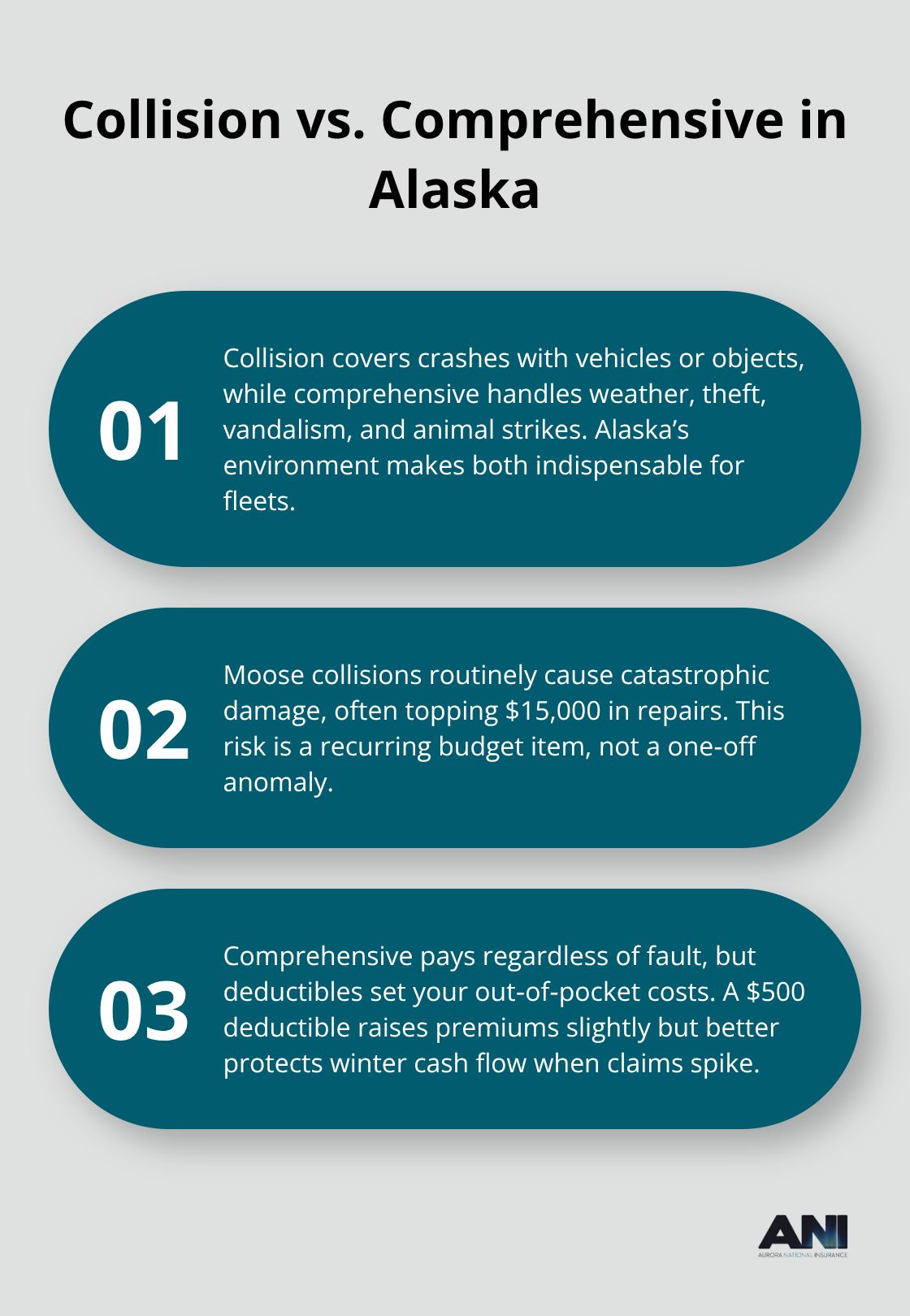
Collision and comprehensive coverage protects your own vehicles from damage, and this is where Alaska’s specific environment matters tremendously. Collision pays for accidents with other vehicles or objects, while comprehensive covers weather damage, theft, vandalism, and animal strikes. Moose collisions happen regularly in Alaska and cause catastrophic damage, with repair costs frequently exceeding $15,000 per incident. Comprehensive coverage pays for these losses regardless of fault, and your choice of deductibles determines your out-of-pocket costs when incidents occur. A $500 deductible costs more monthly but protects your cash flow better during harsh winter months when weather-related claims spike.
Uninsured and Underinsured Motorist Coverage: Filling the Gap
Uninsured and underinsured motorist coverage protects your drivers when they’re hit by drivers carrying insufficient insurance or no insurance at all. The Insurance Information Institute reports that roughly one in eight drivers nationwide operate without insurance, and Alaska’s rural areas likely have higher rates of uninsured drivers. This coverage pays for medical expenses and vehicle damage when your driver bears no fault, preventing those losses from draining your fleet budget or forcing your drivers to pursue personal lawsuits. Your drivers face this risk on every Alaska road, making this layer of protection essential for fleet operations.
Selecting Deductibles That Match Your Operation
The deductible you select shapes both your monthly costs and your financial exposure. Higher deductibles lower your premiums but increase what you pay out-of-pocket when claims occur. Fleet operators with strong cash reserves can absorb higher deductibles, while those with tighter budgets benefit from lower deductibles that spread costs more evenly throughout the year. Your fleet size, vehicle types, and driving patterns all influence which deductible strategy works best for your operation.
Understanding these coverage layers helps you build a policy that actually protects your Alaska fleet. The next step involves matching these coverage options to your specific fleet size and vehicle types.
How to Choose the Right Fleet Policy for Your Needs
Assess Your Fleet Size and Vehicle Types
Selecting fleet auto insurance in Alaska requires matching your specific operation to coverage that handles your actual vehicles and driving patterns, not generic policies sold nationwide. Start by documenting your fleet composition in detail: How many vehicles do you operate? Are they pickup trucks, commercial vans, heavy-duty trucks, or a mix? What’s the total value of your fleet? Alaska insurers price policies differently based on vehicle type because some vehicles sustain more damage in Alaska’s environment than others.
A light-duty pickup driven on paved roads faces different risks than a heavy-duty truck operating on remote gravel routes where weather exposure and accident severity increase dramatically. Your premium reflects these differences, so insurers need accurate information about each vehicle’s use, age, and condition. Document your annual mileage per vehicle and the primary routes your fleet travels. Vehicles operating year-round on the Parks Highway between Anchorage and Fairbanks face different conditions than those making seasonal runs to remote communities.
Compare Coverage Options and Deductibles
Deductible selection separates smart fleet operators from those who waste money or expose themselves unnecessarily. Most Alaska fleet operators should reject the temptation to select high deductibles purely to lower premiums. A $1,000 deductible might save $50 monthly, but when a moose strike damages your vehicle for $15,000, you pay that $1,000 immediately while your operation loses a vehicle.
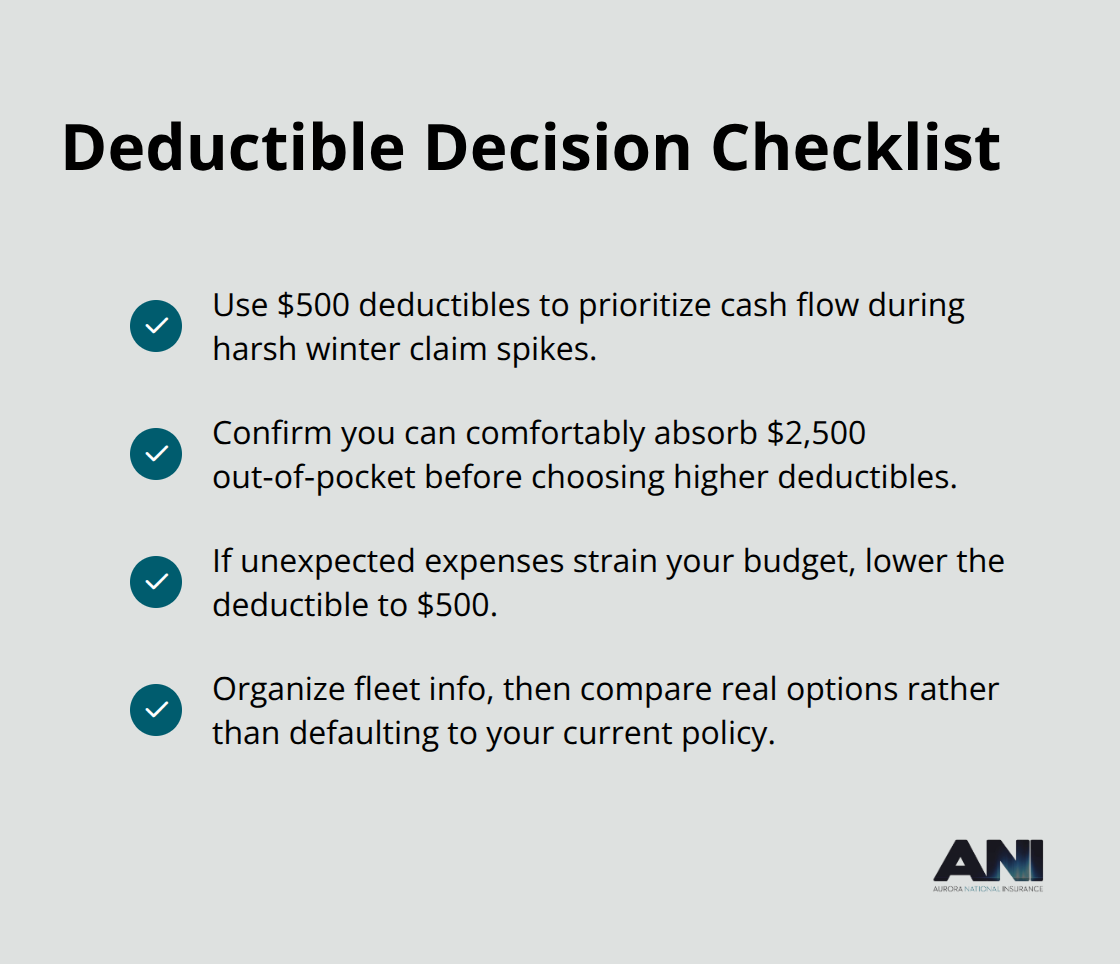
Most commercial auto policies offer deductible options starting at $500 and going up to $2,500 or more. A $500 deductible costs more upfront but protects your cash flow during Alaska’s harsh winter months when claims spike. Calculate your actual cash reserves: if your business can absorb $2,500 out-of-pocket without disrupting operations, that deductible makes sense. If unexpected expenses strain your budget, lower that deductible to $500. Once you have this information organized, you can compare actual coverage options rather than accepting whatever your current insurer offers.
Work with Local Agents Who Understand Alaska Conditions
Local agents who understand Alaska’s specific risks explain how your fleet’s location, vehicle types, and seasonal patterns affect both your coverage needs and premium costs. They compare options that fit your operation’s unique requirements rather than forcing you into standardized packages designed for fleets operating in different climates. Aurora National Insurance, an independent Anchorage-based agency, represents multiple top-rated carriers and leverages local Alaskan expertise to help you find coverage that matches your actual needs.
Final Thoughts
Alaska fleet auto insurance protects your business from the financial damage that accidents cause on Alaska roads. Liability coverage shields your company from injury claims, collision and comprehensive protection guard your vehicles against moose strikes and winter weather, and uninsured motorist coverage fills gaps when other drivers lack adequate insurance. The right deductible strategy balances your monthly costs against your ability to handle out-of-pocket expenses when claims happen.
Gather your fleet information and request quotes from insurers who understand Alaska’s unique operating environment. Document your vehicle count, types, ages, and annual mileage, then decide which deductible levels make sense for your cash flow. Compare actual coverage options rather than accepting whatever your current provider offers.
We at Aurora National Insurance help Alaska fleet owners find coverage that matches their actual operations. As an independent Anchorage-based agency, we represent multiple top-rated carriers and leverage local expertise to deliver tailored comparisons at competitive prices (our licensed agents explain how your specific fleet composition, seasonal patterns, and Alaska routes affect both your coverage needs and premiums). Get an instant online quote from Aurora National Insurance and see how much you can save while gaining protection that actually fits your operation.
The information provided in this blog is for general informational purposes only and does not constitute legal, financial, or insurance advice. Coverage options, terms, and availability may vary. Please consult with a licensed professional for advice specific to your situation.
Artificial intelligence may have been used to generate text and images in some blog articles.


