

Washington General Liability Basics: Essentials for Small Businesses
Running a small business in Washington means managing countless responsibilities. One of the most important is protecting yourself from liability claims that could drain your finances or shut down operations.
At Aurora National Insurance, we’ve helped hundreds of Washington business owners understand their coverage needs. This guide covers the Washington general liability basics you need to know-from what’s actually covered to how much protection your business requires.
What General Liability Insurance Covers in Washington
Bodily Injury Protection
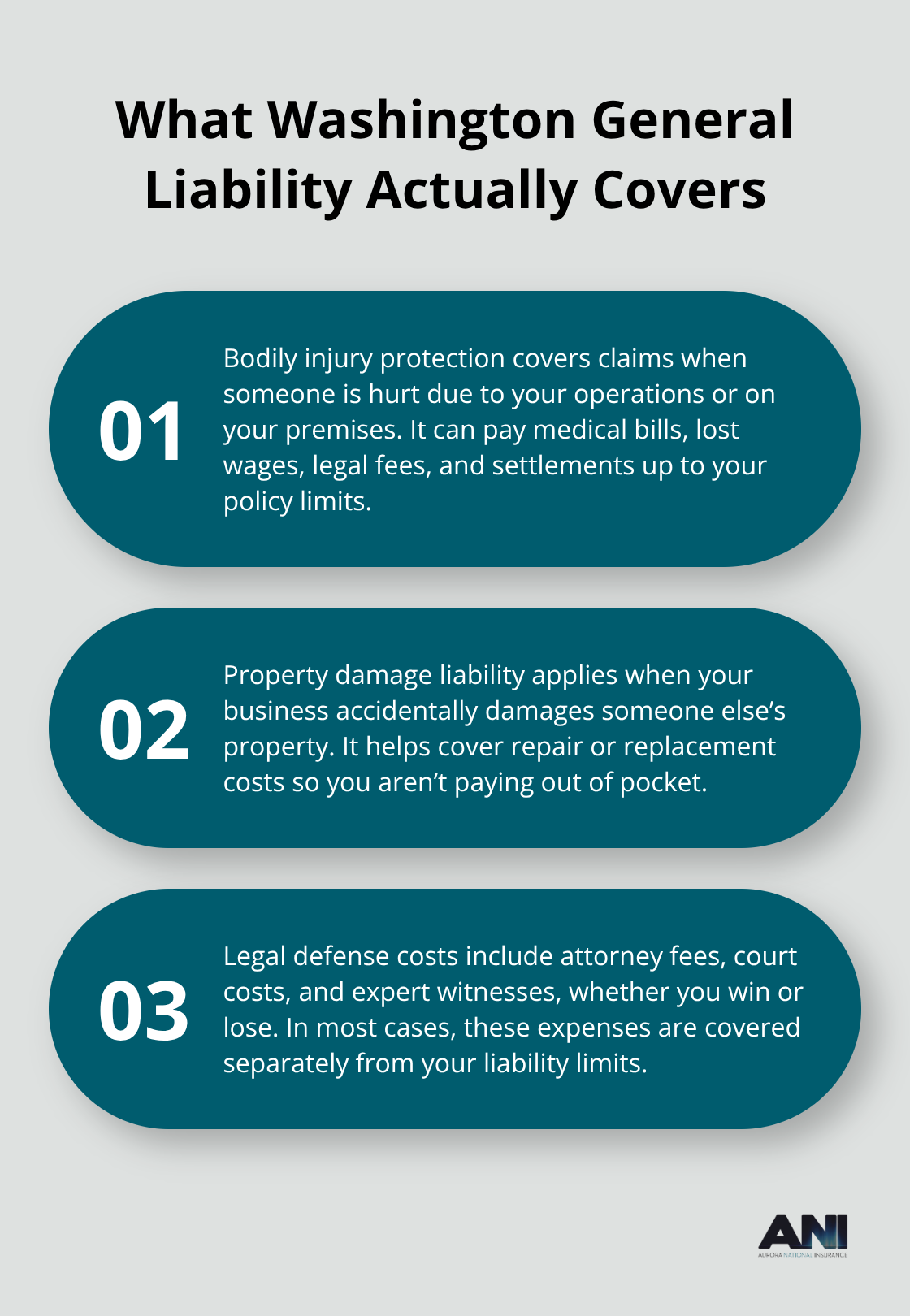
General liability insurance protects your Washington business from three major financial threats. First, it covers bodily injury claims when someone gets hurt on your property or due to your business operations. If a customer slips in your shop and sues for medical bills and lost wages, your policy pays their legal fees and any settlement or judgment up to your coverage limit.
Most Washington small business owners underestimate how quickly these claims escalate. A minor slip-and-fall incident can result in significant medical costs and lost income claims. Your policy’s coverage limits determine how much the insurance company pays toward claims, with typical small business policies offering limits between $300,000 and $1,000,000 per occurrence.
Property Damage Liability
Second, your policy covers property damage liability when your business accidentally damages someone else’s property. A contractor backing a truck through a client’s fence or a retail employee breaking merchandise during delivery both fall under this protection. These incidents happen more often than business owners expect, and the repair or replacement costs add up quickly.
Property damage claims can range from minor repairs to substantial reconstruction expenses. Your coverage limit protects you from paying these costs out of pocket, which could otherwise force you to choose between paying suppliers and paying for damages.
Legal Defense Costs
Third, your policy covers legal defense costs, which many business owners overlook entirely. Court fees, attorney bills, and expert witness costs can accumulate quickly during legal proceedings. Your insurance pays these expenses regardless of whether you win or lose the case, which protects your business from bleeding money on legal battles.
The policy also covers your legal defense costs separately from your coverage limit in most cases, meaning your defense expenses don’t reduce the amount available for settlements. This distinction matters tremendously because you can face substantial legal bills even when the claim gets dismissed early.
Selecting the Right Coverage Limits
Different industries face different exposure levels, so your coverage needs depend on your specific business type. A construction company faces different risks than a consulting firm, which means they require different protection levels. Understanding these three coverage areas helps you make informed decisions about the protection level your Washington business actually needs-and that’s exactly what we’ll explore in the next section.
Why Your Washington Business Needs General Liability Insurance
The Real Cost of Going Uninsured
General liability insurance isn’t optional for Washington small businesses, regardless of what you might think. Washington state doesn’t mandate general liability coverage for most small business types, but that legal freedom masks a dangerous financial reality. A single liability claim can cost tens of thousands of dollars depending on injury severity and legal complexity. Without coverage, you personally pay these costs from business revenue or personal assets.
Most Washington business owners operate without understanding that a customer injury or property damage incident forces them to choose between paying suppliers, making payroll, or covering the claim themselves. Liability claims are a real risk that business owners face. This isn’t theoretical risk-it’s what actually happens to thousands of business owners every year.
Legal Defense Drains Your Cash Flow
Legal defense costs alone can be substantial before any settlement gets paid. These expenses drain your operating capital while your business continues running. Your company still needs to cover payroll, inventory, and rent while you’re paying lawyers to defend against claims. This financial squeeze can force you to cut staff, delay growth investments, or tap personal savings just to keep operations afloat.
Clients and Vendors Require Proof of Coverage
Your clients and vendors increasingly expect proof of general liability coverage before they work with you. Construction contractors, property managers, and corporate procurement departments now require certificates of insurance from their vendors, with minimum coverage limits typically set at $1,000,000 per occurrence. Retail shops, restaurants, and service providers face similar expectations from landlords and property owners who won’t lease space without proof of coverage.
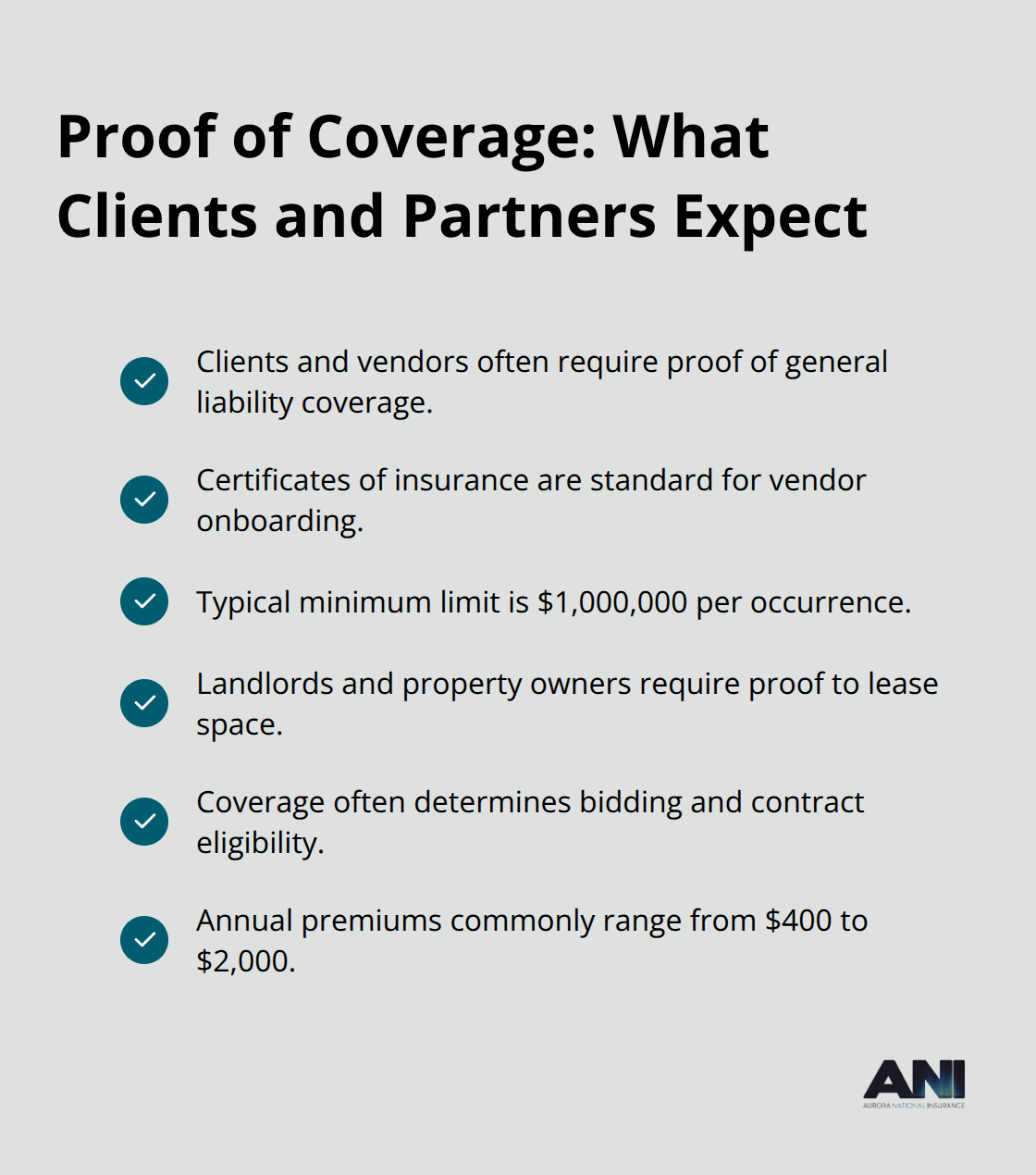
This requirement determines whether you can bid on jobs or secure contracts. Carrying coverage signals professionalism to potential clients and builds trust with partners who know you take risk seriously. The cost of general liability coverage for most Washington small businesses ranges from $400 to $2,000 annually depending on industry and revenue, making it one of the most affordable ways to protect both your finances and your reputation.
Moving Forward with the Right Protection
Understanding why you need coverage is the first step. The next step involves selecting the right policy limits and comparing options that actually fit your business operations.
How to Choose the Right General Liability Policy for Your Washington Business
Match Coverage Limits to Your Industry
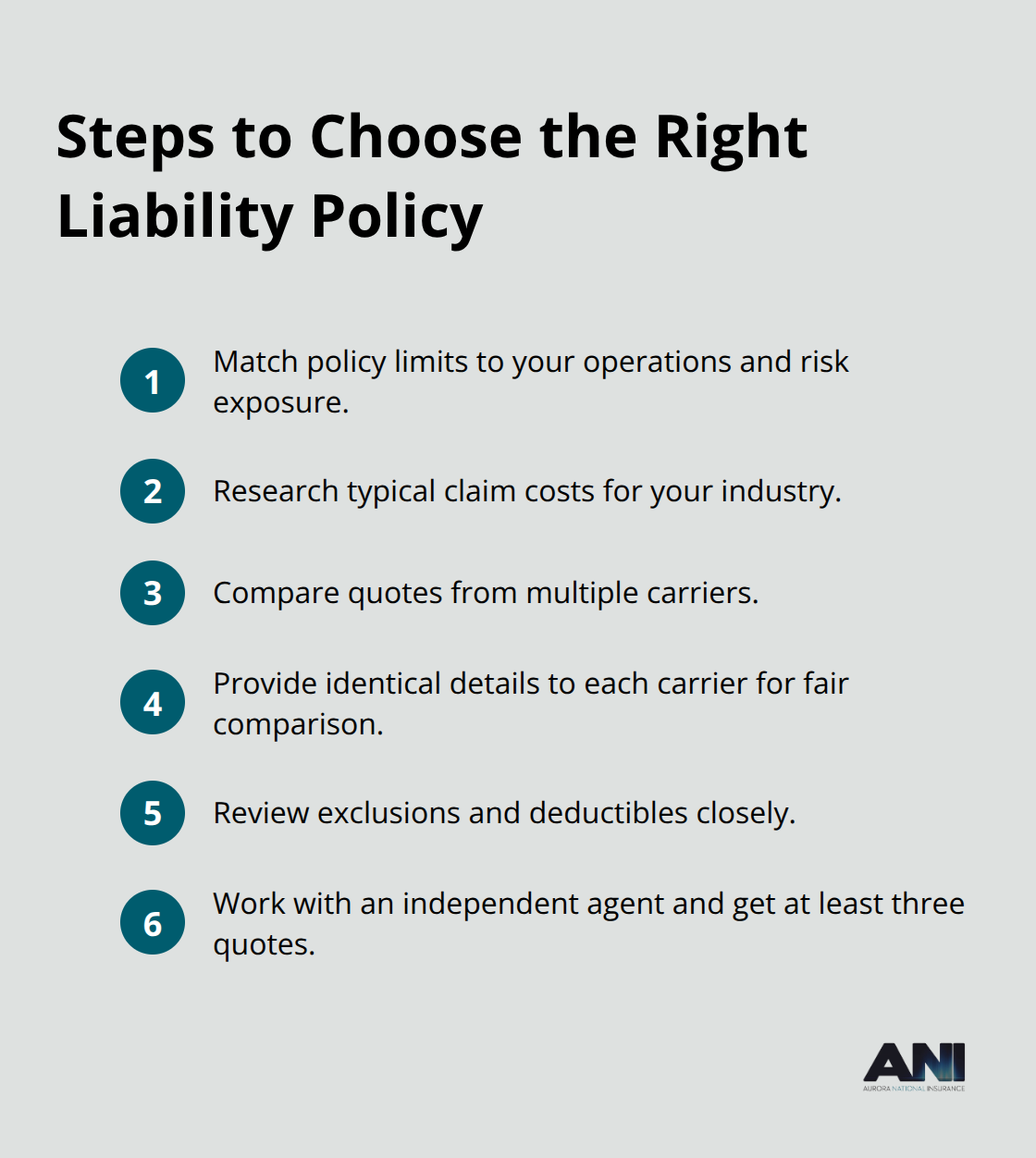
Selecting general liability coverage means matching your policy limits to your actual business operations. Washington business owners often make this decision incorrectly, either purchasing too much coverage they don’t need or too little to protect their assets. Your coverage limit should reflect your industry’s typical claim costs, your annual revenue, and your personal financial exposure.
A restaurant serving alcohol faces different risks than a landscaping company, which faces different risks than an accounting firm. Construction contractors need higher limits because property damage claims involving building work can be substantial. Retail businesses typically need $1,000,000 per occurrence because customer injury claims combine medical costs, lost wages, and pain-and-suffering damages that accumulate quickly. Service-based businesses with minimal physical interaction can sometimes operate adequately with $500,000 limits, though many clients now require $1,000,000 as a baseline for contract work.
Research Your Industry’s Claim Patterns
The key is understanding what claim costs look like in your specific field, not guessing at numbers that sound reasonable. Industry associations often publish average claim data for their sectors. The National Federation of Independent Business and state insurance departments track common claim amounts by business type. Start there rather than choosing limits randomly.
Compare Quotes from Multiple Carriers
Comparing quotes from multiple carriers reveals significant price differences for identical coverage. These differences stem from how each insurer evaluates your specific risk profile, not from industry-wide rate tables. A carrier that specializes in your industry understands your claims patterns better and often prices more competitively than a generalist.
Request Identical Information from Each Carrier
When requesting quotes, provide identical information to each carrier: your revenue, number of employees, years in business, claims history, and detailed description of operations. This consistency allows you to compare apples to apples. Don’t accept the lowest quote without examining what’s included. Some policies exclude certain exposures that matter to your business, or require higher deductibles that increase your out-of-pocket costs when claims happen.
Read the exclusions section carefully because that’s where gaps in protection hide. We recommend getting quotes from at least three carriers before making your decision, and working with an independent agent who represents multiple companies rather than a captive agent tied to a single insurer. Independent agents access broader options and have stronger incentives to find you competitive pricing since their revenue depends on multiple carriers rather than loyalty to one company.
Final Thoughts
Washington general liability basics protect your business from financial devastation when someone gets hurt or property damage occurs. A single liability claim costs tens of thousands of dollars, and without coverage, that expense comes directly from your business revenue or personal assets. Your next step is requesting quotes from multiple carriers to see what protection actually costs for your specific operation.
Different insurers price risk differently based on your industry, revenue, and claims history, so comparing options reveals significant price variations for identical coverage. Request quotes from at least three carriers using identical information about your operations, and examine what each policy excludes rather than just comparing premium prices. We at Aurora National Insurance represent multiple top-rated carriers, which means we can compare options across different insurers and help you find coverage limits that match your actual needs.
Get your Washington general liability quote from Aurora National Insurance and see what protection costs for your business. Our licensed agents understand Washington’s business environment and can explain what coverage limits actually make sense for your industry and revenue level. You’ll have the concrete pricing you need to make a decision that protects your finances without overpaying for unnecessary coverage.
The information provided in this blog is for general informational purposes only and does not constitute legal, financial, or insurance advice. Coverage options, terms, and availability may vary. Please consult with a licensed professional for advice specific to your situation.
Artificial intelligence may have been used to generate text and images in some blog articles.


