

Affordable Home Insurance Alaska: Get More Coverage for Less
Alaska homeowners face unique insurance challenges that often drive up costs. At Aurora National Insurance, we know that finding affordable home insurance in Alaska doesn’t mean sacrificing the protection your home needs.
This guide walks you through real strategies to lower your premiums while covering the risks that matter most in our state.
What Coverage Do Alaska Homeowners Actually Need?
Dwelling and Personal Property Coverage for Alaska Conditions
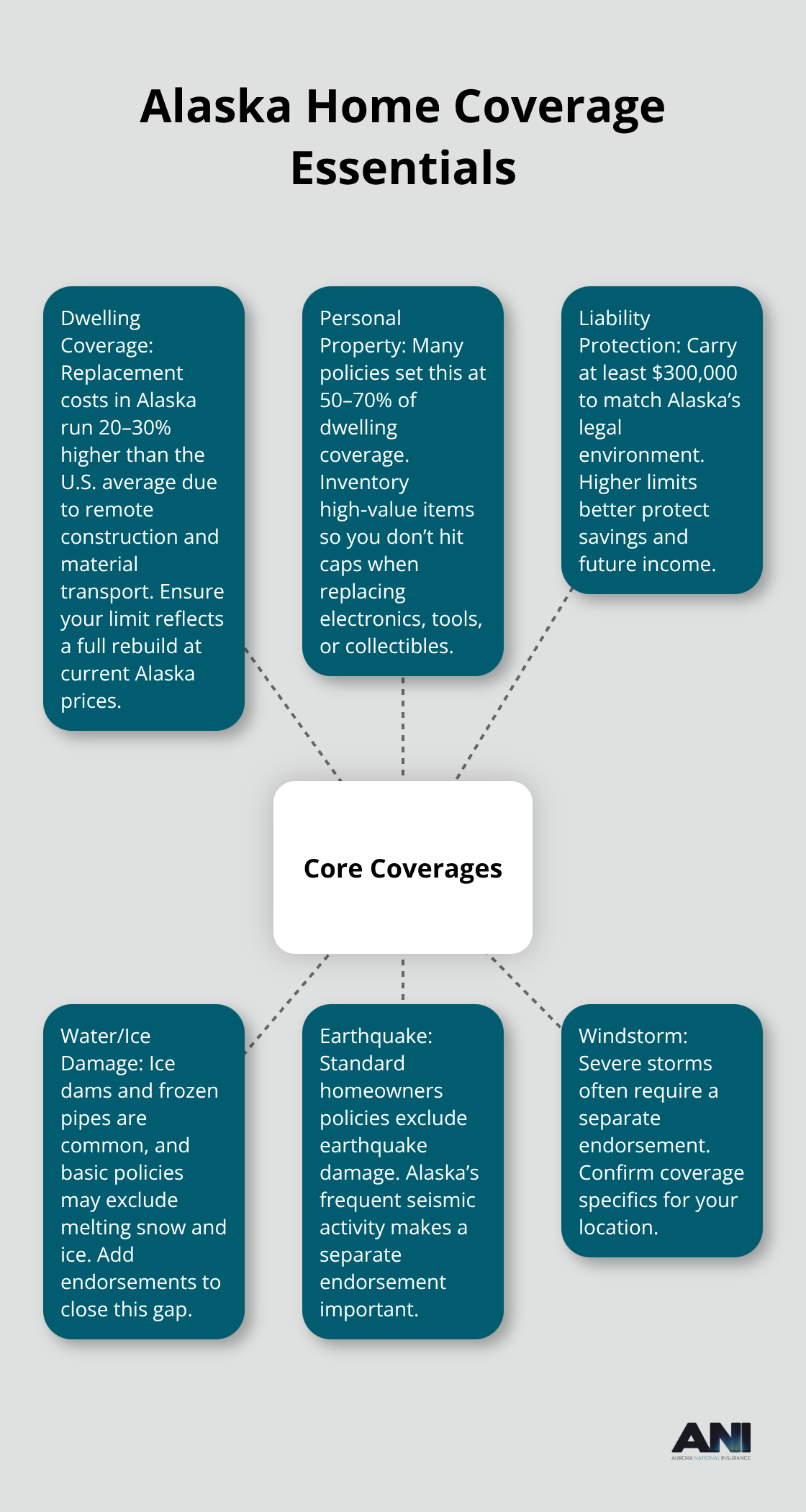
Home insurance in Alaska requires a different approach than what works in the lower 48 states. Standard policies often miss the specific risks that damage Alaska homes most frequently. Dwelling coverage protects your home’s structure, and in Alaska this matters tremendously because replacement costs run 20-30% higher than the national average due to remote construction and material transport. You need enough dwelling coverage to rebuild your entire home at current Alaska prices, not some outdated estimate. Many homeowners underestimate this and end up thousands of dollars short when they file a claim.
Personal property coverage reimburses you for belongings inside your home, but the coverage limit you select makes all the difference. Most policies cover 50-70% of your dwelling coverage amount, which works fine if you’ve calculated your dwelling coverage correctly. However, if you own expensive electronics, tools, or collectibles, you’ll hit that limit fast in Alaska where shipping costs inflate replacement expenses.
Liability Protection in Alaska’s Legal Environment
Liability coverage protects you if someone gets injured on your property and sues. Alaska’s legal environment means you should carry at least $300,000 in liability protection, not the $100,000 minimum many insurers suggest. This higher threshold reflects the actual risk exposure Alaska homeowners face.
Water Damage and Ice-Related Losses
Water damage from ice dams and frozen pipes happens constantly during Alaska winters, yet basic policies exclude water damage from melting snow and ice unless you pay extra for it. This gap leaves many homeowners vulnerable to one of the most common winter claims in the state.
Earthquake and Windstorm Coverage
Earthquake coverage is optional in most states but becomes genuinely important in Alaska, where seismic activity occurs regularly. Alaska has more large earthquakes than the rest of the United States combined, and most standard homeowners policies exclude earthquake damage entirely. Windstorm damage from Alaska’s severe storms also requires separate endorsement in many areas. A local agent can review what your current policy actually covers and identify what gaps exist for your specific location and home type. Understanding these coverage options sets the stage for the next critical step: finding ways to reduce what you pay for the protection you need.
Ways to Lower Your Home Insurance Premiums
Bundle Policies for Substantial Savings
If you purchase your homeowners and automobile policies from the same insurer, you may receive a small discount. The savings work because insurers reward customer loyalty and reduce their administrative costs when handling multiple policies for one household. Beyond the standard bundling discount, some carriers offer additional reductions when you stack home, auto, and umbrella coverage together.
Before committing to any bundle, however, verify that the combined rate actually beats what you’d pay with separate insurers. Bundling only makes financial sense if the total cost is genuinely lower. Alaska homeowners often assume their current insurer offers the best bundle rate, but this assumption costs them money every year.
Raise Your Deductible Strategically
Raising your deductible from $500 to $1,000 typically reduces your premium by 15% to 20%, while jumping to $2,500 cuts costs by 25% to 30% depending on your insurer and location within Alaska. The strategic part matters here: you should only increase your deductible if you have emergency savings to cover that amount without financial hardship.
A $2,500 deductible saves money until you file a claim and suddenly face that out-of-pocket expense. Calculate what you can realistically afford to pay before selecting your deductible amount.
Install Safety and Security Features
Installing security systems, smoke detectors, and deadbolt locks qualifies for discounts ranging from 5% to 15% with most carriers. Alaska’s remote locations make these safety features particularly valuable to insurers. Some companies offer additional discounts for weather-resistant roofing materials or impact-resistant windows (both common upgrades in Alaska homes that reduce claim frequency).
These improvements protect your home while lowering your insurance costs simultaneously. Talk with your agent about which upgrades your insurer rewards most generously.
Shop Multiple Insurers for Real Comparisons
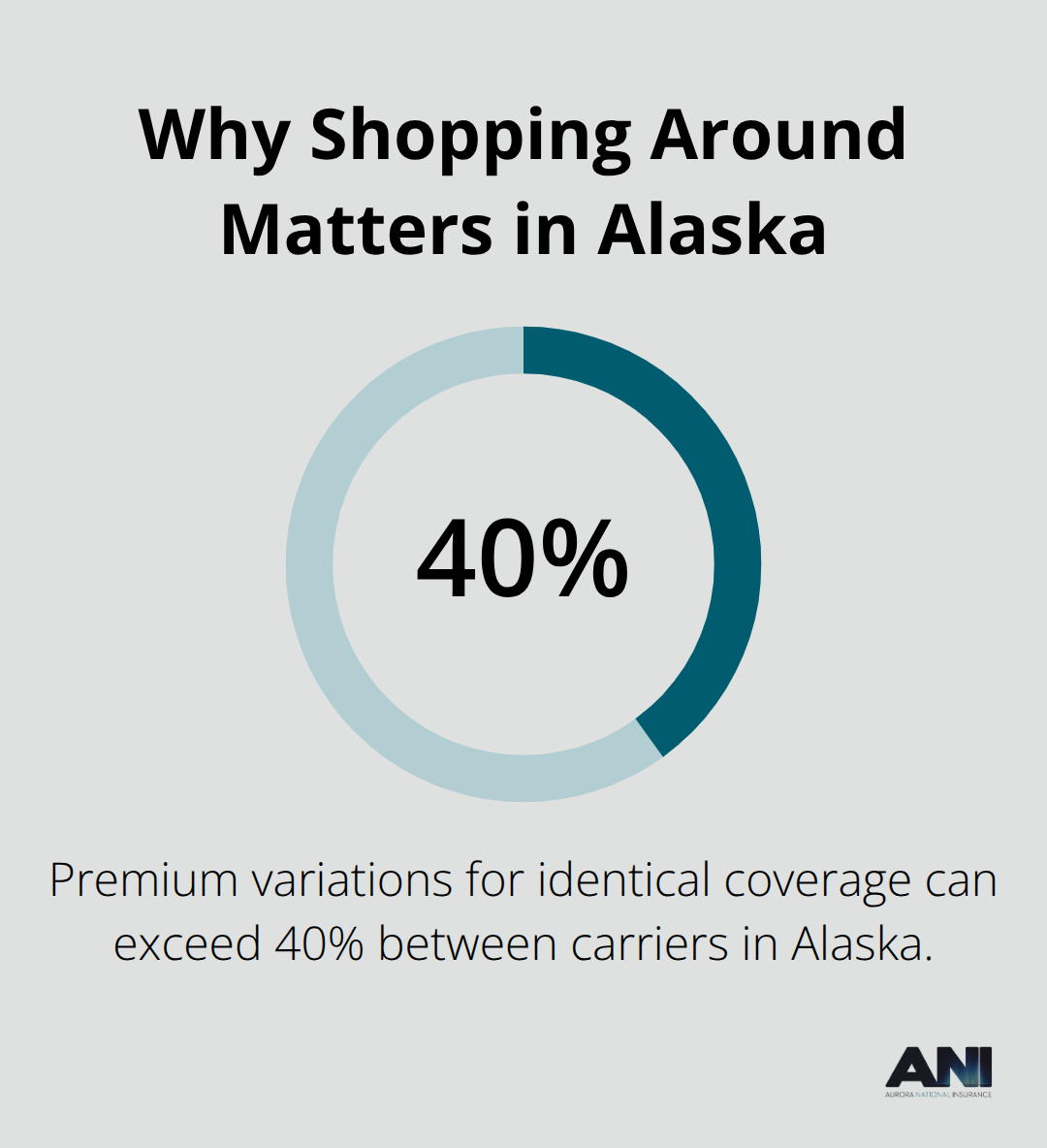
Shopping around across at least three different insurers is non-negotiable in Alaska because premium variations for identical coverage routinely exceed 40% between carriers. Getting quotes from local agents who understand Alaska-specific risks produces better results than using national online comparison tools, which often miss regional factors that affect your actual cost and coverage needs.
Local agents can identify which carriers offer the best rates for your specific situation and explain how Alaska’s unique risks impact your premium. This comparison process reveals opportunities that online tools simply cannot detect, making the effort worthwhile before you commit to any policy.
Why Alaska’s Climate and Geography Make Insurance More Expensive
Extreme Weather Patterns That Drive Up Claims
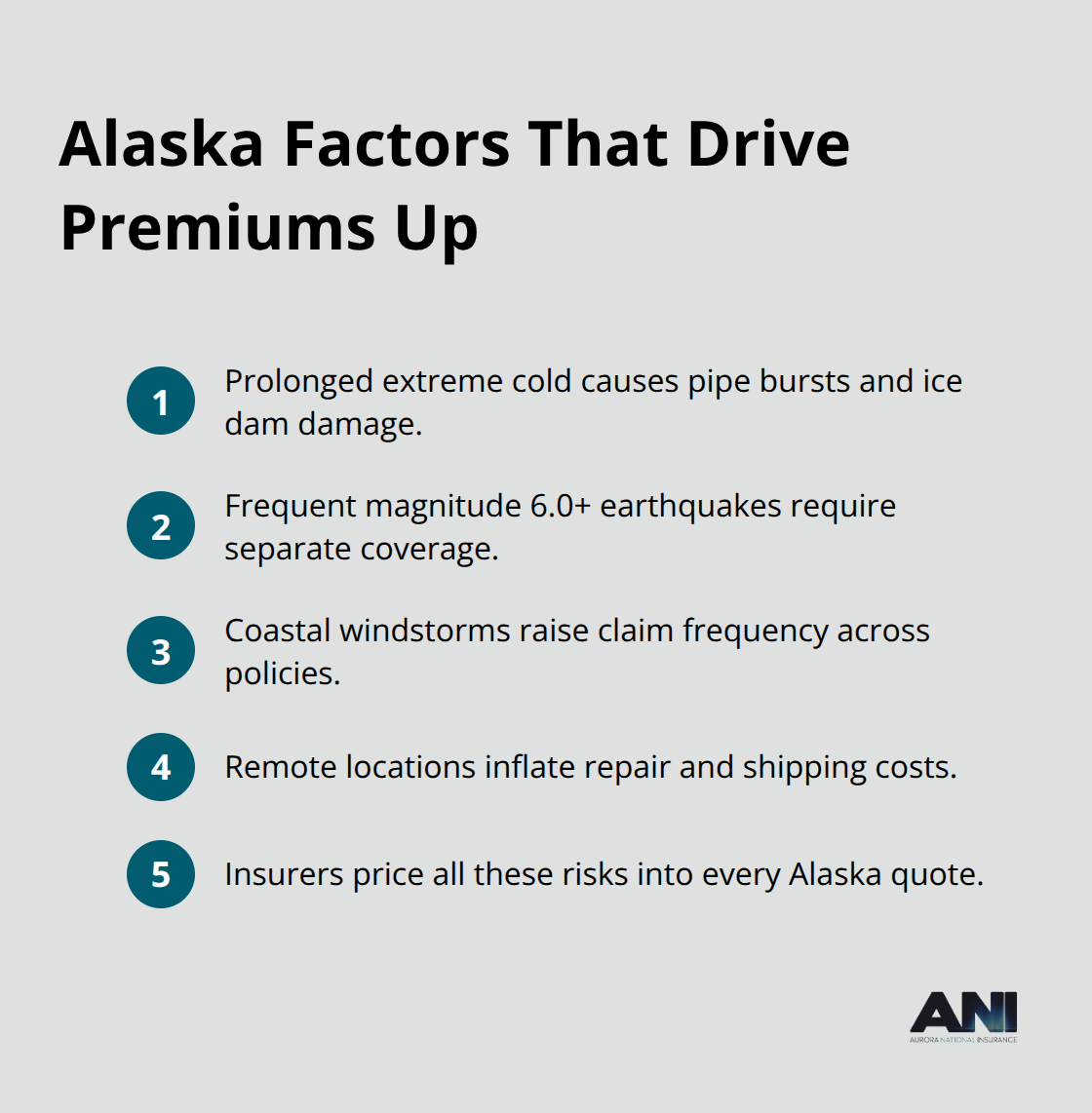
Alaska’s extreme weather patterns create insurance challenges that directly inflate your premiums compared to homeowners in other states. Winter temperatures regularly drop below minus 20 degrees Fahrenheit, and this cold triggers pipe bursts, ice dam damage, and structural stress that southern homeowners rarely encounter. The Alaska Earthquake Center reports that Alaska experiences more magnitude 6.0 or greater earthquakes than any other U.S. state, yet most standard homeowners policies exclude earthquake damage unless you purchase it separately. Windstorms along Alaska’s coast generate claim frequencies that insurers price into every quote, and remote locations mean repair costs skyrocket because contractors must travel long distances or materials require expensive shipping. Your insurer factors all these realities into your premium calculation, which is why Alaska homeowners pay significantly more than equivalent coverage costs in the lower 48 states.
Limited Insurance Market Options
The geographic isolation that defines Alaska also limits your insurance options in ways that directly affect affordability. Many national carriers operate minimally in Alaska or avoid certain remote areas entirely, leaving fewer competitors to choose from and reducing your bargaining power. This limited market means you cannot shop as aggressively as homeowners in populated regions, and some carriers charge Alaska premiums that reflect their operational costs rather than actual risk exposure. Local agents who understand these Alaska-specific factors can identify which carriers price fairly for your actual risk profile and which ones overcharge for remote location status alone.
Construction Costs and Building Standards
Building materials suited to Alaska’s climate cost more to purchase and install, and construction standards specific to permafrost regions and extreme cold add expense to any rebuild scenario. These factors directly impact what it costs to replace your home after a total loss, which insurers account for when calculating your dwelling coverage premium. Your deductible choice becomes even more important in Alaska because higher deductibles offset the geographic premium penalties that affect most policies in the state.
Final Thoughts
The path to affordable home insurance in Alaska starts with understanding what your home actually needs to be protected. Most homeowners either over-insure and waste money on coverage they don’t need, or under-insure and face devastating gaps when claims happen. Calculate your dwelling coverage based on current Alaska rebuild costs, not outdated estimates from five years ago, and review what personal property limits you truly require by inventorying your belongings and their replacement costs.
Working with local agents who understand Alaska’s specific risks transforms your insurance search from frustrating to productive. National online comparison tools miss the regional factors that actually determine your premium and coverage options, while an agent familiar with Alaska’s earthquake frequency, extreme winters, and remote construction costs can explain why your quote differs from what a friend in Washington pays for similar coverage. They identify which carriers price fairly for your actual risk profile and which ones inflate costs unnecessarily.
Your policy requires annual review because your home’s value changes, your circumstances shift, and insurance rates fluctuate (a policy that made sense last year might cost significantly more this year with a different carrier). Contact Aurora National Insurance to discuss your current coverage and explore better options for affordable home insurance in Alaska that matches your specific situation.
The information provided in this blog is for general informational purposes only and does not constitute legal, financial, or insurance advice. Coverage options, terms, and availability may vary. Please consult with a licensed professional for advice specific to your situation.
Artificial intelligence may have been used to generate text and images in some blog articles.


