

Washington Homeowners Policy Tips: Maximize Coverage and Savings
Washington homeowners face rising insurance costs and complex coverage decisions. At Aurora National Insurance, we’ve helped thousands of homeowners in Washington find the right balance between protection and affordability.
This guide walks you through Washington homeowners policy tips that actually work-from understanding state requirements to cutting your premiums without sacrificing coverage.
Understanding Washington Home Insurance Requirements
State-Mandated Coverage and Lender Requirements
Washington state does not mandate specific homeowners insurance coverage amounts, but your mortgage lender will require you to carry enough dwelling coverage to protect their investment in your home. Most lenders demand coverage equal to at least 80 percent of your home’s replacement cost, though many require 100 percent. This matters because underinsurance affects roughly 20 percent of homeowners nationwide, according to the National Association of Insurance Commissioners.
The number 100% seems to be not appropriate for this chart. Please use a different chart type.
How Washington’s Climate Creates Coverage Gaps
Washington’s wet climate and seismic activity create real exposure gaps that standard policies often leave uncovered. Heavy rainfall causes significant damage in western Washington counties like King and Pierce, where annual precipitation exceeds 50 inches, yet standard homeowners policies exclude water damage from poor drainage or ground seepage. Earthquake coverage is optional in Washington but critical given the state’s position near the Cascadia Subduction Zone and its history of damaging quakes. The 2001 Nisqually earthquake near Seattle caused over 2 billion dollars in damage, and seismic activity remains a genuine threat across the state.
Geographic Risks and Coverage Priorities
Geography shapes what you should prioritize in your policy. Coastal homeowners in Pacific County face wind and storm surge risks that require specific windstorm coverage, while those in forested areas near Spokane or eastern Washington face wildfire exposure that standard policies may limit. Many Washington homeowners skip replacement cost coverage and choose actual cash value instead, saving money upfront but facing significant out-of-pocket costs when claims happen because depreciation reduces payouts substantially.
High-Value Items and Policy Limits
High-value items like jewelry, artwork, or collectibles typically have coverage limits of 1,500 to 2,500 dollars under standard policies, forcing you to add scheduled personal property endorsements if you own anything valuable. Your replacement cost estimates from five years ago likely underestimate current rebuilding expenses given inflation in construction materials and labor, which makes annual policy reviews essential as Washington’s housing market changes quickly.
How to Cut Your Washington Home Insurance Costs Without Sacrificing Protection
Bundle Policies for Immediate Savings
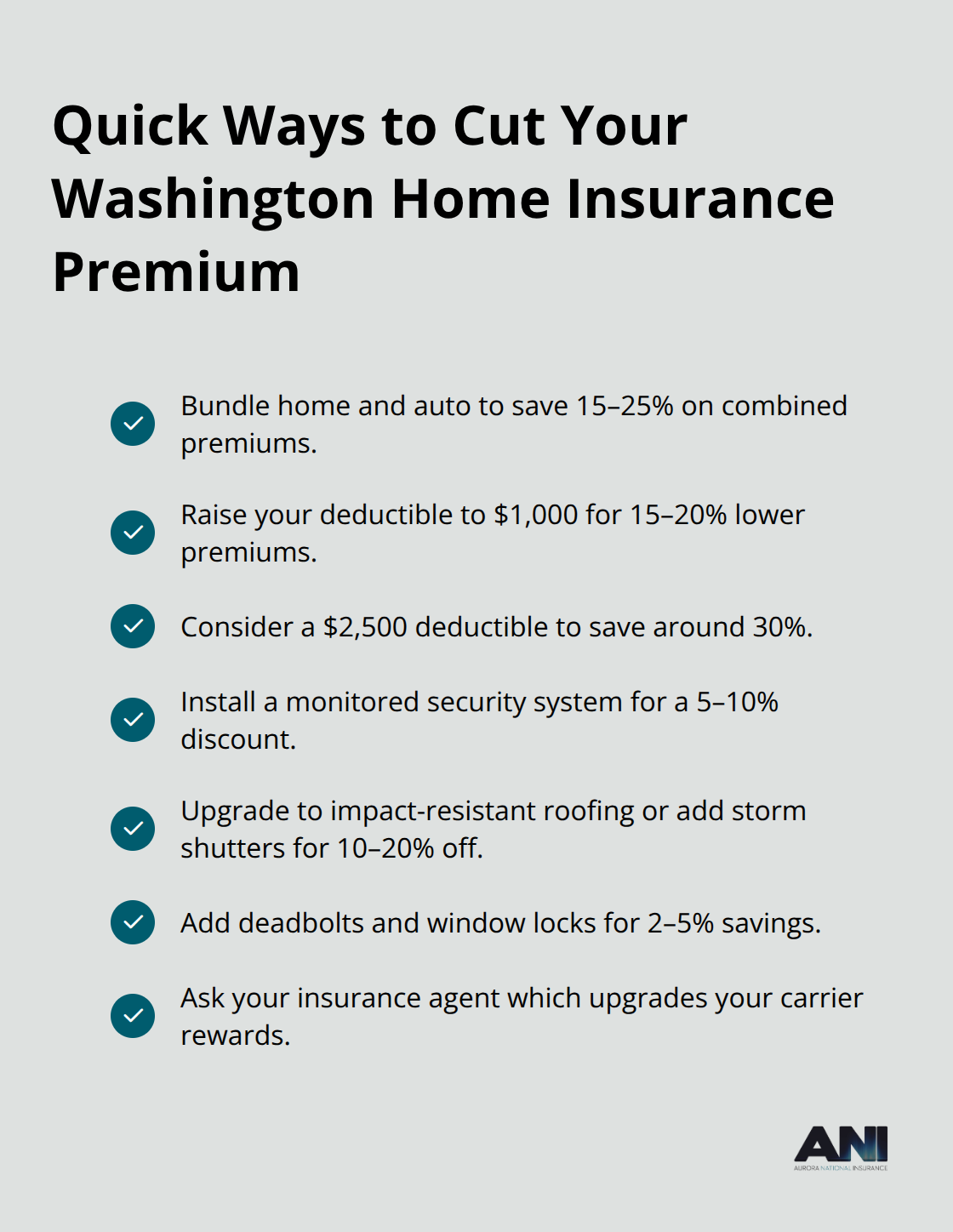
Bundling your homeowners policy with auto insurance typically saves Washington homeowners between 15 and 25 percent on their combined premiums, according to data from the Insurance Information Institute. Most clients reduce their total insurance spend by $500 to $1,200 annually when consolidating policies with one carrier. The savings matter more when you account for Washington’s above-average home insurance costs, which run roughly 12 to 15 percent higher than the national average due to the state’s weather patterns and earthquake exposure.
Adjust Your Deductible to Match Your Budget
Your deductible choice directly controls your monthly premium. Raising your deductible from $500 to $1,000 typically cuts your premium by 15 to 20 percent, while jumping to $2,500 saves around 30 percent. This strategy only works if you have emergency savings to cover that deductible amount when you file a claim, so assess your financial cushion before increasing it.
Install Security Systems and Safety Features
Home safety upgrades reward you with concrete premium reductions that most Washington homeowners overlook. Installing a monitored security system drops your premium by 5 to 10 percent because insurers recognize that theft and break-ins cost them money. Upgrading to impact-resistant roofing or adding storm shutters in windstorm-prone coastal areas qualifies for discounts ranging from 10 to 20 percent, with some carriers offering even higher reductions.
Update Aging Home Systems
Updating your home’s plumbing, electrical wiring, or HVAC system signals lower risk to insurers, particularly when you replace outdated systems that increase water damage or fire exposure. Deadbolts on exterior doors and window locks seem basic, but they consistently generate 2 to 5 percent discounts across carriers. The key is asking your insurance agent which specific upgrades your carrier rewards before spending money on improvements, since different insurers prioritize different risk factors and your investment should align with their underwriting preferences.
With your premiums optimized and your coverage strategy in place, the next step involves selecting the right coverage types for your specific Washington home and circumstances.
Selecting the Right Coverage for Your Washington Home
Replacement Cost Coverage vs. Actual Cash Value
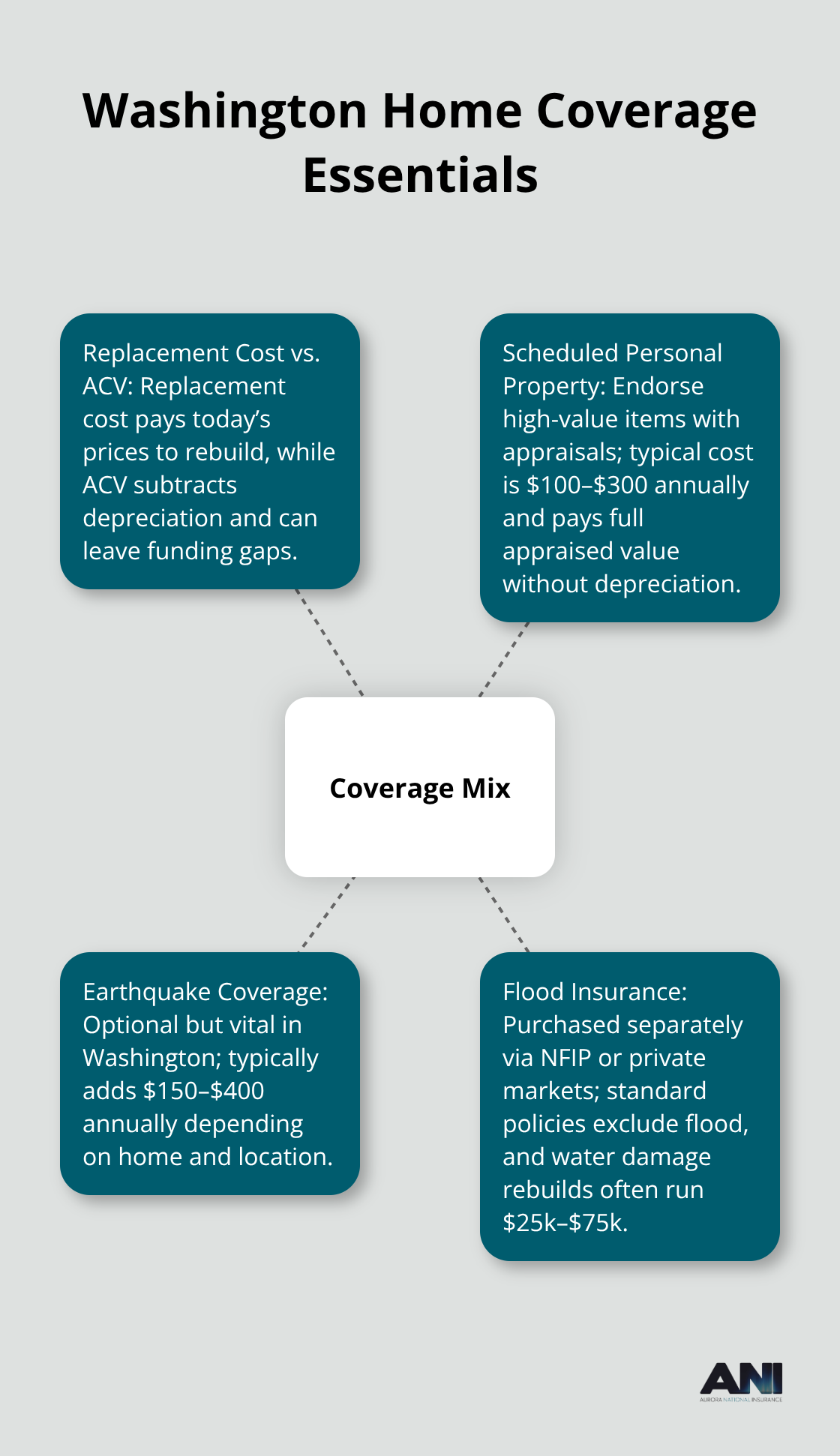
Replacement cost coverage pays what it actually costs to rebuild or repair your home with new materials at today’s prices, while actual cash value subtracts depreciation from that replacement cost before paying you. If your roof needs replacement after a covered loss, replacement cost covers the full cost of new roofing materials and labor, whereas actual cash value pays that amount minus depreciation, often leaving you short of what you need to fully rebuild.
Washington homeowners who choose actual cash value to save money on premiums typically face a harsh reality when they file a claim: a ten-year-old home with dated systems receives substantially less payout than a newer home with identical square footage. Replacement cost coverage costs roughly 10 to 15 percent more in premiums than actual cash value, but that premium difference disappears the moment you file a major claim and discover actual cash value leaves you unable to fully rebuild your home.
Protecting High-Value Items
Standard homeowners policies cap coverage on jewelry, artwork, antiques, and collectibles at $1,500 to $2,500 total, regardless of actual value. A single piece of jewelry worth $5,000 or a collection of firearms worth $15,000 receives no protection under standard coverage limits, forcing you to add a scheduled personal property endorsement that lists specific items with their appraised values. These endorsements cost between $100 and $300 annually depending on item values, but they pay the full appraised value without depreciation if loss occurs.
Washington homeowners with valuable collections should obtain professional appraisals from certified appraisers before purchasing endorsements, since undervalued items receive reduced payouts and overvalued items waste premium dollars.
Earthquake Coverage for Washington Homes
Earthquake coverage remains optional in Washington but essential given seismic risk, and it typically adds $150 to $400 annually to your premium depending on home value and location. The 2001 Nisqually earthquake near Seattle caused over $2 billion in damage, and seismic activity remains a genuine threat across the state.
Flood Coverage Considerations
Flood coverage requires a separate policy through the National Flood Insurance Program or private insurers, and standard homeowners policies exclude all flood damage regardless of cause. Eastern Washington homeowners in areas like Spokane County face lower flood risk than western Washington residents in river valleys, but even moderate flood exposure warrants coverage since rebuilding costs after water damage run $25,000 to $75,000 on average.
Matching Coverage to Your Financial Situation
The decision between these coverage types ultimately depends on your financial capacity to absorb losses and whether your mortgage lender requires full replacement cost protection (which most do for loans exceeding $200,000).
Final Thoughts
Review your current declarations page to identify coverage gaps and confirm that replacement cost coverage protects your home instead of actual cash value. Verify your dwelling limit matches your lender’s requirements and check whether earthquake and flood coverage align with your property’s actual risk. Many Washington homeowners discover they’re either significantly underinsured or paying for unnecessary coverage, and a simple policy review catches both problems.
Contact your insurance agent about bundling opportunities and safety upgrades that qualify for discounts, since the 15 to 25 percent savings from combining policies with one carrier often exceeds the cost of installing a monitored security system. Request specific information about which upgrades your carrier rewards before investing in home improvements (different insurers prioritize different risk factors). Obtain quotes from multiple carriers to compare actual premium costs for identical coverage, as rates vary significantly across carriers even within Washington.
We at Aurora National Insurance represent multiple top-rated carriers and can provide instant online quotes that show you exactly how different coverage choices affect your premium. Get your personalized quote today to find the right Washington homeowners policy tips and protection at competitive prices while securing the coverage your Washington home actually needs.
The information provided in this blog is for general informational purposes only and does not constitute legal, financial, or insurance advice. Coverage options, terms, and availability may vary. Please consult with a licensed professional for advice specific to your situation.
Artificial intelligence may have been used to generate text and images in some blog articles.


