
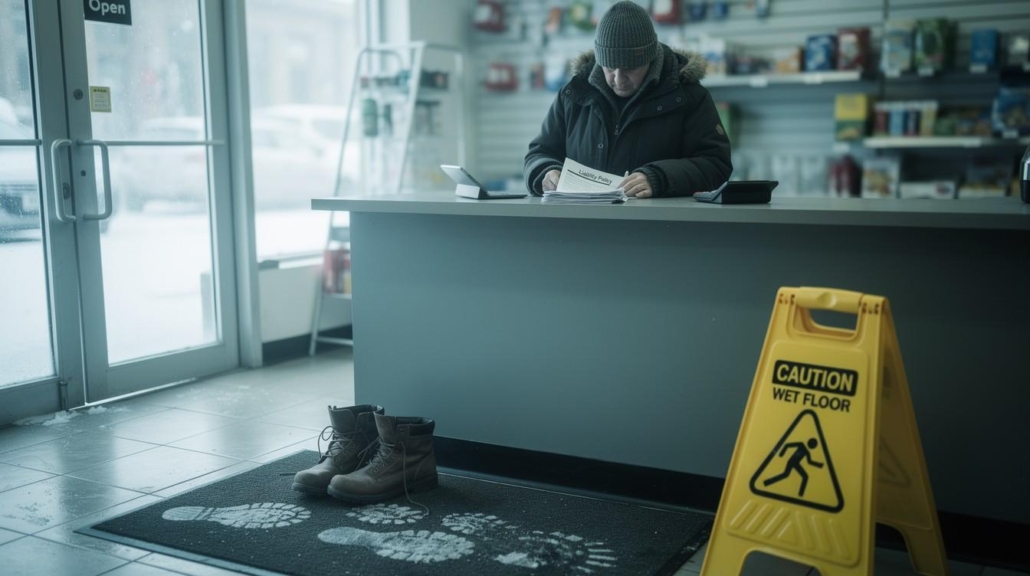
Understanding General Liability Risk Alaska And How It Impacts Your Business
General liability risk in Alaska is real, and it hits harder than most business owners expect. One accident or injury claim can drain your finances fast, especially when you’re operating in Alaska’s challenging environment.
At Aurora National Insurance, we’ve seen how quickly a single incident can threaten a business’s survival. That’s why understanding your exposure and getting proper coverage matters more than you might think.
What General Liability Actually Covers in Alaska
The Three Pillars of General Liability Protection
General liability insurance protects your business when someone gets hurt on your property or claims your work caused them damage. This protection falls into three main categories that work together to shield your operations. Bodily injury coverage pays medical bills and legal costs when a customer or visitor is injured at your location or because of your operations.
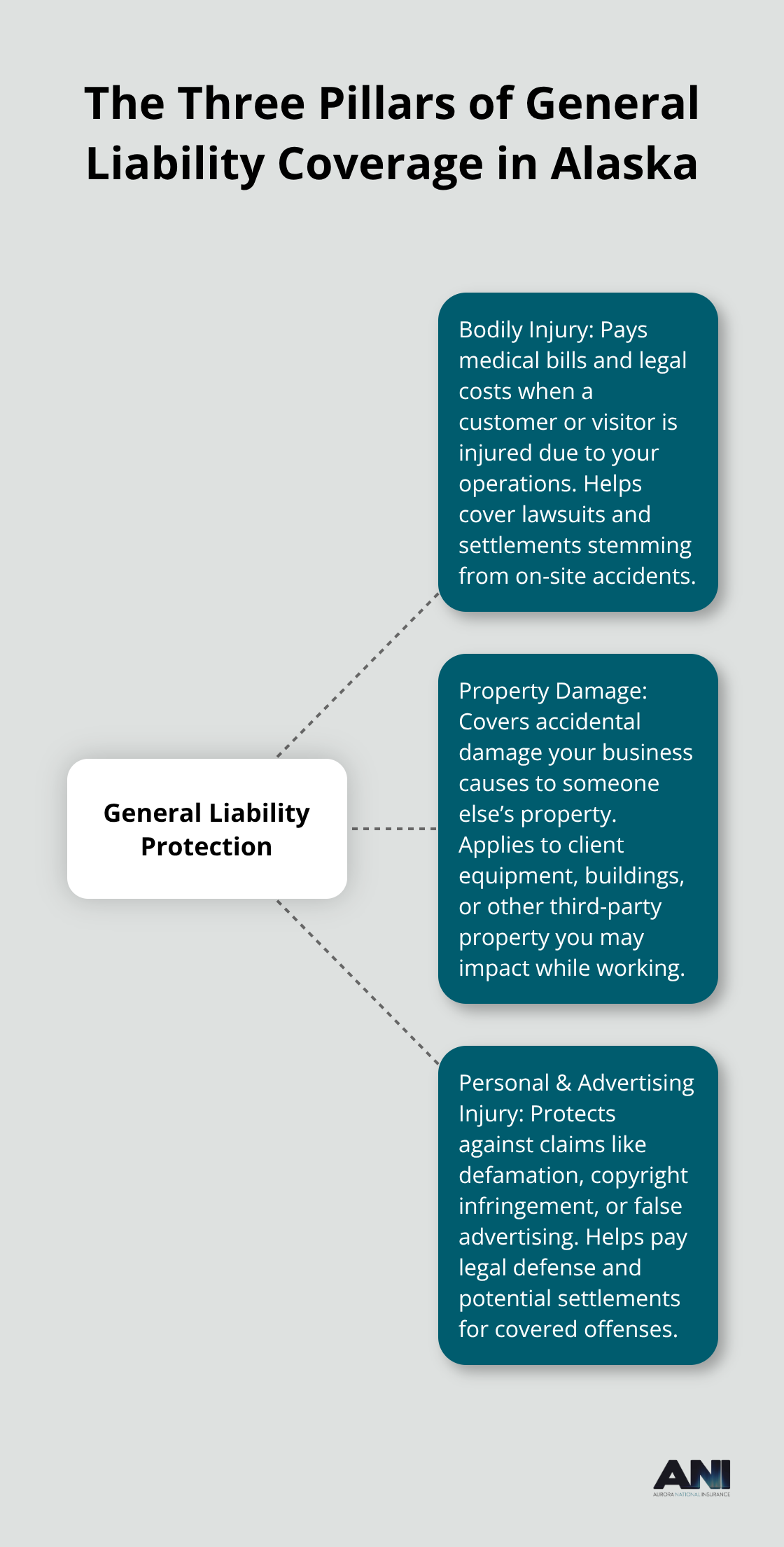
Property damage coverage handles situations where your business accidentally damages someone else’s property, whether that’s a client’s equipment or their building. Personal and advertising injury coverage protects against claims of defamation, copyright infringement, or false advertising. Most Alaska businesses need all three working together because a single incident can trigger multiple claim types simultaneously.
Alaska’s Weather Creates Outsized Liability Exposure
Alaska’s extreme weather and rugged terrain create liability exposures that mainland businesses rarely face. Winter conditions cause slip-and-fall claims to spike dramatically between October and April when ice and snow cover walkways and parking lots. Construction companies working on remote sites face heightened exposure because emergency response times stretch to hours instead of minutes, turning minor injuries into major medical situations. Work injuries cost American businesses $181.4 billion annually, and Alaska’s icy conditions make your business statistically more vulnerable to these claims.
Industry-Specific Risks Demand Tailored Coverage
Fishing and tourism operations deal with unique hazards like equipment failures on water or wildlife encounters that standard policies sometimes exclude. Oil and gas contractors working on the North Slope encounter extreme cold-related injuries that drive up claim severity significantly. Tourism operators in Southeast Alaska report that weather-related accidents account for roughly 40 percent of their liability claims. A retail store in Anchorage faces different risks than a guide service operating in remote wilderness areas, yet many business owners carry identical coverage levels regardless of their actual exposure. Your industry matters enormously here, and cookie-cutter coverage limits won’t protect you adequately.
These industry-specific risks shape how much coverage you actually need. The next section examines the real financial damage that claims inflict on Alaska businesses-and why underestimating your exposure can cost far more than adequate insurance premiums.
What Uninsured Claims Actually Cost Your Alaska Business
The Direct Financial Blow
An uninsured liability claim in Alaska doesn’t just cost you the medical bills or property damage amount. It costs you everything else too. When someone sues your business and you lack coverage, creditors can pursue your business assets, your personal savings, and potentially your home. A single slip-and-fall claim in Anchorage that results in a $150,000 judgment without insurance behind you doesn’t disappear if you can’t pay immediately. Collection efforts continue for years, damaging your credit rating and making it nearly impossible to secure business loans or lines of credit. Alaska court records show that businesses without proper liability coverage often settle claims for significantly higher amounts because they lack the resources to defend themselves through litigation.
Legal Defense Costs That Drain Fast
The legal defense costs alone can reach $50,000 to $100,000 before a case even goes to trial, and most small Alaska businesses cannot absorb those expenses without catastrophic damage. You’ll hire attorneys, file motions, and respond to discovery requests-all while your business operates at reduced capacity. These expenses mount regardless of whether you win or lose the case. Insurance coverage handles these costs, but without it, you pay from operational funds that you need to keep the business running.
Hidden Operational Damage
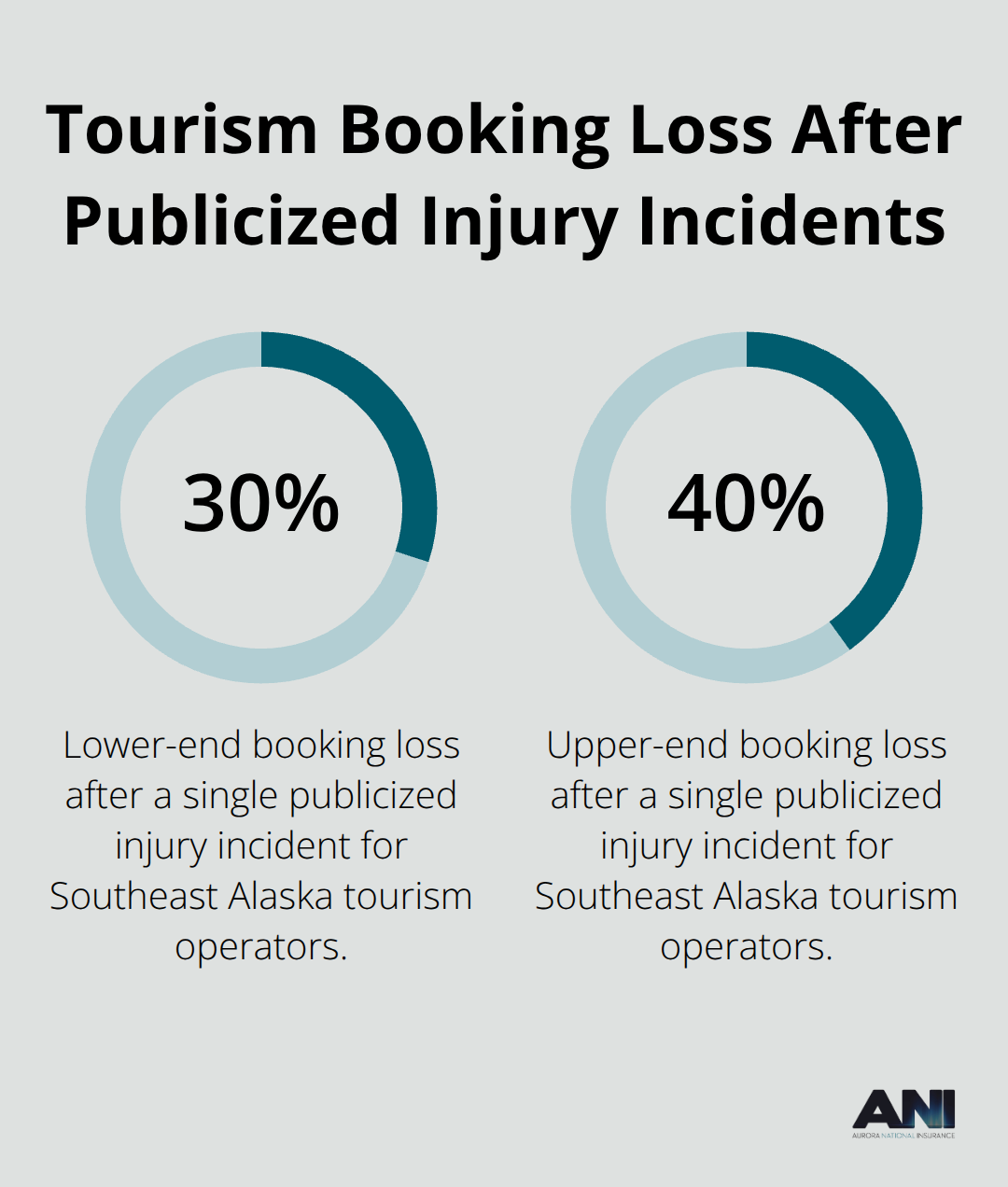
Uninsured claims destroy your operational capacity in ways that extend far beyond the courtroom. Management attention shifts away from growing your business to handling depositions, court appearances, and settlement negotiations. Employees become distracted by workplace disruptions. Your reputation suffers when news of a lawsuit spreads through your local community or industry. Tourism operators in Southeast Alaska have reported losing 30 to 40 percent of seasonal bookings after a single publicized injury incident, even when they weren’t at fault. Construction companies working on major projects face contract cancellations and blacklisting when they lack proof of adequate liability insurance.
The True Cost Multiplier
Medical expenses represent only the visible portion of claim costs. Lost productivity, legal fees, settlement negotiations, court judgments, and reputational damage typically exceed the initial injury expense by two to three times. A business owner in Fairbanks reported that a $40,000 medical claim ultimately cost them $140,000 when factoring in legal defense, lost contracts, and the time spent managing the situation instead of running operations. That financial reality explains why the next section focuses on identifying which hidden costs hit your specific industry hardest.
How to Build Liability Protection That Actually Fits Your Alaska Business
Map Your Operational Hazards First
Your industry determines your liability exposure far more than your business size does, yet most Alaska business owners treat coverage as a one-size-fits-all purchase. A fishing charter operator in Juneau faces drowning risks and equipment failures that a dental office in Anchorage will never encounter. A construction company working on the North Slope deals with extreme cold injuries and remote site hazards that retail stores don’t touch. The National Council on Compensation Insurance reports that Alaska workers’ compensation claim costs run higher than the national average, which directly signals how much your liability exposure exceeds mainland businesses.
Start by mapping your specific operational hazards rather than copying your competitor’s coverage limits. Document every activity your business performs, every location where you operate, and every way your work could injure someone or damage their property. Tourism operators should list weather-related incidents, guide responsibilities, and equipment failures. Contractors should identify fall hazards, equipment operation risks, and remote site challenges. Retailers should account for slip-and-fall patterns, seasonal weather impacts, and customer traffic volumes. This hazard mapping becomes your foundation for determining actual coverage needs instead of guessing.
Set Coverage Limits Based on Worst-Case Scenarios
Coverage limits matter more in Alaska than in most states because injury severity tends to run higher and legal defense costs climb faster. A $300,000 general liability limit might sound adequate until you face a catastrophic injury claim where medical costs exceed $500,000 and legal defense runs $75,000 before settlement. Alaska court records show that slip-and-fall verdicts in Anchorage averaged $285,000 over the past three years, well above the national average of $165,000.
Most Alaska businesses should carry minimum limits of $1,000,000 per occurrence and $2,000,000 aggregate, with higher limits for industries handling dangerous equipment or operating in extreme environments. Your actual limit should reflect your worst-case scenario, not your average claim. This approach protects your business assets when the unexpected happens.
Implement Risk Management That Reduces Claims
Risk management practices then reduce how often you’ll need to use that coverage. Implement a documented safety program that addresses Alaska-specific hazards like ice management in winter months, equipment maintenance schedules that prevent failures, and staff training on liability prevention. Construction companies should establish fall protection protocols and site-specific safety plans. Hospitality businesses should document regular walkway inspections and maintenance logs. Retailers should track slip-and-fall incidents and implement corrective actions immediately.
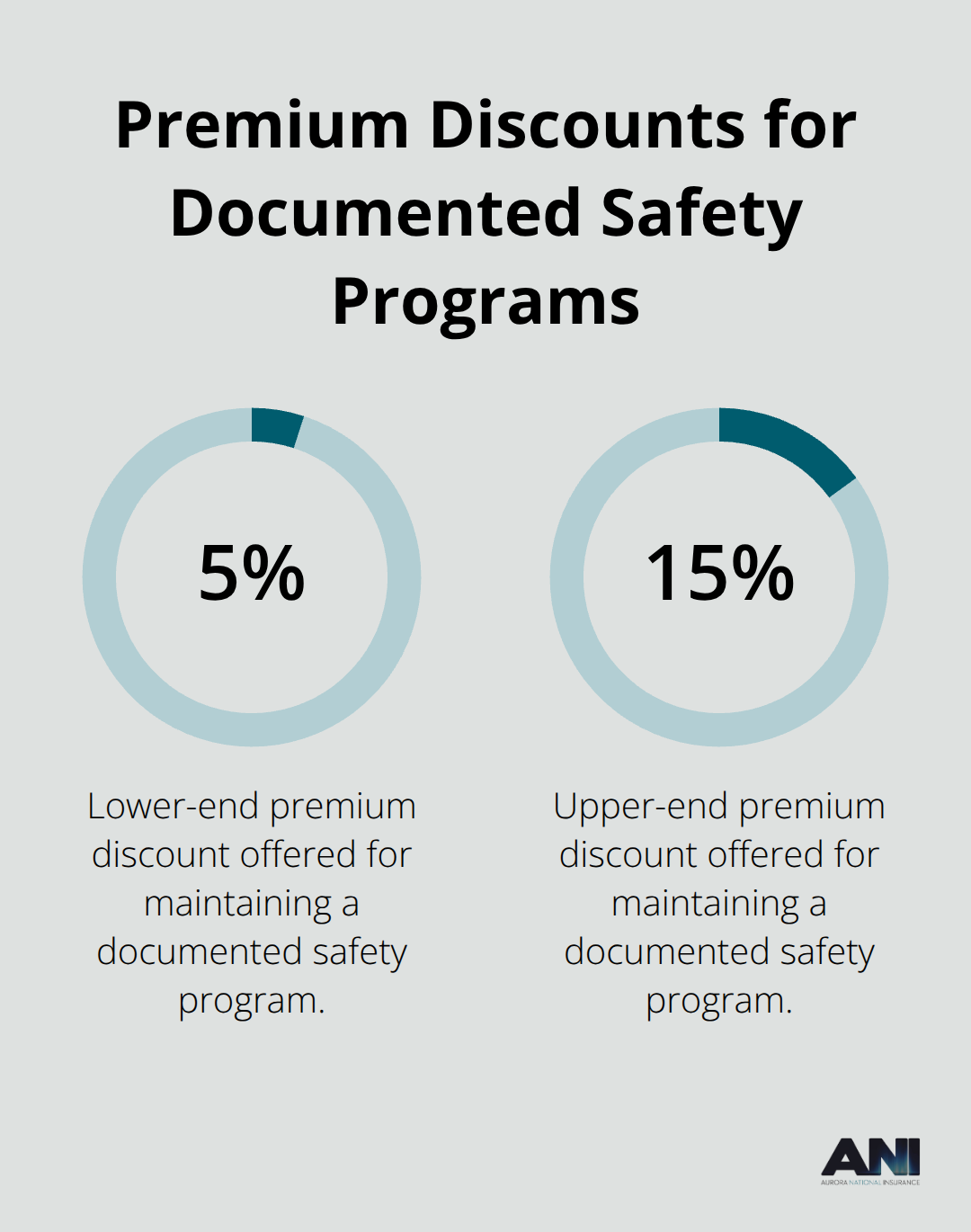
Documentation proves you took reasonable precautions if a claim does occur, which often reduces settlement amounts or helps defend against frivolous claims altogether. Insurance carriers typically offer premium discounts ranging from 5 to 15 percent for businesses that maintain documented safety programs, turning risk management into direct financial savings beyond claim prevention.
Final Thoughts
Start by reviewing your current coverage limits against your documented operational hazards. Pull your policy documents and compare your per-occurrence and aggregate limits to the worst-case scenarios your business could realistically face. If you’re carrying limits below $1,000,000 per occurrence, you’re underprotected for Alaska’s liability environment. Check whether your policy excludes specific activities your business performs, particularly if you operate in tourism, construction, or fishing industries where standard policies often contain gaps.
Next, audit your risk management practices and document your safety procedures, maintenance schedules, and incident response protocols. These practices reduce claim frequency while also demonstrating due diligence if a claim occurs. Insurance carriers reward documented safety programs with premium discounts that often exceed the cost of implementing them, turning risk management into direct financial savings.
General liability risk in Alaska demands that you take action today rather than wait for a claim to force your hand. Aurora National Insurance helps Alaska businesses build coverage that matches their actual exposure instead of relying on generic industry standards. Our licensed agents work with multiple top-rated carriers to find the right protection at competitive prices, and we provide instant online quotes so you can compare options without lengthy phone calls.
The information provided in this blog is for general informational purposes only and does not constitute legal, financial, or insurance advice. Coverage options, terms, and availability may vary. Please consult with a licensed professional for advice specific to your situation.
Artificial intelligence may have been used to generate text and images in some blog articles.


