

General Liability Risk Management: Strategies to Minimize Exposure
General liability claims cost businesses thousands of dollars every year. Slip and fall accidents, product defects, and property damage are common threats that can drain your finances fast.
At Aurora National Insurance, we know that general liability risk management isn’t optional-it’s essential for survival. This guide walks you through proven strategies to identify risks, prevent claims, and choose the right coverage for your business.
Where Do Most General Liability Claims Come From
Slip and Fall Accidents: Your Biggest Exposure
Slip and fall accidents represent the largest category of general liability claims in the United States. The National Floor Safety Institute reports that slip and fall incidents cost American businesses approximately $80 billion annually in medical costs, with the average claim exceeding 20,000 dollars. These accidents happen everywhere-retail stores, offices, warehouses, and service locations. Wet floors, poor lighting, uneven surfaces, and cluttered walkways create the conditions for injury. What makes slip and falls particularly expensive is that they often result in serious injuries like broken bones or head trauma.
Your business becomes liable if a visitor can prove that you knew or should have known about the hazard and failed to fix it. This means you must document maintenance schedules and address reported issues immediately. A single slip and fall claim can spike your insurance premiums for years, making prevention far cheaper than dealing with the aftermath.
Product Defects and Customer Injuries
Product defects and customer injuries represent another significant liability threat, especially for manufacturers and retailers. The Consumer Product Safety Commission receives thousands of injury reports annually related to defective products. When a customer gets hurt because of a faulty product, they can sue for medical expenses, lost wages, and pain and suffering. A contaminated food product, a malfunctioning appliance, or clothing with harmful materials can all trigger substantial claims.
You can significantly reduce claim severity through rigorous quality control, proper product testing, and clear documentation of your safety standards. These steps demonstrate that you took reasonable precautions if an accident does occur.
Property Damage from Business Operations
Property damage from your business operations-such as damage to a client’s building during construction or environmental contamination from your facility-rounds out the major exposure areas. Construction companies face particularly high claims when equipment damages neighboring properties or when work causes structural problems. The best defense involves maintaining detailed records of all work performed and safety measures taken on each project.
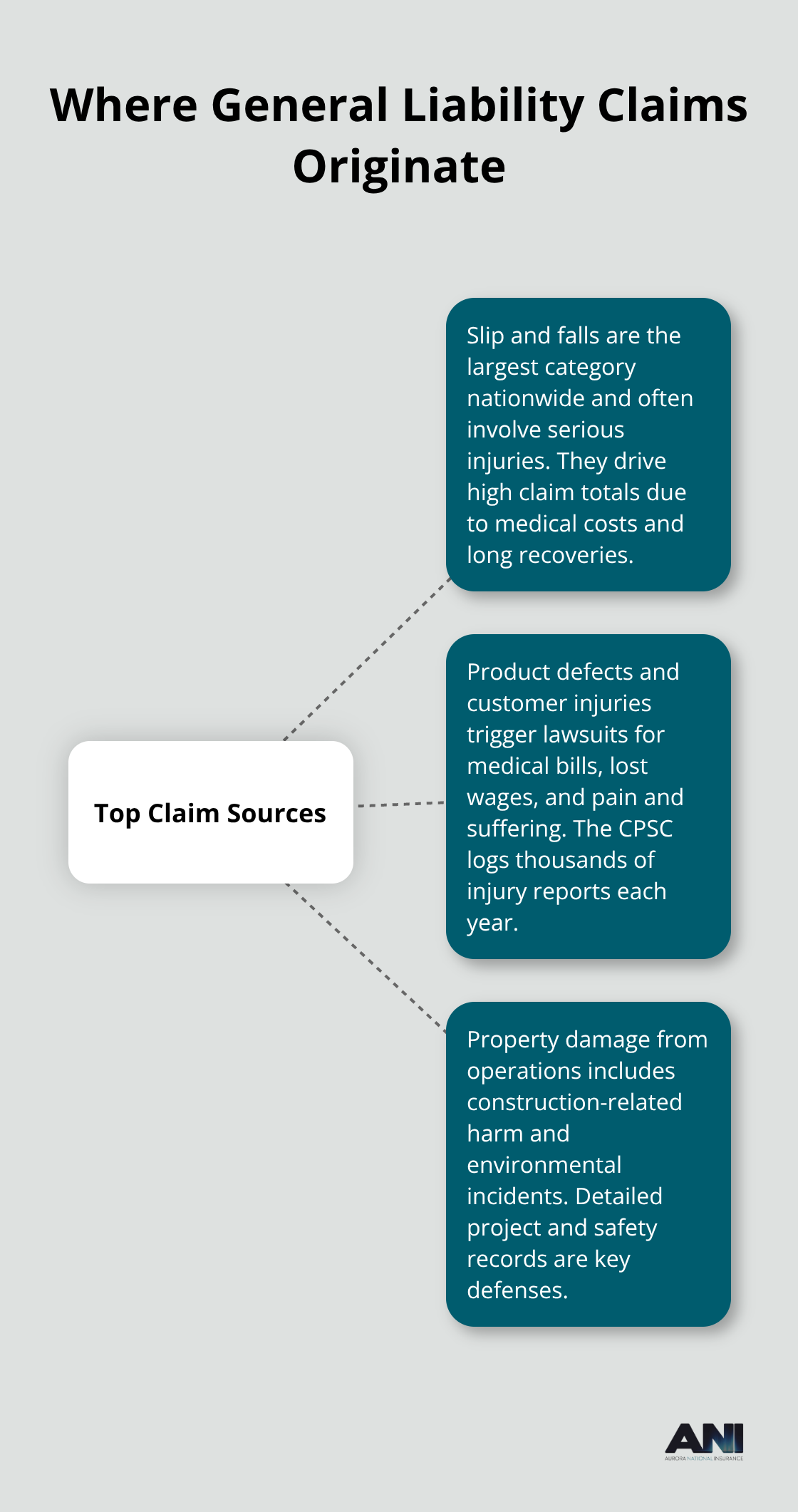
Understanding these three major claim sources helps you identify where your business faces the most risk. The next step involves assessing your specific operations to determine which threats apply to your company.
How to Stop Liability Claims Before They Start
Conduct Regular Safety Audits to Catch Problems Early
Knowing where claims originate is only half the battle. You need a systematic approach to identify weaknesses in your operations and fix them before someone gets hurt. Start with regular safety audits conducted quarterly rather than annually. Monthly audits work even better, especially for high-traffic areas or facilities with significant hazards. During these audits, walk every inch of your premises and document conditions with photos and written notes. Look for wet floors, poor lighting, tripping hazards, broken equipment, and anything else that could cause injury.
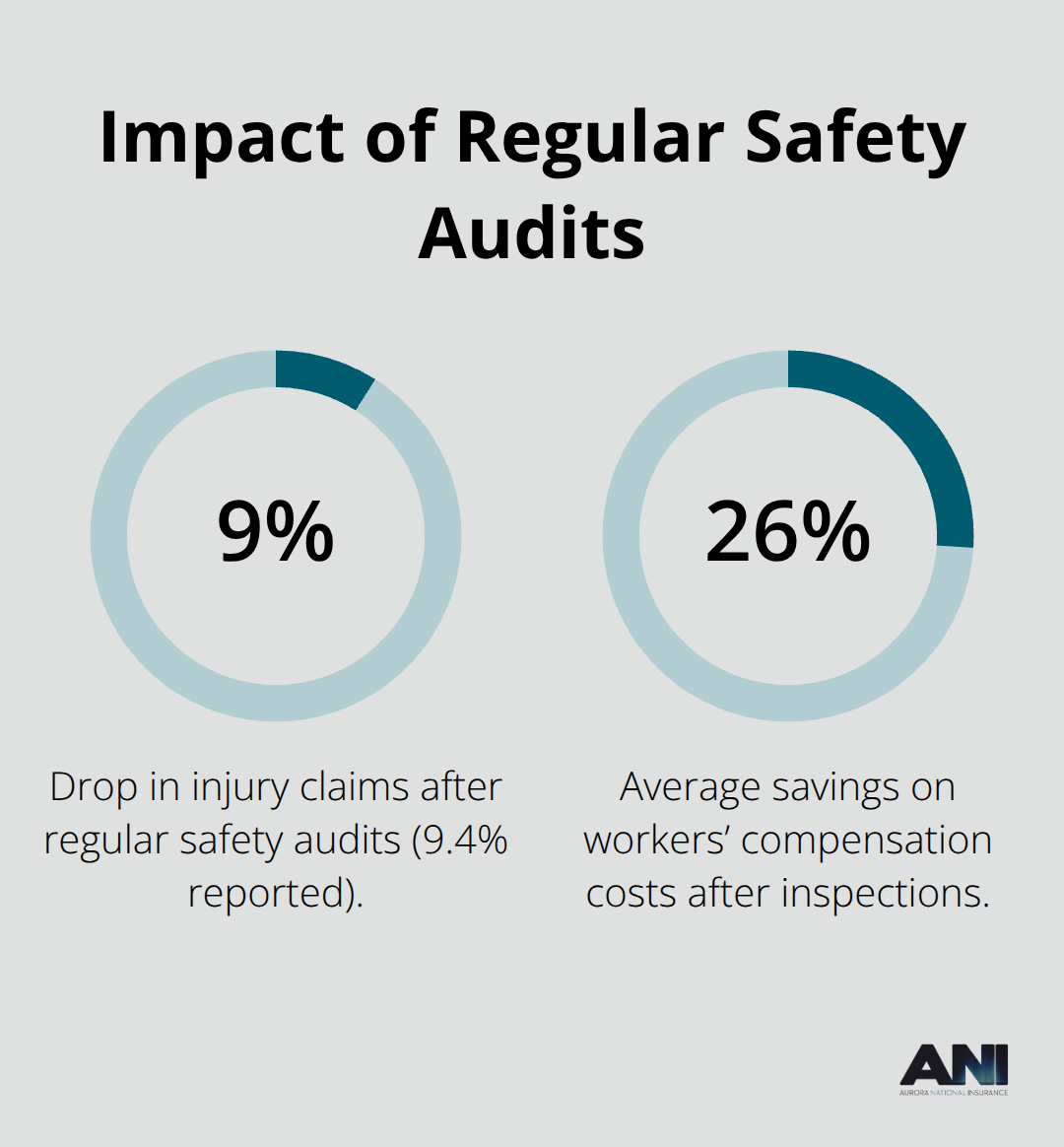
Businesses conducting regular safety audits see a 9.4% drop in injury claims and average savings of 26% on workers’ compensation costs in the four years following an inspection. Create a checklist specific to your industry and location type, then assign responsibility to a staff member who tracks completion and issues. This person becomes your safety champion and holds accountability for ensuring nothing slips through the cracks.
Train Employees on Safety Protocols
Your employees represent your first line of defense against liability claims, which is why training programs matter far more than most business owners realize. Train new hires on safety protocols during their first week and conduct refresher training annually for existing staff. For retail environments, this means teaching employees how to clean spills immediately, use wet floor signs correctly, and report hazards to management. For construction companies, this means ensuring every worker understands fall protection, equipment operation, and site-specific dangers.
Document every training session with dates, attendee names, and topics covered. This documentation becomes critical evidence if a claim occurs and shows you took reasonable precautions. Maintain written safety protocols for every common task and make them accessible to all staff. Update these protocols when procedures change or after near-miss incidents.
Maintain Detailed Records of Your Prevention Efforts
Keep detailed records of maintenance schedules, repairs, and safety improvements for at least three years. These records demonstrate your commitment to prevention and significantly strengthen your position if someone files a claim against your business. Documentation proves you acted responsibly and took steps to protect visitors and customers from harm.
With your internal prevention systems in place, the next critical step involves selecting the right insurance coverage to protect your business when accidents happen despite your best efforts.
Choosing the Right Coverage Limits for Your Business
Match Your Policy Limits to Your Risk Level
General liability insurance comes in different flavors, and picking the wrong one wastes money or leaves you dangerously exposed. Most small businesses start with a standard general liability policy offering coverage limits in general liability insurance of one million dollars per occurrence and two million dollars aggregate. This sounds adequate until a serious injury happens and medical costs, legal fees, and settlement amounts exceed what your policy covers. You then pay the difference from your own pocket, which can bankrupt a small operation instantly.
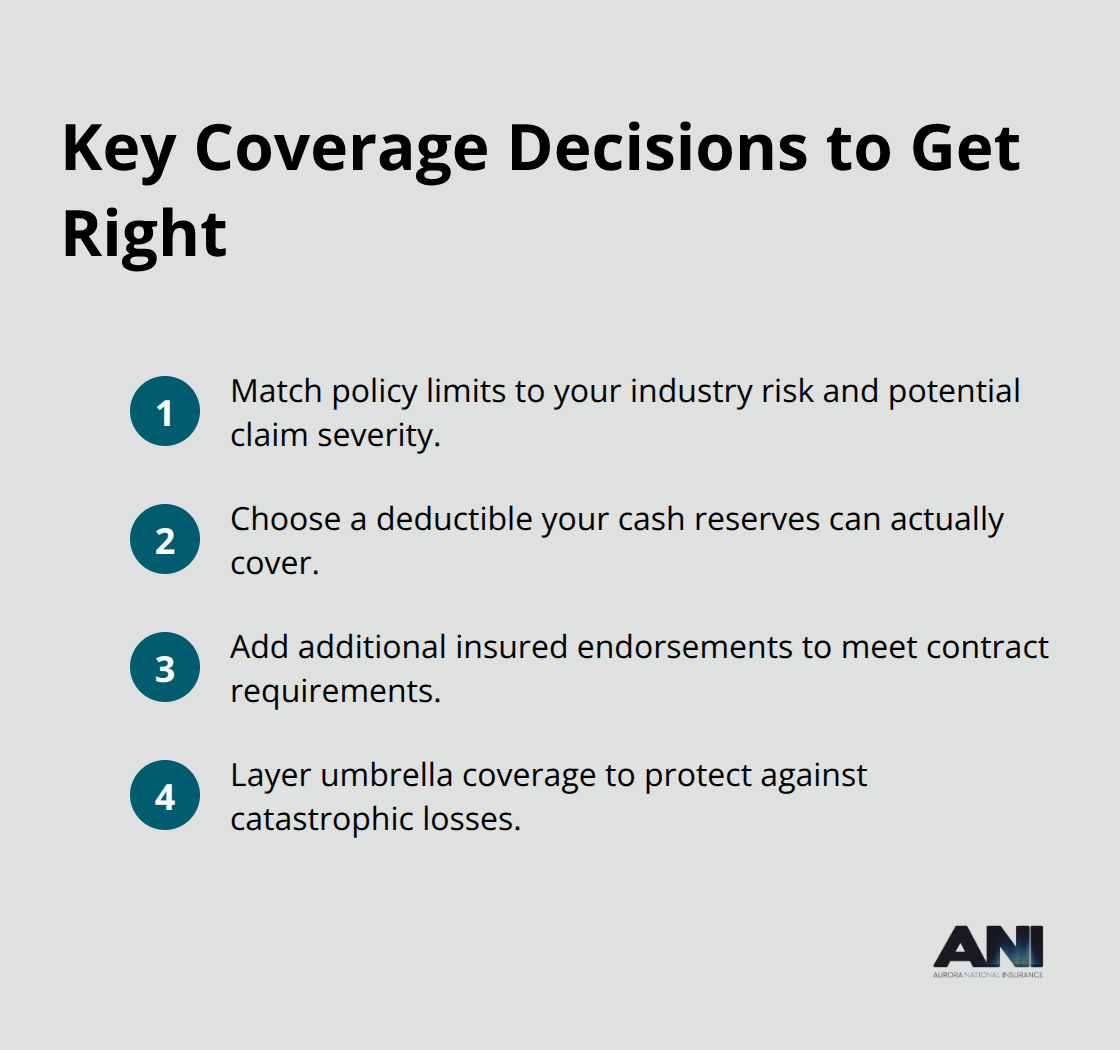
You must match your policy limits to your actual risk level and industry standards. Retail stores typically need one million per occurrence since customer injuries happen regularly but tend to be moderate in severity. Construction companies, manufacturers, and contractors should carry two million or more per occurrence because a single incident can involve multiple injuries or substantial property damage. Talk to your insurance agent about claims history in your specific industry to understand what limits make sense.
Select a Deductible You Can Actually Afford
Your deductible selection matters equally to your coverage limits. A higher deductible like five thousand or ten thousand dollars lowers your monthly premium significantly, but only if your business has cash reserves to cover that amount when a claim occurs. Most profitable businesses choose deductibles between one thousand and five thousand dollars, balancing affordability with manageable out-of-pocket exposure. Never select a deductible you cannot actually pay when needed.
Add Additional Insured Endorsements for Contract Requirements
Additional insured endorsements and umbrella policies address the gaps that standard coverage leaves open. An additional insured endorsement extends your liability protection to clients, contractors, or property owners who require it as a condition of doing business with you. Many commercial contracts now demand this protection, so refusing to add endorsements costs you contracts. Your clients and partners want assurance that their interests receive protection if your operations cause them harm.
Layer Umbrella Coverage Above Your Base Policy
Umbrella coverage sits above your general liability policy and activates when claims exceed your base policy limits or when certain gaps exist in your underlying coverage. A two million dollar umbrella policy costs between three hundred and eight hundred dollars annually depending on your industry and claims history, yet it protects against catastrophic losses that could destroy your business. Construction companies, contractors, and any business handling significant property should carry umbrella coverage as standard practice.
Your insurance advisor should model different scenarios and show you exactly what happens financially if various incidents occur under each coverage option you consider. This approach reveals which combination of limits, deductibles, and additional coverage layers protects your business most effectively while keeping premiums manageable.
Final Thoughts
General liability risk management works best when you combine three core actions into one cohesive strategy. You identify and eliminate hazards through regular safety audits and employee training, you purchase insurance coverage that matches your actual business operations, and you maintain documentation that proves you took reasonable precautions to protect customers and visitors. The businesses that avoid catastrophic liability losses execute all three consistently rather than hoping one approach alone will suffice.
Different industries face vastly different risks, so what protects a retail store won’t adequately shield a construction company. Your next step involves getting a professional assessment of your specific liability exposure and understanding exactly which coverage gaps exist in your current protection. Contact Aurora National Insurance to schedule a consultation where our licensed agents review your current coverage, discuss your industry’s typical claims patterns, and build a protection strategy tailored to your operations across Alaska, Washington, Oregon, Idaho, Arizona, Nevada, Texas, and Illinois.
Bring your safety audit records and recent incident reports to your consultation so your agent understands your actual risk level and can recommend appropriate policy limits and deductible combinations. Request quotes for different coverage options so you can see exactly how each choice affects your premium and out-of-pocket exposure, which empowers you to make decisions based on facts rather than assumptions about what general liability risk management requires for your business.
The information provided in this blog is for general informational purposes only and does not constitute legal, financial, or insurance advice. Coverage options, terms, and availability may vary. Please consult with a licensed professional for advice specific to your situation.
Artificial intelligence may have been used to generate text and images in some blog articles.


