
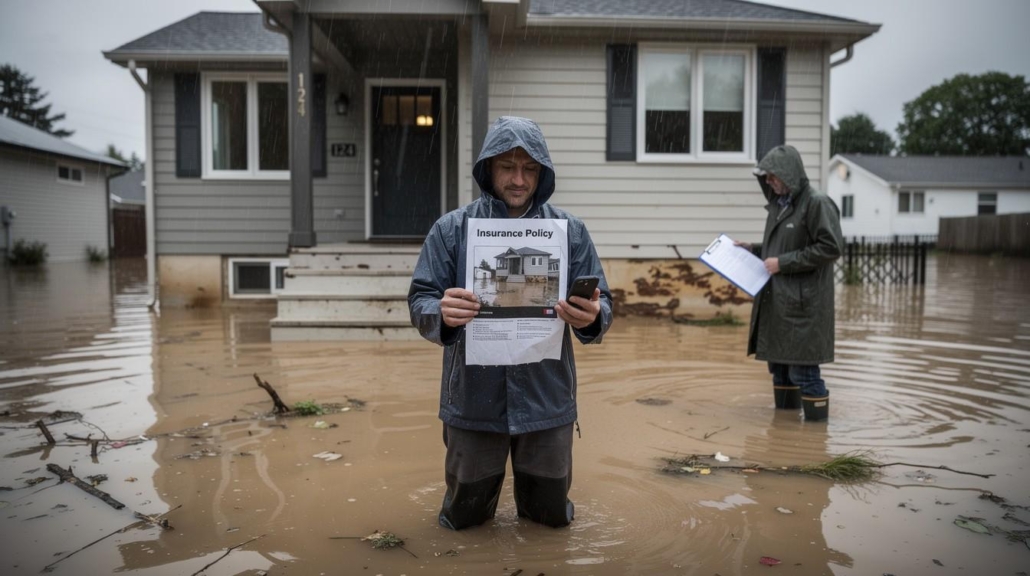
Alaska Flood Home Insurance: Protecting Homes from Extreme Weather
Alaska’s flood risks are real and growing. Heavy rainfall, snowmelt, and coastal storms threaten homes across the state every year, yet many homeowners remain unprotected.
Standard homeowners insurance won’t cover flood damage-you need dedicated Alaska flood home insurance for that protection. At Aurora National Insurance, we help homeowners understand their options and find coverage that fits their needs and budget.
Understanding Alaska’s Flood Risk and Coverage Gaps
Why Alaska’s Flood Patterns Stand Out
Alaska’s flood threat varies dramatically across the state, and location determines your actual risk far more than generic warnings ever could. Southeast Alaska receives the highest rainfall in the nation-some areas get over 200 inches annually-creating persistent flood conditions. Coastal regions face storm surge and king tides that push water inland, while interior areas battle spring snowmelt that overwhelms rivers and drainage systems. The Matanuska River near Anchorage caused significant flooding in 2014, damaging homes and infrastructure across the valley. These events repeat seasonally and predictably.
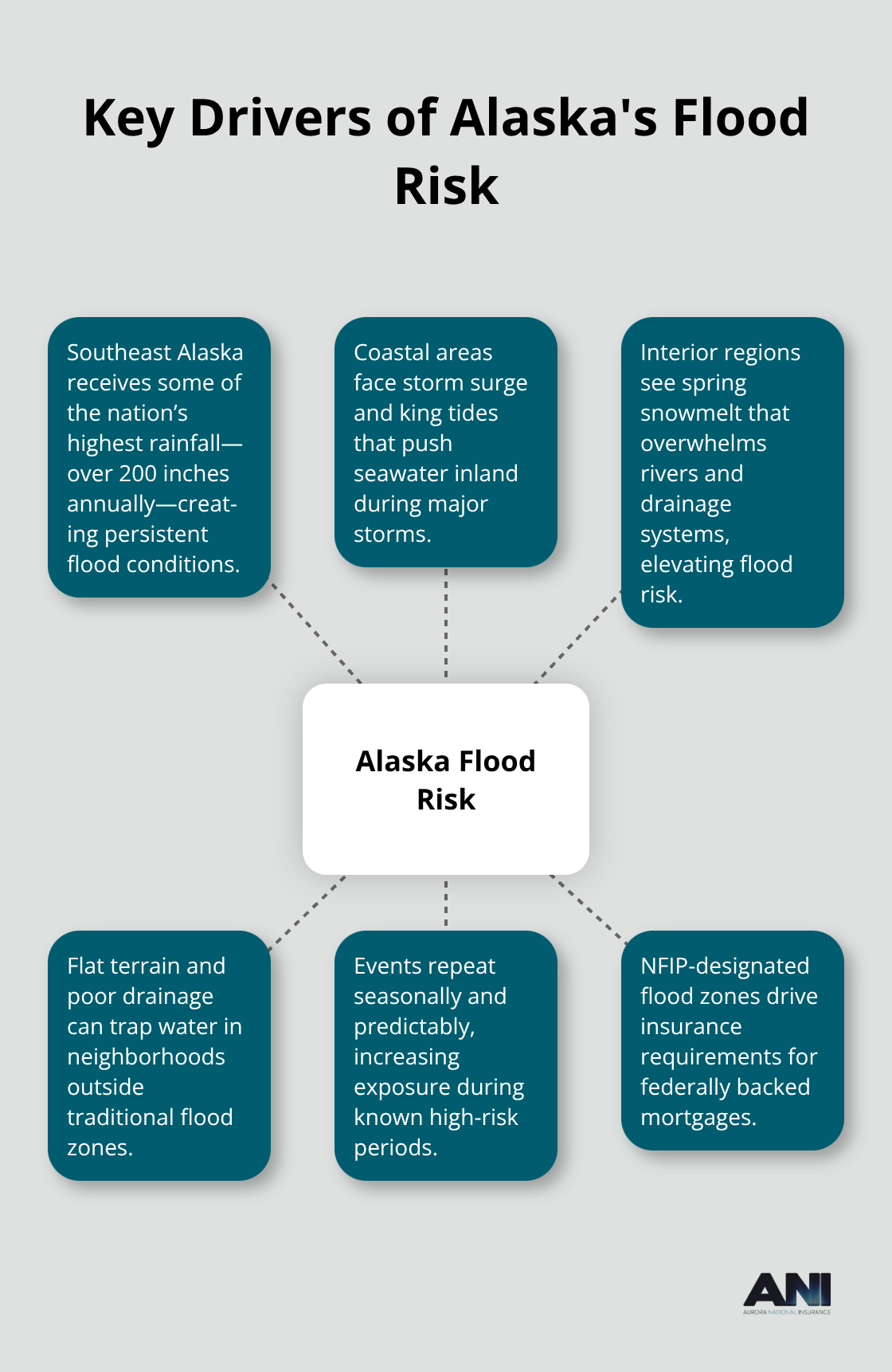
Flat terrain and poor drainage in seemingly safe neighborhoods trap water during heavy rains, putting homes at risk even outside traditional flood zones. The National Flood Insurance Program identifies specific flood zones based on historical data, and homes in high-risk areas require flood insurance if they carry federally backed mortgages.
Identifying Your Flood Zone and Risk Level
Your location determines whether you fall into a high-risk, moderate-risk, or low-risk flood category. Homes near rivers, streams, and coastal zones face substantially higher risk than inland properties. However, coastal homeowners face different flood and storm surge risks than interior residents, making location assessment critical. A property agent or insurance professional can review your address against flood maps and tell you exactly where you stand. This assessment directly shapes your insurance needs and costs. High-risk properties face mandatory coverage requirements, while moderate and low-risk homes have more flexibility in their decisions.
The Critical Gap in Standard Homeowners Insurance
Standard homeowners insurance explicitly excludes flood damage-a fact that surprises most Alaskans who assume their policy covers water damage from any source. Water from a burst pipe or roof leak falls under your homeowners policy, but water entering your home from rising water outside does not. That distinction is absolute and non-negotiable. Flood insurance is separate coverage available through the National Flood Insurance Program or private carriers. This coverage protects both your structure and belongings inside. Most Alaska homeowners pay between $500 and $2,000 annually for flood coverage, depending on their flood zone and home value. For homeowners with mortgages in high-risk areas, this cost is mandatory. Even owners of paid-off homes in moderate or low-risk zones should consider coverage-uninsured flood damage can exceed your home’s total value and create financial hardship that takes years to recover from.
Coverage Details and Deductible Options
Flood insurance covers structural damage to your home and personal property inside it. Deductibles typically start at $1,000 for structure coverage and $500 for contents, though you can select higher deductibles to reduce your premium. Your choice of deductible directly affects what you pay annually. Higher deductibles mean lower premiums but greater out-of-pocket costs if flooding occurs. Lower deductibles cost more upfront but provide better protection when you need it most.
Understanding your flood zone, coverage options, and actual costs puts you in position to make an informed decision about protection. The next step involves comparing what different carriers offer and finding a policy that matches both your risk level and budget.
What Flood Insurance Actually Covers
Structure and Contents Protection
Flood insurance protects two distinct categories: your home’s structure and the belongings inside it. Structural coverage pays for foundation damage, walls, floors, built-in appliances, HVAC systems, and electrical wiring when floodwater enters your home. Contents coverage reimburses personal property like furniture, electronics, clothing, and stored items. Most homeowners purchase these separately, and contents coverage caps at $100,000 under the National Flood Insurance Program, while structure coverage reaches $250,000 for single-family homes. If your home’s replacement value exceeds these limits, private flood insurance fills the gap, though it costs more annually.
Understanding Premium Costs
Most Alaska homeowners in moderate-risk zones pay $600 to $1,200 yearly for basic structure coverage with standard deductibles. High-risk coastal properties run $1,500 to $3,500 annually. The Federal Emergency Management Agency reports that just one inch of floodwater causes an average of $25,000 in damage to a single-story home, making this coverage economically sensible even for properties outside mandatory flood zones.
How Deductibles Affect Your Premium
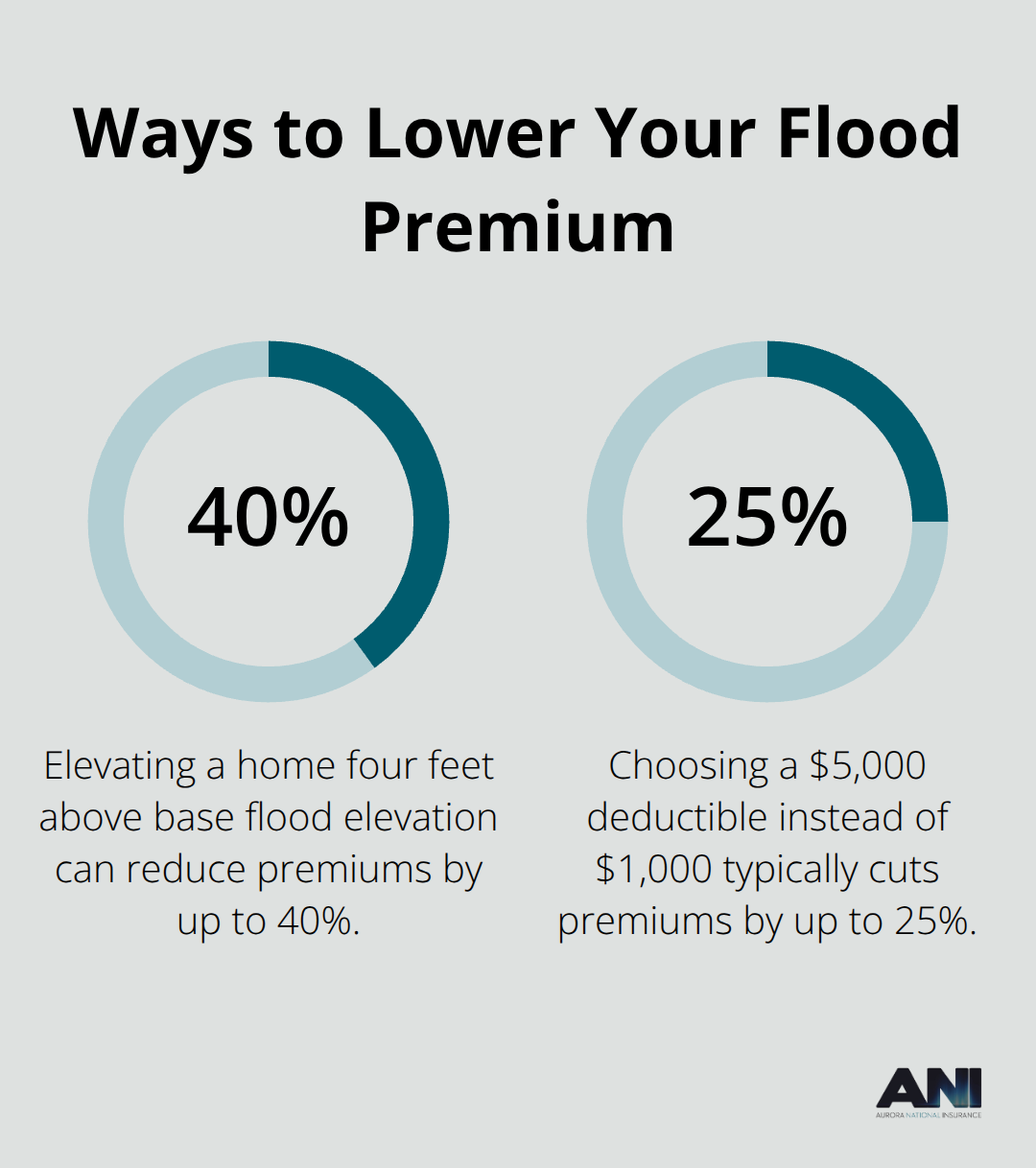
Deductibles function differently in flood insurance than homeowners policies. You choose your deductible amount, and this directly determines your premium-higher deductibles lower your annual cost. Standard structure deductibles start at $1,000, $2,500, $5,000, or $10,000, while contents deductibles begin at $500 or $1,000. Selecting a $5,000 deductible instead of $1,000 typically reduces your annual premium by 15 to 25 percent.
Elevation and Location Impact
Your flood risk level, home age, elevation, and distance from water bodies all affect your final cost. Homes elevated above the base flood elevation pay substantially less than those at ground level. A property elevated four feet above the base flood elevation can see premium reductions of 30 to 40 percent compared to non-elevated homes in the same zone. Alaska’s freeze-thaw cycles and soil conditions make elevation expensive, but the insurance savings accumulate quickly.
Coverage Beyond Designated Flood Zones
Homeowners in low-risk zones sometimes skip coverage entirely, accepting the financial risk themselves-a gamble that backfires when unexpected flooding occurs. Over the past 20 years, 99% of counties in the U.S. have experienced a flood event. That statistic alone justifies coverage for any Alaska property with potential water exposure, regardless of official zone designation. Once you understand what coverage costs and what it protects, the next step involves selecting the right policy for your specific situation and budget.
Selecting the Right Flood Policy for Your Alaska Home
Confirm Your Flood Zone First
Start with your flood zone assessment because it determines which carriers will quote your property and what you’ll actually pay. Contact your local city or borough planning department or use FEMA’s flood map portal to confirm whether your home sits in a high-risk zone that requires flood insurance or a moderate-to-low-risk area where coverage remains optional. This single step eliminates guesswork and prevents wasting time requesting quotes from carriers who won’t insure your address.
Compare Multiple Carriers and Quotes
Once you know your zone, compare at least three carriers offering flood insurance in Alaska rather than accepting the first quote. The National Flood Insurance Program provides baseline coverage, but private carriers like Homeowners Choice and Heritage Insurance often undercut NFIP premiums by 20 to 35 percent for homes in moderate-risk zones, according to data from the Insurance Information Institute. Request quotes with identical deductibles and coverage limits from each carrier so you see real price differences rather than comparing different protection levels. A home in Anchorage’s moderate-risk zone might cost $800 annually through NFIP but only $550 through a private carrier offering the same protection-that $250 difference adds up to $2,500 over a decade.
Invest in Elevation and Mitigation Improvements
Elevation and mitigation improvements deserve serious consideration when selecting coverage because they directly reduce your premium without sacrificing protection. If your home sits below the base flood elevation, investing in elevation or flood vents typically costs $15,000 to $30,000 but generates insurance savings of 30 to 40 percent annually-meaning the investment pays for itself in five to eight years. Ask your agent which specific improvements your carrier recognizes for discounts before spending money on upgrades that won’t reduce your premium. Some carriers offer substantial discounts for sump pumps, backflow preventers, or wet floodproofing, while others ignore these improvements entirely.
Select a Deductible That Matches Your Financial Situation
Your deductible choice should align with your emergency savings rather than defaulting to the lowest option. If you have $3,000 in readily available cash, a $2,500 deductible makes sense financially. If you’d struggle to cover $5,000 out-of-pocket, stick with a $1,000 deductible even though your premium costs more. The goal is avoiding a situation where you have insurance but can’t afford the deductible when flooding occurs.
Work with an Agent Who Understands Alaska’s Flood Patterns
An agent who understands Alaska’s specific flood patterns can explain why a coastal property near Ketchikan faces different risks than a riverfront home in the Matanuska Valley. Local expertise matters far more than national call centers when assessing whether your particular address truly needs coverage or whether you can safely skip it in a low-risk zone.
Final Thoughts
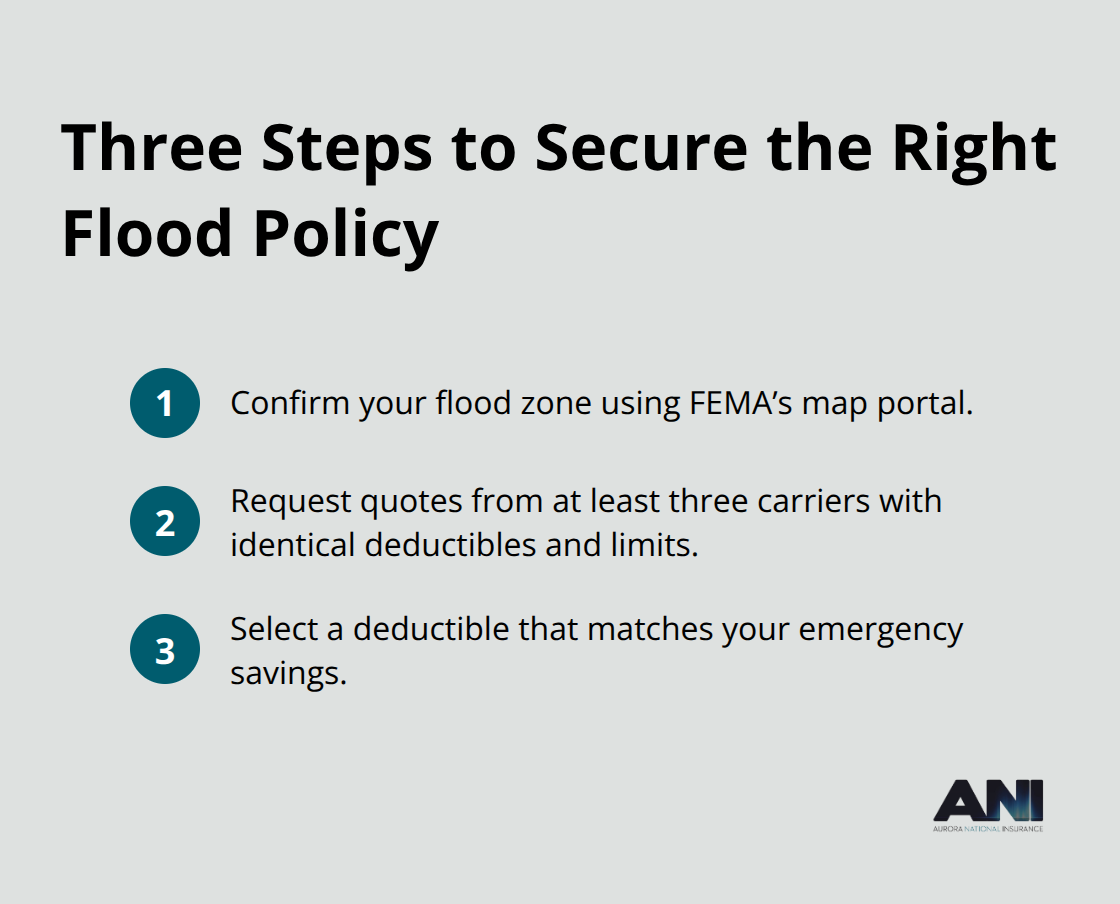
Alaska flood home insurance protects your family and property from water damage that standard homeowners policies explicitly exclude. One inch of floodwater causes an average of $25,000 in damage, and 99% of U.S. counties experienced flooding over the past two decades-your Alaska property faces real risk regardless of zone designation. Three concrete steps put you in position to secure the right coverage: confirm your flood zone through FEMA’s map portal, request quotes from at least three carriers with identical deductibles, and select a deductible that matches your emergency savings.
Private carriers often undercut National Flood Insurance Program premiums by 20 to 35 percent for moderate-risk homes, making price comparison essential before you commit to any policy. We at Aurora National Insurance help Alaska homeowners navigate these decisions with local expertise and access to multiple top-rated carriers-our licensed agents deliver tailored comparisons and competitive pricing so you find protection without overpaying. Contact us at aurorainsurance.net to request instant online quotes and compare your options quickly.
Coverage costs far less than uninsured damage, and peace of mind comes from knowing you’re prepared when heavy rain, snowmelt, or coastal storms arrive. Your family and property deserve that protection from Alaska’s predictable flood threats.
The information provided in this blog is for general informational purposes only and does not constitute legal, financial, or insurance advice. Coverage options, terms, and availability may vary. Please consult with a licensed professional for advice specific to your situation.
Artificial intelligence may have been used to generate text and images in some blog articles.


