General Liability Policy Alaska: Core Protections for Local Businesses
Running a business in Alaska comes with unique challenges, and one of the most important protections you can have is a general liability policy. Alaska’s harsh climate, remote locations, and seasonal business patterns create specific risks that standard coverage might not address.
At Aurora National Insurance, we’ve helped countless Alaska business owners understand what a general liability policy actually covers and why it matters for their bottom line. This guide walks you through the protections you need, why they’re essential in our state, and how to pick the right coverage for your operation.
What Your General Liability Policy Actually Covers
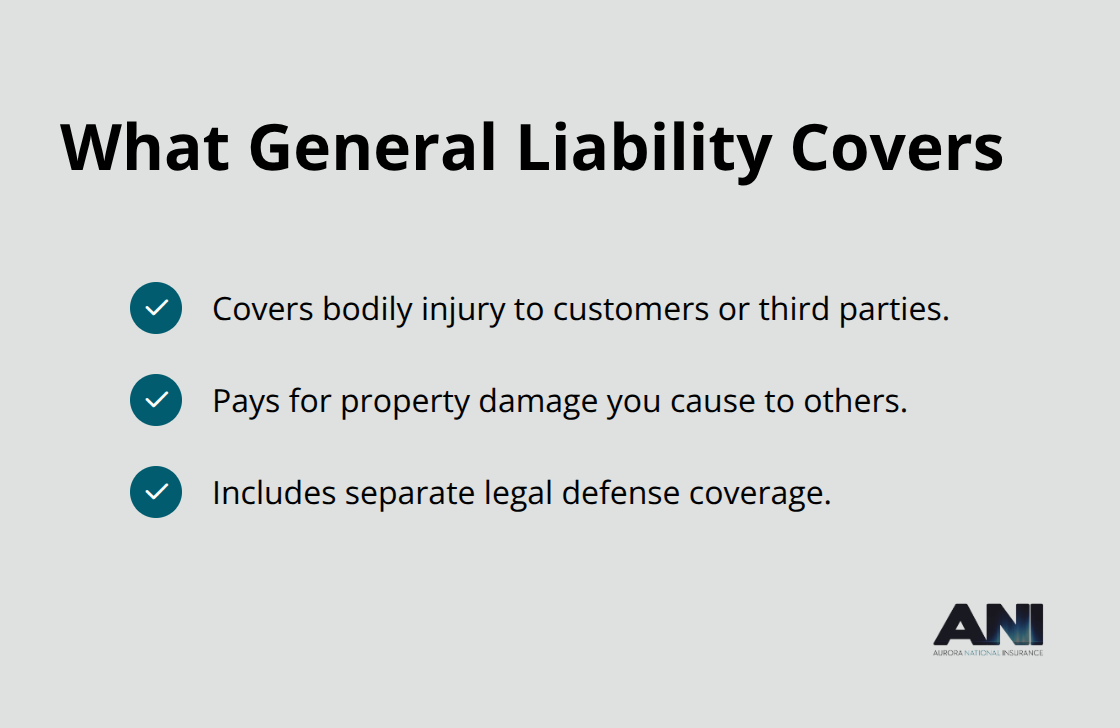
General liability insurance protects your Alaska business when someone gets hurt on your property or at a job site, or when your work accidentally damages someone else’s property. If a customer slips in your retail store and breaks an arm, or your crew accidentally damages a client’s building during a renovation, general liability steps in to cover medical bills, repair costs, and legal fees. This protection applies to nearly every Alaska business, regardless of size. The policy covers three main areas: bodily injury claims from accidents involving customers or third parties, property damage you cause to someone else’s belongings, and the legal defense costs if a claim goes to court.
Bodily Injury Claims and Alaska’s Liability System
Alaska’s pure comparative fault system holds you liable even if you’re only partially at fault for an injury. This creates real exposure for customer-facing businesses and contractors. General liability covers the medical expenses, lost wages, and pain-and-suffering awards that result from these claims. Defense costs are covered separately, so your attorney fees don’t eat into your policy limits.
A typical Alaska business with one to four employees pays about $151 per month for $1 million per occurrence and $2 million aggregate limits. Construction contractors face much higher exposure-averaging around $444 per month for the same employee count-because the work itself carries greater injury risk. The key is matching your coverage limits to your actual exposure, not overpaying for limits you’ll never need or undershooting and leaving your assets at risk.
Medical Payments Coverage Resolves Small Incidents Quickly
Medical payments coverage is a general liability coverage that reimburses others, without regard to your liability, for medical or funeral expenses. This matters because it often resolves small incidents before they escalate into expensive litigation. If a visitor needs emergency care, your policy covers that directly, which typically costs you nothing out of pocket and prevents the incident from becoming a larger claim down the road.
Property Damage Liability on Job Sites
Property damage liability covers accidental damage you cause to client property during work. If your plumbing crew damages a homeowner’s kitchen cabinet while replacing pipes, or your landscaping crew’s equipment tears up a neighbor’s fence, this coverage pays for repairs or replacement. Alaska’s higher repair costs-driven by remote locations, limited competition, and shipping expenses-mean property damage claims can get expensive fast. Your policy covers not just the repair bill but also the legal defense if the property owner sues.
Understanding what your general liability policy covers is the first step, but selecting the right limits and deductibles for your specific operation requires a closer look at your industry and risk profile.
Why General Liability Insurance Matters in Alaska
Alaska’s Unique Business Risks
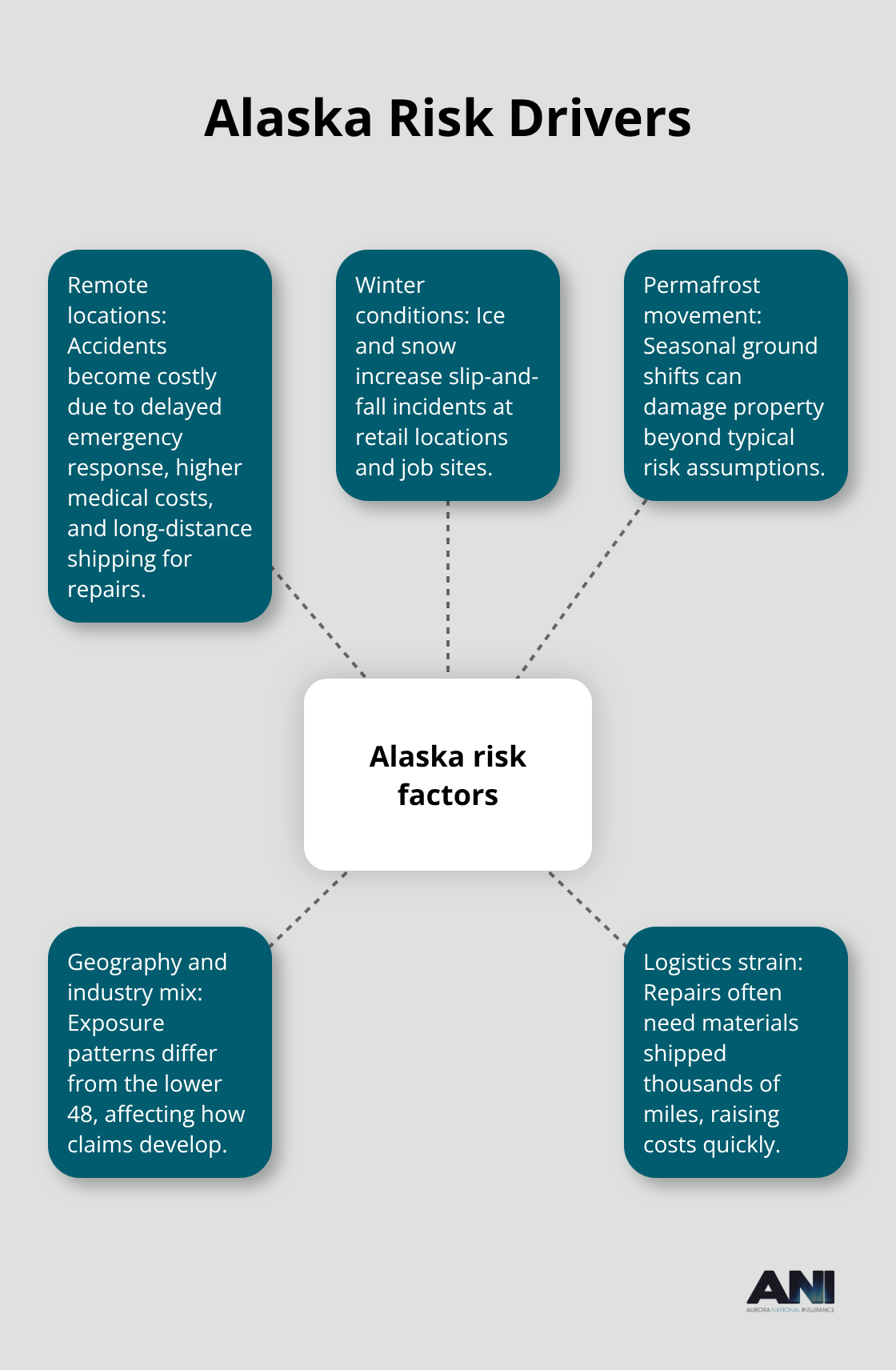
Alaska’s business environment presents risks that many owners underestimate until a claim lands on their desk. The state’s geography, climate, and industry concentration create exposure patterns that differ sharply from the lower 48. Remote locations mean that a single accident spirals into expensive claims because emergency services take longer to arrive, medical care costs more, and repairs require shipping materials thousands of miles. Winter conditions drive slip-and-fall incidents at retail locations and job sites, while permafrost and seasonal ground movement damage property in ways that standard risk assessments often miss.
Liability Exposure Under Alaska Law
Alaska’s pure comparative fault system compounds your exposure-you face liability even when you’re only partially at fault for an injury, which means your legal defense costs and settlements tend to run higher than in states with different fault rules. A contractor working on a residential renovation in Anchorage faces different hazards than one in Seattle, yet many Alaska business owners carry coverage limits designed for lower-risk environments. This mismatch leaves assets vulnerable.
The Financial Impact of Uninsured Claims
The financial reality is stark: a single serious injury claim or major property damage incident wipes out years of profit if you lack adequate coverage. Alaska law requires workers’ compensation for any business with one or more employees, but that covers only your own staff-general liability protects you when a customer, vendor, or third party gets hurt or when your work damages someone else’s property. Construction contractors, retailers, and service providers operate in industries where claims happen regularly; according to MoneyGeek data, Alaska construction businesses average $444 per month for general liability coverage, reflecting the real difference in exposure.
Client Requirements and Contract Obligations
If you work on client premises-whether that’s a homeowner’s kitchen, an office renovation, or a commercial job site-your client’s insurance company will likely demand proof of coverage before you start. Many Alaska contractors report that losing a general liability policy or letting one lapse has cost them more in lost contracts than they ever paid in premiums. The cost of coverage pales against the cost of defending yourself without it or paying a claim from your own pocket.
Understanding why you need coverage is one thing; selecting the right limits and deductibles for your specific operation requires a closer look at your industry and risk profile.
How to Choose the Right General Liability Policy for Your Alaska Business
Match Coverage Limits to Your Industry, Not Your Size
Your industry determines your coverage needs far more than your company size does. A tech consultant with five employees needs dramatically different limits than a construction contractor with five employees. Tech and IT businesses average $29 per month for general liability, while construction averages $444 per month for the same employee count. This gap exists because construction work creates tangible injury and property damage risk every single day.
Start by listing the specific incidents that could realistically happen in your operation. A retail business faces slip-and-fall claims and customer injuries. A contractor faces property damage to client premises and injuries to third parties. A service provider faces claims that their work caused financial loss.
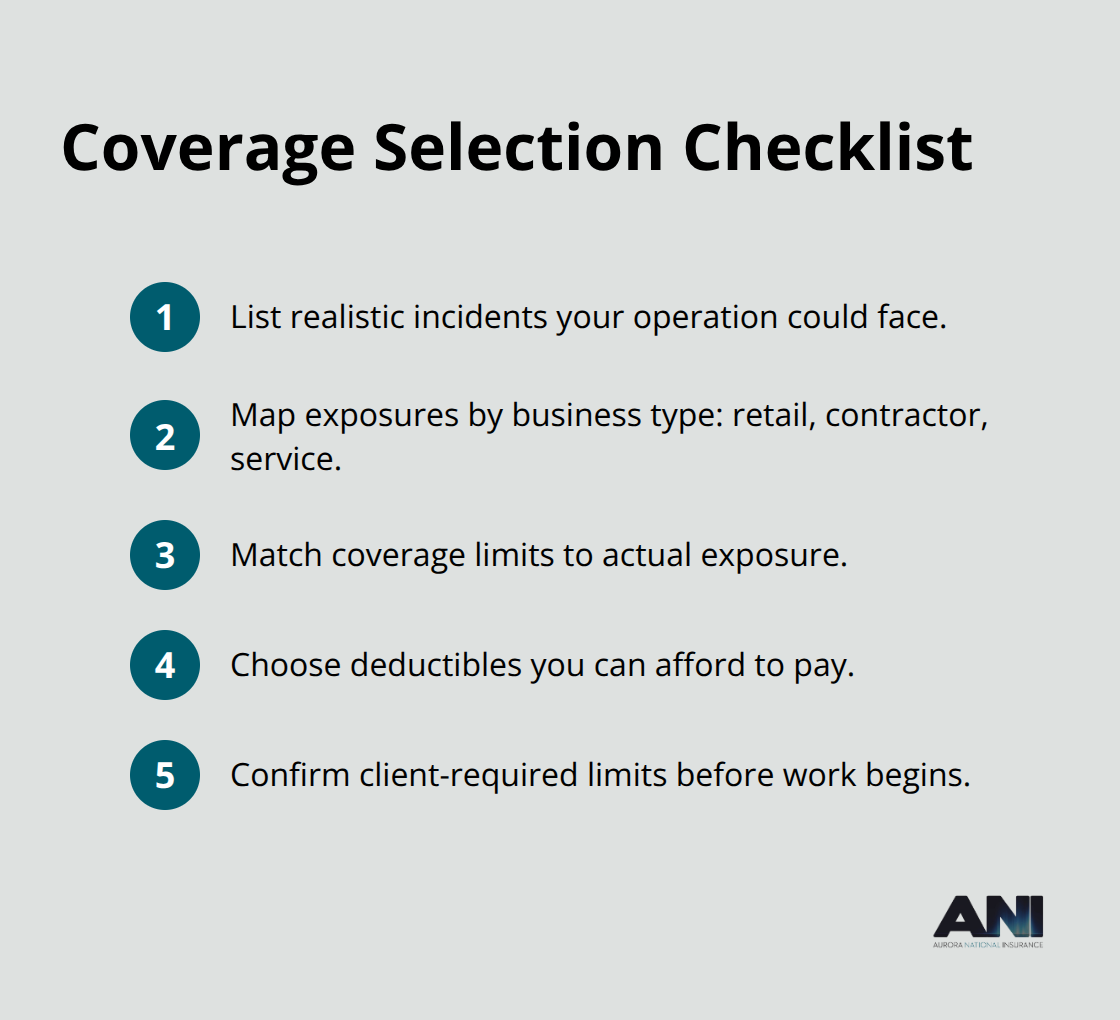
Once you identify your actual exposure, match your coverage limits to that exposure.
Standard Limits Work for Many Alaska Businesses
Most small business owners choose general liability coverage limits of $1 million per occurrence and $2 million aggregate. However, if you work with high-value client property or operate in industries with naturally higher claim costs, higher limits make financial sense. Alaska’s pure comparative fault system means you pay defense costs even when you’re partially at fault, which inflates legal expenses. Many Alaska contractors now carry $2 million per occurrence limits instead of the standard $1 million, recognizing that litigation costs alone can exceed $100,000 before a settlement is reached.
Deductibles Shape Your Out-of-Pocket Risk
Deductibles offer another lever to manage cost. A $1,000 deductible versus a $500 deductible might save you $20 to $40 per month, but that savings vanishes the moment a claim arrives and you pay out of pocket. Alaska business owners should choose deductibles they can actually afford to pay without disrupting operations. For most small businesses, a $1,000 deductible balances affordability with meaningful cost reduction.
Your location and client base also shape what limits make sense. A Juneau business serving government contracts or major corporations often faces requirements to carry higher limits than what they’d otherwise choose. Large clients demand proof of coverage before work begins, and some specifically require $2 million aggregate minimums. If your clients are small homeowners or local businesses, standard limits suffice.
Work with a Local Alaska Agent to Identify Coverage Gaps
An agent who understands Alaska’s construction environment, remote operations, and seasonal patterns can identify coverage gaps that online quote systems miss. An independent agency representing multiple carriers often provides more flexibility to match specific Alaska industry needs. A good agent asks about your worst-case scenario, your client requirements, your property damage exposure, and whether you work with hazardous materials or in high-risk conditions.
That conversation often reveals that standard coverage falls short. Some Alaska contractors discover mid-project that they need pollution liability or professional liability added to their general liability. Waiting until then costs time and money. Try these decisions right upfront by working with someone who knows Alaska’s business landscape, not just general insurance principles.
Final Thoughts
General liability protection forms the foundation that keeps your Alaska business running when accidents happen. The right general liability policy Alaska businesses need depends on your specific industry and exposure, not just your company size. A tech consultant and a construction contractor with identical payroll face completely different risk profiles and premium costs, which is why matching your coverage limits to your actual exposure matters far more than guessing or overpaying for limits you’ll never use.
Getting covered starts with an honest conversation about your worst-case scenario and what your clients require before you start work. Alaska’s pure comparative fault system, higher repair costs, and concentrated high-risk industries mean that underinsuring or skipping coverage altogether exposes you to financial ruin far faster than in other states. Standard $1 million per occurrence limits work for many small businesses, but they may fall short if you work with high-value client property or operate in naturally higher-claim industries.
We at Aurora National Insurance help Alaska business owners answer these questions and find coverage that actually fits their operation. Contact us today to get instant online quotes and discover how much you can save while securing the protection your business needs.
The information provided in this blog is for general informational purposes only and does not constitute legal, financial, or insurance advice. Coverage options, terms, and availability may vary. Please consult with a licensed professional for advice specific to your situation.
Artificial intelligence may have been used to generate text and images in some blog articles.