
Washington Home Insurance Coverage: Custom Fit for Your Home
Your home is one of your biggest investments, and Washington home insurance coverage should reflect that reality. Yet many homeowners in Washington settle for generic policies that leave gaps when they need protection most.
At Aurora National Insurance, we’ve seen firsthand how the right coverage makes all the difference. This guide walks you through building insurance that actually fits your home and your life in Washington.
What Washington Home Insurance Actually Covers
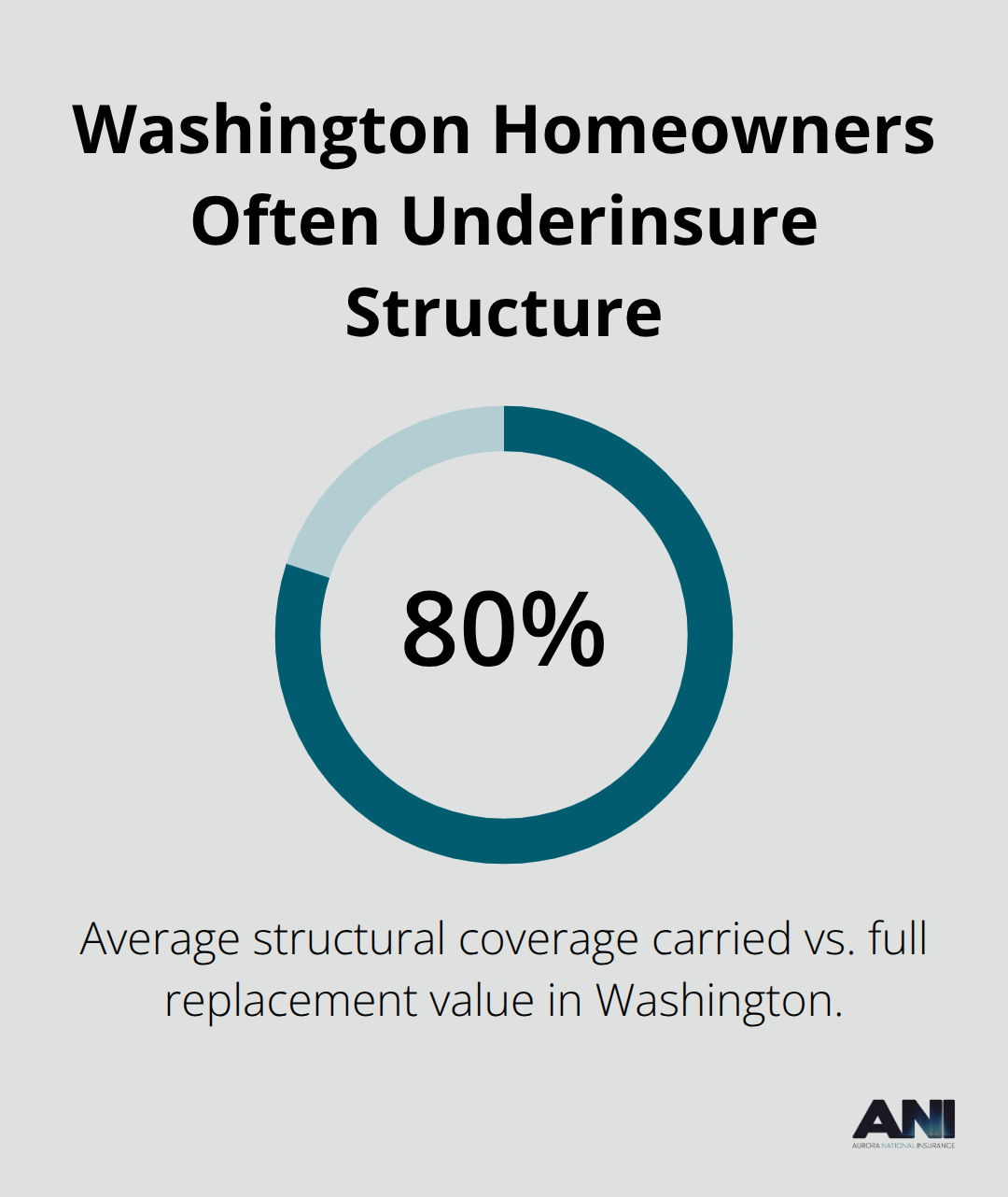
Standard homeowners policies in Washington protect four main areas: your home’s structure, attached structures like garages, personal property inside your home, and liability if someone gets injured on your property. The National Association of Insurance Commissioners reports that the average Washington homeowner carries about 80% of their home’s replacement value in structural coverage, which often falls short of what’s actually needed to rebuild after total loss.
Dwelling and personal property protection
Dwelling coverage pays to repair or rebuild your home’s structure after covered events like fire, wind, or theft. Personal property coverage typically reimburses 50–70% of your dwelling limit for belongings inside your home, though this varies by policy. Liability coverage protects you financially if someone sues after getting injured at your home, with most policies offering $100,000 to $300,000 in protection.
The gaps that catch most homeowners off guard
Most Washington homeowners discover too late that standard policies exclude certain high-risk situations. Flood damage isn’t covered under any standard homeowners policy unless you have a separate flood insurance policy, yet Washington experiences significant flooding in areas near rivers and coastal regions. Earthquake coverage requires a separate endorsement, and many homeowners skip it despite Washington’s proximity to seismic zones.
Water damage from burst pipes or leaks during freezing temperatures receives coverage, but gradual water damage from poor maintenance does not. High-value items like jewelry, art, or collectibles typically have sub-limits of $1,500 to $2,500, far below their actual worth. Replacement cost coverage for personal property costs more than actual cash value but pays what items cost today, not what you paid years ago when you bought them.
Your specific policy language matters far more than assumptions about standard coverage. The gaps in your protection often become obvious only when you file a claim, which is why comparing policies before you need them makes sense.
What Determines Your Washington Home Insurance Premium
Your home’s age and construction materials directly control what insurers charge for coverage. Homes built before 1980 typically cost 15–25% more to insure than newer construction because older wiring, plumbing, and roofing systems fail more often and cost more to repair. If your Washington home has original knob-and-tube wiring, many insurers won’t cover it at all without upgrades. Masonry or concrete construction costs less to insure than wood frame homes since these materials resist fire and weather damage better. Roof age matters significantly-most insurers require roof inspections if your roof exceeds 20 years old, and many won’t insure homes with roofs older than 15-20 years. Metal or slate roofs reduce premiums by 10–20% compared to standard asphalt shingles because they last longer and resist wind damage. A home built in 1995 with a 15-year-old roof and upgraded electrical systems will cost substantially less to insure than a 1970s home with original systems and a roof nearing replacement age.
Location determines risk far more than you’d expect
Where your home sits in Washington shapes your premium more than most homeowners realize. Coastal properties in areas prone to storm surge pay significantly higher rates, while homes in rural mountain areas face different risk profiles around wildfire exposure. Proximity to water sources matters-homes within 1,000 feet of rivers or streams in flood-prone counties face higher base rates even without separate flood insurance. Your specific zip code’s claims history influences pricing: areas with higher rates of theft, water damage claims, or weather events cost more to insure. Washington’s western regions experience more weather-related claims than eastern areas, directly affecting local rates. A home in Seattle experiences different risk factors than one in Spokane, yet many homeowners don’t realize how dramatically location shifts their quote.
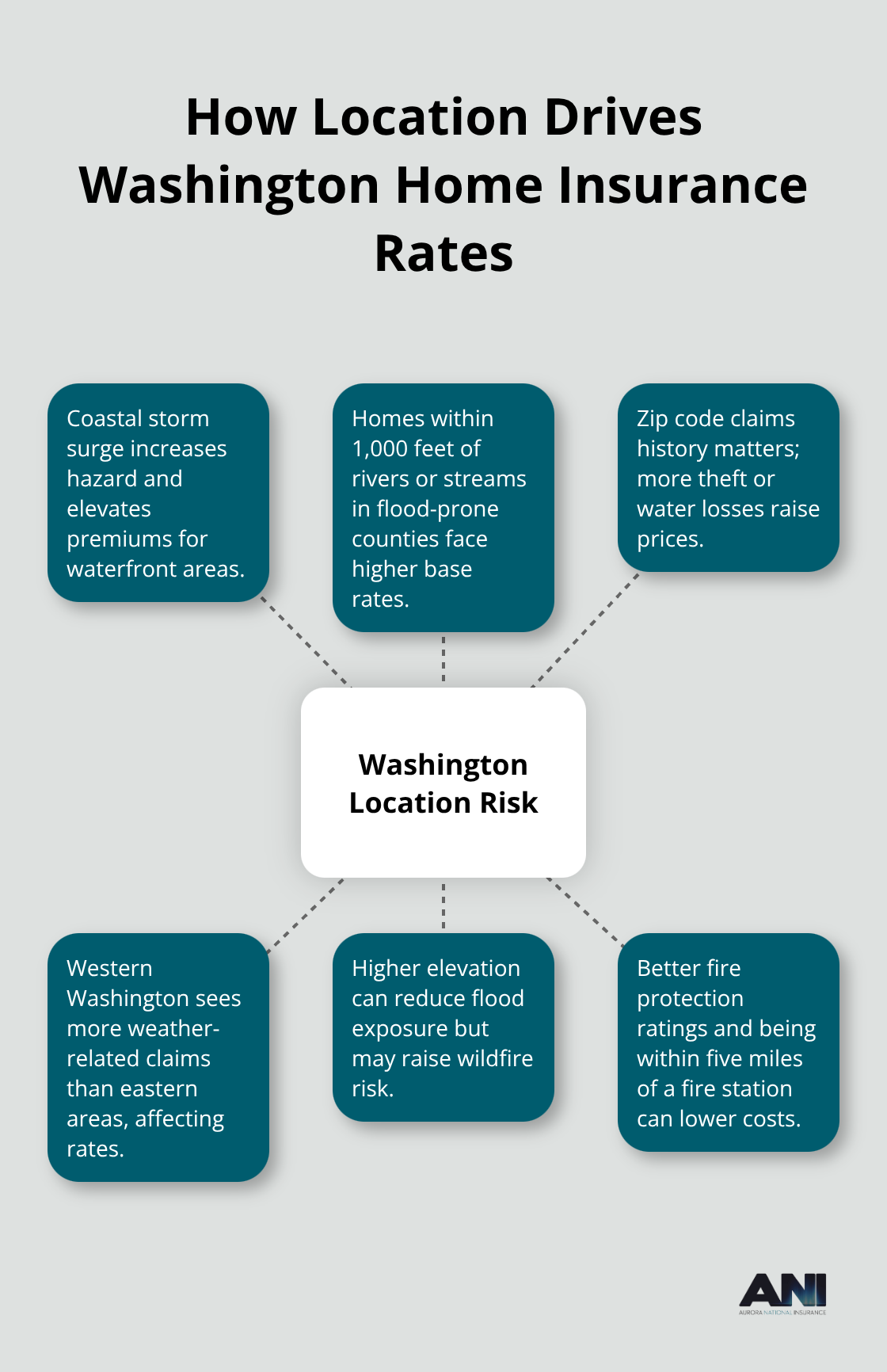
Elevation changes the equation too-homes at higher elevations in mountainous regions often qualify for better rates since they’re less vulnerable to flooding but may face greater wildfire risk. Even your neighborhood’s fire protection rating affects your premium; homes within five miles of a fire station with superior equipment and response times receive better rates than rural properties.
Discounts exist but most homeowners miss them
Insurance companies offer substantial reductions for specific home improvements and behaviors, yet many Washington homeowners don’t know they qualify. A security system with monitored burglar and fire detection typically cuts rates by 5–15%, depending on the system’s monitoring capabilities. Bundling home and auto insurance with the same carrier usually saves 10–25% on your total premium. Storm-resistant features like impact-resistant windows or reinforced roof straps in areas vulnerable to high winds can reduce rates by 8–12%.
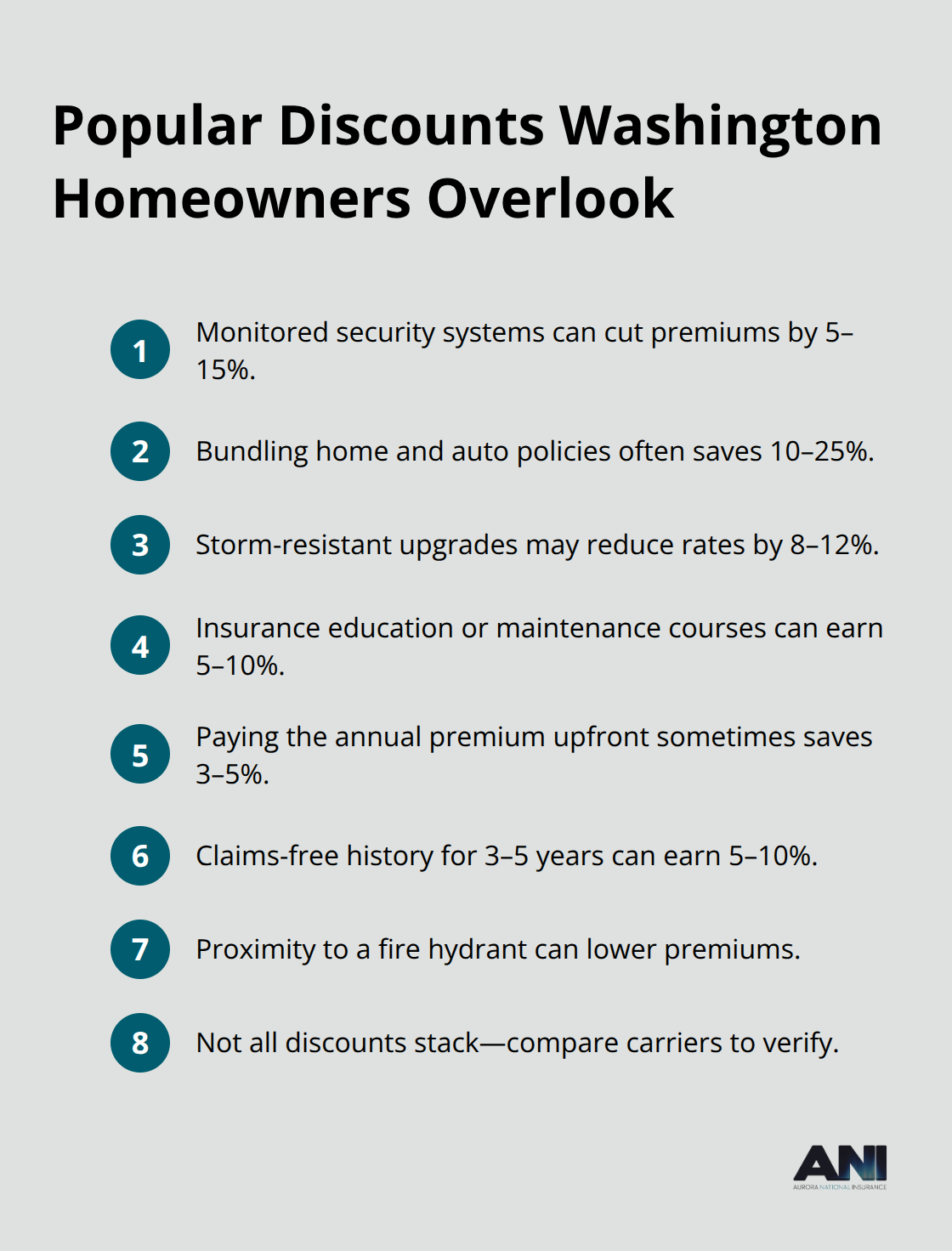
Some insurers offer 5–10% discounts for homeowners who take an insurance literacy course or complete a home maintenance program. Paying your annual premium upfront rather than in monthly installments sometimes saves 3–5%. If you’ve maintained a claims-free record for three to five years, many carriers apply loyalty discounts of 5–10%. Your home’s distance from a fire hydrant affects rates-homes within 1,000 feet of a hydrant typically pay less than those farther away. Not all discounts stack with each other, and different carriers offer different reductions, which is why comparing actual quotes from multiple insurers matters far more than asking about discounts in general.
These rate factors set your baseline premium, but your actual cost depends on how you structure your coverage limits and deductibles. The next section shows you how to adjust these core policy elements to match both your home’s specific needs and your financial situation.
Customizing Your Home Insurance for Pacific Northwest Weather Risks
Washington’s weather patterns demand more than standard coverage, and most homeowners discover this the hard way when a storm or wet season causes damage their policy doesn’t cover. Wind and hail protection should top your priority list since western Washington experiences significant wind events. Your dwelling coverage should specifically include wind damage, and many insurers now offer enhanced wind coverage for an additional premium of 8–15% that covers damage exceeding your standard deductible.
Water damage from heavy rain requires attention too. While standard policies cover sudden water intrusion from storms, they exclude damage from poor drainage or foundation issues. If your home sits in an area with poor drainage or has experienced water problems, a sump pump coverage or water backup endorsement costs roughly $50–150 annually but prevents claims that could reach $25,000 or more. Snow load damage matters in mountain communities-roofs that collapse under heavy snow weight receive coverage under standard policies, but only if your roof meets current building codes. Homes with flat or low-pitched roofs in high-snow areas should verify their coverage explicitly includes snow load damage, as some carriers exclude this in specific regions.
The Pacific Northwest’s wet climate also means mold becomes a real concern. Most standard policies exclude mold damage, but you can add mold coverage for $15–50 per year, which protects against mold resulting from covered water events.
Protecting High-Value Items from Inadequate Coverage
High-value items sitting in your home receive inadequate protection under standard coverage, and this gap costs Washington homeowners thousands annually. Jewelry, art, firearms, and collectibles typically fall under a $1,500 to $2,500 sub-limit on standard policies, meaning a jewelry collection worth $8,000 receives only $1,500 in coverage. Most homeowners don’t realize this limitation exists until they file a claim.
A scheduled personal property endorsement, also called a floater, lists individual high-value items with their replacement cost and removes sub-limits entirely-a $5,000 piece of jewelry receives full $5,000 coverage under a floater. This endorsement typically costs $1–2 per $100 of coverage annually, so protecting an $8,000 jewelry collection costs roughly $80–160 yearly. For art collections or antiques, appraisals become critical since insurers need documented value; without recent appraisals, claims adjusters assign their own value, which usually falls below what you’d pay to replace the item.
Firearms deserve separate attention in Washington-standard homeowners policies cover firearms under personal property limits, but a gun safe endorsement adds protection specifically for collections and typically costs $50–200 annually depending on collection value.
Selecting Deductibles That Match Your Financial Reality
Deductibles on standard policies often create confusion around coverage limits. A $1,000 deductible means you pay the first $1,000 of any covered claim, with insurance covering the remainder. Choosing between a $500, $1,000, or $2,500 deductible depends on your financial situation and risk tolerance-raising your deductible from $500 to $1,000 typically saves 10–15% on annual premiums, while jumping to $2,500 can save 25–30%.
However, selecting a deductible you cannot comfortably pay out-of-pocket creates problems when claims happen. If you choose a $2,500 deductible but only have $1,000 available, you’ll struggle to get repairs started. Your financial cushion should determine your deductible choice, not just the premium savings.
Setting Coverage Limits That Reflect Replacement Costs
Coverage limits deserve equal attention-your dwelling limit should reflect your home’s replacement cost, not its market value or mortgage amount. A 2,000-square-foot home in the Seattle area costs roughly $300–400 per square foot to rebuild, meaning your dwelling coverage should be $600,000–$800,000, not the $400,000 many homeowners carry. Underinsurance means you absorb losses that exceed your coverage limit, and Washington’s construction costs continue rising faster than most homeowners increase their coverage limits annually.
Final Thoughts
Finding the right Washington home insurance coverage means matching your policy to your home’s actual replacement cost, your location’s specific risks, and the high-value items you own. Generic policies leave gaps that become painfully obvious when you file a claim, which is why the customization steps in this guide matter far more than simply buying the cheapest option available. Your home’s age, construction materials, and roof condition set your baseline premium, but location determines whether you pay standard rates or face significant increases.
Coastal properties, flood-prone areas, and homes near wildfire zones all carry different risk profiles that directly affect your costs. The discounts available to Washington homeowners often save hundreds annually, yet most people never ask about them-security systems, bundled coverage, storm-resistant upgrades, and claims-free records all reduce your premium if you request them. Your deductible choice and coverage limits matter equally, as selecting a deductible you can actually afford and setting dwelling limits that match replacement costs prevents financial disaster when claims happen.
High-value items deserve scheduled endorsements rather than relying on inadequate sub-limits, and Pacific Northwest weather patterns demand specific coverage additions like water backup protection and enhanced wind coverage. These customizations cost relatively little but prevent claims that could reach tens of thousands of dollars. Contact Aurora National Insurance to get quotes from multiple carriers and speak with an agent who understands Washington’s specific insurance landscape.
The information provided in this blog is for general informational purposes only and does not constitute legal, financial, or insurance advice. Coverage options, terms, and availability may vary. Please consult with a licensed professional for advice specific to your situation.
Artificial intelligence may have been used to generate text and images in some blog articles.


