
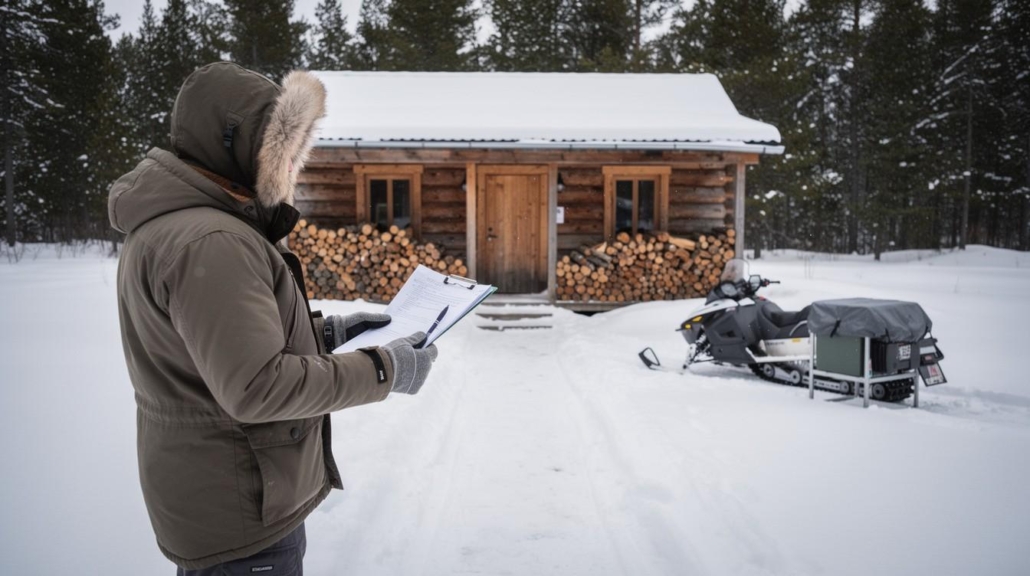
Alaska Seasonal Home Insurance: Protecting Seasonal And Remote Properties
Owning a seasonal home in Alaska comes with distinct challenges that standard homeowners policies simply don’t address. Extreme cold, extended vacancies, and remote locations create risks most insurers overlook.
At Aurora National Insurance, we’ve helped countless Alaska property owners find Alaska seasonal home insurance that actually fits their needs. This guide walks you through what coverage matters most and how to protect your investment without overpaying.
Why Alaska Seasonal Homes Need Specialized Protection
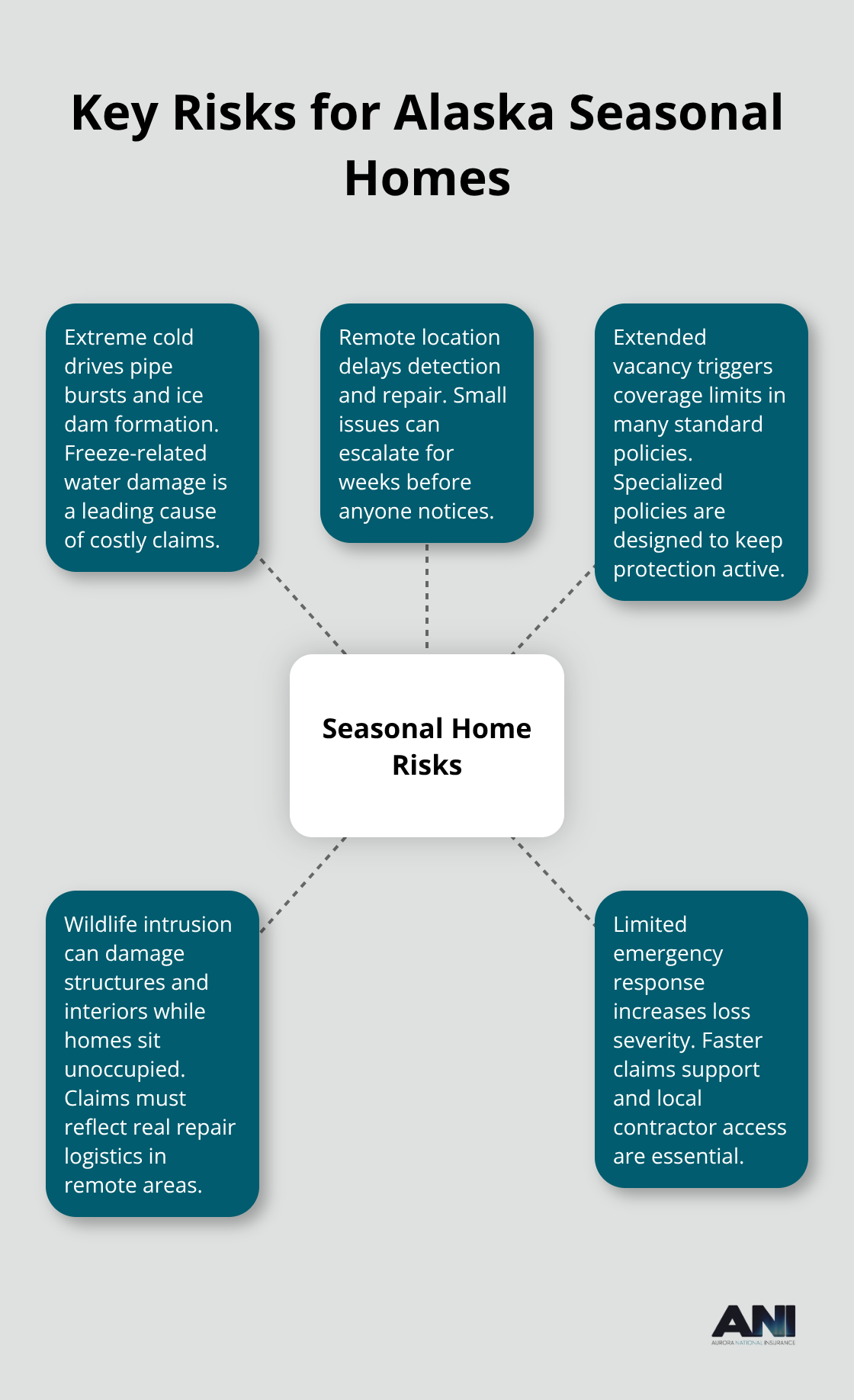
Alaska’s seasonal properties face risks that mainland homeowners never encounter. Winter temperatures regularly drop below negative 40 degrees Fahrenheit across much of the state, and this extreme cold creates pipe-bursting hazards that standard policies often exclude or severely limit. The National Association of Insurance Commissioners reports that water damage claims spike dramatically in cold climates, yet many conventional homeowners policies cap or deny coverage for freeze-related damage in vacant properties.
Property owners often purchase a standard policy, assume they’re covered, then face a devastating claim denial when frozen pipes cause tens of thousands in damage during the off-season.
Remote Location Multiplies Your Vulnerability
Alaska’s geography works against seasonal property owners. Many vacation homes sit 50 to 200 miles from the nearest town, meaning burst pipes, roof damage from heavy snow loads, or wildlife intrusion go undetected for weeks or months. Reported crime in Alaska rose 7.2% in 2025, and remote locations make security monitoring nearly impossible without professional systems. Standard homeowners policies were designed for owner-occupied suburban properties with regular maintenance and quick emergency response. A seasonal cabin in the Matanuska Valley or near Fairbanks operates under completely different conditions. Insurers know this, which is why they either refuse seasonal property coverage entirely or charge premiums that make standard policies economically irrational for your situation.
Vacancy Creates Coverage Gaps Most Policies Won’t Cover
The moment your seasonal home sits empty for 30 consecutive days, most standard homeowners policies begin restricting or denying claims. Some carriers require you to drain water systems and shut off utilities to maintain coverage-requirements that damage your property’s infrastructure and create additional problems when you return. Seasonal home policies specifically account for extended vacancies, weather monitoring requirements, and the practical maintenance challenges that come with a property you only occupy part of the year. Standard policies fail here because they’re written for primary residences where someone lives year-round and responds immediately to problems.
What Specialized Coverage Actually Protects
Specialized coverage addresses the gaps that standard policies ignore. These policies account for extended vacancy periods (often 60 to 180 days or longer) without triggering automatic coverage restrictions. They include freeze protection that covers pipe damage, ice dam damage, and water intrusion-the three most common claims in Alaska seasonal properties. Remote property coverage recognizes that your cabin sits far from emergency services and professional contractors, so claims processes move faster and settlements reflect the reality of your location. Liability protection extends to seasonal properties where you may host guests during limited occupancy periods, protecting you if someone is injured on your property.
The difference between standard and specialized coverage becomes obvious when a claim happens. You need a policy written for Alaska’s conditions, not a generic template designed for year-round occupied homes in temperate climates. Finding that coverage requires understanding what questions to ask your insurance agent and what specific protections matter most for your investment.
What Specialized Coverage Actually Includes
Core Protections That Matter Most
Three specific protections separate specialized seasonal policies from standard homeowners coverage. First, look for policies that explicitly allow extended vacancy periods without triggering coverage denials. Most specialized seasonal policies permit 60 to 180 days of continuous vacancy, though some carriers extend this to 365 days if you maintain the property properly. Ask your agent for the exact vacancy threshold in writing-this number directly determines whether your claim gets paid when damage occurs during your off-season.
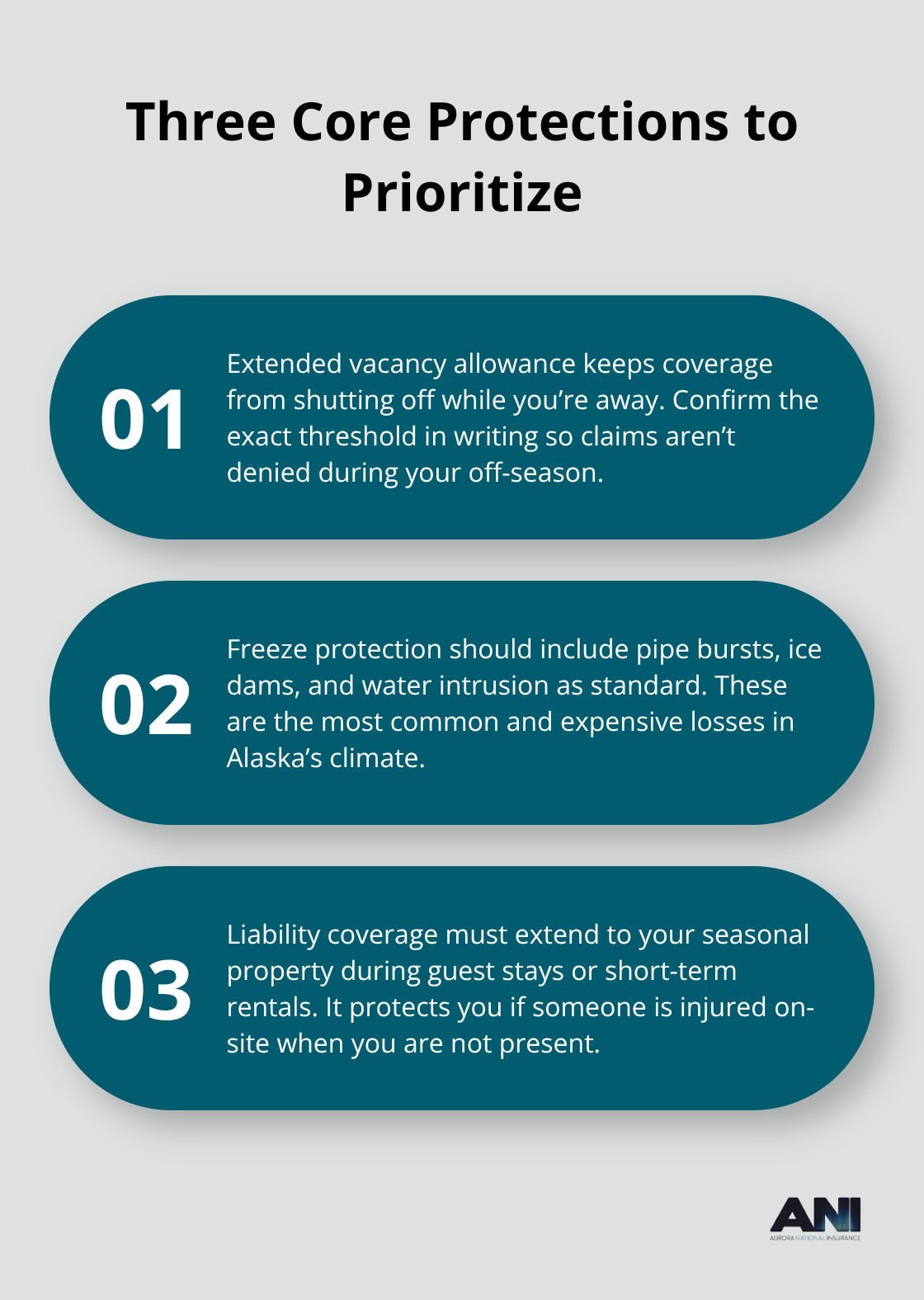
Second, verify that freeze protection covers pipe bursting, ice dam damage, and water intrusion as standard inclusions, not optional add-ons. Water damage and freezing account for a significant portion of homeowners insurance claims nationally, but in Alaska seasonal properties, this percentage runs significantly higher due to temperature extremes and extended vacancy periods. Actual pipe replacement and water remediation costs regularly exceed $20,000 to $50,000 in remote areas, so policies that cap freeze-related claims at $5,000 or $10,000 leave you severely underprotected.
Third, confirm that liability coverage extends to your seasonal property even when you’re not present. If you host guests during summer months or rent your cabin seasonally, liability protection shields you from injury claims-standard policies often exclude liability for vacant or seasonal properties.
Deductibles, Winterization, and Wildlife Coverage
Specialized seasonal policies often charge higher deductibles for seasonal properties ($2,500 to $5,000 versus $500 to $1,000 for primary residences), so compare deductible options carefully against your financial situation. Ask whether the policy includes coverage for winterization failure-when your property sustains damage because pipes weren’t properly drained or heating systems failed during your absence.
Wildlife damage occurs frequently in Alaska seasonal properties where bears, moose, and smaller animals cause thousands in structural damage when properties sit unoccupied. Verify that your policy covers these incidents, as standard homeowners policies typically exclude or severely restrict wildlife-related claims on vacant properties.
Remote Claims Support and Contractor Access
Specialized seasonal policies should offer remote claim reporting and support for hiring local contractors in your property’s area without requiring advance approval for every expense. This matters significantly when you live outside Alaska or far from your seasonal property-you need a carrier that understands the logistics of managing claims from a distance and the higher costs associated with remote repairs.
Request a detailed comparison of what your current standard policy covers versus what a specialized seasonal policy includes, then calculate whether the premium difference justifies the expanded protection. This comparison reveals gaps you didn’t know existed and shows exactly what additional protection you’re purchasing. Once you understand what coverage options exist, the next step involves identifying specific strategies to reduce your premiums while maintaining the protection your investment requires.
How to Lower Your Premiums Without Sacrificing Protection
Install Security Systems for Immediate Discounts
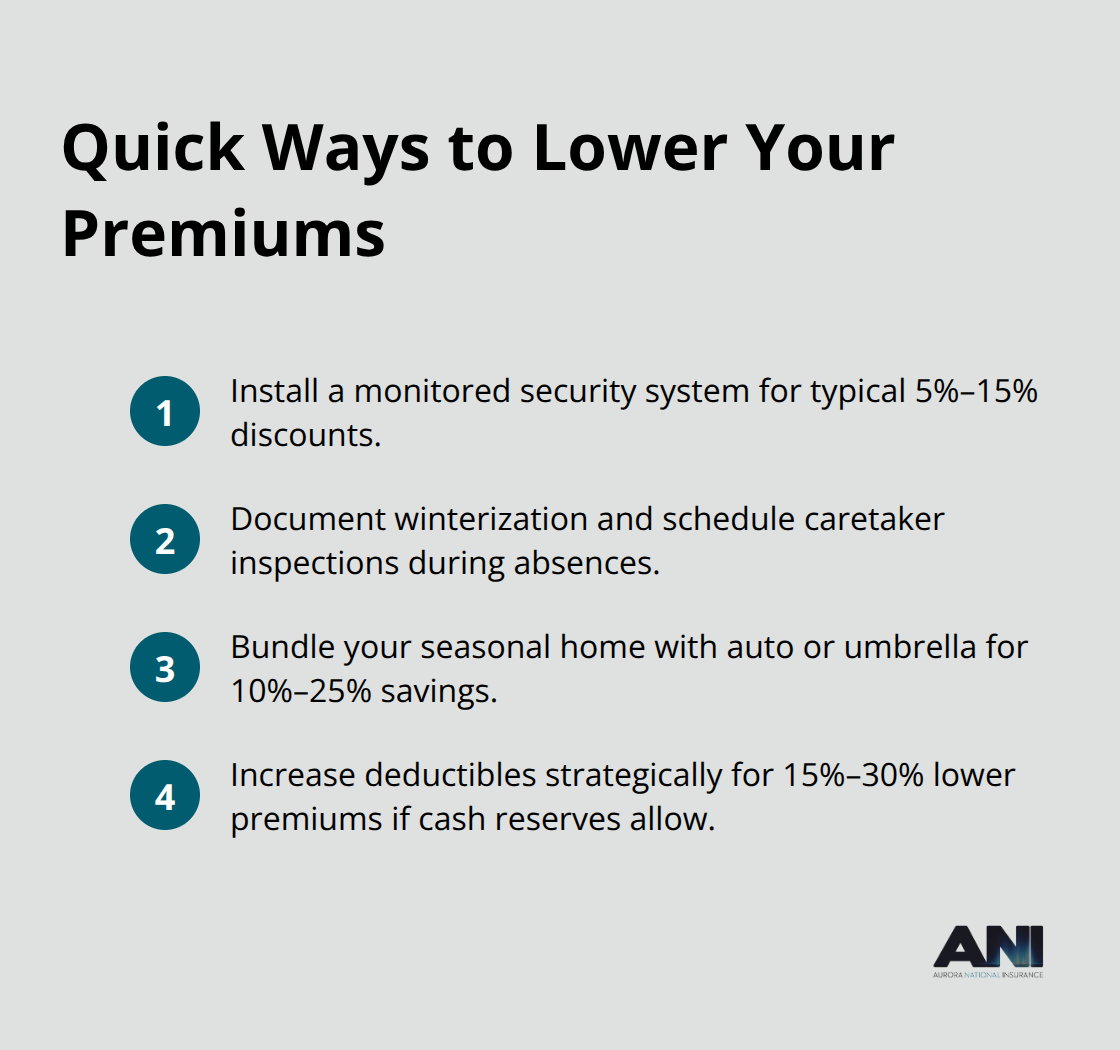
Security systems and property monitoring create your first premium reduction opportunity. Insurers offer measurable discounts-typically 5% to 15%-when you install monitored alarm systems that detect break-ins, fire, and water intrusion. For seasonal properties specifically, remote monitoring matters more than for occupied homes because you need real-time alerts when problems develop while you’re absent. Systems like Vivint, Frontpoint, or local Alaska-based monitoring services cost $30 to $60 monthly but often pay for themselves through premium reductions within the first year. Ask your insurance agent for the exact discount percentage before purchasing any system, as some carriers offer larger discounts for specific brands or monitoring levels. Motion-activated cameras and door sensors add minimal cost while providing visual evidence if theft or vandalism occurs, which strengthens your claims if damage happens during the off-season.
Maintain Your Property During Absence
Property maintenance during your absence directly impacts both your premiums and your ability to file successful claims. Insurers charge higher rates for seasonal properties that sit completely unmaintained because the risk of catastrophic damage increases exponentially. Documented winterization reduces freeze-related claims so dramatically that some carriers offer discounts for winterization efforts. Email copies of discussions and document any policy changes for your records, as this documentation may be essential if a claim is later disputed. If you live outside Alaska, hire a local property caretaker to perform quarterly inspections and document their findings. This costs $200 to $500 quarterly but prevents $30,000 water damage claims and often qualifies you for additional premium discounts.
Bundle Coverage for Immediate Savings
Combining your seasonal home policy with auto, umbrella liability, or other coverage through the same carrier typically generates 10% to 25% discounts. Some carriers offer larger bundling discounts than others, so shopping bundled quotes across three to five different insurers reveals whether your current setup actually represents the best value. Don’t assume your auto insurance carrier offers the best seasonal home rates-some specialize in primary residence coverage and charge premium prices for seasonal properties, while others have specifically built their underwriting around seasonal and vacation home markets. Aurora National Insurance represents multiple top-rated carriers across Alaska, Washington, Oregon, and other states, which means you can compare bundled rates across different combinations to find your lowest total premium.
Upgrade Deductibles Strategically
Increasing your deductible from $1,000 to $2,500 or $5,000 typically reduces premiums by 15% to 30%, but only make this move if you have sufficient emergency reserves to cover the higher out-of-pocket cost if a claim occurs. For seasonal properties where you control the maintenance schedule and can prevent many common claims through winterization, accepting a higher deductible makes financial sense. Calculate your potential savings over five years, then compare that against your liquid savings-if the math shows you’d still struggle to pay a $5,000 deductible if a claim happened, stick with a lower deductible even if premiums cost more.
Final Thoughts
Alaska seasonal home insurance requires a different approach than standard homeowners coverage, and the protection gap matters too much to overlook. Your seasonal property faces freeze damage, extended vacancy risks, and remote location challenges that generic policies simply don’t address. Installing monitored security systems, maintaining your property during absence, bundling coverage, and adjusting deductibles directly reduce both your premiums and your exposure to catastrophic losses.
Getting the right coverage starts with understanding exactly what your current policy excludes. Request a detailed comparison from your agent showing how your existing homeowners policy handles extended vacancy periods, freeze-related damage, and liability protection for seasonal properties. This comparison reveals the specific gaps you’re currently exposed to and quantifies what additional protection costs. Different insurers price seasonal properties differently based on their underwriting appetite and claims experience in Alaska-one carrier might charge $1,200 annually while another charges $1,800 for nearly identical coverage.
Working with agents who understand Alaska’s specific conditions accelerates this process significantly. Local agents know which carriers offer the best Alaska seasonal home insurance rates, which ones have responsive claims processes for remote properties, and which ones actually understand winterization requirements versus those that simply deny claims based on generic policy language. Contact an agent this week to discuss your seasonal property’s specific risks and get actual quotes rather than estimates, and explore your options with experienced professionals who represent multiple top-rated carriers across Alaska and the Pacific Northwest.
The information provided in this blog is for general informational purposes only and does not constitute legal, financial, or insurance advice. Coverage options, terms, and availability may vary. Please consult with a licensed professional for advice specific to your situation.
Artificial intelligence may have been used to generate text and images in some blog articles.


