
Smart Fleet Planning With Alaska Truck Insurance Quotes For Local Operators
Running a truck fleet in Alaska means facing challenges most operators in the lower 48 states never encounter. Extreme weather, remote terrain, and strict regulations make insurance decisions more complex-and more important.
At Aurora National Insurance, we know that finding the right Alaska truck insurance quotes requires understanding what coverage actually protects your business. This guide walks you through comparing quotes, planning your fleet strategically, and reducing costs without sacrificing protection.
Why Alaska Truck Operators Need Specialized Insurance
Alaska’s truck insurance landscape differs fundamentally from the lower 48 states. Winter driving conditions cause claim severity to spike-remote towing and repair costs in Alaska run higher than national averages because of distance and limited service infrastructure. According to the U.S. Census Bureau, trucks move roughly $13.2 trillion in annual shipment value nationally, but Alaska operators face disproportionate risk from weather-related incidents, equipment failures in extreme cold, and accident recovery in isolated areas. Standard commercial auto policies designed for temperate climates simply don’t account for these realities.
State Minimums Leave You Underinsured
Alaska state minimum liability requires 50/100/25 in split limits, but this baseline leaves most operators dangerously underinsured. Brokers and freight contracts typically demand $1,000,000 in auto liability coverage-double or triple the state minimum-because they understand that a single accident in a remote corridor can trigger catastrophic costs that low limits won’t cover. The Federal Motor Carrier Safety Administration requires minimum coverage based on cargo type: $750,000 for non-hazardous freight over 10,001 pounds on interstate routes, $1,000,000 for oil, and $5,000,000 for hazmat. Intrastate Alaska rules can differ, so you must confirm your specific filing requirements before quoting.
Location and Route Patterns Drive Premium Differences
Your garaging location and operating radius directly influence what you’ll pay. Anchorage premiums run substantially higher than Wasilla due to claim activity and density, while regional Alaska routes cost more than city-only operations because winter conditions and long-haul exposure multiply loss severity. A contractor running equipment-heavy vehicles or a food service operator with a fully loaded truck faces steeper premiums than lighter operations, but underinsuring that vehicle creates exposure that no premium savings justify.
Continuous Coverage Protects Your Rate History
Allowing coverage to lapse costs far more than maintaining continuous protection. Insurers reward operators who maintain unbroken coverage history with better rates when you shop 30 to 45 days in advance. Alaska’s remote environment means a breakdown or accident in the interior or on the Dalton Highway creates recovery costs that test the limits of standard coverage. Rental reimbursement and non-trucking/bobtail endorsements protect you during deadhead miles or off-dispatch periods when you’re not generating revenue but still exposed to loss.
Fleet Composition Requires Customized Coverage
Your fleet’s composition shapes cost significantly. A mix of vehicle types and ages across different routes requires customized coverage rather than a one-size-fits-all policy that leaves gaps or overinsures lower-risk assets. When you compare quotes, standardizing your coverage details-limits, deductibles, driver list, radius, and cargo description-across multiple carriers reveals which insurers price your specific operation most competitively. This apples-to-apples comparison process separates realistic quotes from inflated estimates and helps you identify carriers that understand Alaska’s unique risk profile.
Comparing Quotes That Actually Match Your Operation
Standardize Your Information Across All Carriers
Collecting truck insurance quotes without standardizing your inputs wastes time and produces meaningless comparisons. Most Alaska operators fail at this step, requesting quotes with vague descriptions of their operation and then wondering why prices vary wildly across carriers. The difference between a useless quote and one that guides real decisions comes down to precision.
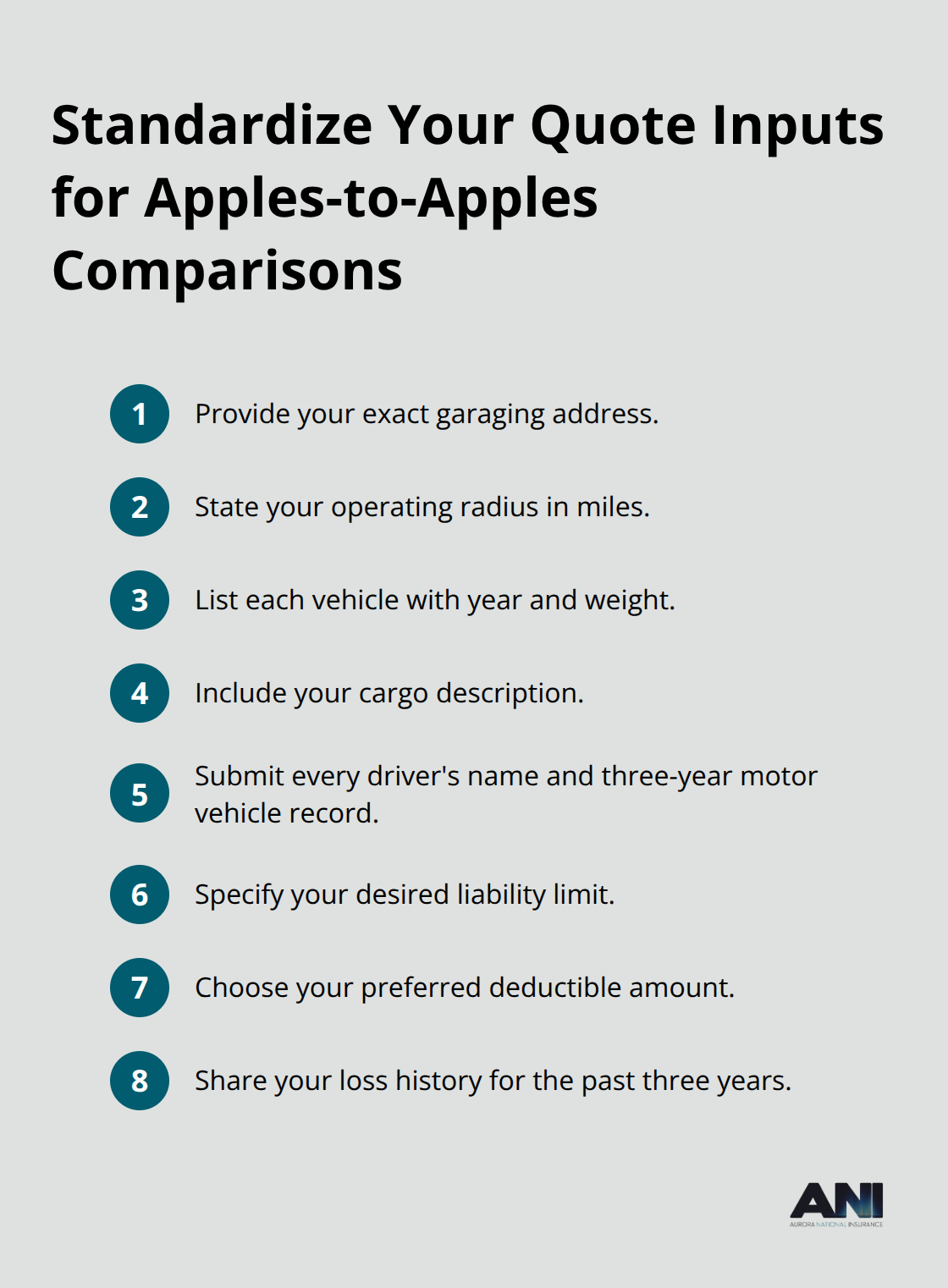
When you contact Progressive, The Hartford, Great West Casualty, Northland Insurance, or other carriers, you must provide identical information to each: your exact garaging address, your operating radius in miles, your specific vehicle list with year and weight, your cargo description, every driver’s name and three-year motor vehicle record, your desired liability limit, your preferred deductible amount, and your loss history for the past three years. Anchorage-based operators typically see quotes 20 to 40 percent lower than rural Alaska locations because claim severity in the city runs lower than remote recovery costs, but only if you compare identical coverage across all carriers.
Understand How Location and Timing Affect Your Quote
Progressive leads the market as the number-one commercial auto insurer nationally with over 2.3 million commercial vehicles insured, and their Alaska pricing often reflects that scale. The Hartford excels for high-risk drivers, while Northland Insurance specializes in small fleets. You should contact these carriers 30 to 45 days before your current policy expires-this timing gives insurers the opportunity to compete and allows you to lock in better rates than last-minute renewals. Alaska’s remote environment means a breakdown or accident in the interior creates recovery costs that test the limits of standard coverage.
Choose a Deductible You Can Actually Afford
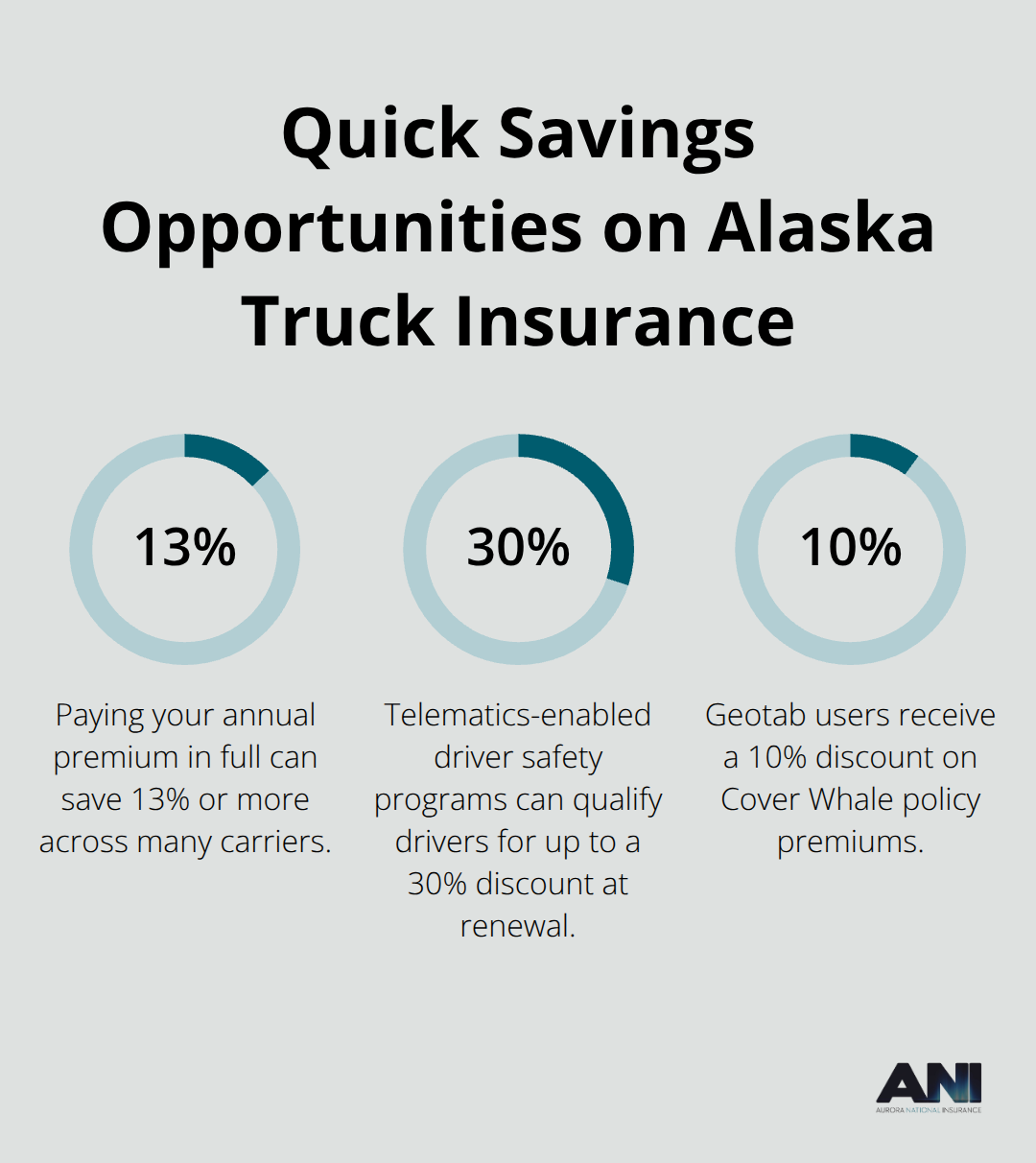
Your deductible choice directly affects what you’ll actually pay out of pocket after a claim and shapes your monthly premium. Many operators chase the lowest monthly premium without considering whether they can afford their chosen deductible when a loss occurs. A $1,000 deductible typically saves 15 to 25 percent on premium compared to a $500 deductible, but if your cash flow cannot absorb a $1,000 expense after an accident, that savings evaporates when you face a claim you cannot cover. Paying your annual premium in full instead of monthly installments saves 13 percent or more across most carriers, a discount that compounds your savings strategy.
Evaluate Carrier Responsiveness and Alaska Experience
Carrier ratings matter less than most operators assume because AM Best A+ ratings and BBB accreditation exist across the industry, but customer service responsiveness separates winners from frustration. Progressive and The Hartford offer 24/7 claims support with specialized commercial adjusters, while Sentry provides a personalized underwriting experience through agent relationships rather than online quotes. For Alaska operations specifically, you want a carrier that understands winter claim severity and remote repair costs, not a national company that prices your Anchorage operation using templates built for suburban Texas routes. Request references from each carrier’s Alaska clients before committing, and ask directly whether they have handled claims involving Dalton Highway recovery or winter equipment failures in the interior.
The quotes you collect now form the foundation for your fleet planning decisions. Once you understand what each carrier actually charges for your specific operation, you can move forward with strategies that reduce claims and protect your bottom line.
Building a Fleet That Cuts Insurance Costs
Right-Size Your Fleet to Seasonal Demand
Fleet size and vehicle composition drive insurance premiums more than most operators realize, yet many Alaska operators maintain oversized fleets that sit idle during low-demand seasons while paying full insurance premiums year-round. Right-sizing your fleet means matching your vehicle count to actual seasonal demand rather than maintaining excess capacity. A contractor running five trucks during summer but only needing two during winter should sell or store the off-season vehicles rather than insuring idle assets. This approach directly reduces your total insurable value and lowers annual premiums. When you quote with carriers like Progressive or Northland Insurance, provide accurate seasonal vehicle counts and garaging locations so quotes reflect your actual operation instead of inflated estimates based on peak-season assumptions.
Maintain Vehicles to Lower Claims and Premiums
Maintenance quality separates operators who pay standard rates from those who face surcharges. Fleets with consistent preventive maintenance records experience fewer breakdowns and claims, which insurers reward through lower premiums at renewal. Cloud-based fleet management systems like Fleetio centralize maintenance scheduling, vehicle inspections, and cost tracking across your entire operation. Set maintenance intervals based on original equipment manufacturer guidelines rather than waiting for failures, and document every service in your system. When you request quotes 30 to 45 days before renewal, provide your maintenance records to underwriters-this documentation demonstrates risk management and often results in better pricing. Alaska’s remote environment makes preventive maintenance non-negotiable because a breakdown on the Dalton Highway or in the interior costs far more to recover than a scheduled service in Anchorage.
Deploy Telematics to Monitor Driver Behavior and Reduce Risk
Telematics technology transforms fleet management from reactive to proactive by collecting real-time data on driver behavior, vehicle performance, and route patterns. According to Geotab research on commercial trucking insurance, data-driven policy customization uses telematics to tailor coverage to each fleet’s specific driving patterns and risks, and direct connectivity between telematics and insurers streamlines insurance management. Cover Whale’s Driver Safety Program uses AI-based dashcams and telematics with real-time coaching to lower claim frequency and severity, and safe-driving status can qualify insured drivers for up to a 30 percent discount on premiums at renewal.
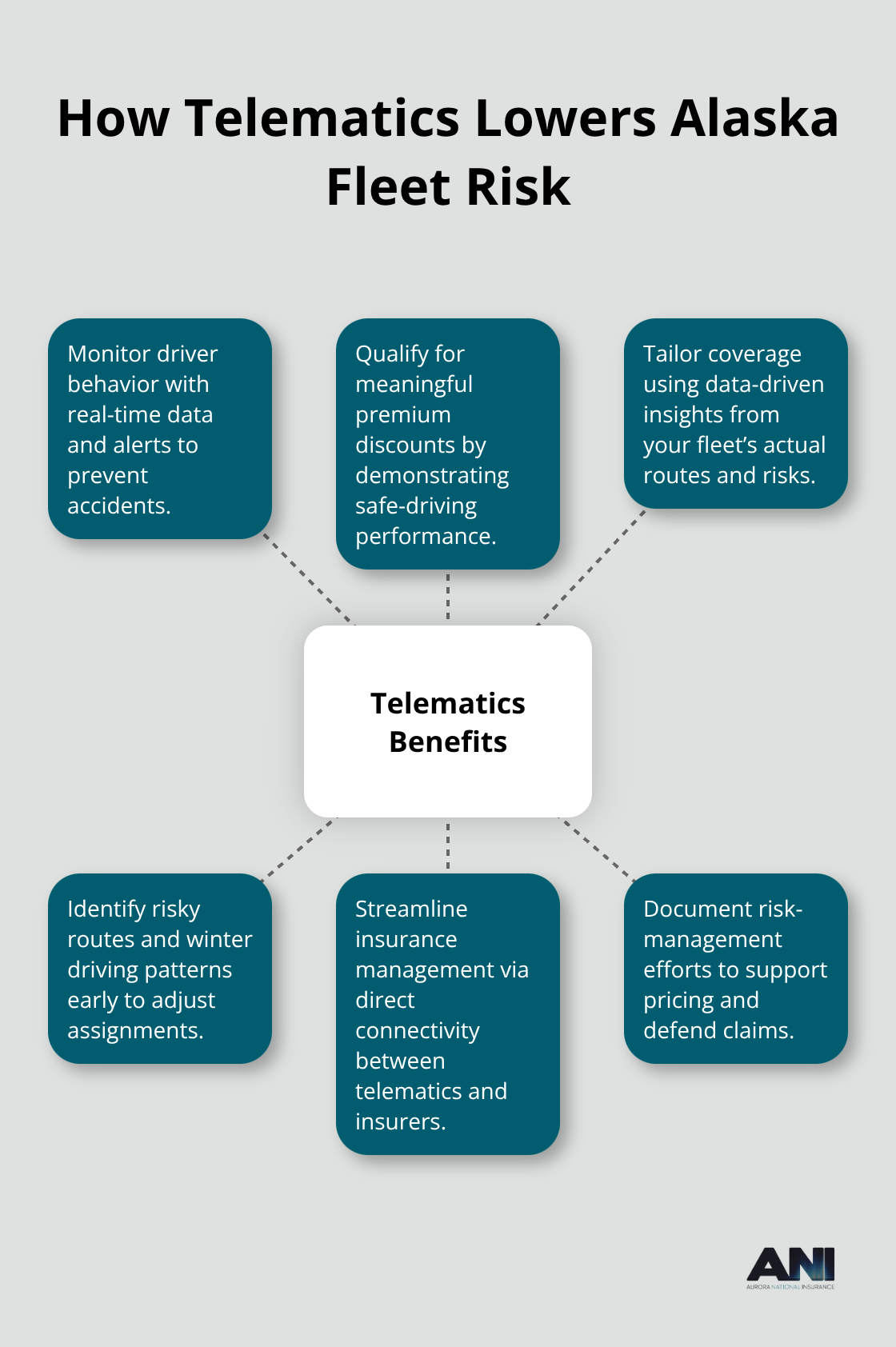
For Alaska operators, install telematics devices in every vehicle and review the data weekly to identify risky driving behaviors before they cause accidents. A driver consistently speeding on the Glenn Highway or accelerating aggressively in winter conditions appears immediately in your telematics reports, allowing you to coach that driver or remove them from high-risk routes. Geotab users receive a 10 percent discount on Cover Whale policy premiums, making the integration between telematics platforms and insurance partners a practical cost-reduction tool.
Use Data to Support Accurate Quotes and Claims
Alaska’s winter driving conditions reward operators who invest in driver monitoring because claim severity from weather-related incidents compounds when drivers lack proper training or judgment. Your telematics data supports accurate radius reporting and cargo documentation when you quote, ensuring carriers price your operation based on actual behavior rather than worst-case assumptions. Most importantly, telematics creates a documented record of your risk-management efforts that justifies lower premiums and protects your operation during claims disputes.
Final Thoughts
Smart fleet planning in Alaska requires three concrete actions: standardize your Alaska truck insurance quotes across multiple carriers, invest in telematics and maintenance systems that reduce claims, and work with agents who understand Alaska’s unique operating environment. The operators who pay the lowest total cost for coverage compare apples-to-apples quotes 30 to 45 days before renewal, maintain continuous coverage history, and document their risk-management efforts through maintenance records and driver safety programs. Paying your annual premium in full saves 13 percent or more, while telematics-enabled driver safety programs can qualify you for up to 30 percent discounts at renewal.
Local insurance agents deliver advantages that online quote tools cannot match because they understand why Anchorage premiums differ from rural locations, why winter claim severity justifies higher limits than state minimums, and which carriers price your specific vehicle types and routes most competitively. An agent familiar with Alaska operations knows the difference between intrastate and interstate requirements, explains why brokers demand $1,000,000 liability coverage, and asks the right questions about your garaging address, operating radius, and loss history to ensure quotes reflect your actual operation. They recognize that a breakdown on the Dalton Highway or in the interior costs far more to recover than a scheduled service in Anchorage.
Contact Aurora National Insurance or another local agent with your vehicle list, operating radius, desired liability limits, and preferred deductible, then request quotes from at least three carriers. Compare those quotes side-by-side using identical coverage parameters, evaluate each carrier’s Alaska claims experience and customer service responsiveness, and select the policy that delivers the lowest total cost while maintaining the coverage your operation actually needs. The time you invest in this process now directly reduces what you’ll pay for insurance over the next three years.
The information provided in this blog is for general informational purposes only and does not constitute legal, financial, or insurance advice. Coverage options, terms, and availability may vary. Please consult with a licensed professional for advice specific to your situation.
Artificial intelligence may have been used to generate text and images in some blog articles.


