

Oregon commercial auto policy: Key Terms and Cost-Effective Options
Running a business in Oregon means understanding your commercial auto policy requirements and finding coverage that fits your budget. At Aurora National Insurance, we know that navigating insurance options takes time and research.
This guide walks you through Oregon’s mandatory coverage types, the cost factors that impact your premiums, and practical strategies to lower your rates without sacrificing protection.
What Oregon Requires for Commercial Auto Coverage
Mandatory Liability and Medical Coverage
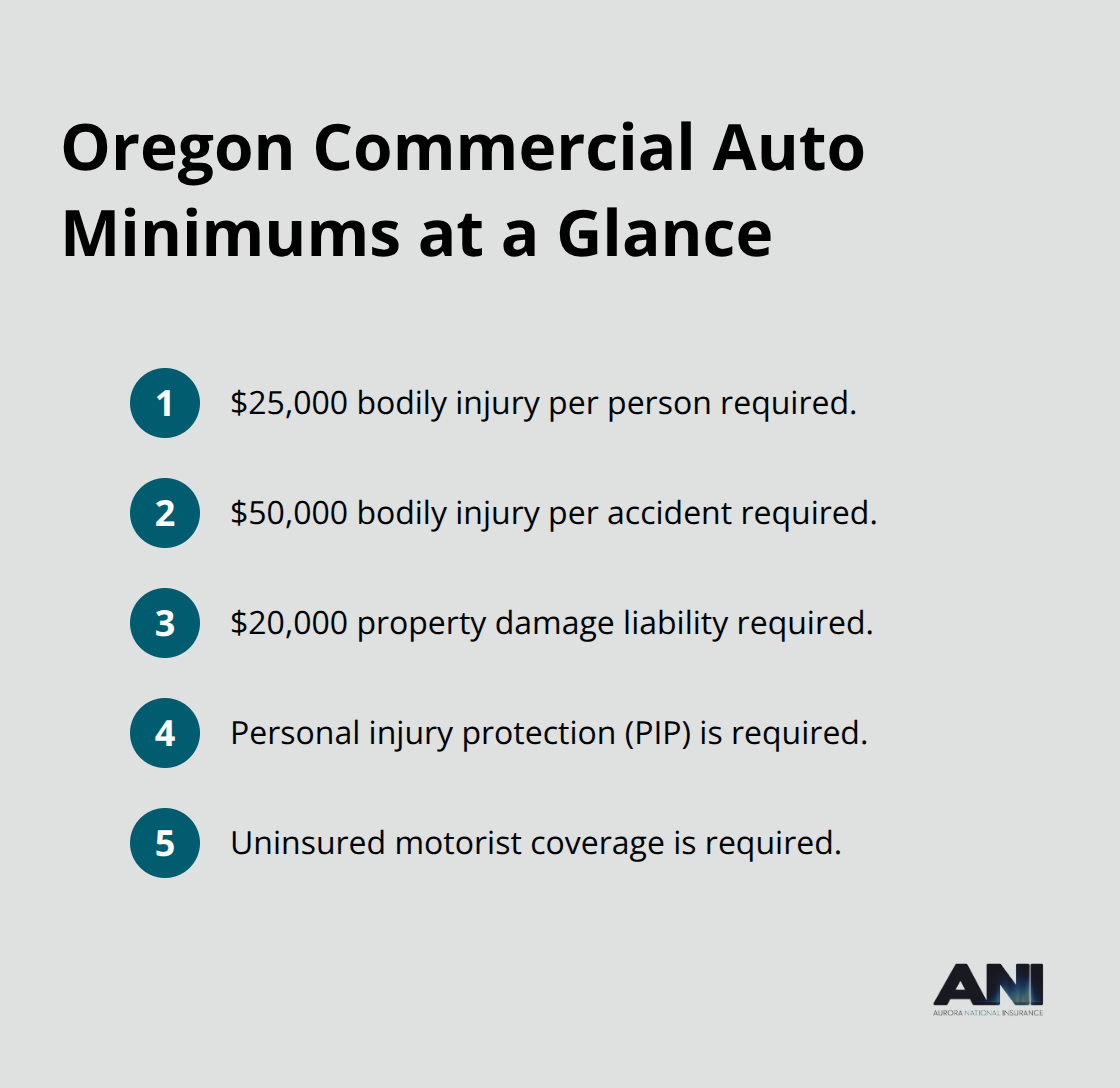
Oregon law mandates that every business vehicle carry minimum liability coverage of $25,000 per person and $50,000 per accident for bodily injury, plus $20,000 for property damage. The Oregon Department of Transportation enforces these requirements strictly. Oregon also requires personal injury protection coverage, which pays medical expenses regardless of fault, and uninsured motorist coverage to protect your drivers when they’re hit by someone without insurance.
Filing Deadlines and Compliance
If you operate as an intrastate carrier with a 1A permit, you have 60 days from vehicle registration and enrollment in Oregon’s weight-mile-tax program to file proof of insurance with the Oregon Commission on Court and Department Services. Missing this deadline puts your operating authority at risk of suspension. Your insurance agent files the required standard industry forms-Form E for liability and Form H for cargo-on your behalf. You should verify your filing status through Oregon’s Online Insurance Look-Up tool to confirm compliance before the deadline passes.
Coverage Beyond State Minimums
Most Oregon businesses need more than the legal minimums to protect their assets adequately. If your operation involves transporting hazardous materials, federal law under 49 CFR Part 387 requires higher financial responsibility limits. For cargo operations, Oregon mandates a minimum of $10,000 in cargo coverage. If you run a fleet with employees, collision and comprehensive coverage protects your vehicles from theft, weather, and accidents-costs you’d otherwise pay out of pocket.
Tailoring Coverage to Your Business Risk
Adding uninsured and underinsured motorist coverage beyond the minimum shields your business and personal assets in a lawsuit. Higher limits cost more, but they protect you if your business has significant assets at stake. A contractor with equipment-laden vehicles faces different risk than a consultant with a single sedan, so you should tailor your limits to match your actual exposure rather than defaulting to state minimums.
The specific coverage you need depends on your industry, fleet size, and the value of assets your vehicles carry. Understanding these distinctions helps you avoid overpaying for unnecessary coverage while maintaining adequate protection.
Cost Factors That Affect Your Oregon Commercial Auto Premium
How Your Driving Record Shapes Your Rate
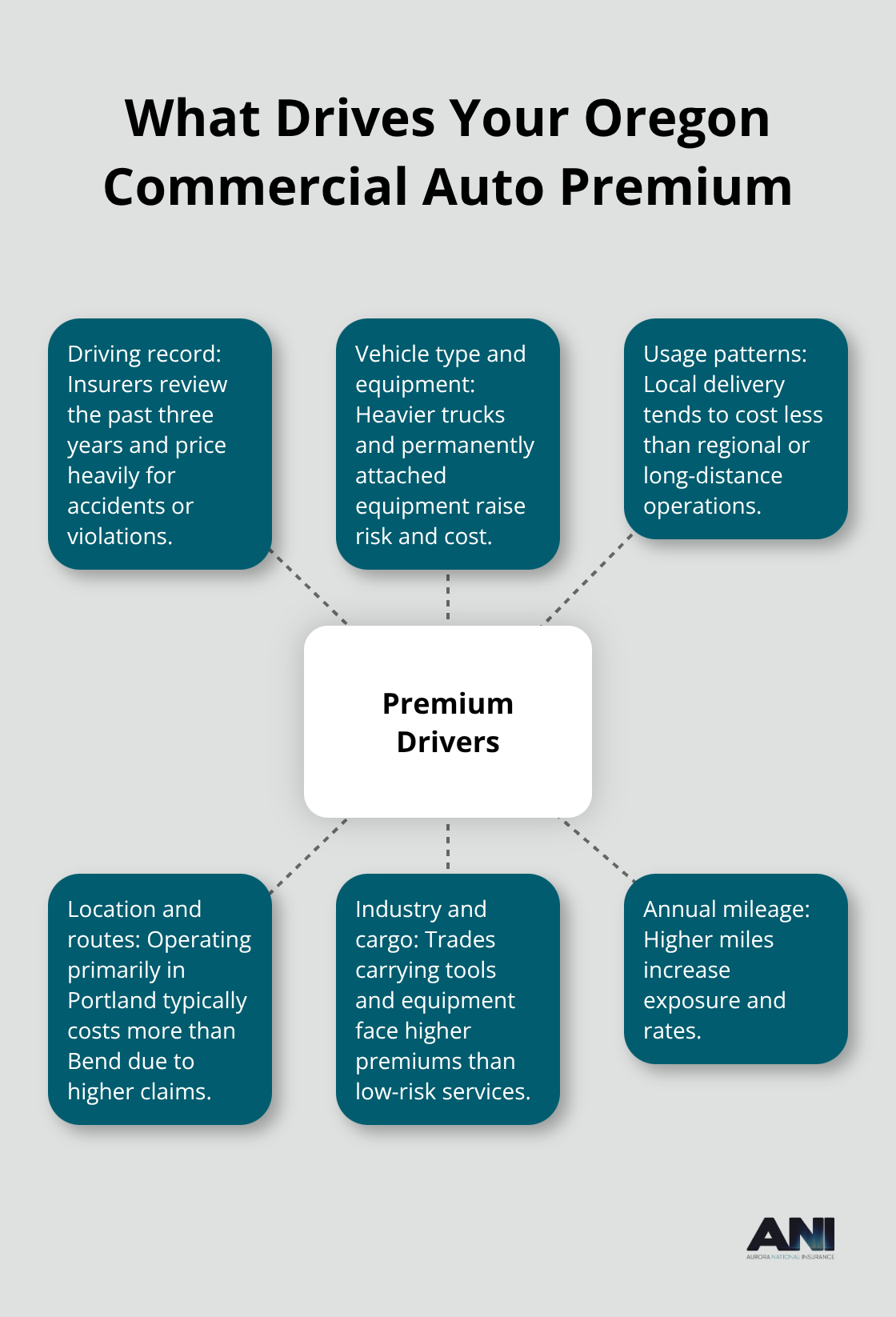
Your driving record impacts your premium more than any other single factor, and Oregon insurers scrutinize the past three years of your history carefully. A single accident or violation typically increases your rate significantly, while a clean record qualifies you for better pricing. If you operate a fleet with multiple drivers, each driver’s history affects the overall premium, so hiring drivers with solid records directly impacts your bottom line. Safety training programs and defensive driving courses can offset a less-than-perfect history, though some insurers weight recent violations more heavily than older ones.
Vehicle Type and Usage Patterns
Vehicle type and how you use it matter just as much as who drives it. A heavy equipment truck or food truck with permanently attached items costs significantly more to insure than a light sedan. The reason is simple-larger vehicles and those carrying valuable cargo present higher claims risk. If you decide whether to buy or lease a vehicle for your business, check insurance rates before you commit to the purchase, since the difference between insuring a box truck versus a pickup can be substantial.
Geographic location within Oregon also influences your rate; operating primarily in Portland typically costs more than routes centered around Bend due to higher claims activity and settlement costs in urban areas. Travel radius matters too-local delivery routes carry lower premiums than regional or long-distance operations because distance increases accident exposure.
Business Industry and Annual Mileage
Your industry classification and annual mileage round out the major cost drivers. Construction, plumbing, landscaping, and trades that carry tools and equipment face higher premiums than service-based businesses with minimal vehicle wear. A contractor’s median commercial auto premium runs around $203 per month, while for-hire transport trucks average $926 monthly. Annual mileage affects risk assessment directly; a business that logs 5,000 miles yearly in local service calls pays less than one covering 50,000 miles regionally.
The combination of these factors-your industry’s risk profile, how many miles your fleet accumulates, and the types of vehicles you operate-creates your individualized rate. Understanding these specific cost drivers helps you make informed decisions about vehicle selection, driver hiring, and route planning that can meaningfully reduce what you pay. These choices set the stage for finding affordable coverage that actually fits your operation.
How to Get Lower Rates Without Sacrificing Protection
Request Quotes from Multiple Carriers
Getting multiple quotes is the only reliable way to find affordable commercial auto coverage in Oregon, and the difference between carriers can be substantial. A contractor in Portland might find better pricing with one carrier while a food truck operator in Salem gets a superior quote elsewhere. Request quotes from at least three carriers and compare the same coverage limits across each proposal, since comparing different limits makes pricing meaningless. When you request a quote, provide accurate information about your vehicles, drivers, annual mileage, and business type, as underestimating these details will lead to rate adjustments later. Oregon’s Division of Financial Regulation maintains a license verification tool, so verify that any agent or insurer you contact holds an active Oregon license before sharing sensitive business information.
Combine Policies to Cut Your Costs
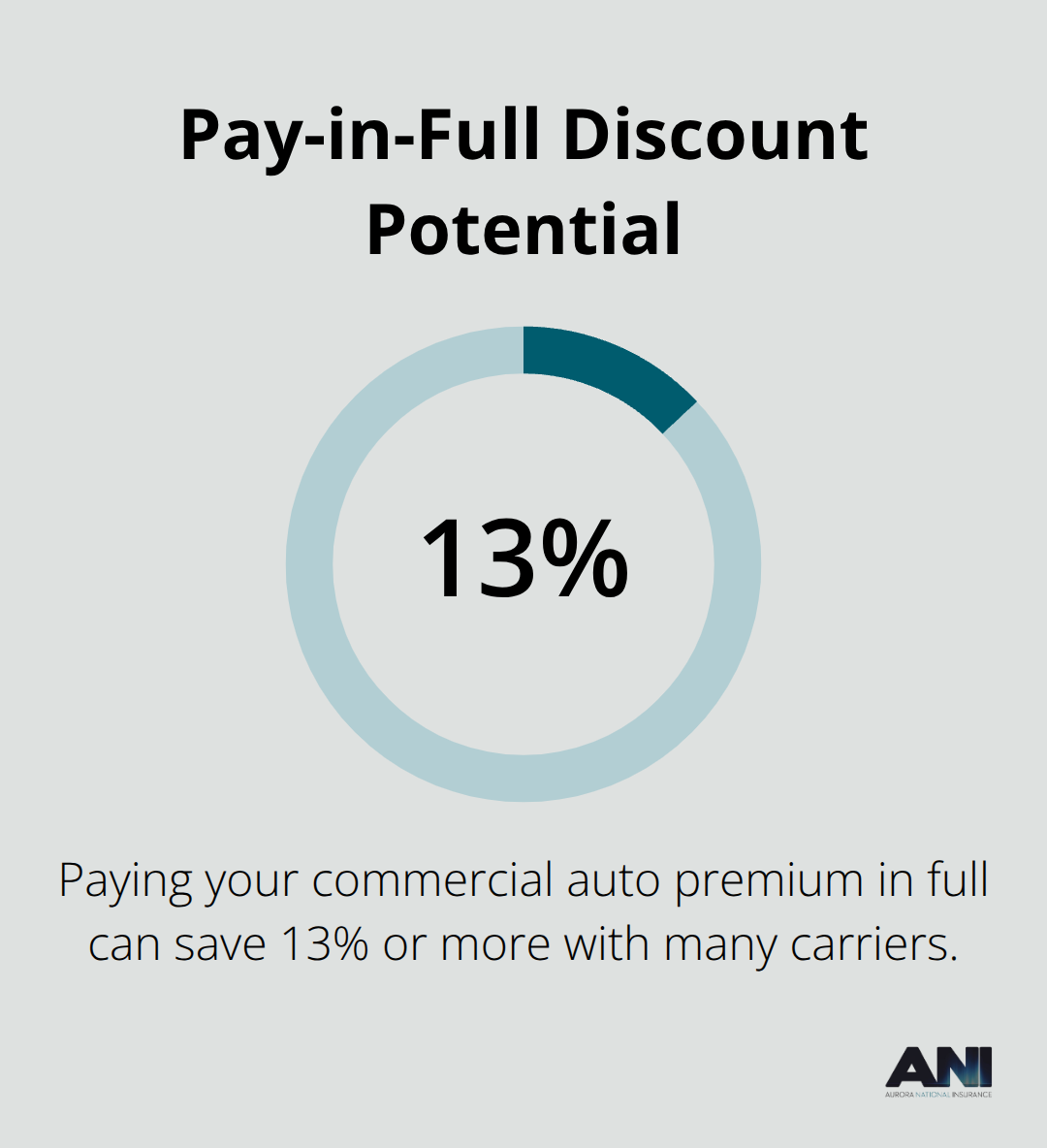
Bundling your commercial auto policy with other business coverages delivers real savings that most Oregon business owners overlook. Commercial auto insurance policies typically have higher liability limits and may cover rented and other nonowned vehicles, including employees’ cars. The savings only materialize if you consolidate policies under one provider rather than spreading coverage across multiple insurers. Beyond bundling, paying your premium in full instead of monthly installments saves 13 percent or more with many carriers.
Invest in Vehicle Safety and Driver Training
Safety features on your vehicles reduce your premium by lowering theft and collision risk. Anti-lock brakes, daytime running lights, side airbags, and GPS trackers all qualify for rate reductions with most carriers. Defensive driving courses and safety training programs for your drivers provide documented risk reduction that insurers reward with rate reductions. If your fleet operates primarily in secure locations, parking vehicles in a locked lot or indoor garage instead of street parking further reduces your theft risk and qualifies you for lower rates. These specific actions directly impact what you pay each month.
Final Thoughts
Protecting your business with an Oregon commercial auto policy requires balancing legal compliance with practical protection. You now understand Oregon’s mandatory minimums-$25,000 per person and $50,000 per accident for bodily injury, plus $20,000 for property damage-and why most businesses need coverage beyond these floors. Filing deadlines matter; missing the 60-day window after vehicle registration risks suspension of your operating authority.
Your premium depends on factors you can influence. A clean driving record, strategic vehicle selection, and parking in secure locations all reduce what you pay monthly. Bundling your commercial auto policy with other business coverages delivers real savings, and paying in full instead of monthly installments saves 13 percent or more.
Request quotes from multiple carriers using identical coverage limits so you can compare apples to apples. Verify that any agent or insurer holds an active Oregon license before sharing information. Get your instant online quote today and take the first step toward affordable, adequate coverage that protects your business.
The information provided in this blog is for general informational purposes only and does not constitute legal, financial, or insurance advice. Coverage options, terms, and availability may vary. Please consult with a licensed professional for advice specific to your situation.
Artificial intelligence may have been used to generate text and images in some blog articles.


