
Oregon Landlord Insurance: Protecting Rental Properties Across The Beaver State
Owning rental property in Oregon comes with real financial exposure. Tenants, weather, and liability claims can drain your profits fast if you’re not protected properly.
Standard homeowners insurance won’t cover your rental units. That’s why Oregon landlord insurance exists-it’s built specifically for the risks you face as a property owner. We at Aurora National Insurance help landlords across Oregon find the right coverage to safeguard their investments.
What Your Oregon Landlord Policy Actually Protects
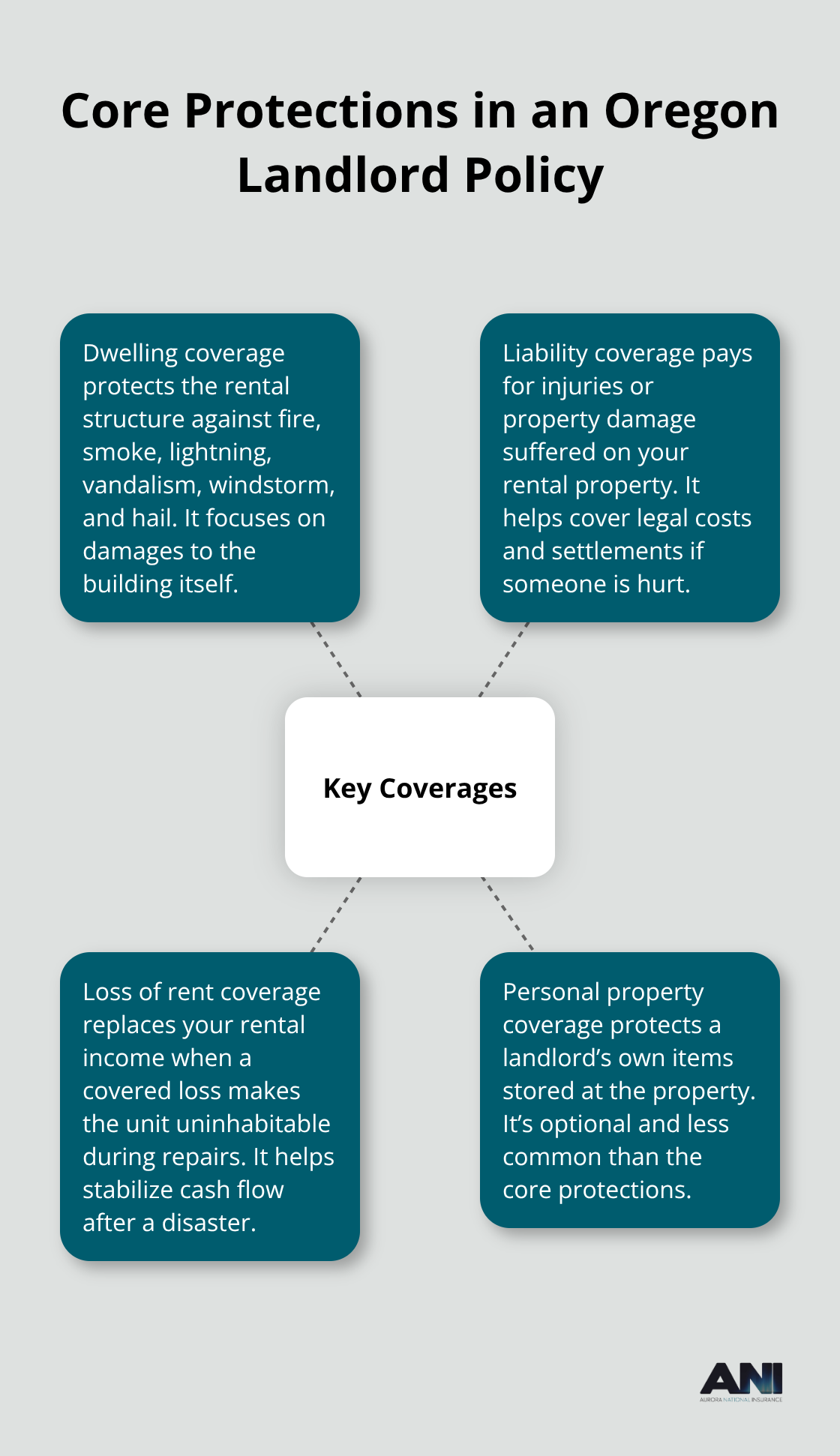
Oregon landlord insurance covers four critical areas that standard homeowners policies ignore. The dwelling itself receives protection against fire, smoke, lightning, vandalism, windstorm, and hail-the perils that damage your rental structure most often. Liability coverage pays for injuries or property damage someone suffers on your rental property, such as a tenant slipping on a faulty handrail or a guest injured in the stairwell. This liability protection matters because Oregon’s tenant-friendly regulations create significant legal exposure for property owners. Loss of rent coverage compensates you when a covered disaster makes the unit uninhabitable, replacing income during repairs. If a fire damages the building and forces tenants out for three months, your policy covers the rent you would have collected. Most Oregon landlords also add personal property coverage for their own belongings stored on the property, though this is less common than the core protections.
The Numbers Behind Oregon’s Risk Profile
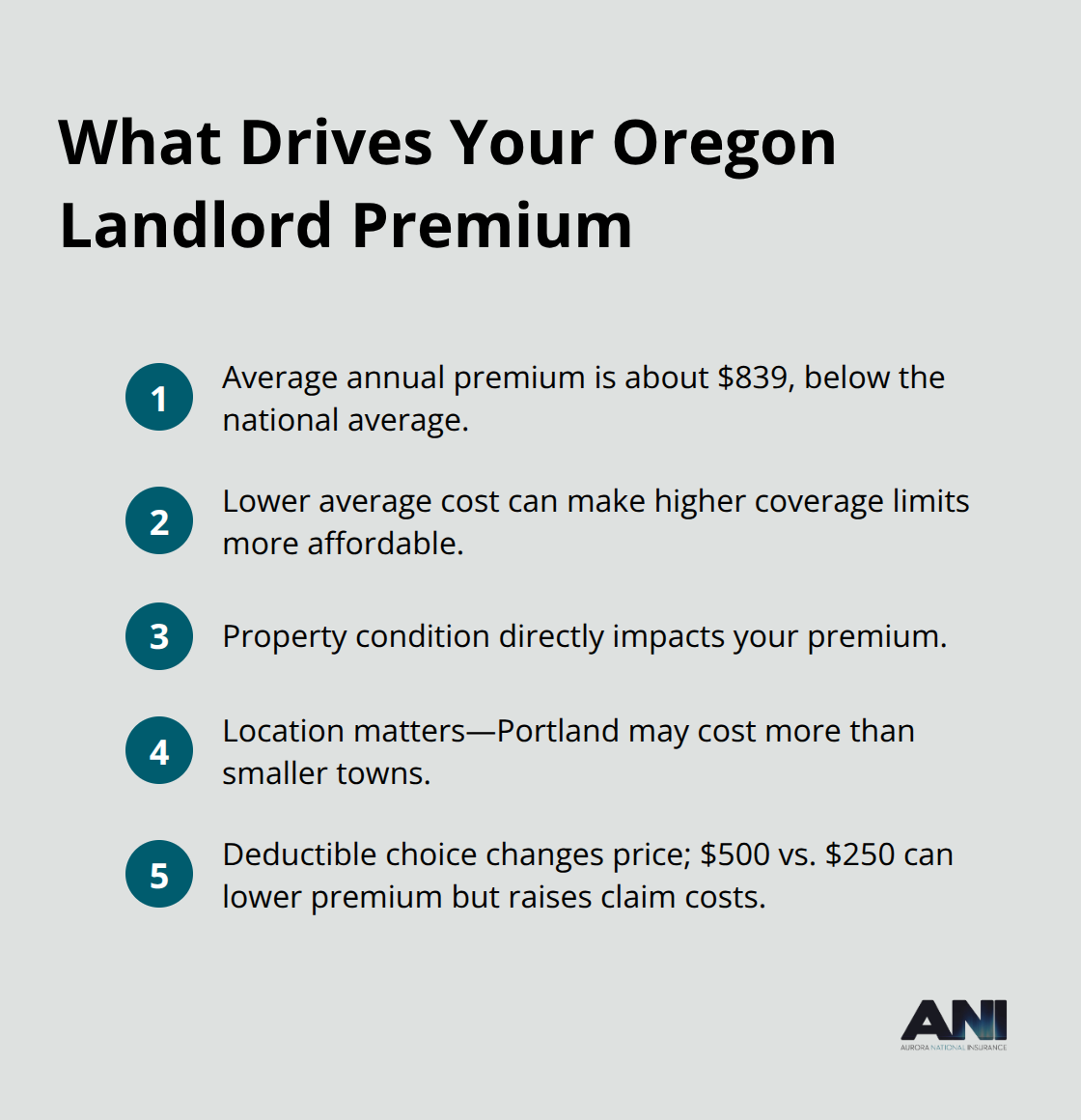
Oregon has experienced 79 federally declared disasters since 1953, making natural disasters a real threat to rental properties across the state. Wildfire exposure in rural areas and storm damage in urban centers mean your property faces genuine risk. The average annual cost of landlord insurance in Oregon runs about $839, which sits below the national average and makes comprehensive protection surprisingly affordable. This low cost means you have room to invest in higher coverage limits without straining your budget. Property condition, location, and deductible choices drive your actual premium, so a property in Portland may cost more than an identical unit in a smaller town. Choosing a $500 deductible instead of $250 can lower your premium meaningfully, though you’ll pay more out-of-pocket if you file a claim.
What Oregon Policies Exclude and Why It Matters
Standard landlord policies do not cover flood damage, earthquakes, infestations, or wear-and-tear maintenance issues. If your Oregon property sits in a flood-prone area, you must purchase separate flood insurance through the National Flood Insurance Program. Earthquake coverage requires a separate endorsement or standalone policy in Oregon, and many landlords skip it entirely-a decision that leaves them exposed if the Cascadia subduction zone ruptures. Mold and pest damage fall under maintenance, not insurance, so you must handle preventive pest control yourself. Your policy also excludes intentional damage and losses from the tenant’s criminal acts. Understanding these gaps helps you make informed decisions about additional coverage and risk management investments on your rental units.
How Oregon’s Rental Laws Shape Your Insurance Needs
Oregon law requires tenants to carry liability insurance under ORS 90.222, with landlords able to require coverage up to $100,000 per occurrence. You can require that tenants name you as an interested party on their policy so you receive notice if coverage lapses. This legal requirement protects both you and your tenants, but it also means your own liability limits must align with your property’s exposure. Oregon’s mandatory mediation rules for landlord-tenant disputes can reduce costly litigation, but strong liability coverage still protects you against unexpected claims. The state’s habitability standards (ORS 90.320) require you to maintain adequate heating, plumbing, electrical systems, and safety features like carbon monoxide alarms-failures here can trigger tenant remedies and liability exposure. Your landlord policy covers injuries that result from these conditions, but prevention through proper maintenance remains your first line of defense.
Why Standard Homeowners Insurance Won’t Protect Your Rental
Your standard homeowners policy explicitly excludes rental properties, and this isn’t a small limitation. Insurers write homeowners coverage for owner-occupied dwellings where you live full-time, not for investment properties you lease to tenants. If you file a claim on a rental unit under a homeowners policy, the insurer will deny it outright. The policy language contains specific exclusions for any property rented to others, making coverage void the moment you sign a lease. Landlords often learn this painful truth only after a tenant injury or fire damages the structure and the insurer refuses to pay. Landlord insurance exists because rental properties create different liability exposure than owner-occupied homes. A tenant or guest injured on your property can sue you, and your homeowners policy won’t cover that claim. Additionally, lost rent during repairs matters financially to landlords in ways it never does for homeowners, so landlord policies include this protection while homeowners policies ignore it entirely.
Oregon’s Natural Disaster Exposure Demands Real Protection
Oregon has experienced 79 federally declared disasters since 1953, and this history shapes insurance costs and coverage needs directly. Wildfire risk in rural areas and coastal storm exposure in urban centers mean your rental property faces genuine threats that go beyond typical wear and tear. The average annual landlord insurance premium in Oregon sits around $839, well below the national average, yet this affordability doesn’t mean skimping on coverage limits. Landlords in Portland face different risks than those in eastern Oregon, so your actual premium depends on property location, age, and construction type rather than statewide averages. A property in a wildfire-prone county will cost more to insure than an identical building fifty miles away in lower-risk terrain.
Rental Market Concentration Creates Liability Exposure
Oregon’s rental market includes 37.12 percent of households as renters according to 2019 data, creating a sizable tenant base and corresponding liability exposure for property owners. This concentration of renters in certain neighborhoods means your liability risk varies significantly by location, making localized insurance assessment essential rather than optional. Higher tenant density in urban areas increases the likelihood of injury claims and property damage disputes, so your coverage limits must reflect your specific market position.
Legal Requirements Shape Your Coverage Obligations
Oregon law under ORS 90.222 requires tenants to carry liability insurance with coverage up to $100,000 per occurrence, and you can mandate that tenants name you as an interested party on their policies. This legal requirement protects you if a tenant’s negligence injures someone, but your own liability limits must account for exposures your tenant’s policy won’t cover. Oregon’s habitability standards under ORS 90.320 require you to maintain adequate heating, plumbing, electrical systems, and safety equipment like carbon monoxide alarms, with tenant remedies available if you fail. Violations of these standards create liability exposure that your landlord policy must address, so insufficient coverage limits leave you personally responsible for damages. Oregon’s mandatory mediation rules for landlord-tenant disputes can reduce costly litigation, but strong liability coverage still protects you against unexpected claims that skip mediation entirely. The state’s tenant-friendly regulations create genuine legal complexity, making specialized landlord insurance not just advisable but essential for protecting your financial interests and complying with disclosure requirements. Understanding these legal obligations helps you select appropriate coverage limits and policy features that align with Oregon’s regulatory environment.
How to Choose the Right Landlord Insurance Policy
Calculate Your Dwelling Replacement Cost Accurately
Start with the replacement cost for the dwelling structure itself, not the land value. This means the price to rebuild the entire rental unit from the ground up using current Oregon construction costs, not what you paid for the property five years ago. Walk through the rental unit and document the square footage, number of bedrooms, construction type, and age of major systems like the roof, HVAC, and plumbing. A 1,200-square-foot wood-frame house in Portland costs significantly more to rebuild than an identical structure in rural Oregon due to local labor rates and material availability.
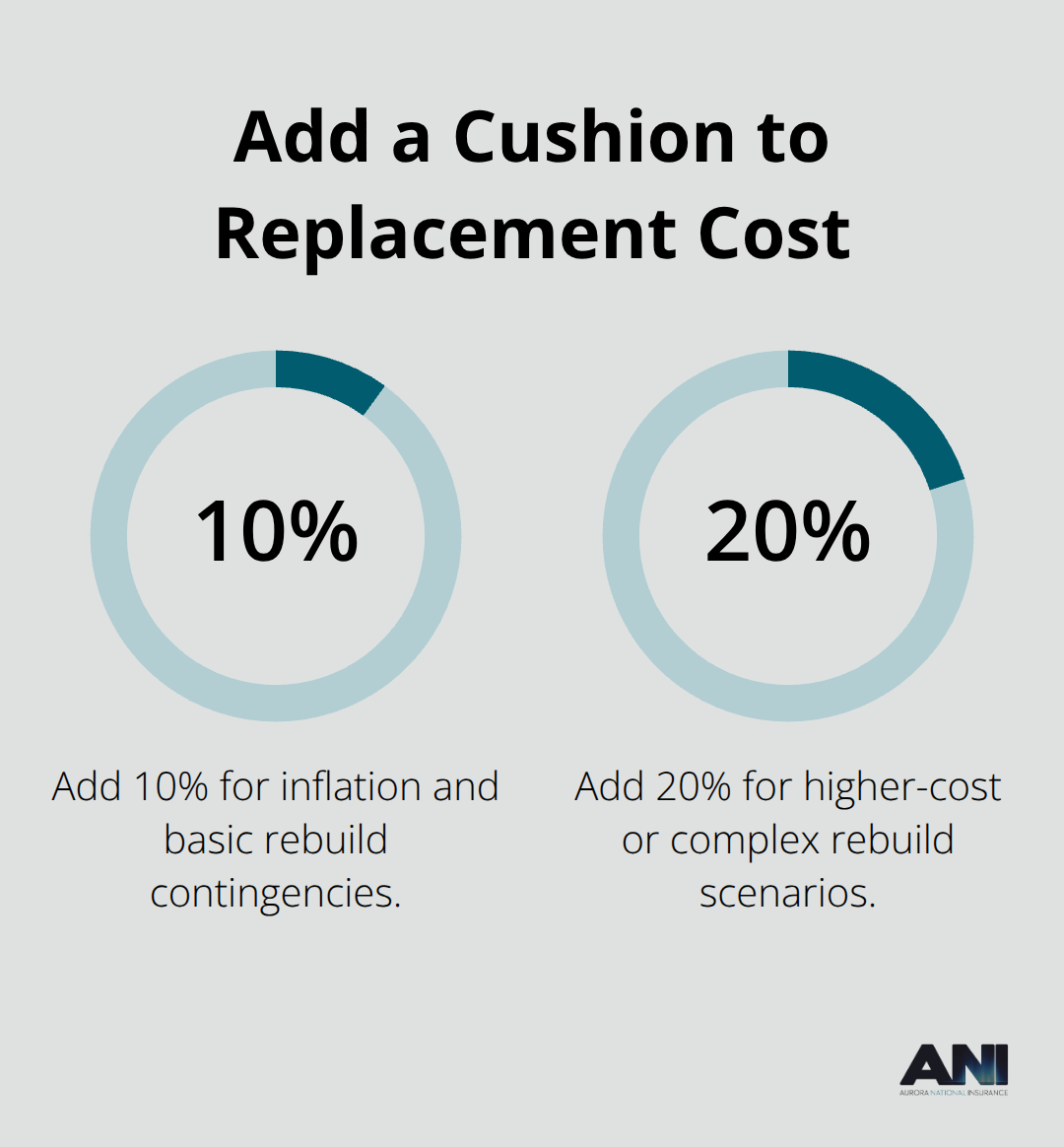
Once you know your replacement cost, add 10 to 20 percent for inflation and unforeseen complications during reconstruction. This number becomes your dwelling coverage limit, and underestimating it leaves you personally liable for the gap if disaster strikes.
Assess Your Liability Exposure Honestly
Your liability risk depends on foot traffic patterns and property characteristics. If your property attracts delivery drivers, service contractors, and frequent tenant guests, your liability risk runs higher than a single-family rental in a quiet neighborhood. Oregon law allows tenants to carry liability insurance under ORS 90.222, but your own liability limits should exceed what tenant policies cover because you face exposure they don’t.
Start with at least $300,000 in liability coverage for most Oregon rental properties, with $500,000 or higher for multi-unit buildings or properties in high-traffic areas. This approach protects you against claims that tenant policies won’t cover.
Determine Loss of Rent Coverage Needs
Loss of rent coverage should equal your monthly rent multiplied by the number of months your property would realistically remain uninhabitable after a major loss. If you charge $1,500 monthly rent and estimate three months for repairs after a fire, you need $4,500 in loss of rent coverage. This calculation prevents underinsurance that would leave you short when you need the protection most.
Gather Quotes from Multiple Carriers
Contact at least three insurers licensed in Oregon and provide identical property details to each one, including the dwelling replacement cost, liability limits, deductible amount, and any additional coverages you’re considering. The National Flood Insurance Program handles flood policies separately, so don’t expect your landlord insurer to quote those together. Earthquake coverage also requires separate quotes in most cases, though some Oregon carriers bundle it as an endorsement.
Compare the total annual premium for each quote, but also examine what each policy actually covers because the lowest price often excludes important protections. A $600 annual policy might lack loss of rent coverage entirely, while a $750 policy includes it, making the cheaper option false economy when you can’t collect rent after a disaster.
Review Policy Terms and Exclusions Carefully
Raise your deductible from $250 to $500 and you might save $100 annually, but you’ll pay an extra $250 if you file a claim. This trade-off makes sense for landlords with strong cash reserves who can absorb the higher deductible, but it’s dangerous for property owners operating on thin margins.
Read the policy language word-for-word for exclusions that matter to your specific property. If your Oregon rental sits in a flood-prone area, standard policies exclude flood damage entirely, so you must purchase National Flood Insurance Program coverage separately to protect yourself. Earthquake exclusions apply to most standard policies too, and many Oregon landlords skip this coverage despite living in earthquake country-a decision that exposes them completely if the Cascadia subduction zone ruptures.
Mold, pest infestations, and maintenance-related damage never appear in landlord policies, so you must prevent these issues through active property maintenance rather than relying on insurance. Check whether the policy covers water damage from burst pipes and frozen plumbing, as coverage varies among carriers and Oregon’s cold winters make this protection genuinely valuable. Finally, verify that the insurer holds strong financial ratings through A.M. Best or similar rating agencies, ensuring they can actually pay claims when disaster strikes rather than disappearing during a crisis.
Final Thoughts
Oregon landlord insurance protects your rental property against the specific risks you face as a property owner in this state. The dwelling coverage shields your structure against fire, smoke, vandalism, and storms, while liability protection covers injuries or property damage claims that tenants or guests bring against you. Loss of rent compensation replaces income when disasters force tenants out temporarily, and these core protections address the real financial exposure that standard homeowners policies ignore completely.
Your actual premium depends on property location, age, and the coverage limits you select, with the average annual cost around $839 in Oregon sitting below the national average. Oregon’s 79 federally declared disasters since 1953 demonstrate that natural disasters pose genuine threats to rental properties across the state, and wildfire risk in rural areas combined with storm exposure in urban centers means your property faces real exposure. Standard policies exclude flood damage and earthquakes entirely, so you must purchase separate coverage if your property sits in a flood-prone area or earthquake zone (mold and pest damage fall under maintenance rather than insurance, requiring active prevention on your part).
Oregon’s rental laws create additional complexity that shapes your coverage needs, with tenants required to carry liability insurance under state law while your own liability limits should exceed what tenant policies cover. The state’s habitability requirements and tenant-friendly regulations mean liability claims can arise from maintenance failures, making strong Oregon landlord insurance coverage essential for protecting your financial interests. Get an instant online quote from our licensed agents to compare multiple top-rated carriers and find tailored protection at competitive prices.
The information provided in this blog is for general informational purposes only and does not constitute legal, financial, or insurance advice. Coverage options, terms, and availability may vary. Please consult with a licensed professional for advice specific to your situation.
Artificial intelligence may have been used to generate text and images in some blog articles.