
Fleet Auto Insurance Alaska: Protecting Your Entire Vehicle Fleet
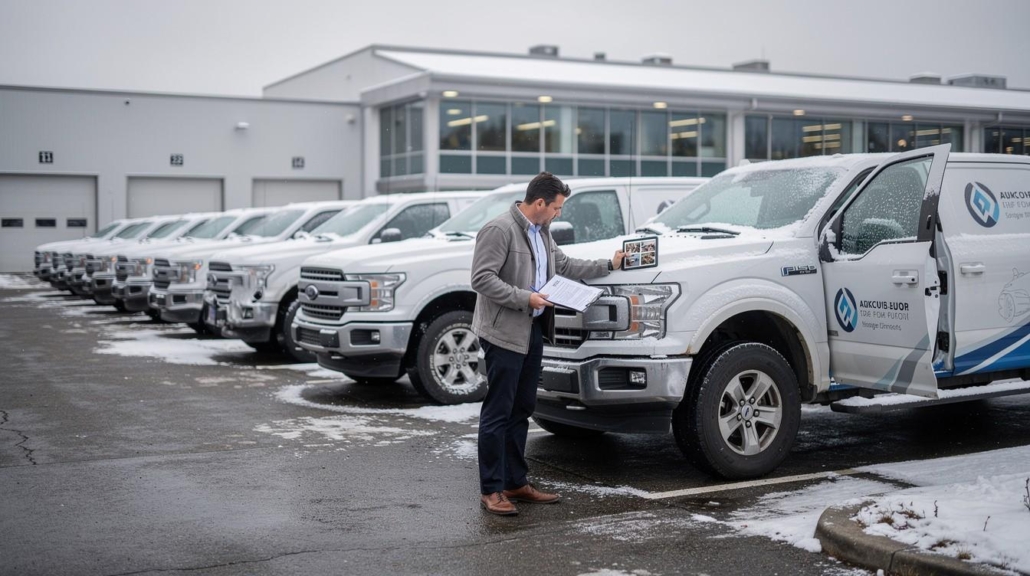
Running a business with multiple vehicles in Alaska comes with real challenges. Weather, terrain, and distance create unique risks that standard car insurance doesn’t fully address.
Fleet auto insurance Alaska is built specifically for companies like yours. At Aurora National Insurance, we help business owners protect their entire operation with coverage that actually fits how you work.
What Fleet Auto Insurance Actually Covers
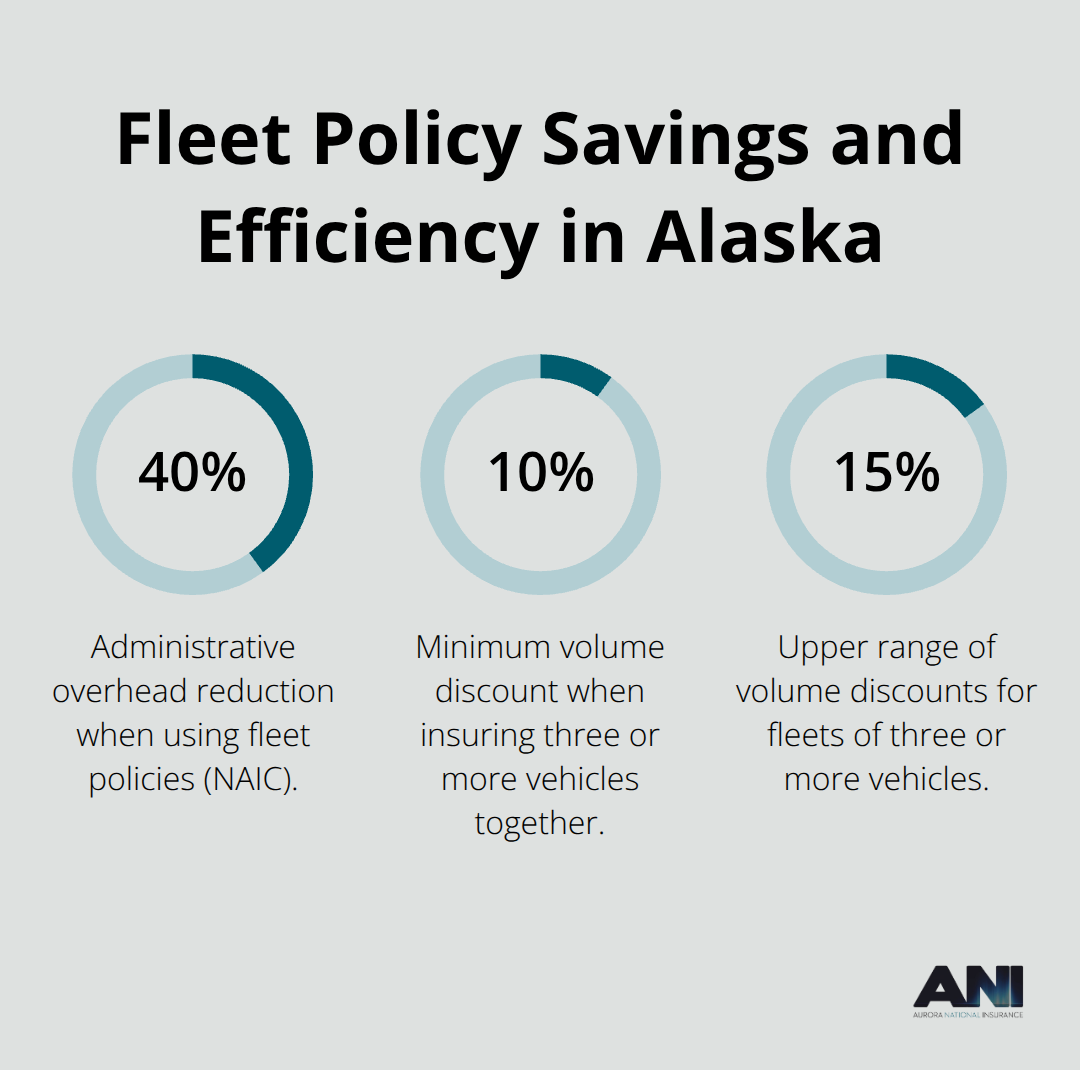
Fleet auto insurance isn’t a single product-it’s a customized insurance solution that combines multiple coverage types into one manageable policy for businesses operating multiple vehicles. At its core, fleet insurance includes liability coverage, which handles damages or injuries your vehicles cause to other people and their property. Most Alaska fleets also add collision coverage to protect against accidents involving other vehicles or objects, and comprehensive coverage to handle theft, weather damage, and vandalism. Uninsured and underinsured motorist coverage becomes especially important in Alaska, where remote areas mean longer response times and fewer resources for accident victims. When you consolidate five, ten, or fifty vehicles under one fleet policy rather than purchasing individual policies, you gain administrative simplicity and typically better pricing because insurers offer volume discounts. The National Association of Insurance Commissioners reports that fleet policies reduce administrative overhead by 40 percent compared to managing separate policies, and many carriers offer 10 to 15 percent discounts when you insure three or more vehicles together.
Why Alaska Creates Unique Fleet Insurance Needs
Alaska’s geography and weather patterns demand fleet insurance that goes beyond standard coverage. Your vehicles face extended driving distances between service areas, which increases exposure to accidents and breakdowns. Winter conditions create higher collision risks-the Alaska Department of Transportation reports that winter weather contributes to approximately one-third of all vehicle accidents statewide. Remote routes also mean your drivers may remain stranded longer before help arrives, making uninsured motorist coverage more valuable since you might encounter uninsured drivers in less-populated areas. Additionally, Alaska’s vast terrain means comprehensive coverage becomes more practical because theft and vandalism risks vary dramatically by region. Coastal areas experience salt corrosion that damages vehicles faster than the national average, making comprehensive protection worth the investment. A fleet policy written for Alaska conditions accounts for these specific exposures rather than applying generic coverage designed for drivers in the lower 48 states.
The Real Economics of Fleet Versus Individual Policies
The financial argument for fleet insurance strengthens as your business grows. A business running three to five vehicles might see 10 to 12 percent savings through bundling, but operations with ten or more vehicles typically achieve 15 to 25 percent reductions in total premium costs. Fleet policies eliminate the administrative burden of managing separate renewal dates, coverage adjustments, and claims across multiple insurers. You also gain predictability in budgeting since one renewal date and one policy statement replace dozens of separate documents. Claims management becomes faster because a single agent handles your entire fleet rather than coordinating with multiple carriers. Many fleet policies include accident forgiveness programs where the first accident doesn’t automatically trigger a rate increase, which protects your bottom line when occasional accidents happen despite good driver training programs.
Finding the Right Coverage for Your Alaska Fleet
Selecting appropriate coverage requires understanding how your specific operations interact with Alaska’s conditions. A construction company operating in Anchorage faces different risks than a delivery service covering remote villages, so your policy should reflect those differences. Liability limits matter significantly-Alaska’s higher accident costs mean standard limits may leave you exposed. Collision and comprehensive coverage decisions depend on your vehicle ages and replacement costs. Uninsured motorist limits deserve special attention in Alaska since you operate in areas where uninsured drivers are more common. An independent Anchorage-based agency can compare multiple carriers and help you match coverage to your actual operations rather than applying one-size-fits-all recommendations.
Essential Coverage for Alaska Fleet Operations
Liability Coverage Forms Your Foundation
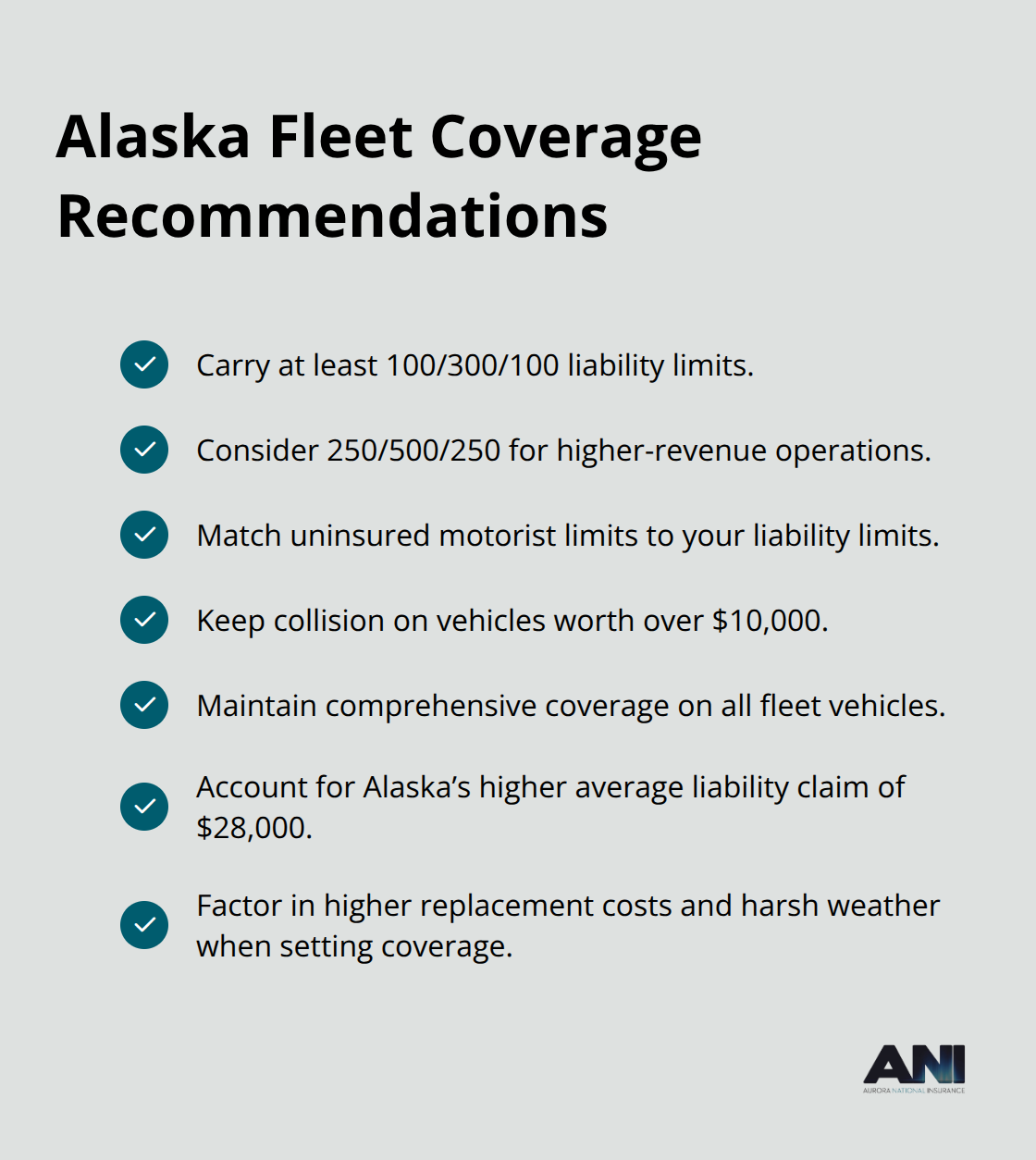
Liability coverage forms the foundation of every fleet policy, and Alaska’s accident costs demand higher limits than many business owners initially consider. The Insurance Information Institute reports that the average liability claim in Alaska exceeds $28,000, well above the national average, which means standard limits leave you exposed to significant financial risk. We recommend minimum liability limits of 100/300/100 for Alaska fleets, though operations with higher revenue should carry 250/500/250 or greater (these figures cover bodily injury per person, total bodily injury per accident, and property damage). Alaska’s sparse population in many regions means accidents often involve substantial travel time and medical costs, pushing claims higher than similar incidents in populated areas.
Collision and Comprehensive Protection for Your Vehicles
Collision and comprehensive coverage protects your actual vehicle investment, though many business owners make the mistake of dropping these on older vehicles. Alaska’s replacement costs run 15 to 20 percent higher than the national average due to shipping and limited local inventory, making comprehensive coverage particularly valuable since theft and weather damage happen frequently across the state. We recommend collision coverage on any vehicle worth more than $10,000 and comprehensive on everything you operate, regardless of age, because the cost to replace a vehicle in Alaska justifies the premium expense. The real issue is that older vehicles still carry substantial replacement value in Alaska’s market, so dropping coverage creates unnecessary risk.
Uninsured and Underinsured Motorist Protection
Uninsured and underinsured motorist coverage separates Alaska fleet policies from standard coverage elsewhere, and this protection deserves your close attention. Alaska’s uninsured motorist rate sits around 12.5 percent, higher than most states, which means your drivers encounter uninsured drivers regularly on Alaska roads. This coverage pays for injuries your drivers suffer when hit by uninsured or underinsured drivers, protecting your operation when someone else’s negligence creates liability they cannot pay. Set uninsured motorist limits equal to your liability limits so your protection remains consistent across all accident scenarios. Many fleet operators overlook this coverage or carry minimal limits, then face devastating costs when a serious accident involves an uninsured driver.
Selecting the right carrier to structure your fleet policy requires understanding which insurers actually specialize in Alaska operations rather than applying generic coverage designed for different conditions.
Which Carriers Actually Understand Alaska Fleet Operations
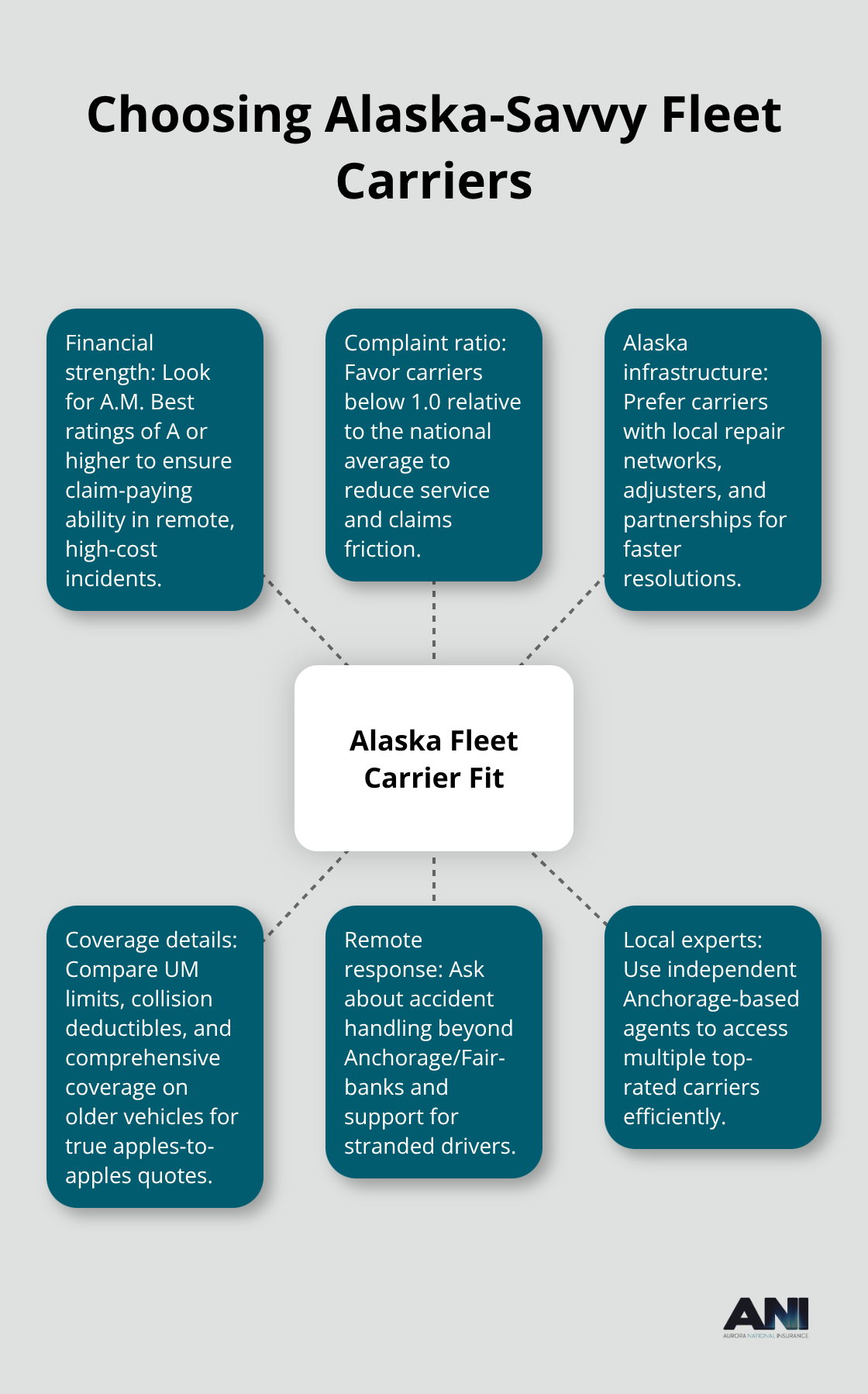
Finding the right insurance carrier for your Alaska fleet means moving beyond national brand recognition to identify insurers who genuinely understand regional conditions. Most major national carriers apply generic fleet policies across all states, missing the specific exposures that define Alaska operations. Check the A.M. Best financial strength ratings of any carrier you consider, since you need a company that can pay claims when serious accidents happen in remote areas where costs escalate quickly. Look for ratings of A or higher, which indicates the carrier has sufficient reserves to handle large claims without financial strain.
Verify Carrier Stability and Service Quality
Beyond financial ratings, contact the Alaska Division of Insurance to verify that your potential carrier maintains an acceptable complaint ratio relative to their market share. Carriers with complaint ratios above 1.0 relative to the national average signal potential issues with claims handling or customer service that will frustrate you when you need support most. Request references from other Alaska fleet operators in your industry and ask specifically about how the carrier handles claims in remote locations and whether they respond quickly to accidents involving stranded drivers.
These conversations reveal which carriers take Alaska seriously versus those treating the state as a secondary market.
Compare Quotes Based on Coverage Details
The comparison process itself reveals which carriers invest in Alaska infrastructure. Request quotes from at least three carriers, but don’t compare based on price alone because the cheapest option often means inadequate coverage or poor service when claims arise. Examine what each quote includes for uninsured motorist limits, collision deductibles, and comprehensive coverage on older vehicles, since these details vary dramatically between carriers. Ask each carrier how they handle accident response in areas beyond Anchorage and Fairbanks, and whether they partner with local repair shops or require vehicles to travel significant distances for repairs.
Work with Local Agents Who Know Alaska
An independent Anchorage-based agency can access multiple top-rated carriers simultaneously and compare their Alaska-specific policies rather than forcing you to contact each insurer individually. Local agents who work with Alaska fleets daily know which carriers respond fastest to claims in rural areas and which ones drag out the process, costing you operational downtime and driver frustration. These agents understand which carriers actually invest in Alaska infrastructure (repair networks, claims adjusters, local partnerships) versus those applying one-size-fits-all approaches designed for the lower 48 states. They can match your specific operations to carriers that handle similar fleets effectively.
Final Thoughts
Fleet auto insurance Alaska protects your business when accidents happen on remote roads and across vast distances that define operations in this state. The coverage you select today determines whether a single accident derails your business or becomes a manageable claim your insurance handles completely. Standard policies designed for the lower 48 states leave gaps that Alaska’s unique conditions expose quickly, so selecting coverage built specifically for your state’s challenges matters far more than finding the cheapest option available.
Contact at least three carriers and compare their uninsured motorist limits, collision deductibles, and claims response procedures in rural areas where your fleet operates. An independent Anchorage-based agency can access multiple top-rated carriers simultaneously and compare their Alaska-specific policies without requiring you to contact each insurer individually. Local agents know which carriers respond fastest to claims in remote locations and which ones create operational delays that cost you money and driver frustration.
Request quotes from Aurora National Insurance, which represents multiple top-rated carriers and leverages local Alaskan expertise to deliver tailored comparisons and responsive service. Their licensed agents understand how your specific operations interact with Alaska’s conditions and can match you with carriers that handle similar fleets effectively.
The information provided in this blog is for general informational purposes only and does not constitute legal, financial, or insurance advice. Coverage options, terms, and availability may vary. Please consult with a licensed professional for advice specific to your situation.
Artificial intelligence may have been used to generate text and images in some blog articles.


