
Washington Fleet Auto Policy: Efficient Coverage for Your Vehicle Network
Running a business with multiple vehicles means managing separate policies, different coverage limits, and scattered paperwork. A Washington fleet auto policy consolidates everything into one manageable plan that protects your entire operation.
At Aurora National Insurance, we’ve helped countless Washington business owners simplify their insurance while cutting costs. This guide walks you through what fleet coverage includes, how to pick the right policy, and why local expertise matters for your vehicles on Washington roads.
What Your Washington Fleet Auto Policy Actually Covers
Understanding Your Coverage Options
Fleet auto insurance in Washington protects your business vehicles against liability, collision, and comprehensive damage, but the specific coverage depends on what you select. Washington requires commercial vehicles to carry minimum liability coverage of $25,000 per person and $50,000 per accident for bodily injury, plus $25,000 for property damage. Most businesses carrying valuable equipment or inventory need coverage well above these minimums.
Your fleet policy can include physical damage coverage for your vehicles, uninsured motorist protection, medical payments coverage, and hired and non-owned auto coverage if your employees occasionally use their personal vehicles for business. The real question isn’t what a fleet policy can cover, but what gaps exist in your current setup.
Why Separate Policies Create Problems
Many Washington businesses operating with multiple individual policies face overlapping coverage on some vehicles while leaving others exposed. Fleet policies eliminate this waste by consolidating everything into one plan with consistent limits across your entire operation.
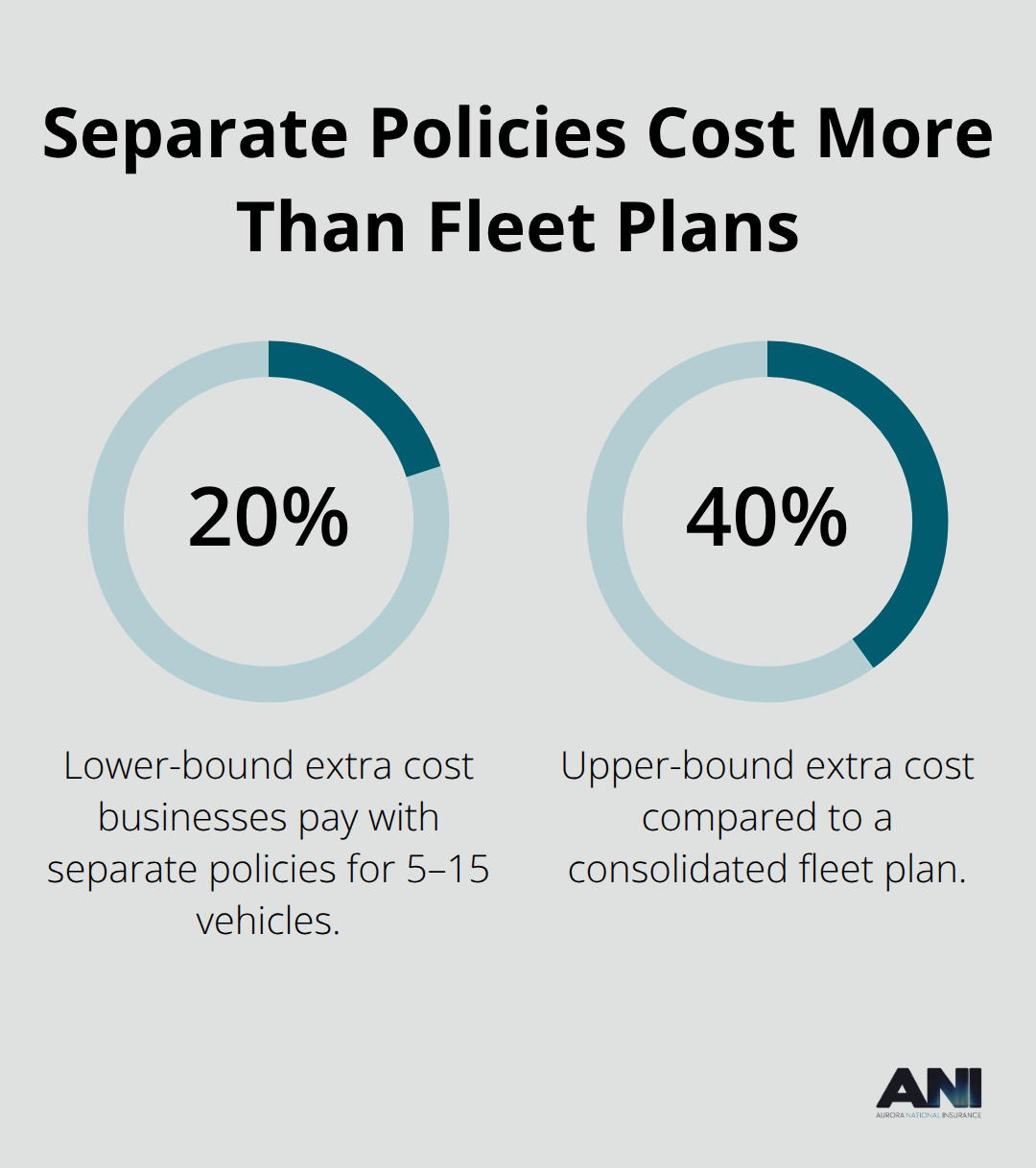
A company running five to fifteen vehicles typically pays 20 to 40 percent more with separate policies than with a consolidated fleet plan, according to industry data on multi-vehicle accounts. You also manage multiple renewal dates, different deductibles, and separate claims processes. One driver gets into an accident and you contact one agent about one vehicle.
With a fleet policy, one call handles all vehicle-related claims.
Vehicle Type and Weather Considerations
Medical payments coverage becomes especially important if your drivers transport clients or customers. Washington’s weather also matters-heavy rain and winter conditions cause significant collision and comprehensive claims. Drivers in Seattle and Tacoma file more weather-related claims than national averages, so your deductible choices directly impact your actual costs when incidents happen.
Washington’s commercial vehicle regulations add another layer of complexity. If any vehicle in your operation is used primarily for business, it must be insured under a commercial policy, not personal auto insurance. Mixing personal and commercial coverage across your fleet creates gaps and potential claim denials.
Customizing Coverage for Different Vehicles
Your vehicle types probably differ. A plumbing company might have service vans, pickup trucks, and a delivery vehicle-each with different risk profiles and replacement costs. A fleet policy lets you customize coverage by vehicle type rather than forcing everything into one generic category. This flexibility reduces your premiums on lower-risk vehicles while maintaining proper protection on your high-value assets.
The next step involves assessing your specific fleet size and vehicle types to determine which coverage options actually fit your operation.
Key Features of an Efficient Fleet Auto Policy
Multi-Vehicle Coverage Simplifies Your Operations
Consolidating five to fifteen vehicles into one fleet policy cuts your administrative burden dramatically compared to juggling separate renewals, deductibles, and claims processes. When a driver gets into an accident, you make one phone call instead of hunting through paperwork to figure out which agent handles which vehicle. Your finance team also stops reconciling separate invoices and processes one monthly or annual premium instead.
The financial advantage of group rates makes the administrative savings look minor. Businesses with three or more vehicles typically save on premiums compared to individual policies. A plumbing company with eight service vans and two trucks might pay significantly less with a fleet plan than with separate policies-savings that compound year after year.
Washington’s Competitive Market Rewards Fleet Accounts
Washington’s competitive insurance market means carriers actively discount fleet accounts because the risk is easier to manage and claims processing runs more efficiently. You’re not locked into identical coverage across every vehicle. A fleet policy lets you set a $500 deductible on a newer cargo van while using a $1,000 deductible on an older pickup truck, then set medical payments coverage at $5,000 for vehicles transporting clients but $2,000 for vehicles used only for equipment delivery.
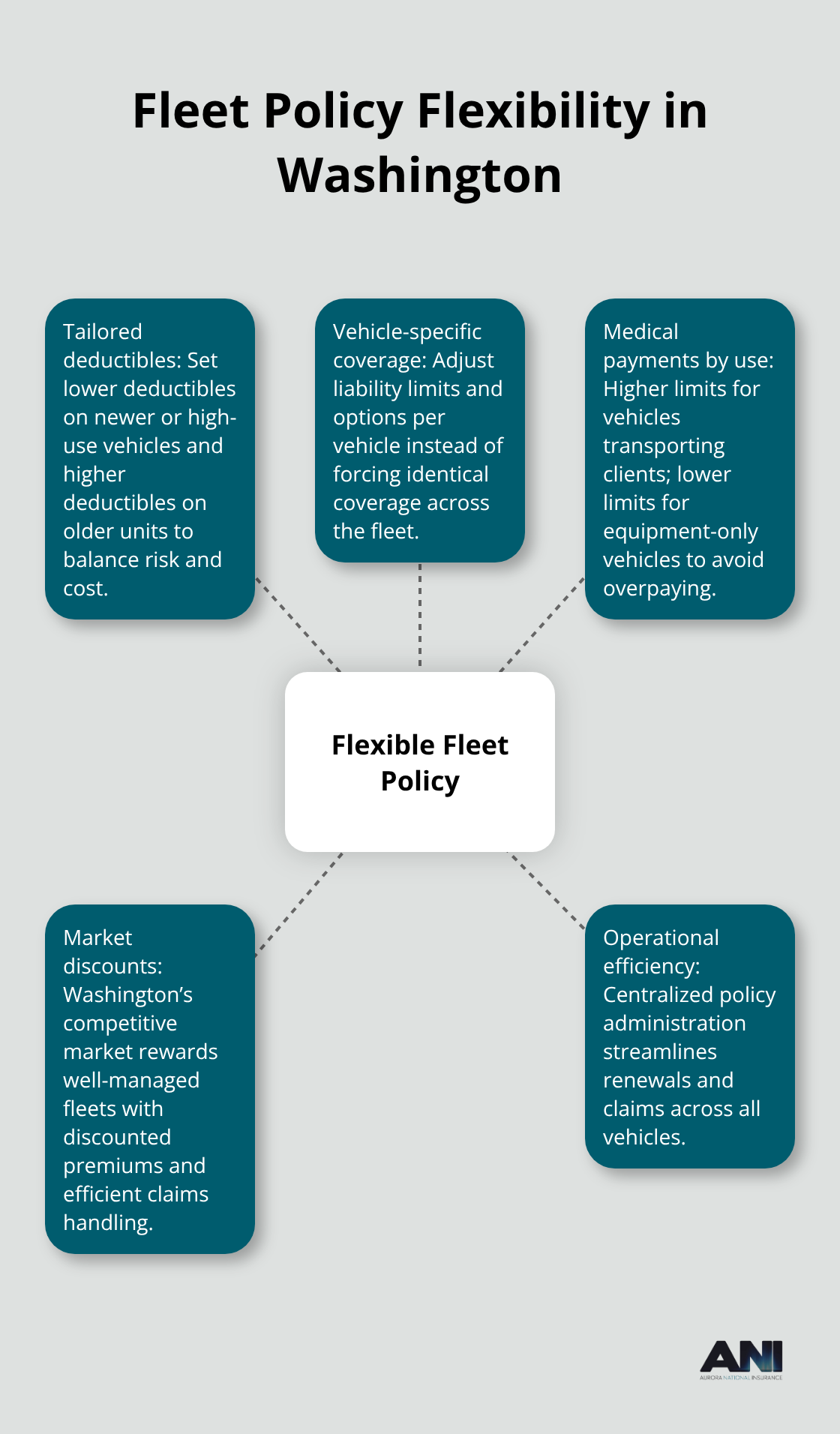
This flexibility means you pay only for the protection each vehicle actually needs rather than forcing everything into one rigid structure. A construction company doesn’t need the same liability limits on a one-ton truck as it does on a dump truck carrying heavy loads, and a fleet policy recognizes that distinction.
Customization Accounts for Vehicle Risk and Weather
Washington’s weather patterns make customization practical-vehicles that spend more time on wet roads or in winter conditions warrant lower collision deductibles, while vehicles primarily used for short local trips can carry higher deductibles without meaningfully increasing your risk exposure. Your deductible choices directly impact your actual costs when incidents happen.
The next step involves assessing your specific fleet size and vehicle types to determine which coverage options actually fit your operation and which customization strategy protects your business most effectively.
Picking the Right Fleet Policy for Your Washington Business
Count Your Vehicles and Document Their Use
Start with an inventory of your vehicles and what each one does. A three-vehicle operation needs different coverage than a fifteen-vehicle fleet, and the mix matters more than the total. A contractor running two dump trucks and one pickup truck faces different risks than a delivery company with three identical vans. Businesses often underestimate how much their vehicle types vary, which leads to either overpaying for unnecessary coverage or leaving gaps that cause problems later.
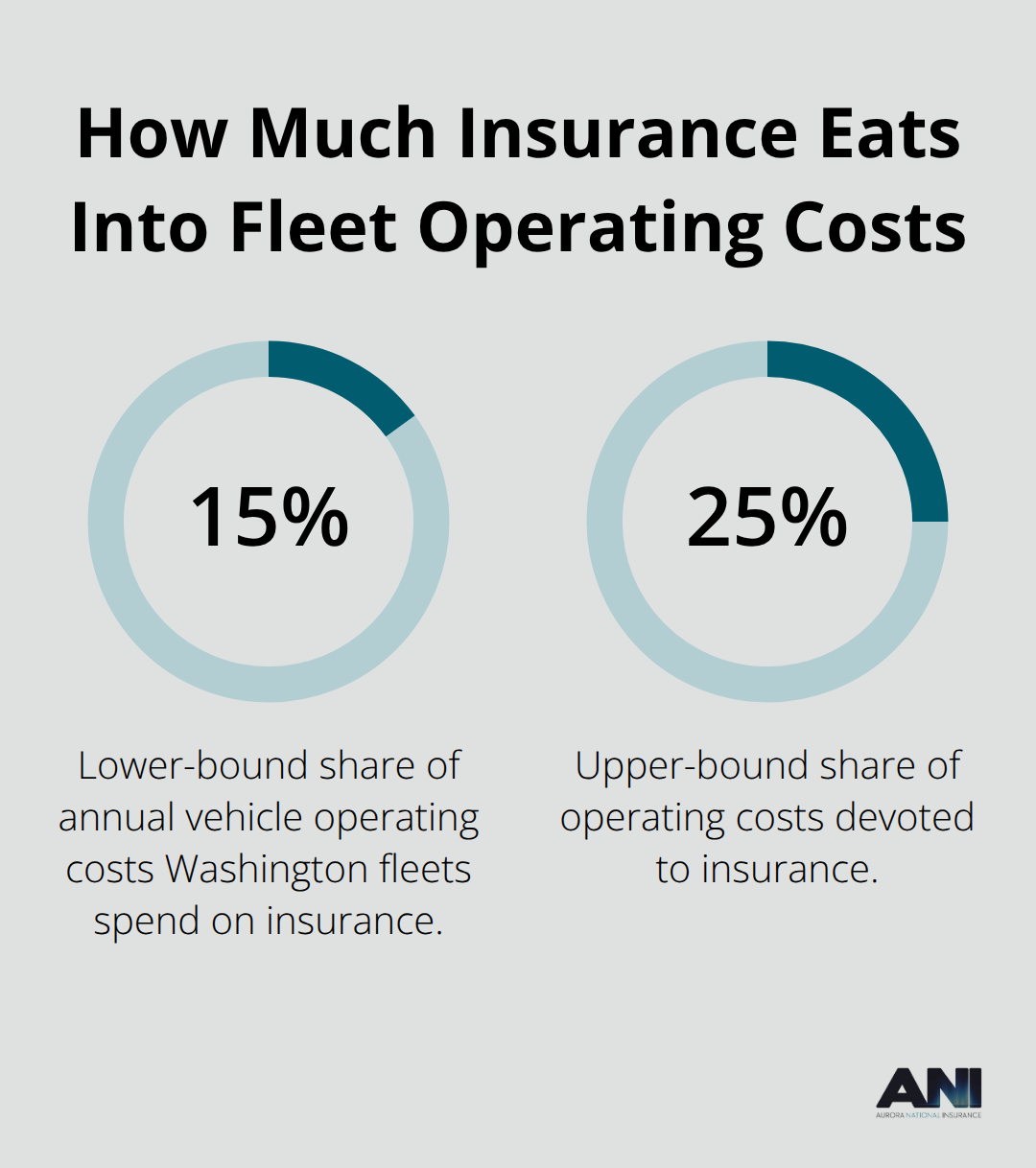
Document each vehicle’s primary use, annual mileage, and replacement cost. This information directly determines your premium and shapes which coverage options actually make sense. Washington businesses with fleets typically spend between 15 and 25 percent of their annual vehicle operating costs on insurance, so getting the structure right saves real money.
Set Coverage Limits Based on Actual Risk, Not Minimums
Stop thinking about coverage limits as one-size-fits-all numbers. Washington’s minimum liability requirements exist, but they’re floors, not targets. A contractor carrying expensive equipment needs higher liability limits than those minimums because a single accident could expose the business to lawsuit costs exceeding state minimums.
Your deductible choices should reflect actual vehicle values and replacement timelines, not generic industry standards. A company that can absorb a $1,000 deductible without disrupting cash flow should take that option on lower-risk vehicles, while keeping a $500 deductible on vehicles that generate revenue. Weather patterns in Washington’s Puget Sound region and eastern regions create different claim frequencies, so vehicles spending more time in winter conditions warrant lower collision deductibles.
Customize Coverage by Vehicle Type
When comparing policies, ignore carriers that refuse to customize by vehicle type. The best fleet policies let you set different deductibles, liability limits, and coverage options for each vehicle based on its actual risk profile and business importance. A plumbing company with eight service vans and two trucks shouldn’t pay identical premiums on both vehicle types-the vans carry different liability exposure and replacement costs than the trucks.
This flexibility means you pay only for the protection each vehicle actually needs rather than forcing everything into one rigid structure.
Work with Agents Who Know Washington Roads
Find an agent who works with Washington roads daily, not someone following a national playbook. Local agents understand how I-5 traffic patterns affect claim frequencies, why winter weather in the Cascades creates specific risks, and which carriers actually pay claims quickly in Washington. They also know which coverage combinations Washington regulators expect for different business types, saving you from compliance problems later.
Final Thoughts
A Washington fleet auto policy consolidates your vehicle coverage into one manageable plan that cuts administrative work and reduces costs compared to juggling separate policies. You stop managing multiple renewal dates, different deductibles, and scattered claims processes. Instead, one policy handles your entire operation with customizable coverage that matches each vehicle’s actual risk and business purpose.
The financial advantage compounds over time-businesses with multiple vehicles typically save 20 to 40 percent on premiums with a fleet plan versus separate policies, and those savings repeat every renewal period. Washington’s weather patterns and road conditions create specific risks that generic national policies often miss. Your deductible choices, liability limits, and coverage customization should reflect what your business actually faces on Washington roads, not what works for companies in other states.
Local expertise matters more than most business owners realize. An agent who works with Washington roads daily understands claim frequencies in different regions, knows which carriers pay quickly, and recognizes which coverage combinations regulators expect for your business type. Get an instant online quote to see how much a properly structured Washington fleet auto policy actually costs compared to your current setup.
The information provided in this blog is for general informational purposes only and does not constitute legal, financial, or insurance advice. Coverage options, terms, and availability may vary. Please consult with a licensed professional for advice specific to your situation.
Artificial intelligence may have been used to generate text and images in some blog articles.


