
Unlock Savings With Oregon commercial auto coverage
Running a business in Oregon means managing costs carefully. Commercial auto coverage is one expense where most business owners overpay without realizing it.
At Aurora National Insurance, we’ve helped hundreds of Oregon business owners cut their premiums by hundreds of dollars annually. This guide shows you exactly how to do the same.
What Coverage Do You Actually Need for Your Oregon Business Vehicles
Meeting Oregon’s Legal Minimums
Oregon requires commercial vehicle owners to carry minimum liability coverage of 25/50/20, meaning $25,000 per person and $50,000 per accident for bodily injury, plus $20,000 for property damage. This is the legal floor, not a recommendation. Most Oregon business owners who operate with only these minimums take unnecessary risk. A single accident involving a delivery vehicle or service truck can exceed these limits in seconds, leaving your business personally liable for damages.
We recommend that Oregon business owners carry at least 100/300/100 coverage, which costs only slightly more but protects your assets substantially better. The difference between minimum coverage and adequate coverage might run $20 to $40 monthly-a small price against a six-figure lawsuit.
Collision and Comprehensive Coverage for Your Fleet
Beyond liability, you need to evaluate collision and comprehensive coverage based on your fleet’s age and value. Collision covers damage from accidents with other vehicles or objects, while comprehensive covers theft, weather, and vandalism. If your vehicles are financed or leased, your lender will require both.
For owned vehicles older than eight years, the math often works against carrying collision coverage since repair costs approach replacement value. However, vehicles under five years old should carry collision with a $500 deductible or lower, particularly if they’re essential to daily operations. Oregon’s weather patterns-rain, ice, and occasional snow in certain regions-make comprehensive coverage worth serious consideration, especially for vehicles parked overnight in unsecured locations.
Additional Protections Your Business Needs
Uninsured motorist coverage is critical since Oregon has a significant number of uninsured drivers. Medical payments coverage and hired and non-owned auto coverage round out a complete commercial auto policy, protecting your business when employees use personal vehicles for work or when you rent vehicles occasionally.
How Oregon Insurers Calculate Your Premium
Premium calculations in Oregon depend on several specific factors: your vehicles’ make and model, driver age and driving records, annual mileage, how vehicles are used, where they’re garaged, and your claims history. A commercial pickup truck used for heavy hauling will cost substantially more to insure than the same truck used for occasional client visits.
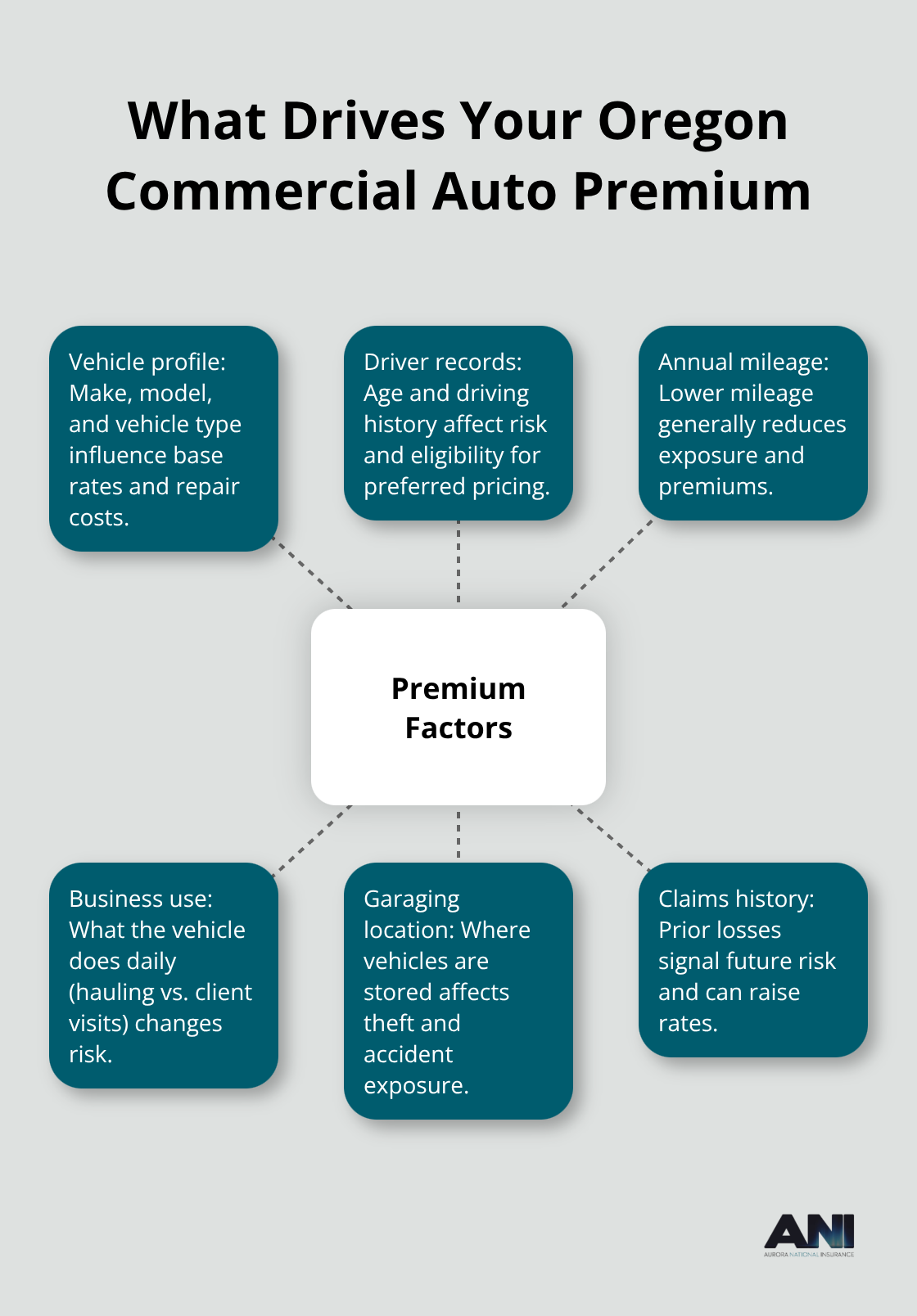
Mileage matters significantly-a vehicle driven 5,000 miles annually costs less than one driven 25,000 miles. Oregon insurers also consider whether your business operates within the Portland metro area, rural regions, or across the entire state, since accident frequency varies by location. Most carriers offer discounts for safety features like backup cameras and collision avoidance systems (mentioning these during quotes can lower your premium by 5 to 10 percent).
Understanding these premium factors helps you identify where you can reduce costs without sacrificing protection. The next section shows you specific strategies that Oregon business owners use to cut their insurance expenses significantly.
How to Cut Your Oregon Commercial Auto Costs
The gap between what Oregon business owners pay for commercial auto coverage and what they should pay often reaches 30 to 40 percent. Most owners simply accept their renewal rate without investigating alternatives. Businesses that implement just one of the following strategies typically reduce their annual premiums by $500 to $1,500, and combining multiple approaches often yields even greater savings.
Combine Your Business Policies for Immediate Discounts
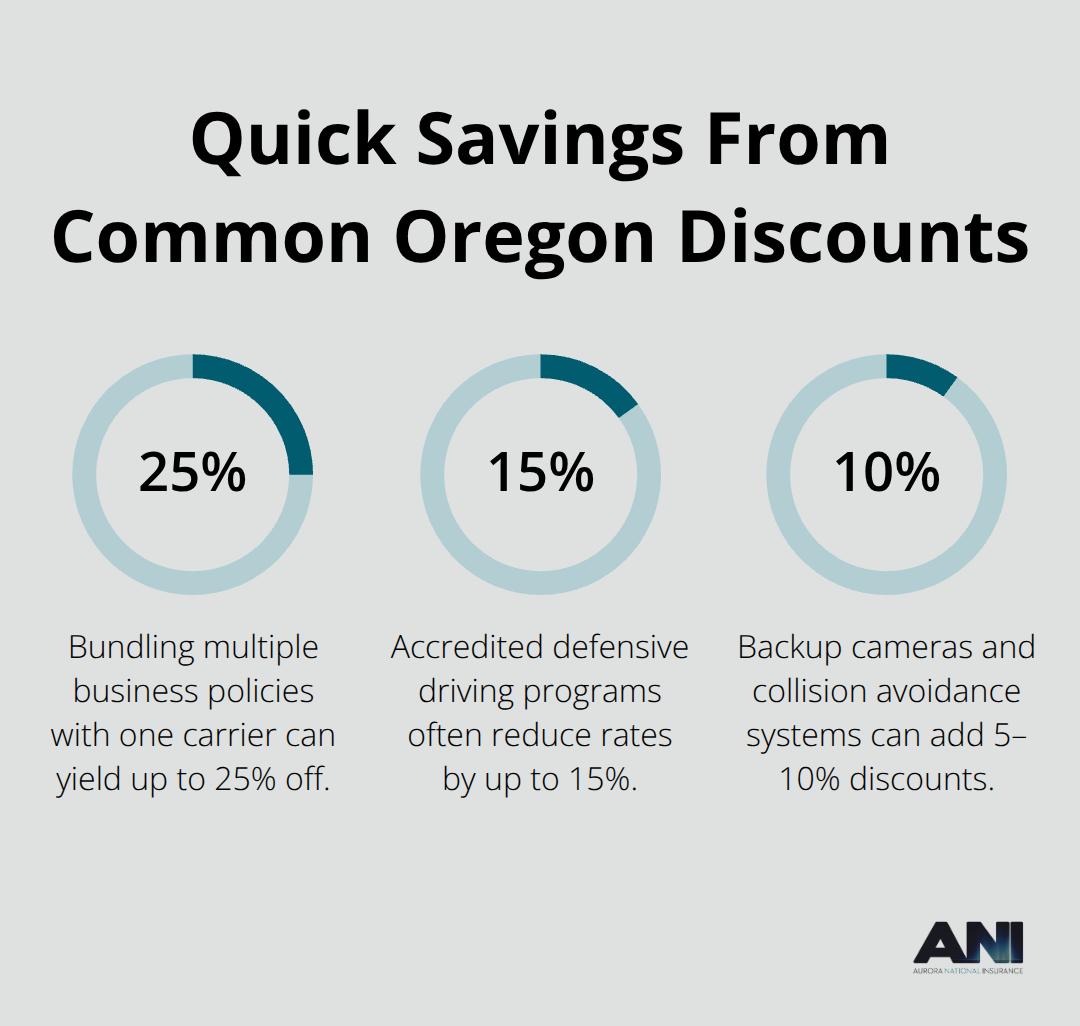
Most Oregon business owners carry commercial auto insurance separately from their general liability, property, or workers compensation policies. This fragmentation costs money. When you consolidate your coverage with a single carrier, insurers offer bundling discounts that typically range from 10 to 25 percent across your entire portfolio. A business paying $2,000 annually for commercial auto and $3,000 for general liability sees an immediate $500 to $1,250 reduction just by moving both policies to one insurer.
The savings compound when you add property coverage or workers compensation to the mix.
Managing one renewal date and one policy contact simplifies your administrative work and reduces the chance you’ll miss coverage gaps or policy updates. Your current carrier might offer bundling discounts you’ve never requested, so contact them directly and ask what package discounts apply to your specific situation. If they can’t match competitive rates, requesting quotes from carriers that specialize in bundled Oregon commercial coverage often reveals substantial savings you didn’t know existed.
Driver Training and Safety Investments Lower Your Rates
Oregon insurers reduce premiums for businesses that implement formal driver training programs and maintain strong safety records. Commercial drivers who completed defensive driving courses experienced fewer accidents over time. Insurers recognize this data and offer rate discounts of 5 to 15 percent for businesses whose drivers complete accredited programs like National Safety Council defensive driving training.
Installing telematics systems that monitor harsh braking, speeding, and rapid acceleration creates measurable safety documentation that carriers reward. Businesses that install backup cameras and collision avoidance systems on their fleets frequently qualify for additional 5 to 10 percent discounts at renewal. The investment in a telematics system typically costs $30 to $50 per vehicle monthly but often returns that cost in premium reductions within the first year while simultaneously identifying risky driving behavior before accidents happen.
Shop Multiple Quotes to Reveal Price Differences
Oregon has competitive commercial auto markets with significant rate variation between carriers. A business receiving a quote of $1,800 annually might find identical coverage for $1,200 from a different insurer. This 33 percent variance isn’t unusual. Collecting quotes from at least three carriers takes roughly two hours and typically reveals rate differences of $400 to $800 annually for identical coverage on the same vehicles.
When you request quotes, provide consistent information about your fleet, annual mileage, driver records, and business use so carriers calculate apples-to-apples comparisons. Online quote tools from independent agencies licensed in Oregon streamline this process significantly compared to calling carriers individually. After securing quotes, negotiate with your current carrier using competing rates-often they’ll produce discounts they wouldn’t offer during standard renewal. Treat premium shopping as an annual requirement rather than a one-time task.
The strategies above address what you pay today, but many Oregon business owners create unnecessary expenses through preventable mistakes that spike their premiums at renewal time.
Premium Mistakes That Cost Oregon Business Owners Thousands
The difference between what you pay and what you should pay often comes down to how accurately you describe your business operations to your insurance carrier. Oregon insurers base premiums on specific operational details, and when those details change or were inaccurate from the start, your premiums climb significantly at renewal. Your carrier calculates your rate based on information you provided, and inaccuracies create problems that surface during claims or at renewal time.
Underreporting Mileage Creates Major Problems
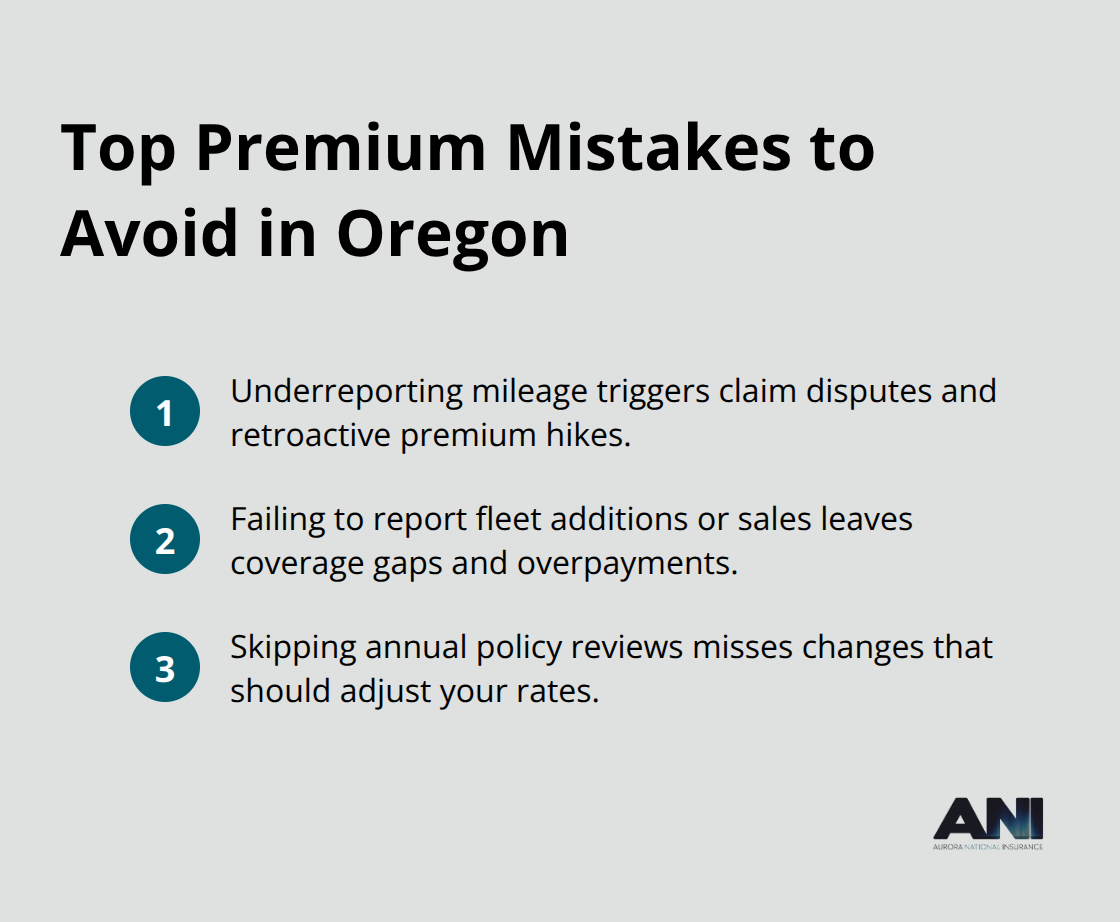
The most expensive mistake is underreporting annual mileage. If you told your carrier your delivery vehicle drives 8,000 miles annually but it actually drives 18,000 miles, you’ve been underinsured the entire year. When a claim occurs, carriers investigate mileage through GPS records, maintenance logs, and fuel receipts. Discovering the discrepancy can result in claim denial or premium adjustments retroactive to your policy start date.
Oregon business owners who accurately track mileage and report significant increases immediately avoid this trap. Use your vehicle’s odometer readings quarterly and notify your carrier when usage patterns shift rather than waiting for renewal. The same principle applies to business use descriptions. A vehicle you classified as used for occasional client meetings but that actually transports equipment daily represents a material change in risk. Carriers charge substantially more for vehicles with heavy commercial use, and misclassifying usage creates liability exposure when claims arise.
Failing to Report Fleet Changes
Failing to report fleet changes ranks equally high among costly mistakes. When you purchase additional vehicles, sell vehicles, or replace aging trucks with new ones, those changes affect your premium calculation. Business owners frequently forget to notify their insurance agent about fleet changes until renewal time, which means they’ve been paying for coverage on vehicles they no longer own or driving uninsured new vehicles.
Oregon requires commercial vehicle owners to add new vehicles to their policy within days of acquisition, not weeks. Some carriers offer grace periods of 14 to 30 days for new vehicle additions, but driving without notification violates your policy terms. Contact your agent immediately when your fleet composition changes to maintain proper coverage and avoid premium surprises at renewal.
Skipping Annual Policy Reviews
Neglecting annual policy reviews means you’re paying for coverage that no longer matches your business needs. A business that added a second location, hired additional drivers, or reduced vehicle usage should see premium adjustments, but these only happen if you actively review your policy and communicate changes. Oregon business owners who schedule annual policy reviews with their agent typically identify 2 to 4 changes per year that either increase or decrease their premiums.
Treat annual reviews as a cost management opportunity rather than a compliance checkbox. Changes in your operation (new service areas, additional employees, equipment modifications) directly impact your insurance needs and rates. Your agent can identify adjustments that reflect your current situation and potentially lower your premiums based on operational improvements you’ve made.
Final Thoughts
Oregon commercial auto coverage doesn’t have to drain your business budget. The strategies outlined above work because they address the real factors that determine what you pay: accurate reporting, smart bundling, competitive shopping, and proactive safety investments. Business owners who implement even two of these approaches typically recover hundreds of dollars annually while strengthening their protection against genuine risks.
Gather your current policy documents and vehicle information, then request quotes from at least three carriers using consistent details about your fleet, mileage, and operations. This comparison takes a few hours but reveals whether you’re overpaying by hundreds of dollars. Contact your current carrier simultaneously and ask specifically about bundling discounts, safety program credits, and any rate reductions you haven’t claimed.
Schedule an annual policy review with your agent to catch changes in your business operations before they create premium surprises at renewal. Report fleet additions, mileage increases, and operational shifts immediately rather than waiting months. Aurora National Insurance has licensed agents in Oregon who specialize in helping business owners find competitive rates across multiple carriers and identify bundling opportunities you might miss on your own.
The information provided in this blog is for general informational purposes only and does not constitute legal, financial, or insurance advice. Coverage options, terms, and availability may vary. Please consult with a licensed professional for advice specific to your situation.
Artificial intelligence may have been used to generate text and images in some blog articles.


