

Oregon Home Insurance Tips: Score Savings and Better Coverage
Oregon homeowners pay an average of $1,200 annually for dwelling coverage, yet many miss critical gaps that leave them underprotected. At Aurora National Insurance, we’ve seen firsthand how the right Oregon home insurance tips can cut your premiums while strengthening your coverage.
This guide walks you through state requirements, proven discount strategies, and how to compare policies without overpaying. You’ll learn exactly what to look for-and what to avoid-when securing the protection your home deserves.
What Oregon Home Insurance Actually Covers
The Six Core Protections Your Policy Provides
Oregon doesn’t mandate homeowners insurance by law, but your mortgage lender will require it as a condition of your loan. This means most Oregon homeowners carry coverage whether they choose to or not. A standard policy covers six core areas: your dwelling structure, other structures like sheds or garages, personal property inside your home, loss of use if your home becomes uninhabitable, liability protection if someone gets injured on your property, and medical payments for visitor injuries.
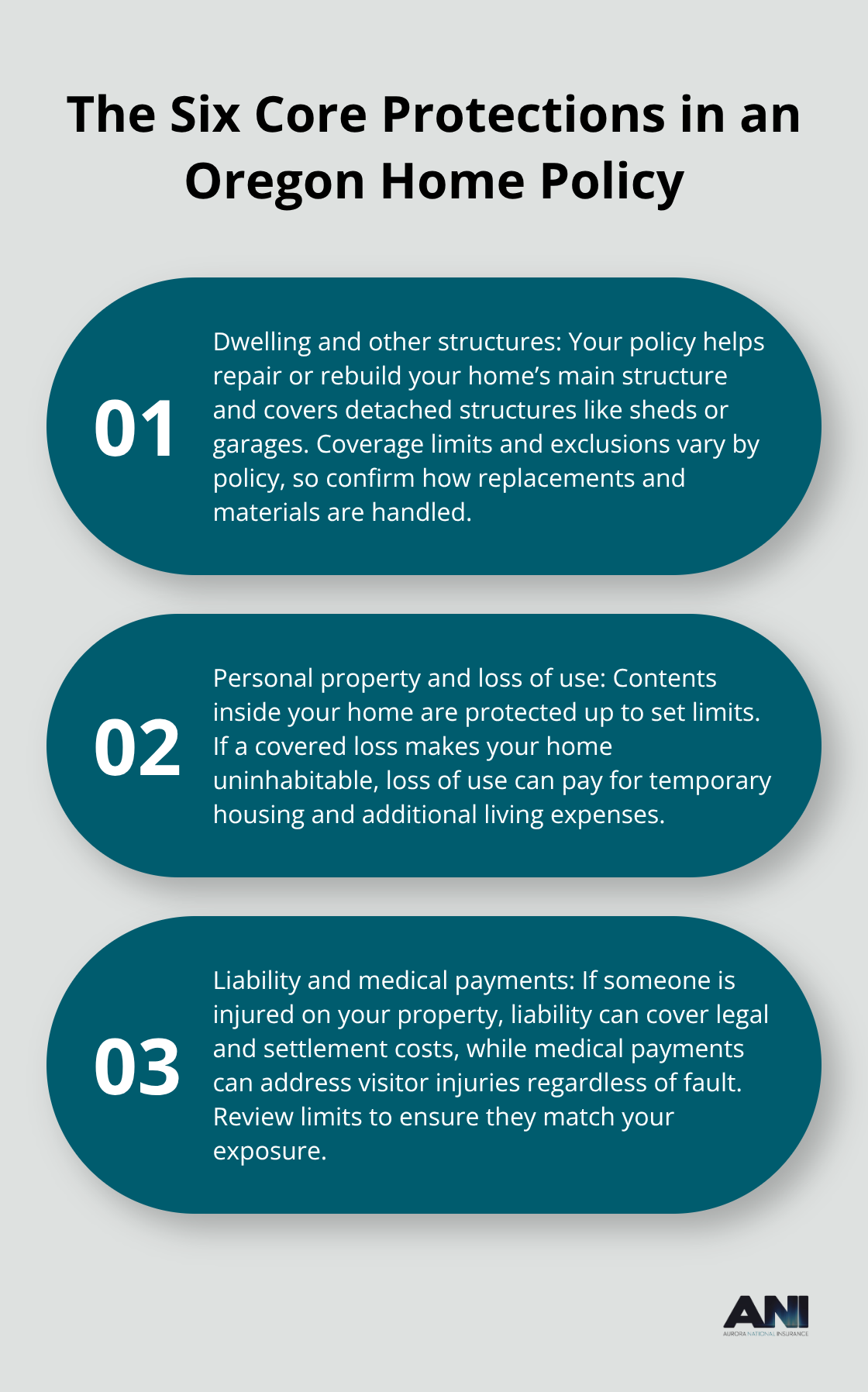
However, these protections come with limits and exclusions that vary by policy. A typical Oregon policy with $500,000 in dwelling coverage and $300,000 in liability costs around $2,065 per year according to NerdWallet data from February 2026.
The Dwelling Limit Problem Most Homeowners Face
Most homeowners set their dwelling limit too low, which creates serious financial exposure after a loss. The median rebuilding cost in Oregon sits at approximately $470,581, meaning a $300,000 dwelling limit leaves you massively underinsured. This gap between your coverage and actual rebuilding costs can force you to pay tens of thousands out of pocket. Location matters significantly in determining both your rates and your coverage needs. Homes in Bend average $2,305 annually while Portland properties typically run $1,850 for identical coverage, largely due to wildfire risk in central Oregon. Your credit history also impacts what you pay-homeowners with poor credit in Oregon pay roughly 113 percent more than those with good credit, translating to around $4,405 annually versus $2,100.
Wildfire Risk and Its Impact on Your Premiums
Oregon’s geography creates major coverage challenges that most homeowners overlook. Wildfire risk directly influences your premium and which carriers will even quote your home. If you live near forested areas, expect higher rates and stricter underwriting from insurers. This geographic reality means your location determines not just your price but your access to coverage itself.
The Gaps That Standard Policies Leave Unprotected
Flood damage isn’t covered under standard homeowners policies at all, despite Oregon’s proximity to water and storm systems. You must purchase flood insurance separately through the National Flood Insurance Program, which is federally backed. This means waiting until a storm arrives to buy flood insurance is too late. Earthquake coverage presents another gap-it’s excluded from standard policies and requires a standalone rider. Adding earthquake coverage can increase your annual premium by $865 or more, depending on your location and home value. Plumbing leaks rank among the most common claims in Oregon due to old, corroded pipes and clogged drains, yet water backup coverage is optional and often overlooked. The hard truth is that Oregon homeowners who skip these optional coverages face genuine financial exposure. Evaluating your specific geographic risks before choosing coverage limits helps you avoid these protection gaps and the financial consequences that follow.
How to Cut Your Oregon Premiums Without Sacrificing Protection
Bundle Your Home and Auto Policies for Immediate Savings
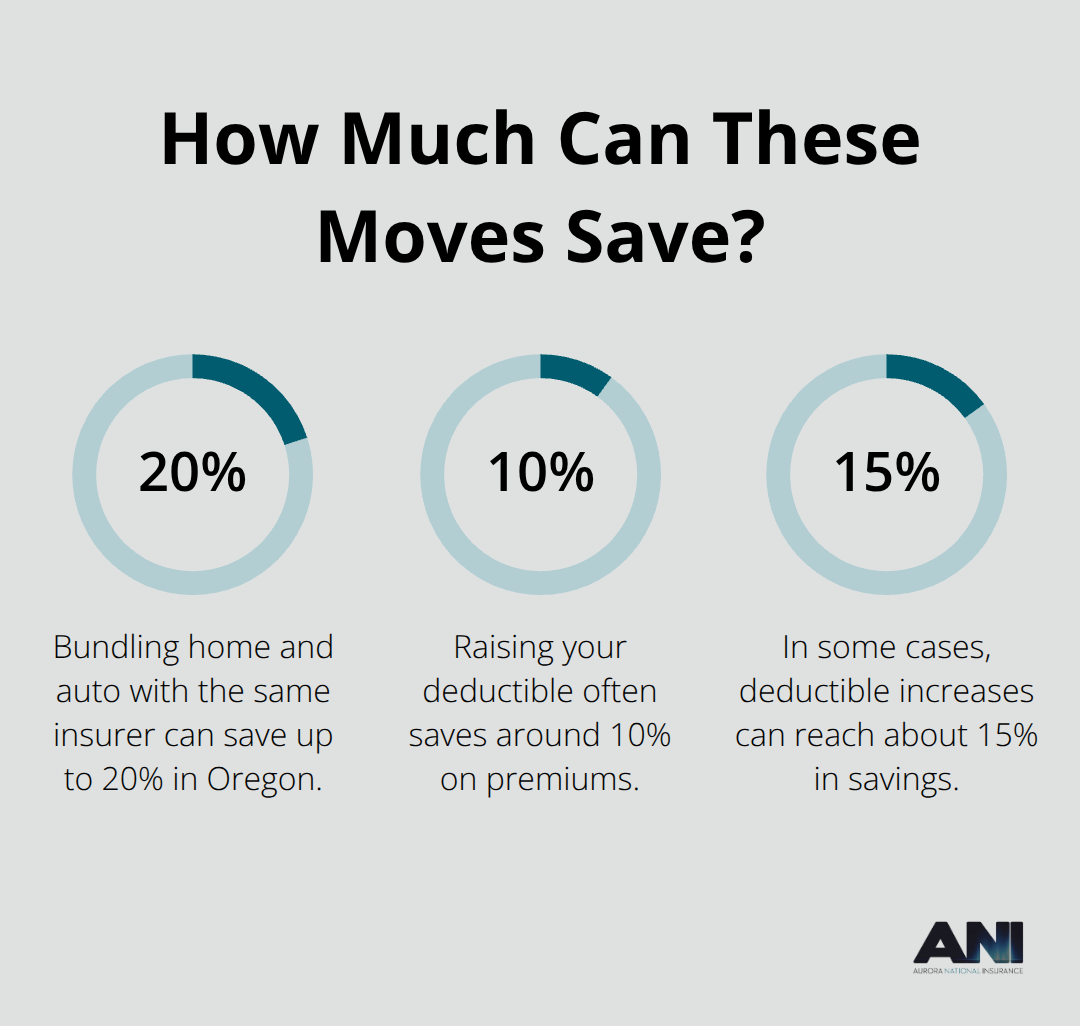
Bundling your home and auto policies with the same insurer delivers the fastest path to savings. Nationwide offers up to 20 percent off when you combine home and auto coverage in Oregon, and this discount stacks with other savings you might qualify for. Homeowners consistently overlook this opportunity, treating their auto and home policies as separate purchases when consolidating them cuts hundreds from annual costs. The math is straightforward: if you pay $1,200 for home coverage and $1,000 for auto, a 20 percent bundling discount saves you $440 per year. Many carriers extend this further if you add life or umbrella coverage to the mix. Before you renew either policy separately, request a combined quote from your current insurer or a competitor to see the actual dollar difference. The Oregon insurance market has tightened recently with some carriers pulling back from new business, making it harder to switch, but bundling discounts are substantial enough to justify the effort of moving both policies simultaneously.
Install Safety Devices That Lower Your Rates
Safety and security devices lower your premiums because they reduce claim frequency and severity. Installing deadbolts, burglar alarms, fire extinguishers, smoke detectors, sprinklers, or monitored fire alarms can qualify for homeowners insurance discounts. Water detection devices and temperature sensors also qualify for credits, particularly valuable given that plumbing leaks rank among Oregon’s most common claims. Installing these devices costs between $300 and $1,500 upfront, but the premium reductions recoup that investment within two to four years for most homeowners. Ask your insurer specifically which devices trigger discounts before purchasing anything, since requirements vary by carrier.
Raise Your Deductible-But Only If You Can Afford It
Increasing your deductible from $500 to $1,000 sounds appealing for lower premiums, but the savings are typically modest-often just 10 to 15 percent, which translates to $200 to $310 annually on a $2,065 policy. This approach makes sense only if you have emergency savings of at least $1,500 to cover that deductible without hardship.
For homeowners living paycheck to paycheck, raising your deductible creates genuine financial risk when a claim arrives. The better strategy combines modest deductible increases with concrete risk reduction through device installation and bundling, which together deliver far more substantial savings than any single tactic. These three levers-bundling, safety devices, and selective deductible adjustments-work together to lower your costs while maintaining the protection your home needs.
Now that you understand what impacts your costs, the next critical step involves comparing quotes across multiple carriers to find the coverage that actually fits your situation.
Comparing Quotes Across Carriers
The Staggering Price Differences Between Insurers
Shopping for Oregon home insurance without comparing multiple quotes guarantees you’ll overpay. The difference between carriers for identical coverage is staggering-some homes see premiums ranging from $450 annually to over $1,900 depending on the insurer, even when the dwelling limit, deductible, and location remain constant. Premium differences between Oregon insurers vary significantly based on carrier selection. This means your choice of carrier matters far more than tweaking your deductible or coverage limits.
How to Request Apples-to-Apples Quotes
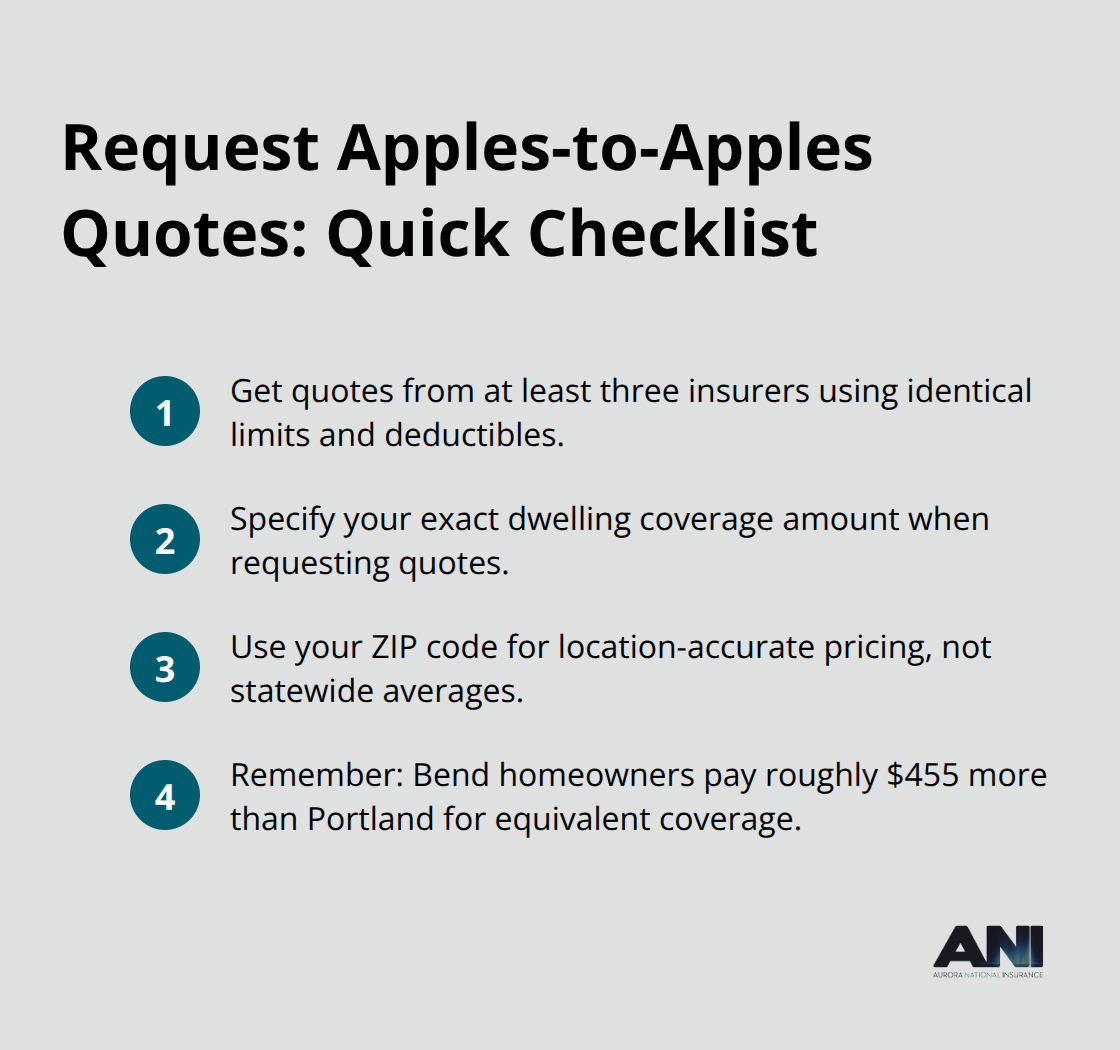
Start by requesting quotes from at least three different insurers using identical parameters-same dwelling limit, same liability coverage, same deductible-so you can actually compare apples to apples. When you call, specify your exact dwelling coverage amount because premiums scale predictably with coverage. Your location within Oregon also dramatically affects pricing, so request quotes specific to your ZIP code rather than accepting statewide averages. Bend homeowners pay roughly $455 more annually than Portland residents for equivalent coverage, primarily due to wildfire exposure, making location-specific quotes essential for accuracy.
What to Examine Beyond the Premium Number
Beyond the premium number itself, examine what each quote actually includes and excludes. Cincinnati Insurance ranks among the fewest consumer complaints in Oregon according to NAIC data, which matters more than you’d think when a claim arrives and you need responsive service. Check whether the quote includes replacement cost coverage-determined by an appraiser to fully rebuild your home rather than just its current market value-or if it defaults to actual cash value, which pays far less after depreciation. Ask explicitly whether water backup coverage, extended replacement cost, and service-line protection are included or optional add-ons, since these gaps create expensive surprises.
Coverage Requirements and Special Circumstances
Request the insurer’s specific requirements for safety devices to qualify for discounts, because requirements vary significantly between carriers and you want to know exactly what installation triggers savings. Most importantly, verify the liability limit matches your actual exposure-if you own a pool, Nationwide requires higher liability coverage, and running a home-based business may increase your premium substantially to cover inventory and equipment. The Oregon FAIR Plan Association exists specifically for homeowners who can’t obtain open-market quotes after being declined by two private insurers, but it covers only actual cash value up to $600,000 dwelling limit and excludes liability entirely, making it a last resort rather than a competitive option.
Finalizing Your Comparison
Request an On Your Side Review consultation if you quote with Nationwide, since this free annual review adjusts deductibles and ensures coverage fits life changes like new garages or additions. Once you’ve narrowed to two or three carriers, request written comparisons showing coverage details side-by-side rather than relying on phone conversations, which create confusion when you’re comparing multiple policies simultaneously.
Final Thoughts
Oregon home insurance tips boil down to three concrete actions: bundle your policies for immediate savings, install safety devices that lower your premiums, and compare quotes across multiple carriers to find actual value. Most Oregon homeowners leave hundreds of dollars on the table annually by treating these steps as optional rather than essential. The median rebuilding cost in Oregon sits at $470,581, yet many homeowners carry dwelling limits far below this figure, creating genuine financial exposure after a loss.
Wildfire risk, flood exclusions, and earthquake gaps demand your attention before a disaster forces expensive decisions under pressure. Request quotes from at least three different insurers using identical coverage parameters so you can see real price differences between carriers. Specify your exact dwelling limit, liability coverage, and deductible to ensure accurate comparisons, and ask each carrier about safety device discounts specific to their requirements since these vary significantly.
A local agent matters more than most homeowners realize because they access options you won’t find shopping online alone and understand Oregon-specific risks like wildfire exposure and flood vulnerability that affect both your rates and coverage needs. We at Aurora National Insurance represent multiple top-rated carriers and provide instant online quotes so you can compare options immediately. Contact us for a free consultation to review your current coverage and identify gaps or savings opportunities specific to your situation.
The information provided in this blog is for general informational purposes only and does not constitute legal, financial, or insurance advice. Coverage options, terms, and availability may vary. Please consult with a licensed professional for advice specific to your situation.
Artificial intelligence may have been used to generate text and images in some blog articles.


