Alaska Commercial Auto Insurance: Smart Coverage for Remote Operations
Running a business across Alaska’s vast landscape means facing challenges that most commercial operators never encounter. Extreme weather, isolated routes, and limited repair options create real risks that standard commercial auto insurance simply doesn’t address.
At Aurora National Insurance, we’ve built Alaska commercial auto insurance specifically for businesses like yours. The coverage options in this guide are designed to protect your fleet against the conditions you actually face.
What Makes Remote Alaska Operations Different
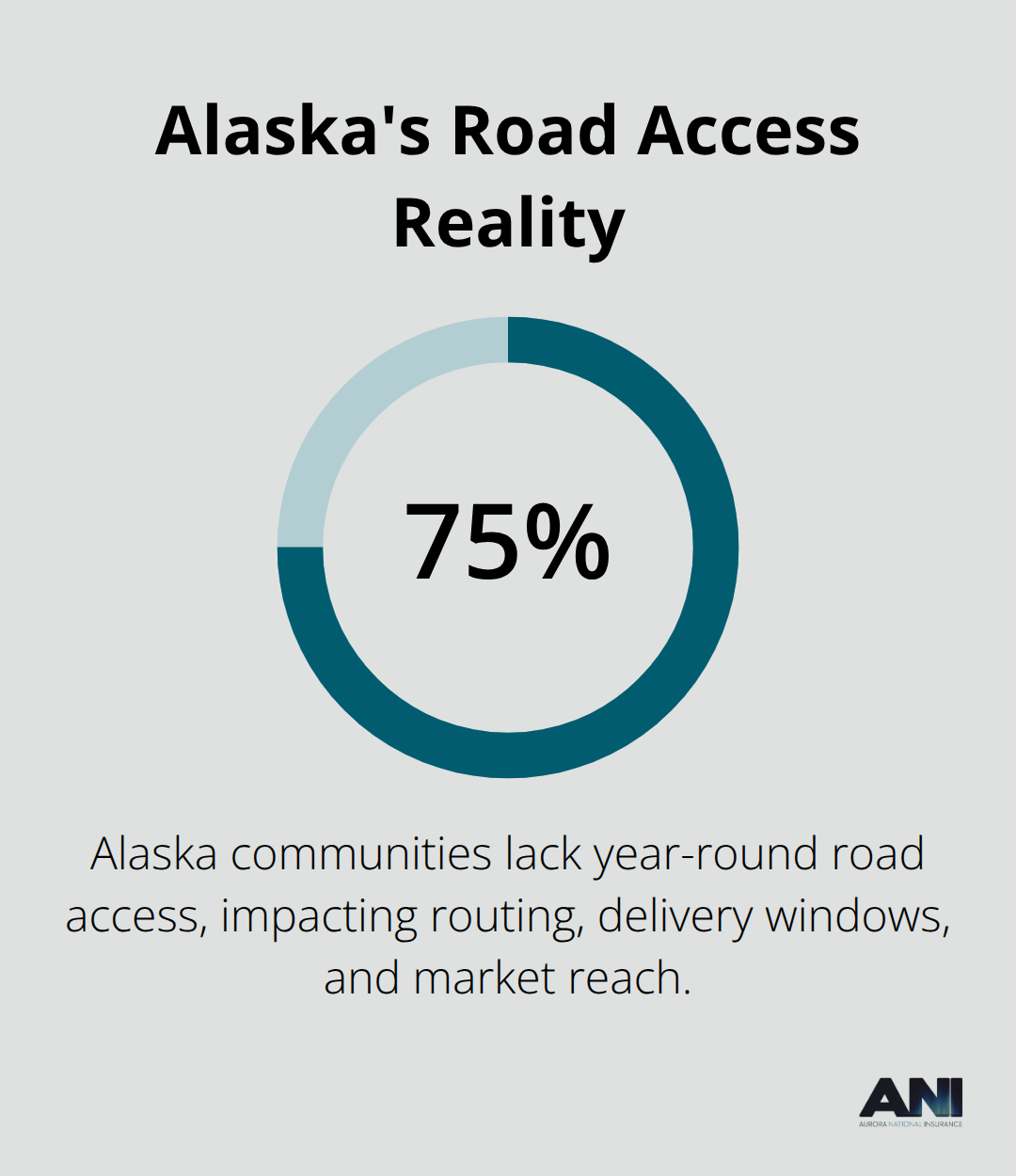
Operating across Alaska forces your business to confront risks that operators in the lower 48 states rarely face. Approximately 75 percent of Alaska communities lack year-round road access, meaning your vehicles either travel extreme distances on limited roads or don’t reach certain markets at all. When your fleet operates 200 miles from the nearest repair facility, a transmission failure doesn’t just cost you the repair-it costs you days or weeks of downtime while a technician travels to your location or your vehicle sits waiting for transport. Winter ice roads provide temporary access to some communities, but these routes exist only during specific cold months and depend entirely on weather, creating narrow delivery windows that force rushed decisions.
The Alaska Marine Highway System and air freight fill some gaps, but both add significant cost and complexity to your operations. This isn’t theoretical risk-it’s your operational reality, and standard commercial auto policies treat Alaska like any other state.
Extreme weather demands better physical protection
Alaska’s weather creates damage patterns that most insurance carriers don’t understand. Temperatures regularly drop below negative 40 degrees, which degrades battery capacity, thickens oil, and causes engine block cracking if vehicles lack proper block heaters. Road salt and corrosive minerals accelerate rust on undercarriages and brake lines. Heavy snow and ice cause rollovers and collisions at lower speeds than you’d expect in milder climates, yet impact severity remains high because rescue operations take longer. Windshield damage from gravel on icy roads happens constantly. Standard collision and comprehensive coverage handles these claims, but carriers unfamiliar with Alaska conditions often underestimate replacement costs or dispute whether damage resulted from maintenance neglect rather than weather exposure. Coverage tailored for Alaska accounts for winterization requirements, higher replacement costs for specialized parts, and the reality that preventive maintenance in extreme cold costs more upfront but prevents catastrophic failures later.
Distance transforms a minor breakdown into a major crisis
A flat tire 50 miles outside Fairbanks becomes an entirely different problem than a flat tire near a city. Roadside assistance that takes 30 minutes in urban areas might take 6 hours in remote Alaska, and if weather deteriorates, your driver might need airlift evacuation. Food trucks and mobile service vehicles carrying expensive attached equipment face additional exposure-if your vehicle breaks down, that equipment sits unprotected in harsh conditions, potentially suffering freeze damage or theft.
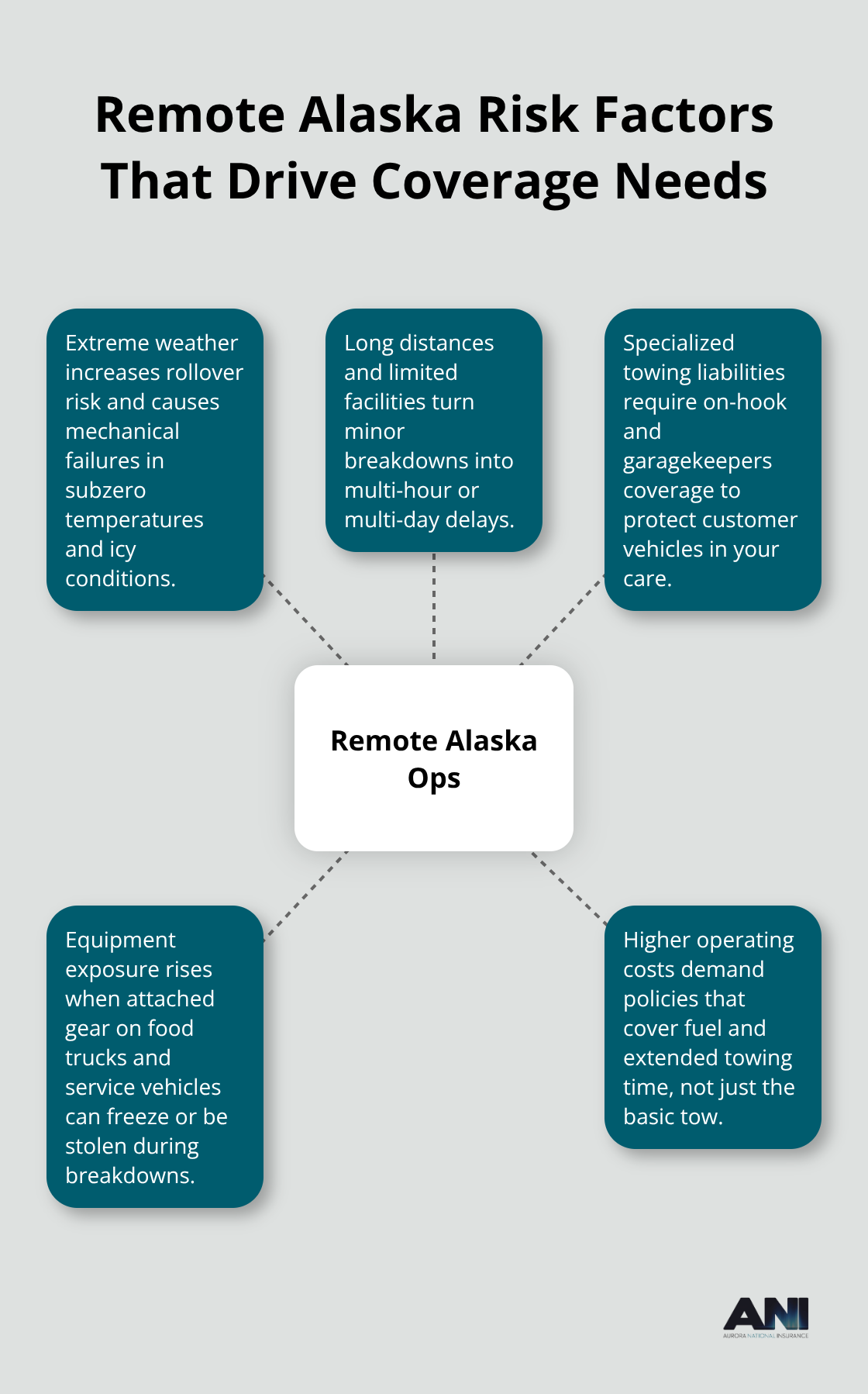
Tow trucks in Alaska require specialized coverage like on-hook liability and garagekeepers liability to protect customers’ vehicles in your care while you manage the tow. Your policy should explicitly cover multi-hour response times and the cost of fuel for long-distance towing, not just the tow itself.
Coverage gaps leave your fleet exposed
Standard national insurance networks treat Alaska as a low-priority market, which means claims adjusters lack local knowledge and response times stretch far beyond acceptable limits. Your vehicles operate in conditions that demand 24/7 support from people who understand Alaska’s specific challenges. A claims adjuster in the lower 48 states cannot accurately assess damage from freeze-thaw cycles or determine whether a breakdown resulted from inadequate winterization or a mechanical defect. When your fleet sits idle waiting for parts or repairs, you lose revenue and disappoint customers. The right commercial auto policy includes claims support designed specifically for rural operations, not generic national programs that fail to account for Alaska’s geography and weather patterns. This specialized approach directly affects how quickly you return vehicles to service and how fairly insurers evaluate your claims.
Protecting Your Fleet Against Alaska’s Harsh Realities
Physical Damage Coverage for Extreme Weather Exposure
Alaska’s extreme conditions demand coverage that goes far beyond what standard policies provide, and physical damage protection sits at the foundation of any fleet strategy in this environment. Collision coverage protects against the specific crash patterns Alaska creates-rollovers on icy roads, impacts with wildlife, and collisions at lower speeds than you’d encounter in milder climates. Comprehensive coverage handles the weather-related damage that happens constantly: windshield damage from temperature changes, freeze-thaw cracking of engine blocks, rust damage from road salt and corrosive minerals, and battery degradation in temperatures below negative 40 degrees.
The critical mistake most operators make involves choosing deductibles that make sense for the lower 48 states rather than Alaska. A $1,000 deductible might feel reasonable until you pay it repeatedly for windshield replacements that occur monthly in winter, or until a freeze-crack in your engine block costs $8,000 and you cover a quarter of that expense out of pocket.
Selecting Deductibles Based on Alaska Claims Patterns
Evaluate deductibles based on your actual claims frequency in Alaska conditions, not national averages. If your vehicles operate primarily in Anchorage or Fairbanks, where repair facilities exist and response times measure in hours rather than days, a $500 deductible paired with comprehensive coverage makes financial sense. If your operations extend into truly remote areas where vehicles sit for weeks waiting for parts, a $250 deductible on comprehensive coverage pays for itself within two or three weather-related claims.
Vehicle size and equipment matter significantly here-a heavy food truck carrying $50,000 in attached equipment faces different damage exposure than a service van, and your policy must reflect that distinction. Cargo coverage and equipment breakdown protection should appear explicitly in your policy rather than assumed, especially if your vehicle’s value exceeds the vehicle itself.
Liability Limits That Account for Remote Emergency Response Costs
Liability coverage in remote Alaska requires limits that account for the reality that emergency response costs far more than in populated areas. Alaska law sets a baseline of $50,000 per person and $100,000 per accident for bodily injury, but that minimum provides almost no protection in a serious crash. If your vehicle causes an accident that injures multiple people, medical helicopter evacuation from a remote location costs $15,000 to $25,000 per person before any hospital treatment begins.
A single serious injury can generate $100,000 in emergency response and medical costs within hours, meaning the state minimum disappears instantly. Try minimum liability limits of at least $300,000 per accident for any business operating outside major population centers, and $500,000 or higher if your routes regularly take vehicles more than 100 miles from Anchorage or Fairbanks. For contractors and service businesses where clients visit remote worksites, general liability coverage layered with your commercial auto policy becomes essential-if a client sustains an injury at a jobsite and also happens to be near your vehicle, the liability exposure compounds.
Uninsured and Underinsured Motorist Protection for Remote Routes
Uninsured and underinsured motorist protection addresses the reality that not every driver on Alaska roads carries adequate coverage, and some carry none. Alaska’s No Pay, No Play law bars uninsured drivers from recovering non-economic damages, but that protection does nothing for you if an uninsured driver hits your vehicle and injures your employees. Uninsured motorist coverage pays your medical bills and lost wages when an uninsured driver causes a crash.
Underinsured motorist coverage fills the gap when another driver’s insurance proves inadequate-if you’re hit by a driver carrying only the $50,000 minimum and your damages exceed that, underinsured coverage pays the difference up to your policy limit. For remote operations where emergency response costs escalate dramatically, underinsured motorist limits should match or exceed your liability limits, not fall short by half. These protections transform your policy from basic compliance into genuine financial security when accidents happen far from help.
Matching Coverage to Your Fleet’s Real Operations
Choosing the right commercial auto policy for remote Alaska operations requires abandoning the approach of selecting coverage based on national averages or what competitors quote. Your fleet operates under conditions that demand a customized assessment of vehicle types, operational territory, and realistic damage frequency.
Catalog Every Vehicle and Classify It Correctly
Start by listing every vehicle your business uses for work, including occasional-use vehicles that employees drive for business purposes. A contractor might operate a pickup truck daily, a service van three days weekly, and occasionally use a personal vehicle for client visits. Each vehicle needs explicit coverage classification on your policy, because mixing vehicle types under generic coverage language creates claim denial risk when an accident occurs.
A vehicle classified as a light service vehicle will have claims denied if it actually carries heavy equipment or tows regularly. Document the actual weight of equipment your vehicles carry, not estimated weight, because vehicles exceeding 10,001 pounds GVWR trigger higher liability requirements under Alaska law. A food truck with attached cooking equipment, a contractor’s truck loaded with tools, or a delivery van carrying inventory can easily exceed this threshold, which means your policy must reflect the correct GVWR classification or you’ll face coverage gaps during claims.
Match Liability Limits to Your Territory
Your operational territory directly determines which coverage limits actually protect your business rather than leaving you exposed. If your operations stay within Anchorage, Fairbanks, or other major cities where repair facilities respond within hours, you can manage with more modest coverage limits and higher deductibles. If your vehicles regularly travel routes more than 100 miles from population centers, your liability limits must increase significantly because emergency response costs in remote areas consume your minimum coverage instantly.
A contractor operating jobsites across interior Alaska should try minimum liability of $300,000 per accident, not the $100,000 state minimum. If your routes take vehicles to communities accessible only by barge or air freight, uninsured and underinsured motorist coverage becomes essential because you cannot predict what other drivers carry.
Adjust Deductibles Based on Alaska Claims Patterns
Compare deductibles based on your actual claims history in Alaska conditions, not national benchmarks. If your vehicles experience windshield damage monthly during winter, a $1,000 comprehensive deductible costs you $12,000 annually out of pocket before insurance pays anything. Reducing that deductible to $250 or $500 typically increases your premium by 8 to 15 percent but eliminates the pattern of repeated out-of-pocket payments that erode your operating budget.
The math shifts dramatically when you account for Alaska’s specific damage patterns rather than applying lower-48 assumptions to your policy selection. A vehicle that operates primarily in remote areas where parts take weeks to arrive justifies a lower deductible because downtime costs exceed the premium increase. A vehicle that stays near major repair centers can absorb a higher deductible without financial strain.
Final Thoughts
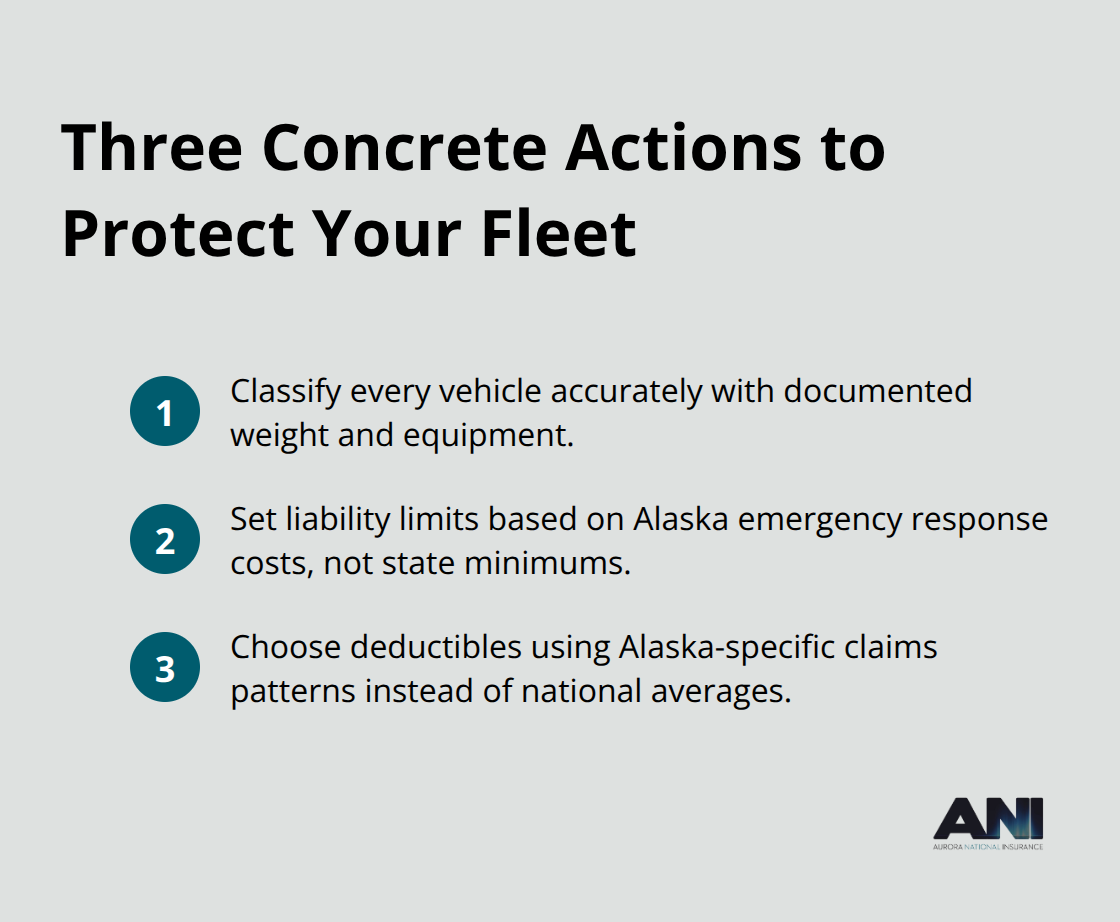
Alaska commercial auto insurance built specifically for remote operations protects your fleet against conditions that standard national policies ignore. The coverage decisions you make today directly determine whether your business survives a serious accident in a remote location or faces financial devastation that could end operations entirely. Your fleet’s protection depends on three concrete actions: classify every vehicle accurately by documenting actual weight and equipment, set liability limits based on Alaska’s emergency response costs rather than the state minimum, and evaluate deductibles through the lens of Alaska claims patterns rather than national averages.
The right Alaska commercial auto insurance policy accounts for the reality that your vehicles operate 200 miles from repair shops, that winter ice roads create narrow delivery windows, and that emergency response in remote areas costs multiples of what it costs in populated states. This isn’t theoretical protection-it’s the difference between returning to work quickly after an accident and watching your business stall while waiting for parts or repairs. A vehicle misclassified as light-duty when it regularly carries heavy equipment will have claims denied when damage occurs, leaving you exposed at the worst possible moment.
Aurora National Insurance takes the guesswork out of coverage selection with licensed agents who understand Alaska’s specific operational challenges. Instant online quotes let you see options immediately, and their Anchorage-based team delivers the local expertise that matters when you need claims support in remote areas. Start your quote process today to secure your fleet against Alaska’s unique challenges.
The information provided in this blog is for general informational purposes only and does not constitute legal, financial, or insurance advice. Coverage options, terms, and availability may vary. Please consult with a licensed professional for advice specific to your situation.
Artificial intelligence may have been used to generate text and images in some blog articles.